
SEW APPARELS · DEVELOPMENT RESOURCES
Woven Dress Buying Guides
Woven dress buying guides help fashion brands turn a silhouette and fabric idea into a clear development brief. Use this resource to organise the decisions that connect bodice fit, skirt proportion, print layout, closures and finishing. The linked technical articles examine specific choices, while the planning sections below help you bring those choices together for sampling and production discussions.
Explore the eight article cards below for print placement, bias panels, consumption quotations, belt assemblies, fit ranges, invisible zippers, pleat retention and snag risks. Then use our woven dress buying guides to prepare the wider product brief, including materials, size allocation, care evidence and order quantities. Keep the decisions connected to an identified pattern and sample revision. Visit the custom woven dress manufacturing page for Sew Apparels capabilities and a product-specific enquiry.
Plan Dress Print Placement Before Cutting
Compare repeat scale, focal motifs, border positioning and panel alignment with seven practical design checks. The article includes a buyer decision table and illustrative annotations for discussing the appearance and cutting implications of your print.
Read the Dress Print Placement GuideBias panel distortion: control drape and shape
Identify the handling and stitching checks that help woven dress bias panels hold their intended drape. Use the technical guide to compare sample revisions.
Read the bias panel guideWoven Dress Fabric Consumption Quotation: Tiers, Gathers and Width
Connect the approved pattern with usable width, size allocation and marker evidence. Separate cutting consumption from purchasing allowances before comparing quotations.
Review dress consumption quotationWoven Dress Belt Component Specification: Assembly and Pairing
Match belt construction with buckle openings, garment loops and adjustment range. Review care compatibility and correct size pairing before approving the complete assembly.
Review dress belt componentsWoven Dress Fit Range Development: Profiles, Blocks and Samples
Define body profiles and separate fit blocks where justified. Connect grading, cross-size sample reviews and size chart evidence with clear production mapping.
Review dress fit range planningWoven Dress Invisible Zipper Approval: Function and Finish
Review seam alignment, waist crossings, lining clearance and usable opening. Connect pull operation and finishing with after-care evidence before releasing the approved closure assembly.
Review invisible zipper approvalWoven Dress Pleat Retention Approval: Care and Evidence
Connect pleat depth, spacing and material trials with the intended care route. Compare original and after-care appearance, document corrections and support claim wording with appropriate evidence.
Review pleat retention approvalWoven Dress Snag Risk Approval: Fabric, Trims and Contact
Map contact between delicate fabric, embellishments and accessories. Connect suitable material evidence with trim inspection, after-care observations and closed corrections before approving the assembly.
Review dress snag risk approval1. Define the Silhouette from Bodice to Hem
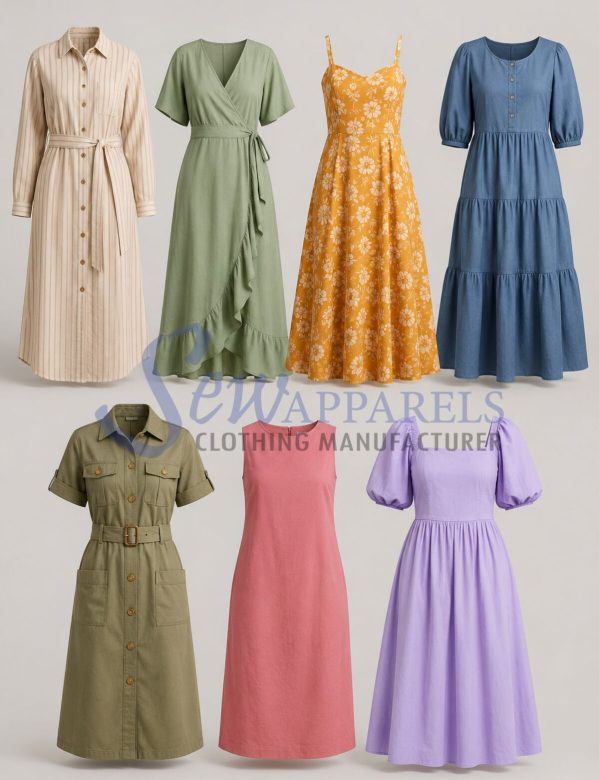
Decide whether the collection needs a shirt dress, wrap shape, shift, tiered style or a fitted bodice with a fuller skirt. Record the intended length, waist position, sleeve and neckline together so the sample team can understand the complete design. Woven dress buying guides are useful when they help a brand describe those relationships clearly. Include a technical sketch, target customer and intended occasion rather than relying on the garment name alone to communicate the design.
Set the fit reference before comparing sample versions. Identify the sample size, body chart, finished measurement points and the areas where the silhouette needs close review. Discuss separate fit blocks where the intended body profiles justify them, then show how each block maps to the order sizes. A change to skirt volume, bodice length or waist position should be recorded with the pattern version that implements it. Keep accepted front, side and back views in the development file. Link the graded size allocation with the quotation so a base-size estimate is not mistaken for the consumption of the complete order.
2. Choose Fabric for Structure, Flow and Coverage
Review the fabric against the design’s intended appearance. Crisp poplin, fluid viscose, textured linen blends, crepe and lightweight voile can support different dress concepts, but a fabric label does not replace a suitable swatch and garment sample. Ask about the proposed composition, weight, colour and finishing, then consider lining or support requirements. Our woven dress buying guides encourage buyers to approve the complete material arrangement, including how the shell and internal layers work together in the intended silhouette.
Record the selected fabric reference and colour approval before developing the final sample. Review opacity, surface appearance and drape under the conditions that matter to the product. If the fabric changes after fitting, agree which construction and appearance decisions need to be revisited. Keep the care expectations in the same brief so the sampling team understands the finished result you intend to sell, rather than assessing the fabric as an isolated component.
3. Connect Print Layout with Pattern Construction
A print decision should explain both the artwork and its position on the finished dress. Identify the motif scale, orientation and the joins where continuity is important. Spoonflower’s proofing resource shows why repeat settings and a physical printed reference serve different purposes. Use woven dress buying guides to prepare those approvals separately, then confirm the garment composition through the relevant sample rather than assuming that an accepted swatch approves every panel arrangement.
Discuss matching priorities with the pattern and cutting team. The Usha Sewing and Design manual addresses grain, directional layouts and matching across garment joins. For your order, identify the visible areas that matter most and request a layout-based consumption estimate. Keep the approved artwork version, placement references and construction drawing together so changes to a waist seam, pocket or skirt panel are reviewed against the same visual requirements.
4. Review Closures, Linings and Sample Approvals
Select the closure arrangement as part of the dress construction. Button fronts, concealed zippers, side openings, ties and wrap designs each need a clearly described position and intended function in the sample brief. Note any lining, facing or internal support required around them. Woven dress buying guides help brands connect these choices with fit and appearance, so the approval covers the complete garment rather than a collection of individually accepted trims that have not been assessed together.
Create a sample review record identifying the version, materials, fit comments and outstanding actions. Evaluate belt and buckle compatibility, zipper clearance and pleat appearance as complete assemblies, including relevant care conditions. Review snag contact with decoration and accessories without inferring garment durability from a fabric name. Keep appearance observations separate from laboratory results and agree the evidence required for each claim. Confirm revised measurements and construction notes have reached the technical team before release. The approval file should tell merchandising and inspection staff which garment to compare, which changes were accepted and who can authorise a later material or trim substitution.
5. Low MOQ Woven Dress Manufacturer Planning
When evaluating a low MOQ woven dress manufacturer, specify the design and material route behind the quantity request. Request a written quotation for the actual style, colour, fabric, print, size mix, belt or other trims, and packaging. Confirm whether minimums apply per style, colour, fabric or combined order. Stock material and custom fabric development can create different purchasing commitments, so availability and quantity conditions need project-specific confirmation. These woven dress buying guides encourage a focused enquiry rather than promising an unverified numeric minimum. Provide launch quantities and expected repeat orders, then ask which material and development route can support them. Keep the agreed quantity and quote revision beside the approved sample.
6. Development Support for Startup Dress Brands
Startup brands can begin with a focused dress concept, fabric direction, size plan and expected quantity. Explain which development inputs are ready and where you need a discussion about sampling, prints, private labels or packaging. Woven dress buying guides give new teams a practical way to prepare that information. Confirm the sampling scope, approval responsibilities and delivery assumptions directly with Sew Apparels for the proposed order. A concise first-collection brief can still contain the essential technical decisions needed to move from an idea to an approved production reference.
Turn Your Dress Concept into a Development Brief
Bring together the silhouette, fabric reference, artwork, size range and sample questions. Add the pattern revision, usable width, closure and belt details, and evidence needed for care or performance claims. Use these woven dress buying guides to prepare a focused enquiry with clear approval responsibilities and discuss the next development steps with Sew Apparels.
Discuss Woven Dress Manufacturing