
A woven dress fabric consumption quotation should explain how much material the proposed dress requires and which assumptions produce that figure. Gathers, tiers, panel shapes and size allocation can change the cutting layout. Comparing only a fabric price per metre can therefore hide an important difference in the cost of the finished garment.
Buyers need a quotation that connects an identified pattern with the actual material width, order breakdown and allowance scope. This guide shows how to prepare those inputs, review marker evidence and compare alternatives without stripping the design of its intended appearance. All calculation examples below are illustrative; they are not Sew Apparels prices, confirmed consumption figures or production promises.
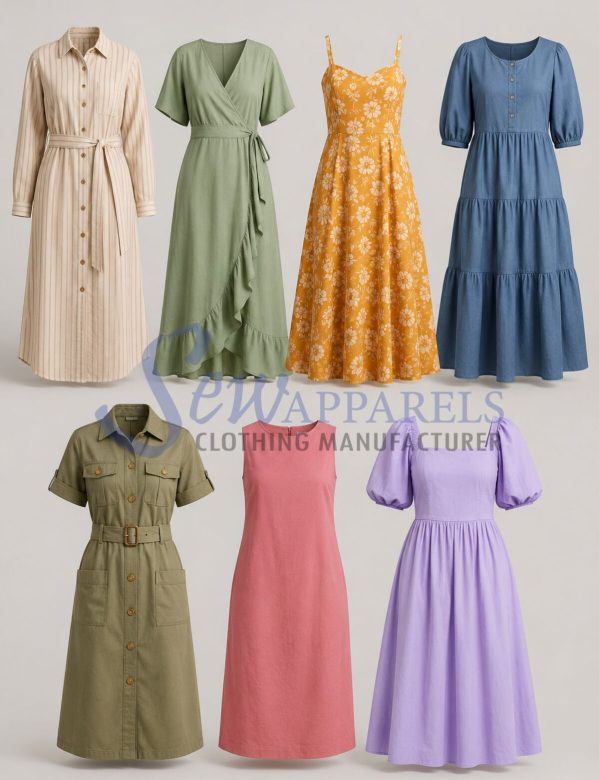
1. Define the woven dress fabric consumption quotation
Begin with a technical sketch, approved length, sleeve option, skirt construction and sample reference. Separate the shell, lining and any other cut materials. State whether the request concerns an early estimate or a quotation based on completed graded patterns. These stages carry different levels of certainty and should be labelled clearly.
Identify the fabric code, colour, finish and quantity plan alongside the style. Ask the supplier to name the pattern revision and cutting assumptions used. A short description such as “tiered midi dress” does not define tier dimensions, fullness or component count well enough to support a reliable comparison between quotations.
Build a complete pattern input
List the tiered dress fabric consumption inputs: number of tiers, finished dimensions, join details, sleeve pieces, bodice pieces and required facings. Confirm how seam and hem allowances are represented in the pattern. Include optional pieces separately so they do not enter one supplier’s estimate while being omitted from another.
A dress pattern version quotation should name the exact revision being costed. Keep later silhouette changes traceable to a new estimate. If a longer skirt or fuller sleeve is approved after the quotation, request the corresponding consumption review before assuming the earlier price still applies to the changed garment.
2. Establish width, units and cutting restrictions
Clarify woven dress usable fabric width rather than relying only on the supplier’s nominal width label. Agree which width the marker uses and what edge exclusions are included. Where actual roll widths vary, ask how the quotation represents that variation and when the cutting plan will be checked against available material.
The Gerber marker information documentation distinguishes marker length, width, utilization and yield information. These fields help frame an evidence request, but a software display alone does not prove that the pattern, size mix or material assumptions match your order. Ask for the associated marker reference.
Compare width alternatives fairly
A dress fabric width cost comparison should show both quoted fabric price and consumption under the relevant layout. A wider option is not automatically cheaper per dress, particularly when piece geometry or cutting restrictions limit how it can be used. Request a comparable trial rather than applying a simple width proportion to every design.
Document dress directional cutting consumption when the cloth requires consistent orientation. Nap, a directional print or an agreed appearance rule can restrict rotation. Use the dress print repeat placement guide to record the matching requirement before comparing layouts. The woven dress fabric consumption quotation should state those restrictions explicitly so that an unrestricted layout is not compared with a production layout that must follow them.
3. Review tiers, gathers and panels as actual pieces
A gathered dress marker quotation should reflect the intended ungathered pattern dimensions and construction. Finished gathered appearance does not reveal how the pieces were shaped before assembly. Ask the patternmaker to confirm the relevant lengths and widths, then review them against the approved sample rather than estimating material from a product photograph.
For woven dress panel layout costing, identify shaped panels, seams and any matching requirement. Two dresses with similar finished circumference may have different cutting layouts because their pieces have different shapes. A proposed layout change should also be reviewed for its effect on seam positions, drape and visual balance.
Record fullness without using a universal ratio
A dress fullness ratio quotation brief needs a defined measurement basis: which joining edge and which ungathered length are being compared. State the approved dimensions and sample revision. Do not use a generic fullness ratio as a substitute for the actual pattern, because fabric behaviour and design intentions vary.
Separate a tiered dress gathering allowance quote from unspecified extra fabric. Explain whether a stated amount refers to pattern fullness, an operation allowance or a purchasing contingency. Clear terminology makes the woven dress fabric consumption quotation easier to challenge and prevents the same provision being included twice under different labels.
4. Match the marker with the order’s size allocation
Supply woven dress graded marker inputs with the required sizes and quantities. A consumption figure based on one sample size may not represent the order average. Ask which size combination appears in each marker and how the supplier weights those markers to reflect the actual quantities being purchased.
Check that all required pieces are included in the correct counts. Confirm whether small components are represented in the main layout or handled separately. A promising utilization figure means little if a facing, tie or lining component has been left outside the calculation without a corresponding allowance or separate material line.
Use a plain layout as a defined comparison
A solid dress cutting layout quote can be a useful comparison when the solid fabric permits different placement rules from a print. Identify the difference in restrictions, material and construction. Do not present savings as available for the printed design unless that design can legitimately use the same layout rules.
Lectra’s pattern development resource connects pattern decisions and consumption estimation with cost planning. Use that principle to review alternatives before release. It does not establish that any named software is used for your order or guarantee a particular saving from changing the dress.
5. Separate marker consumption from purchasing allowances
Build a woven dress fabric allowance register that identifies what sits outside the base marker calculation. Possible items to discuss include spreading end losses, fabric defects, approved process needs and order-specific contingencies. Their applicability and amount should be agreed from evidence, not added as a universal percentage to every style.
Ask whether the quoted quantity already contains these provisions. Some estimates report net cutting consumption; others report a purchasing figure with agreed allowances included. A woven dress fabric consumption quotation should use a clear label for each figure so the buyer does not compare one net figure with another gross figure.
An illustrative calculation
Suppose a hypothetical marker is 12 metres long and contains six complete dresses under a specified width and size mix. The marker average is 2 metres per dress: 12 divided by six. If the illustrative fabric price is 4 currency units per metre, the marker-based material value is 8 units per dress.
Those figures do not include every possible purchasing or production cost. If an agreed additional material provision applies, show its basis separately and confirm it has not already been included. If another material is priced by weight, obtain the relevant conversion inputs; do not treat metres and kilograms as directly interchangeable quantities.
6. Compare options through a documented decision
A dress fullness cost tradeoff should show the approved design beside the proposed alternative. Request its revised pattern reference, consumption and sample implications. Reduced fullness may change silhouette and movement, so the commercial decision should follow a design review rather than treating every material reduction as an acceptable improvement.
Prepare a woven dress consumption scope comparison across quotations. Match pattern version, material, width, size mix, cutting direction, component coverage and allowance definitions. Where inputs differ, identify the difference and request a corrected comparison. A woven dress fabric consumption quotation becomes actionable when its scope is sufficiently clear to explain the price.
Ask for evidence you can interpret
A dress marker evidence request should seek the marker reference, dimensions, size quantities, component completeness and calculation basis. Ask whether the layout is preliminary or approved for the proposed material. Keep a readable record beside the quotation; buyers should not have to infer scope from an unexplained efficiency percentage.
For custom woven dress manufacturing, send the fabric reference, technical pack, quantity split and current sample decisions together. Confirm the quotation’s validity, material availability and revision conditions directly. A complete development enquiry supports a more useful discussion than asking for the lowest price against a silhouette name alone.
For private label woven dress production, connect the consumption approval with the bill of materials and purchase specification. Startup brands can prepare these inputs while discussing their first order. Confirm project-specific minimum quantities and development support rather than assuming any MOQ, stock availability or included sampling service from this guide.
Buyer checklist before approving the quotation
- Identify the dress style, technical pack, sample and pattern revision.
- Separate shell, lining and other material quantities.
- Record nominal width, usable marker width and units consistently.
- Confirm orientation, matching rules, piece counts and cutting restrictions.
- Match marker size combinations with the actual order allocation.
- Distinguish base consumption from additional purchasing provisions.
- Approve design changes and commercial revisions together.
Store the evidence with the woven dress fabric consumption quotation, including any unresolved assumption that affects its validity. Before placing an order, resolve those assumptions with the responsible supplier representative. When an input changes, identify whether the estimate remains usable or requires a revised calculation and quotation.
Common questions about dress consumption quotations
Can finished dress measurements alone give a reliable consumption figure?
They provide context but do not describe every pattern piece, cutting restriction or size combination. Request an estimate with its assumptions, then a revised figure when suitable patterns and material inputs are available. A woven dress fabric consumption quotation should make its stage and uncertainty visible.
Does high marker utilization mean the lowest garment cost?
Not by itself. Review material price, required construction, component completeness and the purchasing scope. A marker may use its area efficiently while representing a different dress or fabric from the one being ordered. Compare the complete, equivalent specification before choosing an option.
Where should buyers start?
Use the woven dress manufacturing page for product enquiry context and the woven dress buying guides for related development decisions. Prepare an identified pattern, material and size allocation first. A traceable woven dress fabric consumption quotation can then connect the design you approve with the material basis you purchase.