
A woven dress belt component specification connects the belt body, fastening hardware and garment loops in one approval record. These parts may look coordinated separately but behave differently when assembled. A belt that twists through its loops, bunches at the buckle or arrives in the wrong size can undermine an otherwise well-developed dress.
The buyer’s task is to define the intended appearance, adjustment range and construction, then approve a complete sample. This guide explains the practical checks needed before release. It does not establish universal dimensions, strength limits or care instructions; those must be agreed for the actual material, hardware, garment and market.
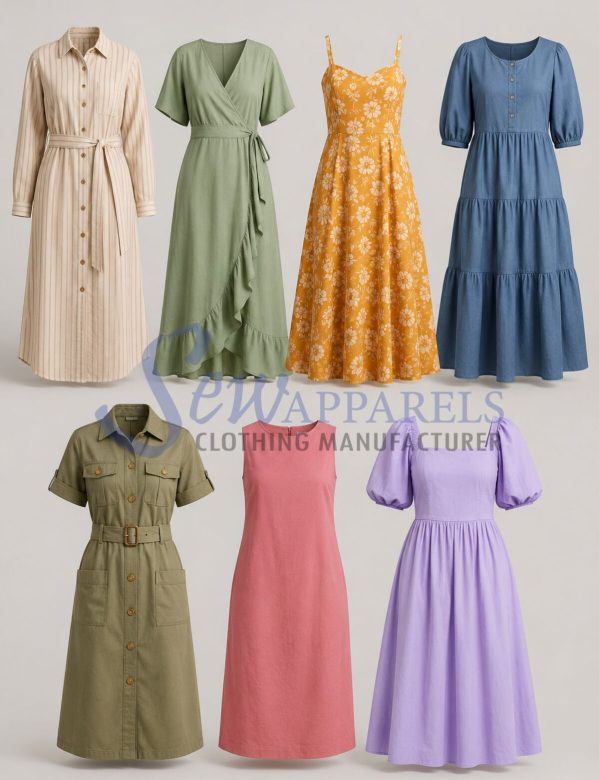
1. Define the woven dress belt component specification
Start with the dress style, belt function and waist position. Decide whether the belt mainly decorates the silhouette, adjusts fit or closes part of the garment. Identify whether it is removable, tied, buckled or secured by another arrangement. A sketch should show the intended front appearance and how the free end is retained.
List the belt fabric, supporting layers, thread, buckle, keeper and garment loops as distinct components. Include references, colours and sample revisions rather than relying on descriptions such as “matching belt.” Keep the belt fabric and support layers in the dress fabric consumption quotation so these components are not omitted from material planning. This lets the buyer trace a change in one part without accidentally approving a different assembly as a whole.
Specify the belt body
For dress self fabric belt construction, record the finished width, length, layer structure, seam position and supporting material. State how the fabric direction relates to the approved pattern. Review the actual sample for shape and handle rather than assuming shell fabric will automatically provide suitable belt stability.
A dress belt stiffness trial should compare candidate assemblies on the dress. Examine bending, twisting, tying or fastening as appropriate, alongside comfort when sitting and moving. Document the selected option and supporting layer reference. More stiffness is not always better if it makes the belt uncomfortable or changes the silhouette.
2. Match buckle dimensions with the finished belt
A woven dress buckle dimension brief should distinguish outside appearance dimensions from the opening through which the belt passes. Identify the fastening mechanism and any keeper or attachment requirement. Obtain the component drawing and supplier reference, then confirm compatibility using the finished belt’s width and thickness.
Test the complete threading or fastening operation with the proposed assembly. Check whether the end enters easily, whether the belt bunches and whether the closed position sits as intended. A hardware size label alone does not replace this trial, especially when fabric layers and turned seams create local thickness differences.
Keep material evidence specific
The dress belt buckle material declaration should identify the actual component and finish, including relevant supplier documentation. If the buyer requires chemical or other compliance evidence, qualified reviewers should determine the applicable requirement and report scope. Do not treat a generic certificate or a similar-looking buckle as proof for a substituted item.
Use the woven dress belt component specification to record which evidence belongs to which component revision. A new coating, supplier or mechanism may require reassessment. Keep aesthetic approval separate from material documentation so a satisfactory colour match is not confused with confirmation of a technical requirement.
3. Review garment loops as part of the assembly
Measure dress belt loop clearance with the finished belt in place, including the areas where seams or end details pass through. Record the intended loop position and construction. A loop can be generous enough to admit the belt yet allow unwanted movement, so review both insertion and the worn appearance.
The Sewing & Craft Alliance guidelines include a belt-loop resource describing cloth carriers and alternative loop constructions, including thread loops on dresses. These are useful design references. Choose and trial the arrangement for the actual dress rather than copying a generic loop dimension or attachment detail into every style.
Define the attachment evidence
A dress belt attachment loop strength review should identify the agreed evaluation, attachment construction and acceptance requirement. Record damage or distortion in the surrounding fabric as well as the loop. The development team should decide what evidence is suitable for intended use; this article does not prescribe a load or claim a tested result.
Inspect the loops on the completed garment from inside and outside. Review whether stitching catches unintended layers or changes the dress drape. The woven dress belt component specification should identify the approved loop construction and placement so production can repeat the selected solution rather than interpreting a photograph.
4. Define length, adjustment and finishing
For woven dress belt length grading, separate total finished length from usable adjustment range and the free tail. Link each belt size to the intended garment sizes. Do not assume the same grading increment as the dress waist measurement without reviewing overlap, fastening geometry and the design’s intended wearing position.
Record dress belt adjustment hole positions from a clearly identified reference point when the mechanism requires holes. Include the end treatment and reinforcement proposal in the assembly sample. Trial access to the intended positions and how the free end sits; hole spacing alone does not show whether the complete belt works comfortably.
Finish edges and ends deliberately
The woven dress belt edge finish should state the approved construction and appearance reference. Check waviness, visible stitching, raw edges and changes near hardware attachments. Evaluate the finished sample in the intended fabric and colour because a result achieved on a development substitute may not represent the order material.
A dress belt end shape specification should show the outline, finished dimensions and any detail needed for fastening. Keep the approved end sample or drawing beside the measurement record. For a tied belt, review the end’s appearance when tied; for a buckled belt, include its passage through the opening and keeper.
Check local bulk
Review dress belt seam bulk where the belt folds back, attaches to hardware or passes through a keeper. Compare the inside construction with the desired outside appearance. A clean sample face can hide a thick junction that affects fastening, so the technical review should include the assembled operation.
Document corrections against the sample revision rather than issuing a general instruction to “make it thinner.” Identify the material or construction change and repeat the relevant trial. This gives the woven dress belt component specification an actionable record and prevents an undocumented improvement from being lost during production handover.
5. Approve colour and care together
A dress belt component colour match review should consider the belt, dress, thread and buckle finish together under agreed viewing conditions. Decide whether exact matching or an intentional contrast is required. Keep approved physical references where practical, since a photograph or colour name can be interpreted differently across suppliers.
Check dress belt wash compatibility for the complete proposed care arrangement. Consider whether the removable belt is cleaned with the dress or separately, and confirm instructions through appropriate evidence. Review shape, colour change, attachment, finish appearance and fastening operation after the agreed treatment rather than examining only the shell fabric.
Make the care instruction consistent
The GINETEX care-symbol overview explains the main treatment categories, including washing, drying, ironing and professional care. Use it to understand care terminology. The selected instruction for your product must still reflect the actual assembly and evidence, rather than being chosen from fibre content alone.
State any belt-removal or separate-care instruction clearly in the approved product information when appropriate. Have the responsible team confirm wording and market requirements before release. The woven dress belt component specification should connect those instructions to the identified belt revision and sample evidence.
6. Control detachable belts from approval to packing
A dress detachable belt SKU pairing register should connect each garment style, colour and size with the correct belt. Identify whether one belt serves several dress sizes or whether separate belt sizes are supplied. Confirm how the pairing is checked during packing and how replacement requests will identify the correct component.
Review the agreed packing arrangement for creasing, buckle impressions and misplaced accessories. Define the component count and identify where the belt is placed. Avoid leaving a detached accessory as an unrecorded addition, because a correct garment can still arrive as an incomplete product if its belt is missing.
Prepare a complete enquiry
For custom woven dress manufacturing, send the technical sketch, belt measurements, hardware reference, loop arrangement and care proposal together. Confirm sourcing responsibilities, sample requirements, component minimum quantities and timing directly. This guide does not imply that a particular buckle, finish or testing service is already available for the order.
For private label woven dress production, retain the belt specification in the bill of materials and approved technical pack. Startup brands can use the same clear record while discussing their first collection. Confirm project-specific MOQ and development support rather than assuming every belt option follows the same commercial conditions as the dress.
Buyer approval worksheet
A woven dress belt approval worksheet can bring these decisions together:
- Style, sample revision, function and intended wearing position.
- Belt body dimensions, layers, finish and support material references.
- Buckle drawing, opening, mechanism, finish and documentation.
- Loop construction, position, clearance and attachment review.
- Adjustment range, size pairing, end shape and local bulk checks.
- Colour references, care evidence and any removal instruction.
- Packing arrangement, component count and release reviewer.
Attach the accepted sample and any supporting reports to the woven dress belt component specification. Record unresolved questions before purchase approval, then close them through the responsible reviewer. If the shell, support layer, hardware or size plan changes later, identify which earlier decisions need to be reassessed.
Common buyer questions
Can a buckle be approved separately?
Its appearance and documentation can be reviewed separately, but functional approval should include the finished belt assembly. Thickness, end construction and keeper placement can affect operation. Keep the component approval and assembled sample decision connected in the same development record.
Should every dress size use a different belt length?
There is no universal rule. Define the intended adjustment range, appearance and garment size allocation, then trial the proposed pairing. A woven dress belt component specification should make that decision explicit instead of allowing packing teams to guess which accessory belongs to each dress.
What is the starting point for development?
Bring the belt concept and identified dress sample to the woven dress manufacturing page for enquiry context. Use the woven dress buying guides for related product decisions. Approving the complete assembly through a woven dress belt component specification supports a clearer handover from design to production.