
A cargo pants feature costing worksheet helps buyers compare design options without confusing a lower quotation with an equivalent garment. Pocket count, bellows, curved panels, reinforcement and hardware all influence the specification that a factory is being asked to make. The worksheet should identify those differences, record what each quotation includes and connect any proposed saving with a sample review.
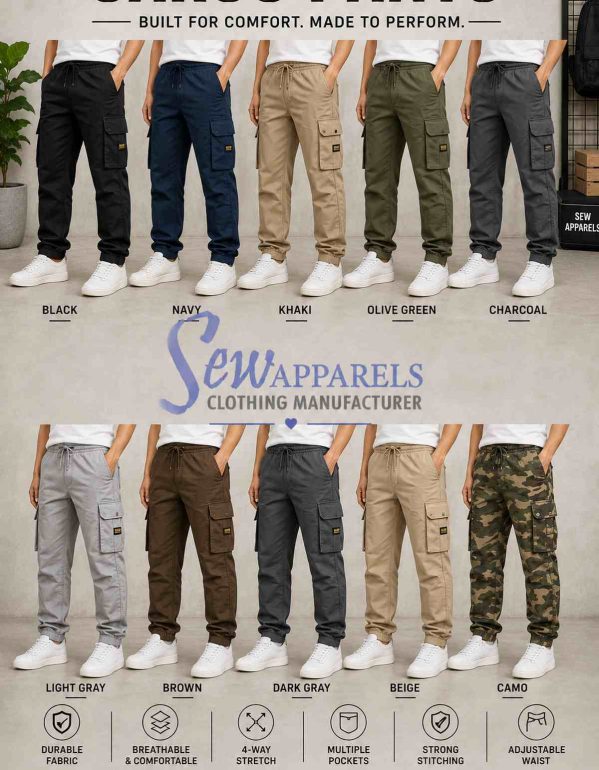
For a startup collection or an established range, the aim is a clear cargo pant value engineering brief. Keep essential storage, movement and appearance requirements visible while exploring alternatives. This article provides a practical method for comparing features. It does not assign universal sewing times, component prices or percentage savings; those inputs require an actual specification and supplier confirmation.
1. Establish the cargo pants feature costing worksheet baseline
Choose one controlled style revision as the baseline. Identify the shell fabric, size range, order breakdown, pocket map, leg silhouette, closures, care route and packing requirements. Record whether the quotation covers a complete finished garment or a narrower scope. Without this starting point, two prices may refer to different material responsibilities and different work.
A cargo pant material inclusion sheet should name the fabric and lining references, applicable reinforcement, thread, labels and packaging. Include the nominated shade and finish, not just a generic fabric description. State which party supplies each item and which approvals remain open. A lower price based on a different fabric route is a material change, not proof that the same design became cheaper.
The cargo pants feature costing worksheet should give every alternative its own revision reference. Retain the baseline when a new option is proposed. This allows the buyer to explain exactly what changed and prevents an earlier quoted drawing from being mistaken for the final production version. Keep the quotation date and validity conditions alongside each option.
2. Compare pockets by construction and use
A cargo pants pocket count quotation is useful only when the pockets are defined. Two styles with the same number of pockets may have different openings, internal bags, bellows, flaps and closures. Identify each pocket by location and type. Note whether it is decorative, intended for storage or designed around a specific item. Do not calculate a universal price per pocket from an unrelated garment.
Create a cargo pocket operation list for the relevant construction. It may include preparing the pocket edge, forming folds, attaching reinforcement, making the flap, setting closures and attaching the assembly. Ask the factory to confirm its actual method and work content. A buyer’s sketch can organise the discussion, but it cannot establish measured production time by itself.
For example, compare a flat patch pocket with a bellows pocket using the same intended contents. The alternative may reduce construction steps, but it may also change capacity and the appearance when filled. Record the functional difference before treating either option as preferred. Sample both where the decision depends on storage or movement that cannot be established from a drawing.
Use the cargo pants feature costing worksheet to keep the accepted pocket requirements beside the price comparison. Record usable opening, intended load and flap coverage where relevant. This gives the factory a stable brief and makes the buyer’s decision explainable beyond the number at the bottom of a quotation.
3. Separate panels, seams and reinforcement
Cargo pant panel complexity cost depends on the actual pattern and assembly. Curved knee pieces, extra joins and decorative panels can change cutting and sewing work. They can also serve a fit or movement purpose. Before removing a panel, identify why it exists and which measurements or wearer checks are needed to assess the proposed change.
A cargo pant operation cost comparison should use defined construction methods. Coats Digital’s method, time and cost guidance explains an approach that connects work methods with time benchmarks and supports comparisons during development. The practical lesson is to compare specified work content rather than appearance alone. This reference does not establish a time for your cargo style or imply that Sew Apparels uses that software.
Keep cargo reinforcement operation costing separate enough to understand it. Record the reinforcement location, material assembly and approved sewing or setting method. Removing reinforcement may reduce quoted work while changing the suitability of a loaded pocket or closure area. Ask the technical team to assess the sample instead of assuming reinforcement is unnecessary because it is less visible.
Coats’ seam type reference describes seams in relation to their construction and application. Use that distinction when discussing an alternative join or edge treatment: record the intended assembly and requirements, rather than choosing solely by the number of visible stitch lines. A seam change still needs review on the nominated fabric and garment.
The cargo pants feature costing worksheet should distinguish a cosmetic change from a structural one. A simplified topstitch detail may leave storage largely unchanged, whereas removing knee shaping may affect the complete fit. Neither result should be assumed before review. Include any additional sampling required to establish whether the option meets the brief.
4. Reconcile trim quantities and quotation scope
A cargo pants trim bill comparison needs exact references and quantities. List the fly zipper, buttons, snaps, buckles, cord parts, labels and other nominated components. Specify size, colour or finish and where each part is used. A generic “hardware” allowance does not explain whether a quotation includes the same components as the approved design.
Cargo trim quantity cost inputs should distinguish garment requirements from procurement commitments. The number used in one trouser is not necessarily the quantity that can be ordered from a component supplier. Ask how minimum order conditions, custom artwork, tooling and unused components are treated in the quotation. Confirm these terms for the particular part instead of assuming a garment minimum covers every custom trim. Coordinate approval and purchasing dates with the custom trim order schedule.
Keep one-time development costs separate from repeat garment costs where the supplier provides that breakdown. Clarify tooling ownership, artwork revision charges and whether an earlier sample fee is included or credited. Do not invent an amortisation rate. If the buyer chooses to spread a development expense across a proposed quantity for internal comparison, label that calculation as a buyer assumption.
For the cargo pants feature costing worksheet, retain the actual quoted currency, quantity, delivery basis and included services. If one option includes packing and another excludes it, reconcile that scope before calling the difference a design saving. Taxes, transport and other commercial terms should be confirmed with the relevant parties rather than guessed in a feature table.
5. Evaluate design alternatives on a sample
A cargo design option price comparison should name the baseline, proposed change and intended benefit. Ask for a cargo pant alternative feature quote against that controlled description. Keep unchanged features explicit so the supplier does not substitute a broader simplification than the buyer intended. Review the resulting commercial and technical comments together.
Use a cargo style simplification sample when storage, comfort, movement or appearance could be affected. Inspect the trouser standing and in ordinary movement, with the nominated pockets used as intended. Compare the same size and material reference where possible. If the alternative also changes fabric, disclose that difference rather than attributing the entire result to a removed feature.
Record the cargo design functional tradeoff plainly. A shallower pocket may reduce usable storage; a different closure may change handling; an omitted panel may alter the silhouette. The buyer can accept a tradeoff if it fits the product brief, but the decision should be deliberate. Keep essential requirements separate from features that can be discussed.
The cargo pants feature costing worksheet is not a reason to strip away every detail. It is a way to decide where complexity delivers value for the intended wearer. A feature that supports the core product may deserve retention even if another construction has a lower quotation. Agree the accepted alternative before asking the factory to prepare a final production specification.
6. Normalise quotes and retain the decision
Cargo factory quote normalisation means making the comparison conditions consistent. Check that quotations refer to the same revision, material responsibility, size breakdown, quantity and finishing scope. Record exclusions and unresolved inputs. Do not silently adjust supplier prices to create a preferred answer; show any buyer calculations separately and explain their assumptions.
Maintain a cargo value engineering decision record with the reviewer, date, accepted revision and sample reference. State which feature changed, whether the quotation was revised and which checks supported acceptance. Retain rejected options as history so the same unsuitable proposal does not have to be evaluated again during a repeat order.
A cargo pants feature costing worksheet can use the following columns. Keep each line short enough to read during a review, while linking the entry to the controlled technical information held by the buyer and factory. The worksheet should expose gaps, not disguise them with an apparently complete total.
- Feature: pocket, panel, reinforcement or trim and its location.
- Baseline: current construction and controlled revision.
- Alternative: proposed change and unchanged requirements.
- Cost evidence: supplier quotation, date, scope and stated conditions.
- Function: capacity, movement, handling or appearance affected.
- Approval: required sample, reviewer, decision and final reference.
As an illustrative comparison, consider two cargo pockets with identical placement but different expansion arrangements. Obtain quotes against both drawings, check how closure and reinforcement requirements differ, and compare the samples with the intended contents. The result may favour either option. No percentage saving should be claimed until the actual prices and equivalent scope support it.
Frequently asked questions
Is fewer pockets always the best way to reduce cost?
No. Pocket construction, fabric requirements, hardware and the garment’s intended use all matter. Removing storage that defines the product may weaken its value. Compare a clearly described alternative with the original requirements and ask for a revised quotation instead of assuming a fixed saving per pocket.
Can the worksheet replace a technical pack?
No. It organises comparisons and decisions, while the technical pack identifies what the factory must make. Keep drawing, measurement, material and component references controlled. Update the final specification after acceptance so an economical option discussed in the worksheet does not conflict with an older production instruction.
How should a small brand start?
Choose a focused baseline and identify which features are essential. Request confirmed material routes, minimums and development charges. Compare a small number of meaningful alternatives and review samples before release. A clear brief helps the supplier respond without implying that custom components are available at every order quantity.
Use the comparison to prepare a better enquiry
For custom cargo pants manufacturing, share the baseline technical information and the alternatives you want evaluated. Keep the cargo pants feature costing worksheet beside the quotation so both teams can identify scope, assumptions and accepted changes. Confirm the final price and production arrangements for the actual order.
Use the cargo pants buying guides to connect this comparison with pocket engineering, knee articulation and trim readiness. For private label cargo pants production, retain the accepted sample and final component references for repeat enquiries. Review the cargo pants feature costing worksheet again when materials or order conditions change, rather than assuming that an earlier comparison remains current.