Utility work vests developed for layered mobility, organized tool access, durable closures and coordinated occupational uniform programs
Custom Work Vests Manufacturer in Bangladesh
Custom Work Vests Manufacturer in Bangladesh for logistics, maintenance, field service, facility and trade-uniform buyers. We develop sleeveless work layers with buyer-specified fabrics, pocket systems, closures, reinforcement, branding, labels and export-ready packing. Explore our complete workwear manufacturing program for coordinated utility garments, industrial uniforms and workforce layers.
MOQ
1) 500 pieces with matching export-quality stock fabric, and 2) 2000 pieces with custom fabric per color and style.
Sampling Lead Time
10–15 DAYS
Sampling Time
Production Lead Time
15–30 DAYS
At MOQ after PP approval; quantity-dependent
ABOUT OUR WORK VESTS MANUFACTURING
Work Vests Built Around Access, Layering and Task Movement
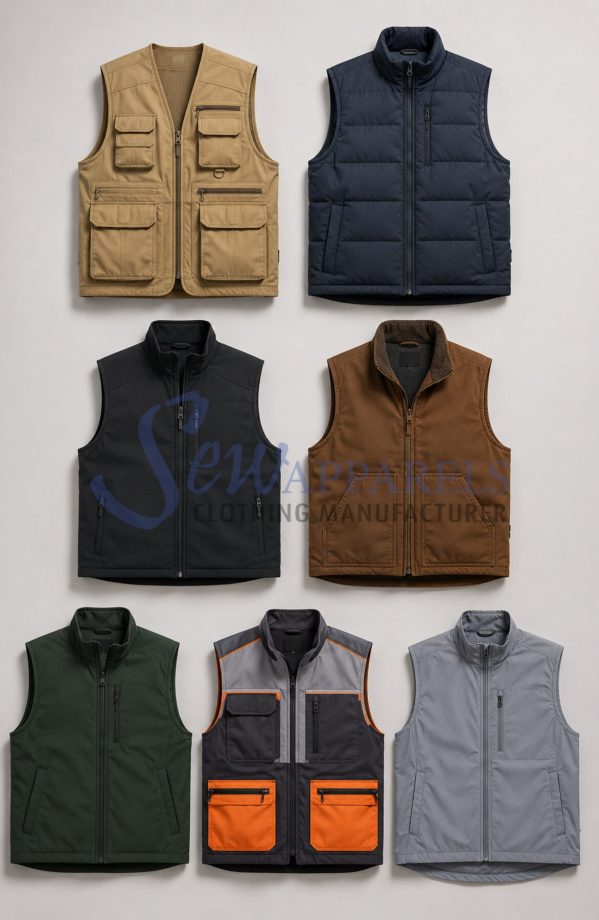
Sew Apparels is a Custom Work Vests Manufacturer in Bangladesh developing woven utility vests from tech packs, physical references and size charts. We coordinate shell weight, armhole clearance, pocket geometry, closure choice and reinforcement so each approved vest remains practical over shirts, polos or light mid-layers.
Layering-Focused Vest Pattern Development
Utility Pocket Mapping & Access
Front Closure & Hem Engineering
Reinforced Stress-Point Construction
Our Impact
2018
Established
850+
Skilled Workers
40,000+
sq.ft Factory Area
40+
Export Countries
Woven Fabrics for Work Vests
As a Custom Work Vests Manufacturer in Bangladesh, we select shell fabrics around vest weight, abrasion exposure, pocket load, layering comfort and expected care. Buyers can approve GSM, blend, weave, finish and color after reviewing swatches or development samples.
Polyester-Cotton Twill
220–280 GSM 65/35 or buyer-specified blends for structured utility vests, stable pocket attachment and everyday uniform programs.
Cotton Canvas / Duck
260–340 GSM dense woven option for rugged work vests requiring firmer body, heavier pocket assemblies and reinforced detailing.
100% Cotton Twill
220–280 GSM option with a natural hand feel for trade uniforms, workshop collections and cotton-focused private-label ranges.
Poly-Cotton Ripstop
200–250 GSM grid-reinforced woven option for lighter utility vests where buyers want reduced weight with practical tear resistance.
Stretch Workwear Twill
220–270 GSM woven option with controlled elastane content when reaching, bending and layered movement are important to the brief.
Polyester Oxford
150–220 GSM shell option for lighter service vests, zip-front styles and buyer-specified coated finishes when technically required.
Work Vest Branding & Functional Details
Branding and components are positioned around pocket openings, front closures and high-contact zones. Artwork, trims and reinforcement details are approved together so identity does not interfere with daily access or movement.
▦
Chest & Back Embroidery
Woven, Rubber & Fabric Patches
♜
Custom Zippers & Pullers
✓
Woven, Size & Care Labels
◈
Utility Pocket Configurations
▤
Contrast Binding & Reinforcement
⌂
Branded Polybags & Carton Marking
⤢
Branded Polybags & Carton Marking
SCALABLE WORK VEST PRODUCTION
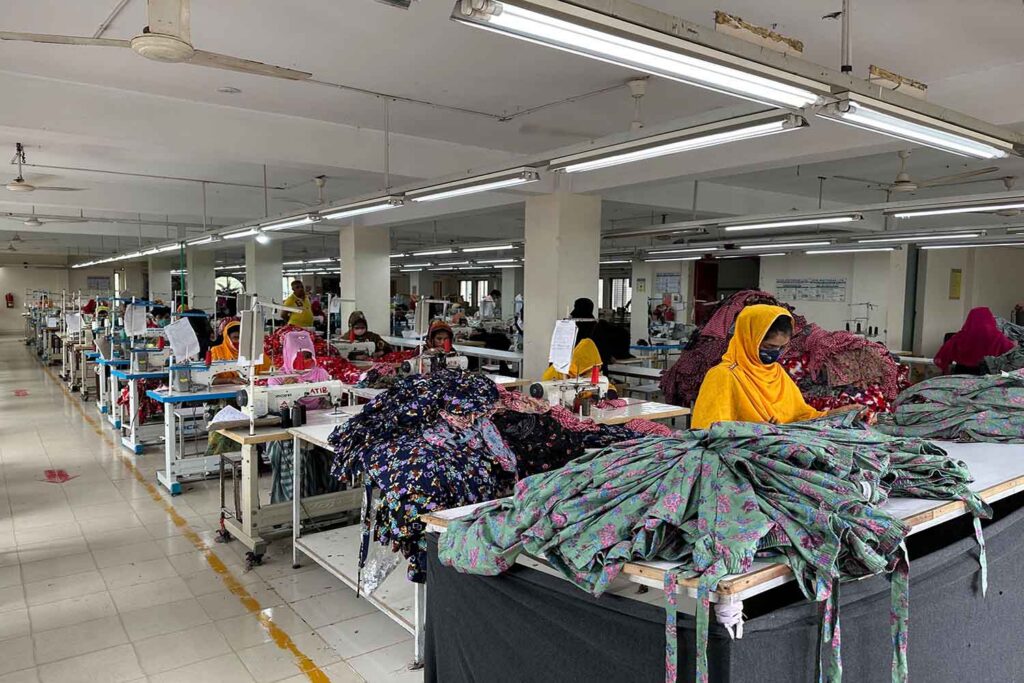
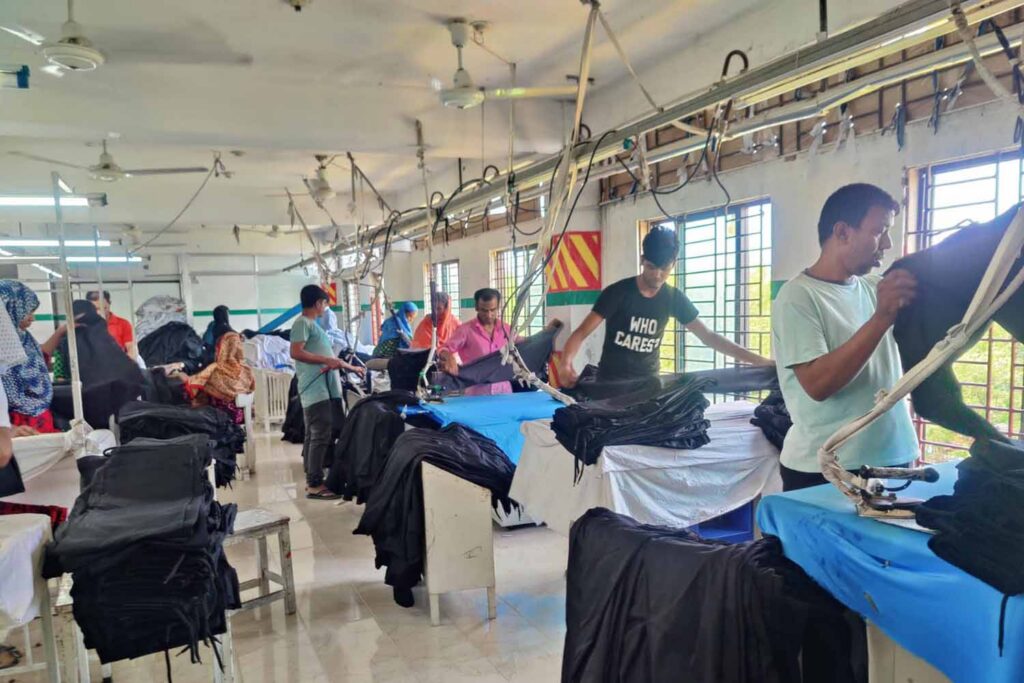
Our woven workwear team supports work vest programs through flexible line allocation, shell preparation, pocket assembly, closure setting, reinforcement, quality inspection, finishing and export coordination.
UP TO 80K
Woven Apparel Monthly Capacity
Flexible Woven Sewing Line
Allocation
Skilled Workwear
Production Team
Worldwide
Export Packing & Shipment Coordination
Our Work Vest Production Process
As a Custom Work Vests Manufacturer in Bangladesh, Sew Apparels confirms vest silhouette, layering allowance, pocket map, closure system, reinforcement zones and branding before sampling. After approval, material preparation, cutting, pocket assembly, sewing, inline checks, finishing, AQL review, packing and export coordination follow the production plan.
Quality Control for Work Vests
Fabric Weight, Shade & Surface Review
Chest, Length & Armhole Measurement Control
Front Closure, Hem & Panel Alignment Check
Pocket Size, Position & Bartack Review
Seam Allowance & Stress-Point Workmanship Check
AQL 2.5 Final & Packing Inspection
WHY INTERNATIONAL WORKWEAR & UNIFORM BUYERS CHOOSE SEW APPARELS FOR WORK VESTS
Our Custom Work Vests Manufacturer in Bangladesh supports layered fit control, practical storage, durable component placement and repeatable specification management for occupational programs.
💰
Layering-Specific Pattern Control
Armholes, chest ease and body length are balanced so vests layer cleanly without restricting routine reaching or bending.
⏱
Pocket Architecture by Task
Pocket depth, opening direction and reinforcement are planned around tools, documents and devices used during everyday occupational movement.
🛡
Closure Selection by Vest Weight
Zippers, snaps or hook-and-loop systems are matched to shell weight, pocket loading and the buyer’s intended care routine.
♻
Stress-Point Reinforcement Planning
Bartacks and reinforcement pieces are positioned at pocket corners, closure ends and other load points identified during sample review.
⚙
Fabric Choice by Work Environment
Shell weight, weave and hand feel are selected around climate, layering, abrasion exposure and required uniform appearance.
☑
Repeat-Order Specification Control
Stored patterns, pocket maps, trim references and artwork positions help buyers maintain consistent vest programs across replenishment orders.
WORK VESTS APPLICATIONS
Warehouse & Logistics Teams
Layered utility vests for picking, dispatch and floor operations.
Field Service Technicians
Pocketed vests for mobile repair and service crews.
Construction & Maintenance Crews
Practical outer layers for site and maintenance tasks.
Facility Management Teams
Branded vests for property and technical support staff.
Trade & Hardware Retail
Utility-inspired vests for workwear and trade collections.
Corporate Utility Programs
Coordinated vests for branded multi-role workforce uniforms.
Frequently Asked Questions
What is your MOQ for custom work vests?
1) 500 pieces with matching export-quality stock fabric, and 2) 2000 pieces with custom fabric per color and style. As a Custom Work Vests Manufacturer in Bangladesh, we confirm final MOQ after reviewing shell fabric, pocket count, closures, reinforcement, branding, size range and packaging requirements.
Which work vest constructions can you manufacture?
We can develop zip-front, snap-front, open-front, multi-pocket, canvas, lightweight utility and lined vest constructions. Armhole shape, body length, hem treatment, pocket map and layering allowance follow the approved tech pack or physical reference.
Which fabrics are suitable for occupational work vests?
Common choices include polyester-cotton twill, cotton canvas or duck, 100% cotton twill, poly-cotton ripstop, stretch workwear twill and polyester Oxford. Final weight and finish are selected according to layering, pocket load, climate and care expectations.
Can you develop custom pockets and closure systems?
Yes. Lower utility pockets, chest compartments, pen channels, internal pockets, zipper pockets, flaps and buyer-specified tool storage can be developed. Zippers, snaps or hook-and-loop closures are coordinated with shell weight and intended use during sampling.
Do you provide private labels and custom branding?
Yes. We support embroidery, screen or heat-transfer logos, woven or rubber patches, woven labels, care labels, size tabs, hang tags, barcode labels and branded packaging. Placement is approved around pockets and closures before bulk production.
Can you make a work vest sample before production?
Yes. Sampling allows buyers to review layering ease, armhole clearance, pocket access, closure operation, reinforcement, logo placement and overall proportions before bulk cutting. Typical sample development is around 10–15 days depending on material and trim availability.
What is the bulk production lead time for work vests?
Typical bulk production is 15–30 days at the applicable MOQ after PP sample and material approvals. Lead time depends on order quantity. Custom-developed fabrics, complex pocket assemblies, special trims, testing requirements or broad size assortments can require additional planning time.
Can you ship bulk work vest orders internationally?
International orders can move by agreed sea, air or express services. We prepare commercial export documents and can discuss FOB, CIF, CNF or feasible DDP arrangements after destination, shipment size and service requirements are confirmed.
Related Products
Work Vest Fit Starts With Layering Allowance
For buyers comparing a Custom Work Vests Manufacturer in Bangladesh, vest fit should be treated as a layering problem, not a sleeveless shirt pattern. Chest ease, armhole depth, shoulder width and body length must accommodate the intended base garment while keeping pockets and closures stable during movement.
A work vest manufacturer in Bangladesh can develop regular, relaxed or closer uniform silhouettes, but the correct choice depends on what sits underneath. A warehouse vest over a polo needs different ease from a canvas utility vest worn over a sweatshirt.
Pattern balance also affects pocket access. Too much body width can make loaded pockets swing away, while insufficient ease can pull the zipper or front edges apart. Sample fittings should review both the silhouette and practical storage zones.
Grading should preserve armhole clearance, front length and pocket relationships across sizes. Buyers approving inclusive sizing can request fit review at key sizes instead of assuming one proportional grade will suit every wearer.
Pocket Systems Need Load-Aware Engineering
A Custom Work Vests Manufacturer in Bangladesh must treat storage as part of the garment structure. Chest pockets, lower patch pockets, zip compartments, pen channels and internal storage all change weight distribution, sewing sequence and reinforcement needs.
For multi pocket work vests, useful capacity is not simply a matter of adding compartments. Pocket depth, opening width, flap shape and hand-entry angle should match the tools or personal items workers are expected to carry.
Heavy pocket assemblies can distort a light shell if the base fabric or reinforcement is inadequate. Oversized bartacks on a lightweight service vest can also create unnecessary stiffness, so construction should match the pocket load.
When formal pocket-strength evaluation is required, buyers can reference the ASTM pocket reinforcement method. Testing requirements should be agreed before bulk production so fabric, thread, bartack settings and specimen preparation follow the specification.
Shell Weight Changes the Entire Vest
Fabric decisions at a Custom Work Vests Manufacturer in Bangladesh should begin with the vest’s job. Shell weight influences drape, pocket support, layering comfort, heat retention and how the garment behaves through repeated movement and laundering.
Polyester cotton work vests are often selected for balanced workwear handling, while cotton canvas work vests create a firmer, more rugged body. Ripstop can reduce weight, and stretch twill can support movement when elastane is specified.
A wholesale work vests program may use several fabric weights across seasons or workforce roles. Buyers should keep fabric code, approved color, GSM, finish, shrinkage expectations and the associated pattern clearly documented.
Coatings or water-repellent finishes should never be assumed from a fabric name. If a specific finish or performance level is required, it should be written into the material specification and supported by relevant supplier data or testing.
Closures and Reinforcement Define Daily Use
At a Custom Work Vests Manufacturer in Bangladesh, front closures and reinforcement details are engineered together because they absorb repeated hand force. Zipper tape, snap backing, hook-and-loop placement, hem facings and front edges need enough support to remain aligned.
Utility work vests may use molded zippers, coil zippers, snaps or combined systems. Selection depends on vest weight, glove use, care conditions and appearance. Slider size, zipper length and top-stop position should be confirmed on the approved sample.
Stress points commonly occur at pocket corners, side openings, hanger loops and closure ends. Reinforcement may use bartacks, extra stitching rows, backing pieces or doubled fabric, but the method should suit the shell construction.
Finished garments can be evaluated using AATCC textile testing methods when buyers require dimensional, colorfastness or laundering assessments. The test plan should state the method, acceptance level and sample condition rather than rely on generic durability claims.
Branding Must Respect Functional Zones
A Custom Work Vests Manufacturer in Bangladesh should place logos only after the pocket map and closure system are settled. Embroidery, patches or transfers can interfere with storage zones, internal pocket bags or reinforcement if branding is added late.
Private label work vests may carry chest embroidery, back identification, woven patches, rubber badges, name areas or departmental color coding. Artwork size and placement should follow an approved sample or a defined grading rule.
An industrial work vest supplier must also consider backing and needle penetration on dense canvas or layered pocket areas. Embroidery density, patch edges and transfer temperatures should suit the fabric and component stack rather than one universal setting.
Brand identity continues through woven labels, care labels, size tabs, hang tags, barcode stickers and packaging. Consistent trim references help buyers build coordinated vest, trouser, shirt and jacket ranges under one uniform program.
Laundering Expectations Belong in Development
A Custom Work Vests Manufacturer in Bangladesh should establish care expectations before approving shell fabric, labels and decoration. Work vests may be washed frequently, and pocket assemblies, zippers, labels and contrast components can react differently from the main fabric.
Buyers can specify dimensional change, appearance after laundering, colorfastness or other relevant checks according to market and end use. Performance should not be claimed until the agreed material or finished garment has been tested appropriately.
QC for bulk work vest production should include fabric shade, pocket dimensions, pocket symmetry, closure function, armhole measurements, hem alignment and bartack consistency. Inline review is valuable because pocket and zipper errors become difficult to correct later.
Final inspection should verify labels, size assortment, carton ratios and buyer-specific packing instructions. AQL 2.5 can form part of the final control plan, while additional laboratory testing should remain linked to the purchase specification.
Repeat Programs Depend on Controlled Specifications
A Custom Work Vests Manufacturer in Bangladesh can support repeat occupational programs only when the approved specification is recorded beyond the first shipment. Pattern version, pocket map, zipper code, thread color, bartack location, label set and packaging instruction need traceable references.
A private-label buyer may develop custom work vests for warehouse, service, maintenance and trade roles within one collection. Shared fabrics and trims can simplify sourcing, while role-specific storage or identification keeps each vest suited to its task.
For an industrial work vest supplier, replenishment accuracy matters as much as first-order development. Changes to fabric source, trim availability or artwork should be re-approved when they could alter fit, appearance, function or care.
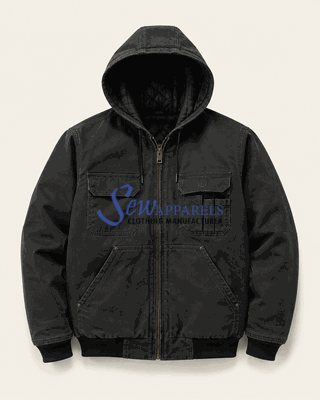
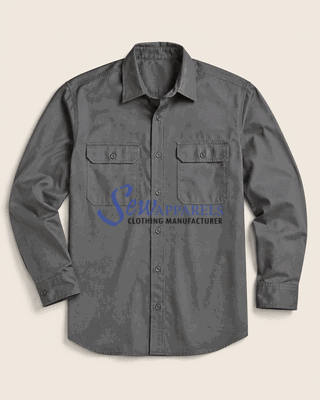
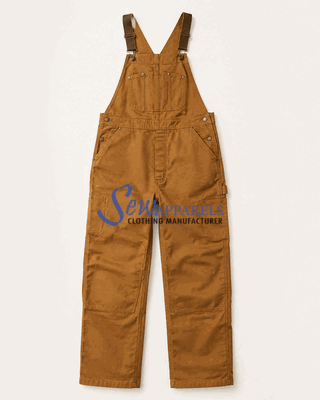
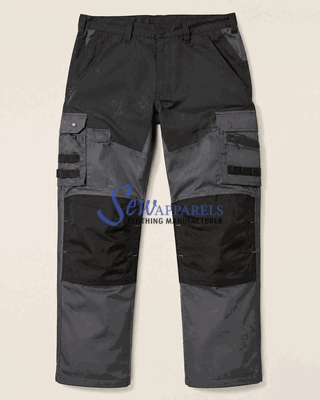
Clear approval history also helps buyers expand into coordinated products without copying old specifications blindly. Vest programs can connect with work shirts, cargo trousers, overalls and jackets while each style retains its own construction and purpose.
Develop Your Next Work Vest Program
Send your tech pack, physical reference, size chart, fabric target, pocket plan, closure details and branding to our Custom Work Vests Manufacturer in Bangladesh for costing, sample development and bulk production support.
Pair these utility layers with our custom woven work shirts.