
Patient gowns engineered for coverage, access, easy dressing and dependable institutional replenishment
Custom Patient Gowns Manufacturer in Bangladesh
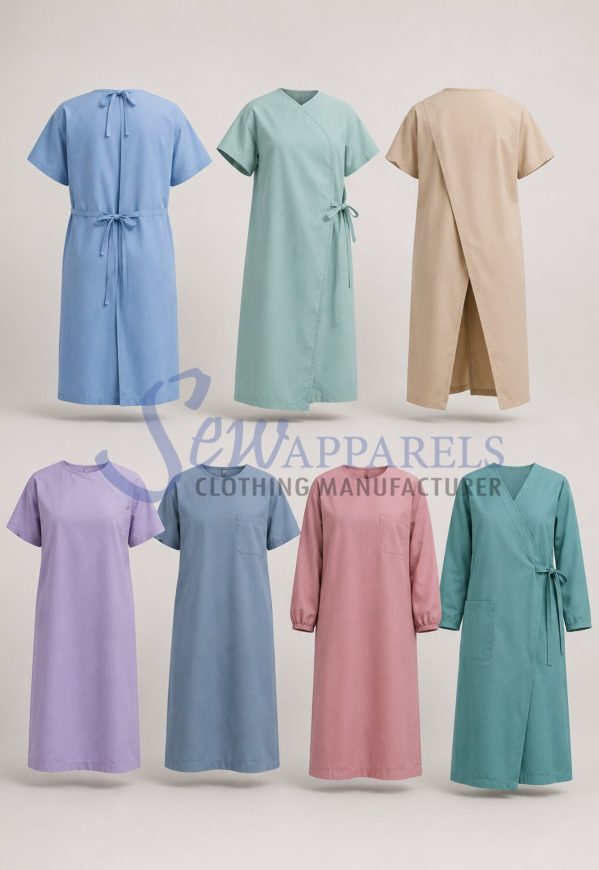
Custom Patient Gowns Manufacturer in Bangladesh for hospitals, clinics, diagnostic centers, care facilities, medical distributors and private-label healthcare suppliers. We develop gown length, back overlap, shoulder and waist closures, sleeve openings, fabric weight, printed or solid colors, size grading, labels and packing around each approved patient-use specification.
MOQ
2000 Pcs Per Design / Color
Sampling Lead Time
10–15 DAYS Sampling Time
Production Lead Time
60–90 DAYS
After PP Sample Approval
Depends on order quantity
ABOUT OUR PATIENT GOWN MANUFACTURING
Patient Gowns Developed Around Coverage and Practical Access
Sew Apparels is a Custom Patient Gowns Manufacturer in Bangladesh developing reusable woven gowns from tech packs, samples and measurement charts. We coordinate coverage, back overlap, ties or snaps, sleeve shape, access openings, fabric, prints, labeling and packing for organized healthcare supply programs.
Back-Overlap & Opening Development
Tie, Snap & Shoulder Closure Options
Patient-Use Pocket & Access Planning
Institutional Sizing & Reorder Control
Our Impact
2018
Established
850+
Skilled Workers
40,000+
sq.ft Factory Area
40+
Export Countries
Fabric Options for Reusable Patient Gowns
As a Custom Patient Gowns Manufacturer in Bangladesh, we select woven materials by opacity, hand feel, drape, weight, print suitability and buyer-defined care expectations. Fabric approval follows the intended patient setting and garment construction, not fiber percentage alone.
Polyester-Cotton Poplin
110–150 GSM balanced woven option for lightweight reusable gowns, printed designs and controlled institutional presentation.
100% Cotton Poplin
110–150 GSM cotton construction for buyers seeking natural-fiber hand feel and familiar patient-gown drape.
Polyester-Cotton Plain Weave
120–160 GSM practical woven blend for solid-color or printed reusable patient gown programs.
100% Cotton Plain Weave
120–160 GSM cotton option for straightforward gown construction and buyer-specified care requirements.
Poly-Cotton Seersucker
110–150 GSM textured woven option for buyers seeking a traditional institutional patient-gown appearance.
Printed Poly-Cotton Woven
110–150 GSM custom-print option for repeat hospital, clinic and healthcare-supply gown programs.
Patient Gown Branding & Functional Finishing
Patient-gown finishing is planned around comfort, identification and repeat production. Prints, bindings, closures, labels and packing references are approved before bulk release so institutional buyers can maintain consistent presentation across replenishment orders.
▦
All-Over Printed Motifs
▣
Facility or Brand Print Marks
♜
Woven, Printed & Care Labels
✓
Tie, Snap & Press-Stud Closures
◈
Contrast Neck & Edge Binding
▤
Self-Fabric or Twill-Tape Ties
⌂
Buyer-Specified Access Openings
⤢
Barcodes, Polybags & Carton Marking
CONTROLLED PATIENT GOWN PRODUCTION
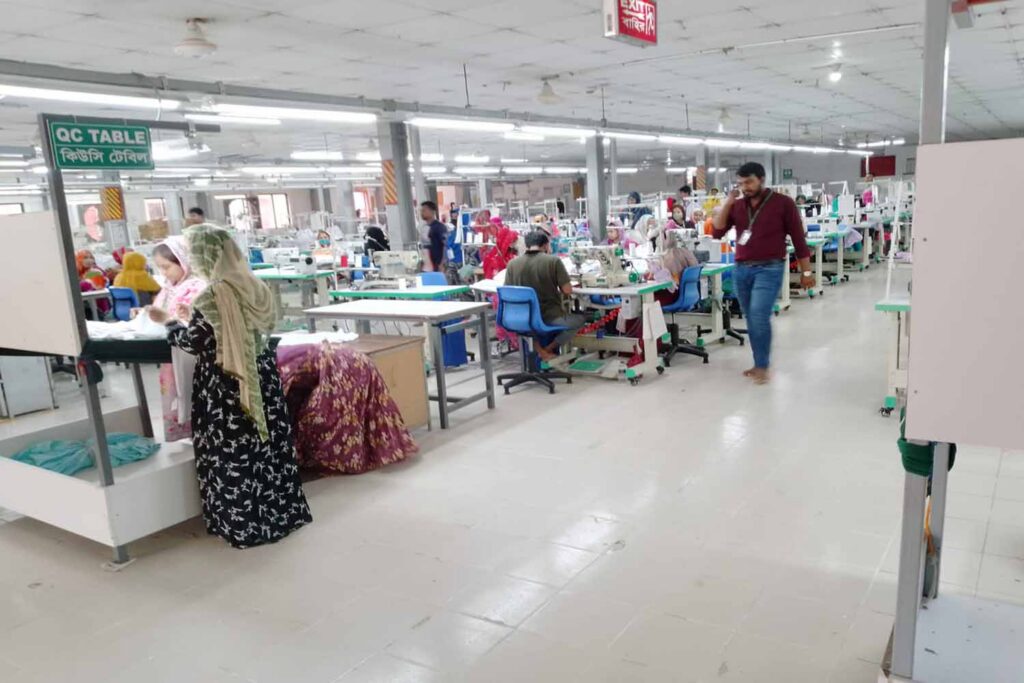
Our woven medical apparel team supports patient gown programs through flexible line allocation, material approval, pattern control, sewing, closure checks, measurement inspection and export coordination.
UP TO 80K
Woven Apparel Monthly Capacity
Flexible Woven Sewing Line
Allocation
Skilled Medical Apparel
Production Team
Worldwide
Export Documentation and Shipment Support
Our Patient Gown Production Process
As a Custom Patient Gowns Manufacturer in Bangladesh, Sew Apparels confirms gown type, body length, coverage, opening direction, back overlap, ties or snaps, sleeve shape, access requirements, fabric, artwork, sizes, labels and packing before sampling. Approved orders proceed through material inspection, pattern control, cutting, sewing, printing where required, measurement checks, closure review, final QC, packing and shipment coordination.
Quality Control for Patient Gowns
Fabric Weight, Shade, Print & Surface Review
Body Length, Width, Sleeve & Overlap Measurement Check
Tie, Snap, Binding & Opening Workmanship Inspection
Back Coverage, Hem & Access Alignment Review
Label, Size, Print & Packing Identification Verification
AQL 2.5 Final & Export Packing Inspection
WHY INTERNATIONAL HEALTHCARE BUYERS CHOOSE SEW APPARELS FOR PATIENT GOWNS
Our Custom Patient Gowns Manufacturer in Bangladesh helps institutional buyers control coverage, opening geometry, closures, fabric references, sizing and repeat-order documentation.
💰
Patient-Specific Pattern Development
Gown length, width, overlap and sleeve proportions are engineered around dressing access, coverage and buyer-approved patient use.
⏱
Closure Placement Control
Tie and snap positions follow measured references so openings remain consistent across sizes, production lots and repeat programs.
🛡
Coverage & Access Verification
Back overlap, neck opening and buyer-specified access points are checked against approved samples before final production release.
♻
Print & Shade Discipline
Printed motifs, solid colors, bindings and labels are reviewed against approved references before garment assembly and packing.
⚙
Institutional Size Consistency
Controlled patterns and measurement charts support predictable gown dimensions across adult size ranges and recurring healthcare orders.
☑
Replenishment Record Control
Fabric, pattern, closure, print and packing records are retained to support more consistent patient-gown repeat production.
PATIENT GOWNS APPLICATIONS
Hospitals & Inpatient Units
Reusable gowns for inpatient supply programs.
Clinics & Diagnostic Centers
Patient garments for examination workflows.
Procedure & Recovery Facilities
Practical gowns for pre- and post-procedure use.
Maternity & Care Centers
Comfort-focused gowns for patient care programs.
Rehabilitation & Nursing Facilities
Repeatable gowns for long-term care supply.
Medical Supply Distributors
Private-label gown programs for healthcare buyers.
Frequently Asked Questions
What is your MOQ for custom patient gowns?
A practical MOQ is usually around 2000 gowns per design/color. Our Custom Patient Gowns Manufacturer in Bangladesh confirms the final minimum after gown construction, fabric, print, sizes, closures, labeling and packing are approved. Custom-developed fabric can require a higher quantity.
Which patient gown constructions and closure options can you develop?
We can develop open-back, overlapping-back, tie-back, snap-back and buyer-designed reusable gowns with short, elbow, three-quarter or specified sleeves. Shoulder openings, waist ties, access points, bindings and modesty coverage are developed from the buyer’s sample or technical specification.
Which fabrics are suitable for reusable patient gowns?
Common options include polyester-cotton poplin, 100% cotton poplin, polyester-cotton plain weave, cotton plain weave, poly-cotton seersucker and printed poly-cotton woven fabrics. Weight, opacity, hand feel, print quality and intended care requirements are reviewed before approval.
Are patient gowns the same as isolation or protective gowns?
No. A standard reusable patient gown is mainly a patient-wear garment for coverage and access; it should not automatically be presented as an isolation gown, protective gown or PPE. Barrier, protective or regulatory requirements must be separately specified, tested and documented.
Can you manufacture private-label patient gowns?
Yes. We support printed motifs, facility branding, private labels, care labels, size identification, color-coded bindings, barcodes, polybags and custom carton marks. Artwork, label content and packing references are approved before bulk application.
Can you make a patient gown sample before bulk production?
Yes. A physical sample lets the buyer review gown length, back overlap, neck opening, tie or snap positions, sleeve mobility, access details, opacity, print scale and labels before production. Sample development is typically around 10–15 days depending on materials and artwork.
What is the production lead time for patient gowns?
Bulk production generally takes 60–90 days after PP sample approval, with fabric, print and trims confirmed. Lead time depends on order quantity. Custom fabric, printed material, extended sizing, special closures, buyer-requested testing or complex packing can affect the final schedule.
Can you ship patient gowns internationally?
Yes. We coordinate sea, air or express shipment according to order volume and delivery priority, prepare export documentation and can quote FOB, CIF, CNF or feasible DDP after destination, packing volume and delivery requirements are confirmed.
Related Products
Engineering Patient Gown Coverage Without Excess Bulk
A Custom Patient Gowns Manufacturer in Bangladesh should begin with how the gown covers the body in seated, standing and bed positions. Body width, back overlap, shoulder balance and finished length must work together without creating unnecessary bulk. That reference also supports repeat grading.
custom patient gowns may look simple on a hanger, yet small pattern changes affect dressing access and modesty. Back-panel width, neck opening, shoulder slope and sleeve shape should follow the approved patient-use specification. Coverage remains measurable across production sizes.
hospital patient gowns are often ordered across broad adult size ranges. Grading should preserve overlap and opening relationships instead of only increasing chest width. Opening proportions are retained during grading.
A physical fit sample remains important because flat measurements cannot show exactly how front coverage, back panels and ties behave on the body. Bulk production should reproduce that approved reference. Approved samples define the bulk benchmark.
Choosing Woven Fabrics for Opacity, Hand Feel and Print Control
A Custom Patient Gowns Manufacturer in Bangladesh needs a fabric brief that reflects patient use rather than fashion styling. Opacity, weight, drape, surface feel and print clarity matter under bright institutional lighting. Opacity is reviewed before color approval.
poly cotton patient gowns suit buyers wanting a practical woven blend with familiar handling and print compatibility. Composition alone does not define quality, so construction, weight, finishing and shade standards should be documented. Print scale is checked before cutting.
cotton patient gowns can support buyers prioritizing natural-fiber content and hand feel. Cotton-rich material may respond differently to care, making fabric approval and buyer-defined testing important. Care expectations are recorded before sourcing.
Printed healthcare fabrics need controlled artwork scale, repeat direction and color references. Obvious print orientation and panel direction should still follow the buyer’s approved sample and cutting instructions. Directional artwork follows approved marker planning.
Back Openings, Ties, Snaps and Patient Access Details
A Custom Patient Gowns Manufacturer in Bangladesh should treat closures as part of the pattern architecture. Neck ties, waist ties, snaps and shoulder openings affect dressing sequence, overlap and comfort. Closure points are fixed before sampling.
back tie patient gowns can use self-fabric ties, woven tapes or buyer-approved components. Tie length, width, reinforcement and location should be confirmed on the sample. Tie attachments receive measured reinforcement positions.
Some medical examination gowns require access openings or alternative shoulder constructions. Those details should come from a clear technical specification rather than assumptions based on a reference image. Access details remain buyer-specification driven.
Snap systems also need component approval. Diameter, finish, attachment method and placement should be reviewed with the chosen fabric so production reproduces the intended closure arrangement. Snap references stay consistent across reorders.
Sizing and Mobility for Bed, Chair and Examination Use
A Custom Patient Gowns Manufacturer in Bangladesh developing institutional ranges must consider more than chest circumference. Shoulder movement, sleeve opening, gown sweep, sitting coverage and back-panel behavior all influence practical fit. Seated posture influences practical gown length.
wholesale patient gowns may use grouped sizes to simplify inventory. When buyers choose combined ranges, grading should maintain neck opening, tie reach and overlap without creating excessive fabric. Grouped sizes still require controlled overlap.
Mobility can be reviewed during sample fitting through arm raise, seated posture and basic dressing movements. The goal is to confirm garment geometry, not claim a medical performance level. Movement checks support realistic sample approval.
Measurement charts can identify gown length, half chest, sweep, sleeve opening, neck width, tie position and overlap points. Consistent definitions help inspection and future replenishment. Inspection teams use identical measurement definitions.
Frequent Care, Colorfastness and Construction Durability
A Custom Patient Gowns Manufacturer in Bangladesh should discuss care expectations before material approval because institutional buyers may use laundering conditions different from household washing. Heat, detergent, drying and finishing can alter appearance, dimensions, prints and closures. Care conditions are confirmed before testing.
The AATCC laundering colorfastness test evaluates colorfastness to accelerated laundering for textiles expected to withstand frequent washing. Buyers should define the procedure and acceptance criteria relevant to their own care route. Color criteria follow buyer-approved test requirements.
Seam construction should suit the selected woven fabric and attachment points. Back ties, shoulder openings and binding joins can receive repeated handling, so stitch type and reinforcement need approval. Stress points receive construction-specific reinforcement.
The ASTM seam strength test measures failure in sewn seams of woven fabrics. Buyers needing seam verification can specify suitable testing and performance criteria instead of relying on generic durability claims. Test requests remain tied to specifications.
Institutional Identification, Private Label and Packing Control
A Custom Patient Gowns Manufacturer in Bangladesh serving medical suppliers needs accurate identification as much as neat sewing. Size marks, labels, print references, barcode data and carton ratios should match the buyer’s approved packing specification. Size identifiers are checked before packing.
private label patient gowns may use printed branding, woven labels, care labels, size coding or color-coded binding. Decoration should consider patient comfort and laundering expectations. Decoration placement avoids unnecessary patient irritation.
Some buyers request polybags and barcodes, while institutional programs use count-based bulk packing. The packing route should be confirmed before carton quantities and shipment volume are calculated. Packing methods follow distribution workflow requirements.
Repeat orders benefit from retained pattern versions, fabric references, closure codes, artwork files and packing instructions. Documentation reduces accidental specification drift during later replenishment. Version records support later replenishment accuracy.
Sourcing Repeat Patient Gown Programs from Bangladesh
A Custom Patient Gowns Manufacturer in Bangladesh competing for international healthcare business needs disciplined development, not only low garment cost. Buyers should evaluate fabric sourcing, pattern control, closures, printing, sizing, QC records and packing accuracy. Supplier control begins with approved references.
Choosing a patient gown manufacturer in Bangladesh matters for buyers managing repeat quantities across hospitals, distributors or care networks. A clear approved sample provides a stable reference for reorders. Reorder files reduce unnecessary redevelopment work.
bulk patient gown production should not begin while fabric, artwork, ties, snaps or size rules remain undecided. Freezing these details before line release reduces late substitutions and inspection confusion. Frozen specifications simplify line-level inspection.
Patient gowns also need precise classification. Unless separate specifications and verified testing support protective claims, reusable patient apparel should not be marketed as isolation, barrier or PPE garments. Accurate terminology protects sourcing decisions.
Develop a Dependable Patient Gown Program
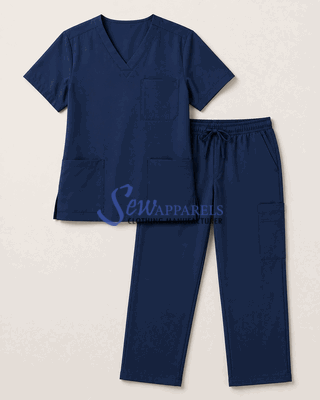
Share your patient-gown brief with our Custom Patient Gowns Manufacturer in Bangladesh team, including intended use, fabric, gown length, back construction, ties or snaps, sleeve shape, access details, sizes, prints or colors, labeling, packing and care route. We will use those requirements for focused sampling, costing and bulk planning. For staff uniforms, explore our custom scrub sets.