
SEW APPARELS TECHNICAL LIBRARY
Compression Shirts Buying Guides
Plan panel mapping, stretch, seams, fit, grading, low MOQ startup development and production control with a structured technical library for custom compression shirts.
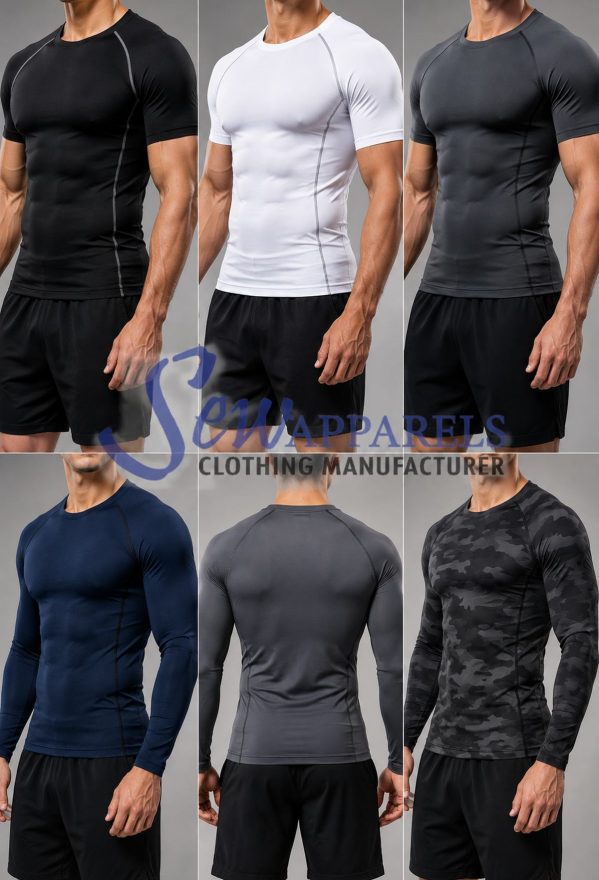
Existing compression shirt product reference showing several styles. Use it to discuss silhouette and design direction; it does not verify compression pressure, seam construction or performance-test results.
Compression Shirts Buying Guides for Buyer-Led Development
Compression shirts buying guides should help a brand convert performance ideas into measurable fabric, panel, fit, seam and inspection decisions. Begin with athlete profile, sport, climate, fit intent, size range, artwork, care route, quantities and launch timing. Then connect every construction choice to evidence that sampling and bulk teams can repeat. A panel line should have a functional purpose, a stretch direction should be recorded, and a measurement should have a defined landmark and tolerance. This guide hub links technical articles to the original product page while keeping development decisions organised for sourcing, costing and quality control.
Map Movement Before Drawing Panels
Body mapped construction works when panel routes follow shoulder rotation, arm lift, torso flexion and breathing expansion. Mark body landmarks before adding style lines. Record underarm, side, shoulder and sleeve endpoints on body and garment diagrams. Give each panel a purpose: mobility, ventilation, support, abrasion control or visual identity. Confirm stretch direction and recovery for each cut part. Review movement on representative athletes rather than a dress form alone. The first guide below covers panel routes, shoulder mobility, grading and bulk inspection. For movement review, compression shirts buying guides should distinguish a decorative line from a seam position tested on the intended athlete profile.
Select Stretch, Recovery and Weight Together
Compare composition, knit structure, finished mass, extension under agreed load, growth, recovery, shrinkage, hand, opacity and moisture behaviour as one material system. A fabric with high extension can still recover poorly, and two panels with different shrinkage can distort a seam after care. Record face and back, greatest stretch direction, material code, lot and finishing status on the trim card. Test joined materials as well as separate swatches because seam elasticity and panel width change garment response. Approve the production-intent colour, finish and care route before grading or bulk booking. Material comparisons in compression shirts buying guides are most reliable when the same load, conditioning and recovery interval are recorded for every candidate.
Engineer Seams for Skin Contact and Mobility
Compression shirts place seams close to the body, so seam profile, stretch, placement and thread must work together. Keep bulky intersections away from the axilla, shoulder pressure zones and other high-movement areas. Specify stitch type, seam allowance, thread, needle, density, differential feed and acceptable extension. Add section drawings for unusual joins. Test cross-body reach, overhead movement and repeated flexion while checking pressure, abrasion, stitch opening and panel migration. Seal a sample made on intended machines with intended operators, then use the same construction description in the technical pack and line instructions. Use compression shirts buying guides alongside physical seam samples: a smooth-looking join can still restrict extension or fail after repeated movement.
Grade Panels from Stable Landmarks
Panel grading needs more than increasing every width by the same amount. Define which body and garment landmarks control each endpoint, then state horizontal, vertical and angular movement by size. Confirm chest, waist, body length, sleeve, armhole and panel widths on selected small, middle and large sizes. Check that ventilation or support areas remain aligned with the intended body zone. If fabrics differ in recovery or shrinkage, equal pattern increments may not create equal finished behaviour. Record grade rules, measurement method, tolerance and size-set approval evidence before releasing production patterns.
Connect Specifications to Costing and Repeat Orders
Cost the approved panel network, material yield, sewing operations, decoration, testing, packing and inspection plan. Record fabric orientation and marker constraints because angled pieces can change consumption and cutting time. Specify skin-contact trims and labels. Separate development charges from repeat production inputs, and approve substitutions explicitly. For reorders, compare material code, finish, shade, stretch, recovery and shrinkage with the sealed reference; a supplier name alone is insufficient. Retain tolerances and sample comments so later orders reproduce the approved fit. When using compression shirts buying guides for a quotation brief, attach this material and construction record so suppliers price the same specification.
Low MOQ Compression Shirts for Startup Brands
A low MOQ compression shirts manufacturer can help a startup brand test one fit block, material system and panel architecture before expanding the range. Small MOQ development still requires a complete brief, production-intent materials, artwork control, measurement chart, size set, care validation and sealed sample. Sew Apparels gives facility and priority to startup brands when the programme limits colourways and uses clear approval stages. Share athlete profile, quantities, size ratio, branding and delivery timing early. Final minimums depend on fabric availability, custom colours, trims, decoration and testing. Use the first order to build repeatable evidence for future production.
Control Samples, Care and Bulk Inspection
Set approval gates for material, pattern, construction, decoration, size set, care and pre-production sample. Measure key dimensions before and after agreed laundering. Inspect recovery, twist, seam puckering, skipped stitches, colour change, panel alignment and decoration. During bulk production, check first pieces and scheduled intervals across sizes, fabric lots, machines and operators. Classify functional defects separately from visual or measurement defects, and trace findings to roll, bundle, line and date. A clear hold-and-release plan lets the team correct problems before more garments are completed and keeps final inspection connected to the approved sample. Keep the inspection evidence with the compression shirts buying guides selected for the style, including the reason a sample was accepted, held or revised.
Use the Guide Hub as the Technical Record
Use these compression shirts buying guides to organise the evidence behind a development decision. Start with the intended activity, wearer and size range, then compare panel construction, sleeve movement, seam behaviour and neckline extension before requesting a sample. Keep drawings, fabric specifications, test conditions, size-set comments and approved changes together so the sample room and purchasing team work from the same brief.
Read the relevant technical guide when a specific issue appears, and use the manufacturing page when you are ready to discuss sampling or quotation. For a repeat order, identify what has changed in the material, trim or production method and request confirmation against the approved reference. A clear record helps a startup brand and an established buyer explain requirements without relying on a product photograph or an unverified performance claim.
RELATED TECHNICAL GUIDE
Start with Body-Mapped Panel Design
GUIDE 01
Body Mapped Panel Design: Compression Shirts
Control underarm panels, torso direction, shoulder mobility, grading and bulk inspection with measurable development evidence.
Read the body-mapped panel design guideGUIDE 02
Raglan Versus Set In Sleeves: Compression Shirts
Compare sleeve pitch, underarm seam route, shoulder range, material direction, grading, care and bulk quality for a controlled compression-shirt fit.
Read the raglan versus set-in sleeve guideGUIDE 03
Compression Shirt Flatlock: Thread Breakage Checks
Identify thread and fabric failure, compare controlled sewing trials and verify extension, care and corrected samples before approval.
Read the flatlock thread breakage guideGUIDE 04
Compression Shirt Neckline: Dressing and Recovery
Review relaxed opening, head passage, binding and seam limits, recovery timing and care before approving the finished neckline.
Read the neckline dressing extension guideGUIDE 05
Compression Shirt Pressure Claims: Evidence Review
Match pressure wording to the tested garment, sizes, locations, posture and care conditions while keeping medical and outcome claims separate.
Read the pressure claim verification guideGUIDE 06
Compression Shirt Tucked Hem: Movement Retention
Compare the intended shirt and bottom pairing, starting overlap, reaching, bending and care before approving a tucked-use statement.
Read the tucked hem retention guideTechnical References
ASTM D2594/D2594M-21 covers stretch and growth of low-power knitted fabrics. Its scope does not make it a compression-pressure certification or an automatic choice for high-support materials; ASTM also cautions against using it alone for commercial shipment acceptance because between-laboratory precision is poor. Agree the appropriate method and acceptance criteria with the testing laboratory. ISO 8559-1:2017 defines body measurements that support consistent size and shape profiles; it does not prescribe this garment’s finished measurements or pressure targets.
Turn Your Development Decisions into a Product Brief
Bring athlete profile, fit intent, fabrics, panel map, measurements, artwork, quantities and delivery timing together before sampling. A complete brief helps the factory identify stretch, recovery, seam, grading and care risks early and protects repeatability from sample to bulk.
Discuss custom compression shirts