
Compression shirt pressure claim verification starts with a simple distinction: a close-fitting appearance is not evidence of a particular pressure. If a brand wants to advertise a numerical value, it needs a report connected to the finished garment and the conditions under which it was assessed. A fabric specification or a supplier’s description alone does not establish the pressure applied by the shirt.
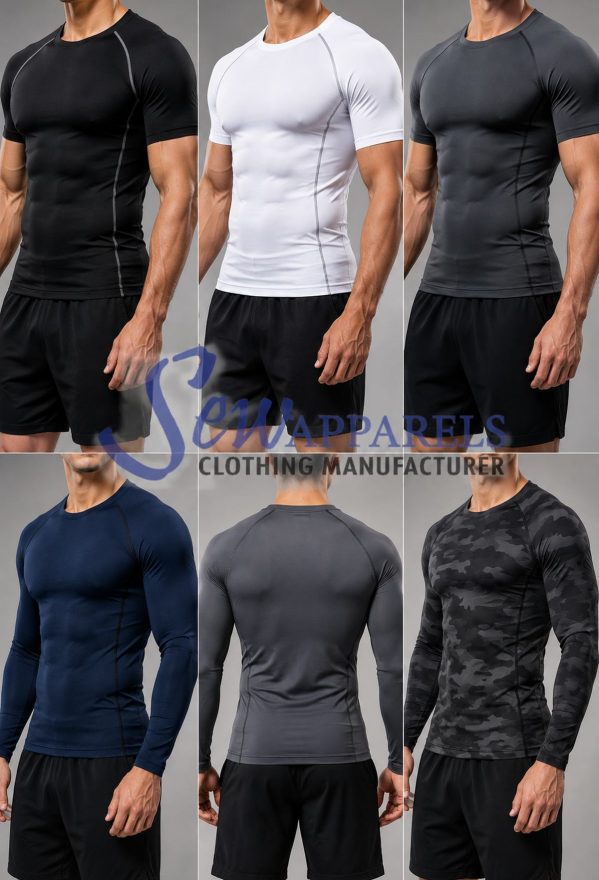
This guide gives buyers six evidence checks before approving pressure wording for a sports top. It is a sourcing and documentation framework, not a testing protocol, a medical recommendation or a declaration of regulatory compliance. Agree the proposed claim with qualified testing and market-compliance specialists before release. The evidence should match what customers will reasonably understand the statement to mean.
Why compression shirt pressure claim verification needs a defined claim
Write the exact proposed wording before commissioning a test. A statement about close fit differs from a claim that the shirt applies a specified pressure, improves recovery or provides a therapeutic benefit. Each asks the evidence to demonstrate something different. Avoid starting with a broad promise and later selecting whichever measurements appear to support it.
The US Federal Trade Commission’s Policy Statement Regarding Advertising Substantiation explains the need for a reasonable basis for objective advertising claims before they are communicated. It also addresses claims that imply a particular level of support. Use this as a relevant US-market reference and obtain advice for the intended destination; it is not a universal clearance for a garment or its wording.
Keep sport versus medical wording explicit in the brief. Pressure measurements do not, by themselves, prove a health outcome. Terms such as medical grade, therapeutic or clinically proven require a separate assessment of the claim and applicable requirements. Do not add those expressions because a sports shirt contains elastane or feels firm against the body.
1. Match the report to the actual garment
Request the full report reference and a clear pressure report garment identity. The tested item should be traceable to the style, sample revision, size, fabric, construction and condition supplied for assessment. Record photographs or another unambiguous identification route where available. A report for a material swatch, a different style or an earlier pattern cannot silently become evidence for the production shirt.
For compression shirt pressure claim verification, ask whether the sample used production-intent materials and dimensions. Identify relevant panel arrangements, seams and trims rather than reducing the garment to its fibre composition. If a development change occurred after testing, document it and seek a technical assessment of whether the evidence remains applicable. Do not assume that a small visual change has no effect on fit.
Keep compression shirt garment versus fabric test information separate in the approval file. Material extension, recovery or force data can help engineers compare options, but fabric data claim limits remain important. A material test does not directly establish pressure at a body location in a finished shirt. Keep the report scope visible so a useful technical result is not overstated in marketing.
2. Define locations and body-position conditions
Agree garment pressure measurement locations with the testing specialist. The report should explain where readings were taken and how those positions were identified. A single result should not be presented as pressure across the entire torso unless the evidence supports that interpretation. Keep local readings separate from any average and identify how a reported summary was calculated.
Compression shirt pressure claim verification also requires stated body position test conditions. A compression shirt body position pressure comparison must preserve the assessed posture in its report. Record whether assessment used a wearer, a form or another defined setup, and identify the relevant posture and movement conditions. A static measurement does not automatically describe every sporting movement. Ask what the method can establish before choosing language that implies constant pressure.
The study Confounding compression: posture, sizing and garment type found that these factors affected interface pressure in lower-body sports compression garments. Its participants wore tights and leggings, so the results do not quantify pressure from a shirt. The study supports taking test conditions seriously; a proposed top still needs evidence appropriate to its own construction and claim.
3. Check tested sizes and wearer or form scope
State the tested size scope before deciding whether the claim can cover a range. Request the garment sizes and the associated wearer or form dimensions relevant to the method. A size label alone provides limited context. Identify how the tested fit relates to the intended size chart and whether the report assessed one configuration or several.
When reviewing compression shirt pressure claim verification, do not assume that the smallest, middle and largest sizes behave identically. Ask the specialist how to select representative samples and whether additional evidence is needed. If a result applies only to a defined size and fit condition, the proposed wording must preserve that limitation rather than suggesting a universal value.
Keep close fit versus compression distinct in fit comments. A wearer saying the shirt feels tight is useful feedback about experience, but it is not a calibrated reading. Likewise, a comfortable sample does not establish a numerical pressure range. Retain subjective fit feedback and objective measurement results as separate records that contribute to different decisions.
4. Review the measurement method and calibration evidence
Request enough method information for a qualified reviewer to interpret the report. Identify the measurement system, units, sample setup and procedure used. Ask for relevant calibrated pressure evidence and how calibration or verification was documented for the assessment. A number without its method and conditions is difficult to compare or responsibly reproduce in a product statement.
Compression shirt pressure claim verification should preserve the reported units and any stated uncertainty or limitations. If compression shirt mmHg claim evidence is proposed, confirm that the report actually supports the numerical wording. Do not convert a force, stretch percentage or an unrelated material measurement into mmHg without an appropriate method and qualified interpretation.
Ask whether the result is an individual reading, an average, a range or another defined summary. Preserve variability rather than selecting the highest convenient value. Do not compare two reports as equivalent if their setups differ materially. Where findings disagree, request clarification from the testing parties before treating the difference as proof that one supplier has a superior garment.
5. Identify care condition and production applicability
Record whether the garment was new, conditioned, washed or previously worn when tested. An after care pressure review may be relevant where the wording implies continued performance through the intended care route. Agree the care conditions and the evidence needed with the specialist; avoid inventing a number of washes that supposedly validates all products.
For compression shirt pressure claim verification, link each result to its sample history. A measurement from a new prototype should not become a guarantee after repeated washing unless appropriate evidence supports that extension. Review changes in fit and material condition alongside the report. Keep the assessed care route aligned with the instructions intended for the customer.
Consider how production will remain connected to the tested configuration. Identify material substitutions, pattern revisions and dimensional changes that need review. A supplier’s general quality statement does not replace traceability. Agree the relevant control records so the brand can locate the accepted construction, its evidence and the conditions that would trigger further testing.
6. Approve wording against the evidence, not the aspiration
Quantitative claim approval should compare the exact proposed statement with the actual report scope. Check the garment identity, size coverage, locations, body position and care conditions together. The sports compression top pressure test scope should remain visible to the person approving packaging, web copy and sales material. Avoid broader wording than the evidence can support.
Before closing compression shirt pressure claim verification, record any qualifications that need to accompany the statement. A precise local measurement does not establish improved circulation, faster recovery or injury prevention. Those are separate outcome claims. A development report also should not be described as independent clinical proof when it did not investigate a clinical outcome.
Use a pressure evidence gap record when information is incomplete. Identify what is missing, who will clarify it and which wording is awaiting review. The appropriate response may be to obtain further evidence or use a factual fit description that is itself supportable. Do not publish the stronger claim on the assumption that a later report will resolve the gap.
A claim-to-evidence checklist for buyers
Keep one approval sheet for each proposed pressure statement. Attach the report reference and the exact wording under review. The sheet should make limitations easy to find without replacing the report itself. A concise summary helps sourcing, design and marketing teams avoid treating different pieces of evidence as interchangeable.
- Claim: exact numerical or descriptive wording and intended market.
- Identity: finished style, revision, materials, construction and sample condition.
- Scope: tested sizes, fit setup, measurement locations and posture.
- Method: system, units, relevant calibration information and reporting limitations.
- Decision: supported wording, required qualifications, evidence gaps and review owner.
Keep the original report and subsequent correspondence accessible with the approved revision. If the commercial copy changes, review the new wording rather than relying on an earlier approval for a different promise. The same principle applies when a repeat order introduces a substitute material or revised fit. Traceability makes the decision easier to revisit without reconstructing an incomplete history.
Build the evidence request into the manufacturing brief
For custom compression shirt manufacturing, share the intended fit, size chart, construction and proposed claims at the development stage. Private label compression shirt production should distinguish the factory’s construction responsibilities from the specialist evidence needed for a marketing statement. Discuss testing arrangements and development quantities directly rather than assuming a generic certification or minimum order.
The existing Compression Shirts Buying Guides connects pressure-evidence review with other product-development decisions. Keep this approval record attached to the actual style and its production reference. The objective is a clear, supportable statement about the garment that will be supplied, with the evidence boundaries preserved.
Frequently asked questions
Does a tight shirt prove a stated pressure?
No. Tightness feedback and appearance do not establish a numerical reading. Request an appropriate assessment of the identified finished garment and preserve the method and conditions in the approval record.
Can a leggings study support a shirt’s mmHg label?
No. Research on other garments can inform questions about testing, but it does not supply a pressure value for the proposed top. Product-specific evidence must match the claim and tested configuration.
Does a pressure report prove a medical benefit?
No. Compression shirt pressure claim verification addresses the evidence for the stated pressure under defined conditions. A medical or performance benefit is a separate claim requiring its own appropriate substantiation and review.
Keep wearer feedback from the neckline dressing and recovery review alongside the technical brief. Dressing comfort is a separate observation from calibrated pressure and does not substantiate an advertised pressure value.