
Compression shirt neckline dressing extension is the temporary opening needed to put a close-fitting shirt on and take it off. A collar can sit neatly at rest but restrict head passage, damage its joining seam or remain enlarged after dressing. Buyers should assess the finished neckline as an assembly, with the binding, stitching and surrounding fabric working together.
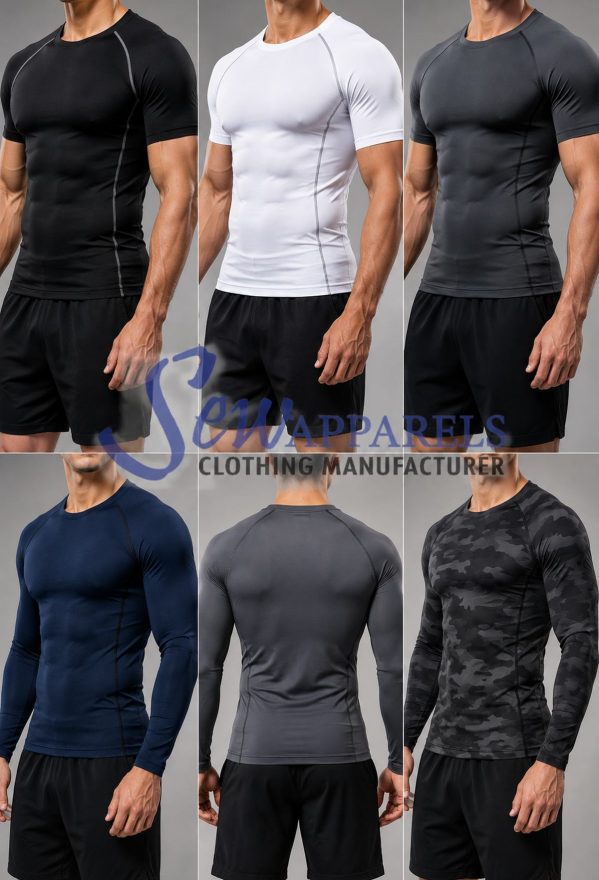
This guide explains six checks for opening recovery before sample approval. The checks organise a development review; they are not a universal laboratory method or a medical compression assessment. Define the intended wearer, fit, dressing route and care instructions before comparing samples. A fabric stretch percentage on its own cannot establish whether the completed shirt is easy to dress in or recovers acceptably.
What compression shirt neckline dressing extension should demonstrate
The useful outcome is a neckline that accommodates the intended dressing movement and returns to an agreed shape without visible damage. Opening size, extension force and recovery are different observations. A larger relaxed opening may ease passage but change coverage. A very extensible edge may pass over the head yet remain wavy afterwards. Review these trade-offs against the product brief rather than treating maximum stretch as the only target.
Separate the temporary dressing condition from how the collar sits during wear. Ask for feedback on putting the shirt on, removing it and wearing it in the intended position. Keep neck opening dressing stretch separate from any claim about pressure, support or athletic performance. Comfortable head passage does not demonstrate a therapeutic effect or validate a compression level.
1. Record the relaxed opening before any trial
Start with an identified production-intent sample. Record the style, revision, size, fabric and binding references, then agree how the relaxed collar measurement will be taken. Define the landmarks and whether the result is a flat dimension or an opening circumference. Those measures should not be substituted for one another without a clear explanation of the measurement method.
For compression shirt neckline dressing extension, a consistent starting measurement allows a useful before-and-after comparison. Lay the sample without intentionally stretching it and record the condition at measurement. Photograph the neckline face and reverse, including the join and any seam intersections. Note existing waviness, twisting or puckering before the first dressing exercise so later findings are not incorrectly attributed to the trial.
Compare the finished edge with the approved pattern and construction information. Binding width, finished opening shape and the surrounding panel should match the revision under review. If the sample has been steamed, washed or repeatedly tried on, state that history. A freshly sewn reference and a previously handled sample may otherwise produce misleading differences.
2. Review head passage in the intended size range
A tight top head passage review needs appropriate wearer feedback and a clearly defined dressing route. Ask participants to use the intended garment size and stop if the exercise is uncomfortable. Observe where resistance appears and whether the wearer must pull heavily on one small section. Do not force a shirt onto someone merely to obtain a pass observation.
Compression shirt neckline dressing extension should be considered across the planned size range, not just a single middle-size prototype. Agree representative sizes for the development review and identify which fit conditions remain untested. A body measurement chart helps organise sampling, but it does not replace actual opening feedback. Head passage also depends on the opening shape and the garment’s available movement around it.
Collect collar opening fit feedback in separate fields: dressing ease, removal ease, resting coverage and edge feel. Avoid compressing all four into a single comfortable label. Ask whether difficulty comes from a narrow opening, a stiff binding, a limiting seam or restricted handling space. These are observations to investigate rather than immediate proof of the root cause.
3. Compare binding and seam limitations
Run a neck binding extension trial on clearly labelled alternatives when the assembly needs improvement. Keep the body fabric and relevant pattern dimensions consistent where possible. Identify the binding material, cut direction, finished width and joining construction. A different trim can alter both the relaxed appearance and the opening response, so retain the original sample beside each alternative.
A&E’s Sewing Stretch Knit Fabrics technical bulletin explains why thread selection, stitch balance and seam geometry matter to stretch-seam behaviour. Use that background to structure a discussion with the sewing technician. It does not supply a universally correct neckline setting or certify that a particular collar will pass a finished-garment dressing review.
When reviewing compression shirt neckline dressing extension, distinguish binding versus seam limitation. If the material extends but the stitch line becomes taut, investigate the sewn construction. If both remain resistant, assess the trim and opening geometry together. Inspect for neck seam extension damage, including broken stitches or fabric damage, after releasing the opening. Avoid approving a setting change solely because the collar stretches farther.
4. Measure recovery after an agreed waiting interval
Compression top collar recovery concerns the return towards the agreed resting size and shape after extension is removed. Define the neckline recovery waiting interval before the comparison. Record when the initial and later observations are made, rather than measuring one sample immediately and allowing another to rest much longer. Keep sample handling consistent between measurements.
ASTM’s public scope for D2594/D2594M-21 distinguishes fabric stretch and growth for low-power knitted materials. It also identifies limitations for support applications and commercial shipment acceptance. Discuss a suitable material test with a competent laboratory; do not present this fabric method as a complete collar dressing test or proof of finished compression-shirt performance.
For compression shirt neckline dressing extension, record both the dimension and visible shape after the agreed recovery period. A collar may return close to its starting measurement while retaining a distorted join or an uneven edge. Conversely, a small dimensional change may require interpretation against the agreed tolerance and use. State the observations without inventing a universal recovery percentage or pass limit.
5. Repeat the review after the proposed care process
Check the compression shirt neckline after care using the proposed washing and drying instructions. Identify the process and the sample history. Compare relaxed opening, dressing response and recovery with the starting record. If the neckline and body change differently, investigate the component combination rather than relying only on a whole-garment length measurement.
Compression shirt neckline dressing extension after care should be reviewed under comparable conditions. Do not change both the dressing procedure and the laundering conditions between alternatives. Label samples through every stage and record any conditioning interval used before measurement. A report stating washed and passed is insufficient when the reviewer cannot identify the care route or what was assessed.
Include a neck opening repeat use trial where it is relevant to the development brief. Agree the repetitions and observations in advance, and separate repeated dressing from care cycles in the record. Inspect compression neck edge deformation, stitch damage and residual waviness after the planned exercise. Results describe the reviewed conditions; they should not be converted into an unsupported lifetime guarantee.
6. Approve the complete construction and its scope
Dressing opening sample approval should identify the accepted neckline configuration, sample revision and review conditions. Preserve the binding specification, pattern information and sewing construction with the approved reference. A general instruction to make the collar stretchier does not tell production what was accepted or how appearance should remain controlled.
Before closing compression shirt neckline dressing extension, review the corrected sample against the original issue. Confirm dressing ease, relaxed coverage, recovery and condition after care. Record any sizes, colours or material combinations requiring further evidence. One successful prototype should not automatically approve every variant where trims or fabrics differ.
Connect the decision to production checks. Agree which opening dimensions and visible construction features will be inspected, how substitutions will be handled and when a new sample is required. A sealed sample supports comparison, but the written specification is needed to make repeat orders traceable. Keep any laboratory report linked to its exact material or assembly rather than a broad style name.
A recovery record that buyers can compare
Create a compression collar recovery record with a small number of consistent fields. Include sample identity, starting measurement, dressing observations, trial conditions, recovery timing and care history. Add photographs of the relaxed edge before and after review. Retain suspected explanations separately from observed facts so the next trial has a clear purpose.
- Starting condition: opening shape, relaxed dimension, binding and seam identity.
- Dressing review: relevant size, route, wearer feedback and any local resistance.
- Recovery review: agreed timing, dimension and visible deformation after release.
- Care review: process, sample condition and repeated observations.
- Approval: accepted revision, scope, exceptions and production follow-up.
Neckline stretch evidence becomes more useful when two alternatives share a consistent review procedure. If one sample looks better, establish which relevant observations improved and which remain unresolved. A larger opening might improve passage while reducing desired coverage. Keep that commercial and design trade-off visible instead of reporting a single stretch result as the complete answer.
Put the neckline decision into a manufacturing brief
For custom compression shirt manufacturing, include the intended fit, neck shape, size range, material references and care requirements in the brief. Private label compression shirt production benefits from a specific approved opening construction and documented wearer feedback. Discuss development quantities and trim availability directly; neither a minimum order nor a final performance outcome should be assumed from a general guide.
The existing Compression Shirts Buying Guides connects related product decisions to the commercial product page. Keep the neckline record with the relevant style revision so sampling and production teams can locate the accepted construction. The aim is a repeatable approval based on the actual assembly and intended dressing conditions.
Frequently asked questions
Does greater fabric stretch guarantee easy head passage?
No. The finished opening depends on shape, binding and stitching as well as the body material. Review the assembled collar and appropriate garment sizes before accepting the construction.
Should recovery be measured immediately after dressing?
Agree the observation timing before testing and apply it consistently. Record immediate appearance if relevant, then take any later measurement at the agreed interval. Different resting periods make alternatives difficult to compare.
What closes a neckline development issue?
A corrected sample and an approval record should show the accepted configuration, review conditions and remaining scope. Compression shirt neckline dressing extension is resolved through evidence for the agreed garment, rather than a claim that the material stretches well.
If the joining seam cracks during dressing, keep the observation linked to the flatlock thread breakage investigation. Record the actual stitch construction; opening restriction and thread rupture are related observations, not automatically the same cause.