
Compression shirt tucked hem retention depends on how the shirt and bottom garment work together during movement. A long body does not automatically stay tucked, and a close fit does not prove that the hem will remain below the waistband. Buyers should review the actual pairing, starting overlap and movements before approving a base-layer construction.
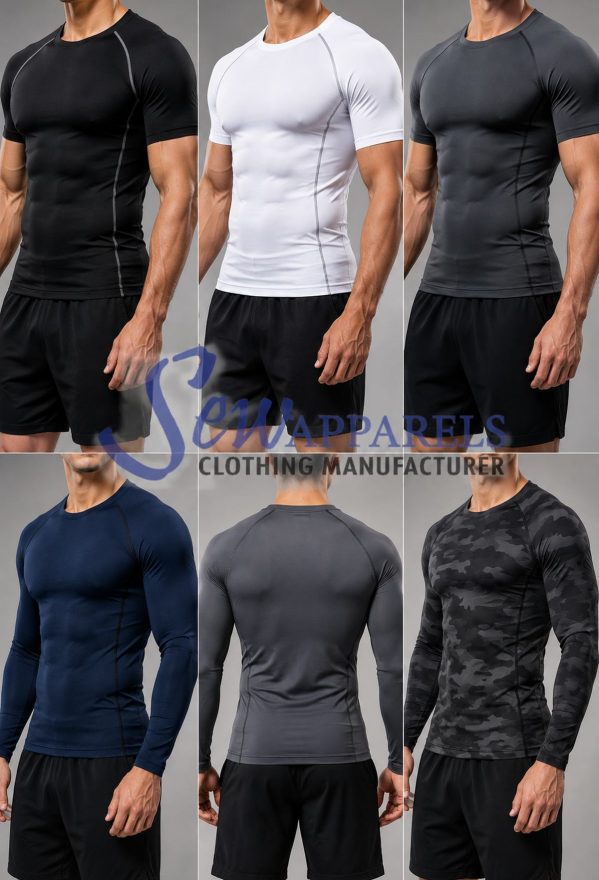
This guide sets out six practical checks for a tucked compression top movement trial. The checks organise sample development and fit feedback; they are not a universal performance test or a promise that a shirt can never untuck. Define the intended sport, garment pairing, size range and care route, then use consistent observations to compare alternatives.
What compression shirt tucked hem retention should establish
The useful question is whether the intended combination maintains acceptable coverage and comfort during the agreed activities. Identify whether the shirt is designed to be tucked throughout use, optionally tucked or worn outside the waistband. Those options may need different body proportions. Do not approve a tucked-use statement from a relaxed photograph of a shirt worn on its own.
Separate compression base layer hem ride up from waistband movement. The shirt may migrate upwards, the shorts may move downwards, or both may change position. Recording only that the top came loose hides the mechanism. Inspect the two garments together while keeping observations separate so the next development change addresses the actual finding.
1. Identify the shirt and bottom pairing
Record the exact shirt bottom pairing before a wear trial. Include both style references, sample revisions, sizes and relevant materials. Identify the waistband construction and the intended worn position of the shorts or trousers. A result with one bottom garment should not become a claim about every waistband, rise and fabric surface a customer might use.
For compression shirt tucked hem retention, keep the shirt revision constant when comparing bottom garments. Alternatively, keep the bottom garment constant when comparing shirt alternatives. Changing both at once may improve the result but makes it difficult to identify why. Label each combination clearly and retain photographs of its starting position.
Ask whether the pairing represents the intended product programme. A sample tucked into a high-rise development short may not represent a lower-rise retail product. Likewise, a firm waistband and a loose drawstring waist can interact differently with the same top. Record the actual setting used, including any drawcord adjustment, rather than treating the garment name as sufficient context.
2. Measure starting overlap consistently
Define the starting overlap measurement with clear reference points. Record compression shirt overlap with shorts for the actual pairing and the intended worn position. State where the waistband sits and where the shirt hem lies beneath it before movement. Use an agreed observation route that respects the wearer’s privacy. Front, back and side coverage may differ, so record the areas relevant to the design instead of assuming one flat body length describes the whole pairing.
Compression shirt tucked hem retention comparisons need a repeatable starting condition. Ask the wearer to arrange the shirt in the agreed manner and record whether excess fabric is folded or distributed smoothly. Avoid giving one alternative extra tucking depth merely to improve its result. If the garment cannot reach the intended starting overlap comfortably, record that as a development finding.
ISO 8559-1:2017 provides anthropometric definitions relevant to clothing size and shape profiles. It can support consistent discussion of wearer dimensions and landmarks. It does not prescribe a universal tucked overlap, garment length or retention pass limit. Agree the finished-garment measurements and fit criteria for this particular programme.
3. Observe reaching and upper-body movement
Agree a movement sequence that reflects the intended use. A reaching hem migration review might include arm elevation and cross-body movement where appropriate. Record the sequence and repetitions so alternatives receive a comparable review. Ask the wearer to stop if discomfort occurs, and do not stretch a sample forcibly simply to demonstrate that it can remain tucked.
When assessing compression shirt tucked hem retention, observe the shirt and waistband before, during and after the movement where practical. Note whether the hem moves temporarily and settles back, or remains displaced afterwards. Record whether the wearer adjusts either garment during the sequence. A result requiring repeated manual re-tucking is different from a result obtained without adjustment.
Consider the route of tension through the garment. Restricted sleeve or shoulder movement may pull the body upwards, while a revised upper-body fit may change the observation without changing hem length. These are possibilities for controlled trials, not diagnoses based on a single photograph. Keep the original sample available to compare with any revised construction.
4. Review bending and fabric interaction
A bending untucking assessment should use an agreed activity relevant to the wearer and product. Observe back and side coverage as well as the front. State whether the movement includes sitting, bending or another defined action rather than recording only normal movement. Different activities can expose different fit limitations, so keep their results identifiable.
Compression shirt tucked hem retention also involves fabric surface interaction at the pairing. Record the shirt face, waistband lining and any relevant inner surface. If an alternative introduces a gripper or changes the hem finish, identify it in the trial record. Review comfort, bulk and care compatibility alongside retention; added friction is not automatically a better overall design.
Distinguish body length versus slippage when discussing revisions. A short starting overlap may justify reviewing length or hem shape. Adequate starting overlap followed by migration may need a broader fit and pairing investigation. Do not assume extra length alone solves the problem, particularly if it creates bunching or unwanted pressure under the waistband.
5. Repeat the pairing review after care
Check hem retention after care using the intended garment instructions and identified samples. Record what was washed and dried, how the samples were conditioned and whether the pairing remained the same. If only one garment was cared for, state that clearly. A change in the shirt, bottom garment or both can alter the starting relationship.
AATCC TM150-2025 addresses garment dimensional changes after home laundering and notes that it may not apply to some stretch fabrics. Discuss method suitability with the laboratory before commissioning dimensional testing. The method is not an anti-untucking certification, and a dimensional report does not replace a paired garment wear trial.
For compression shirt tucked hem retention after care, repeat the agreed starting measurement and movement observations. Identify any change in body length, waistband position or surface condition without assuming a cause from the result alone. Keep new and cared-for observations separate so reviewers can see whether the accepted pairing still meets its development criteria.
6. Approve the intended tucked-use configuration
Tucked fit approval should identify the shirt revision, bottom garment, size scope and review conditions. State the accepted observations and any limitations. A general comment such as stays in place is too broad if the review covered only one size and one relaxed exercise. Preserve the specific pairing that supplied the evidence.
Before closing compression shirt tucked hem retention, compare the corrected sample with the original problem under the same agreed sequence. Check both retention and comfort, including bunching, waistband interference and the need for adjustment. If a revision solves one finding while creating another, keep both visible in the decision record rather than approving the garment from a single favourable observation.
Agree production checks for the accepted dimensions and construction. Identify changes in fabric, hem finish, pattern or paired waistband that require another review. The approved sample helps teams compare appearance, while the written brief preserves what was tested. Retention claim limitations should follow the evidence rather than implying that every wearer and every bottom garment will produce the same result.
Use a movement observation record
Keep one base layer shirt hem migration assessment for each identified pairing. A concise record can show the starting relationship and what happened during each movement. Use consistent units and clear descriptions, and attach photographs only where the wearer has agreed to their use. Distinguish measured change from subjective comments about comfort or ease.
- Pairing: both style references, revisions, sizes and relevant materials.
- Starting position: waistband location, overlap references and tucking arrangement.
- Sequence: reaching, bending or other agreed movements and repetitions.
- Observation: shirt migration, waistband movement, coverage and manual adjustment.
- Condition: new or cared-for sample with the process identified.
- Decision: accepted revision, scope and any further trial required.
For example, a hypothetical review might find that a shirt remains tucked during arm elevation but needs adjustment after bending. That does not justify a universal retention claim. It identifies the activity requiring another comparison. Keep the finding attached to the actual pairing and trial conditions so a revised sample can be reviewed against a clear problem.
Review representative sizes and relevant wearer profiles rather than relying solely on a mannequin. A form helps compare dimensions and resting appearance, but it cannot supply human movement feedback. Ask the development team how to select the review scope and document untested combinations. Expanding the size range or changing the intended use may require additional evidence.
Put the pairing into the manufacturing brief
For custom compression shirt manufacturing, provide the intended tucked-use context, bottom garment references, size chart and starting-overlap criteria. Private label compression shirt production benefits from a defined paired fit review before bulk decisions. Discuss development quantities and material availability directly instead of assuming a generic minimum order or guaranteed retention outcome.
The existing Compression Shirts Buying Guides connects related fit and construction decisions to the original product page. Keep the movement observation record with the style revision and approved sample. This gives sampling and production teams a specific configuration to reproduce and a clear reason to review future changes.
Frequently asked questions
Will a longer compression shirt always stay tucked?
No. Starting overlap matters, but migration can also involve upper-body fit, the waistband and fabric interaction. Compare a controlled revised sample and inspect comfort as well as retention.
Can a shirt be approved without the intended shorts?
Its individual dimensions can be reviewed, but a paired retention statement needs a relevant bottom garment and defined movement observations. Preserve the pairing and its size scope in the approval file.
What evidence supports a tucked-use statement?
Compression shirt tucked hem retention needs an identified pairing, consistent starting position and documented movement review. Include care condition and claim boundaries; a single relaxed photograph does not establish the result.
Review upper-body movement alongside the raglan versus set-in sleeve comparison. A sleeve change may alter how tension reaches the body panel, so repeat the actual paired wear trial rather than assuming that additional hem length is the only correction.