Hood Adjustment Construction
Learn how to brief the cord channel, peak shaping and collar integration, then approve hood fit across sizes and finishing conditions.
Read the hood adjustment guide
Hooded work jackets buying guides help a product team turn a broad idea into a brief that a pattern maker, sample room and quality team can follow. A hood is connected to the neckline, collar, front closure, lining, cord channel and finishing process. If one part changes without the others, the hood can pull backward, cover the eyes, gape at the neck or lose its shape after washing.
Use these hooded work jackets buying guides when developing a new workwear style, comparing an approval sample or preparing a repeat order. The six articles cover adjustment, weather flaps, detachable hood quotations, embroidery access, abrasion evidence and water test evidence. Identify the model revision and destination before comparing results or approving a claim.
The Hooded Work Jackets product page is the route for a scoped manufacturing enquiry. Include shell and lining identity, attachment references, sizes, artwork and requested quantities. Keep proposed features separate from confirmed production options. A clear brief supports meaningful sample review without implying that a generic jacket meets every workplace requirement.
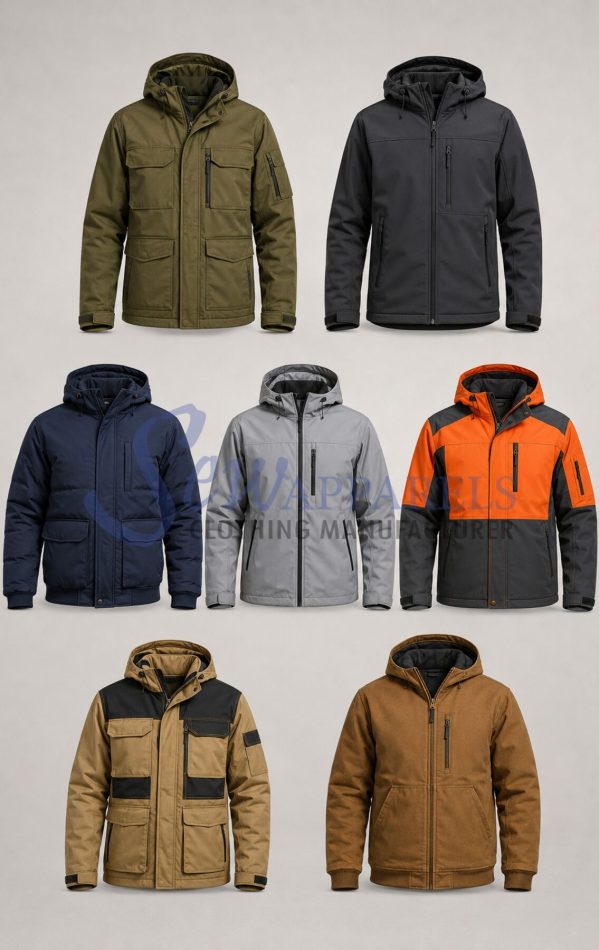
Learn how to brief the cord channel, peak shaping and collar integration, then approve hood fit across sizes and finishing conditions.
Read the hood adjustment guideSpecify zip overlap, chin protection and fastener spacing before approving a hooded work jacket front.
Read the weather flap guideCompare the hood and jacket interface, size compatibility, bundle contents, sample requirements and quoted quantity basis. Resolve assumptions and preserve the approved component reference for replacement orders.
Read the detachable hood quotation guidePlan access to the intended outer panel, keep lining and pockets clear, and approve the complete decoration workflow. Review the finished lining closure and resolve any performance implications for the actual jacket configuration.
Read the embroidery access guideMatch the shell identity and tested surface to the applicable abrasion method. Compare report conditions and endpoints, record equipment contact observations, and keep wear pilot findings separate from service-life claims.
Read the shell abrasion comparison guideSeparate spray surface-wetting results from fabric penetration evidence and assembled garment claims. Trace the tested sample, compare report conditions, resolve seam and component gaps, and approve wording within the evidence scope.
Read the water resistance evidence guideStart with the guide that matches the construction decision in your tech pack. Read it before the first sample so the measurement points and approval questions are ready. During fitting, keep the sample on the intended base layer and repeat the key movements: zip the jacket, raise the arms, turn the head, bend forward and check the garment from the side and back.
Record the agreed measurements instead of relying on comments such as “make it sharper” or “add more room.” Note the fabric, interlining, cord or elastic, hardware, seam finish and wash condition used for the approval. When a change is needed, identify the exact pattern or sewing point so the next sample can be compared with the previous one.
• Confirm the wearer, season, base layer and whether head protection is used.
• Show the hood face opening, crown depth, back neck and collar join on the technical drawing.
• Specify cord-channel position, finished width, exits, stops, hardware and reinforcement.
• Define peak extension, support, edge finish and visibility checks from front and side views.
• Measure the smallest, middle and largest size before and after the agreed finishing process.
• Keep the approved sample, measurement chart, comments and tolerance record together.
Use the checklist on the actual sample, not only the flat drawing. Zip the jacket over the intended base layer, turn the head, raise the arms and bend forward. Record any change to hood depth, face opening, neck join or peak support with a measurement and a dated photo. Repeat these checks at the edge sizes so the graded hood keeps the approved balance.
A construction decision rarely belongs to one component. A cord channel changes the hood edge, the hood edge changes the collar balance and the collar balance changes the front closure. Reviewing the full sequence lets the factory identify a conflict before bulk cutting. It also gives the buyer a fair basis for comparing samples, because every supplier is responding to the same measurable brief.
The same discipline helps with repeat production. When a fabric, trim or wash changes, the team can return to the relevant guide and recheck the affected measurements instead of starting from memory. This reduces avoidable corrections and keeps the approved brand fit consistent across colours and seasons.
New hooded work jacket articles will be added here as each permanent keyword group is published. The hub will remain a simple route: choose the construction guide, review the sample questions, then use the product brief for the commercial and production discussion.
Before a hooded work jacket moves from concept to sampling, ask the production team to confirm the pattern basis, fabric weight, lining choice and intended finishing route. A hood that works in a light shell may need a different crown depth when the jacket is lined or insulated. A cord channel that is comfortable in a soft fabric may become restrictive when seam tape, binding or a waterproof finish is added.
Ask where the hood is balanced from the centre front and back neck, how the collar is joined, and which seam allowances are included in the finished measurement. Request front, side and back photographs of the sample on a real wearer. If the garment is used on a job site, include the gloves, base layer and head protection in the fitting session. These details help the sample room solve a use problem rather than simply copy a flat sketch.
It is also useful to agree on what can change between sample rounds. Fabric substitutions, trim availability, wash shrinkage and pressing temperature can all change the final hood. Mark the approved construction in the tech pack and require any substitution to be shown with a measurement comparison. That record makes a repeat order faster because the factory can see which features are essential and which can be adjusted for availability.
When the buyer and supplier use the same checkpoints, the conversation becomes clearer. The buyer can explain the performance target, and the supplier can propose a production-ready solution with realistic tolerances. This is especially valuable for a first collection, where a small number of well-documented decisions can protect both the launch date and the budget.
Use the hooded work jackets buying guides for a startup brand or smaller first run: a controlled hood block can make sample comparison clearer than several untested options. Establish the intended fit and component relationship before adding colourways, labels and trim variations. Record the garment and hood revisions together so a later replacement enquiry can identify the approved interface.
When seeking a low MOQ hooded work jackets manufacturer, provide quantities by size and colour, shell and lining references, attachment hardware, artwork, packaging and destination. Ask which material or component constraints affect the proposed order minimum and sample schedule. Any quantity, price, timing or startup support arrangement requires project-specific confirmation. Agree who approves the fit sample, attachment trial and final decorated configuration; do not assume a universal minimum or priority production slot.
These hooded work jackets buying guides support a practical development record: describe the intended use, identify the sample, compare measurable observations and assign responsibility for unresolved decisions. A startup team can use the same references on its technical pack, sample comments and receiving checks. This gives the manufacturing enquiry a clear basis without implying certification or guaranteed performance.
YKK’s zipper structure explanation describes the elements, slider and tape, and why component geometry matters to operation. It supports precise attachment identification, but does not prove interchangeability of unrelated hood and jacket components. Confirm the actual pairing through the agreed sample plan.
ICC’s explanation of Incoterms and commercial contracts separates delivery obligations, risks and costs from product specifications, payment and ownership. Keep those additional matters in the quotation and order agreement. Neither reference certifies a jacket or establishes Sew Apparels pricing, order minimums or lead times.
Start with the construction guide when you are preparing a tech pack or approving a sample. Keep the product page for manufacturer, supplier, MOQ and production questions. Return to this page as the hooded work jacket library grows. Send the approved hood fit, fabric, closure, trim and quantity requirements to the manufacturing team.
Review the Hooded Work Jackets product page