
A detachable work jacket hood quotation should identify exactly what the buyer is receiving and which jacket it will fit. A low component price is difficult to evaluate when the attachment, size relationship, materials or bundle contents remain unclear. This guide explains six practical checks for comparing a removable hood garment quotation, requesting a sample and turning an approved configuration into an order. It does not present a current Sew Apparels price, minimum quantity or delivery promise.
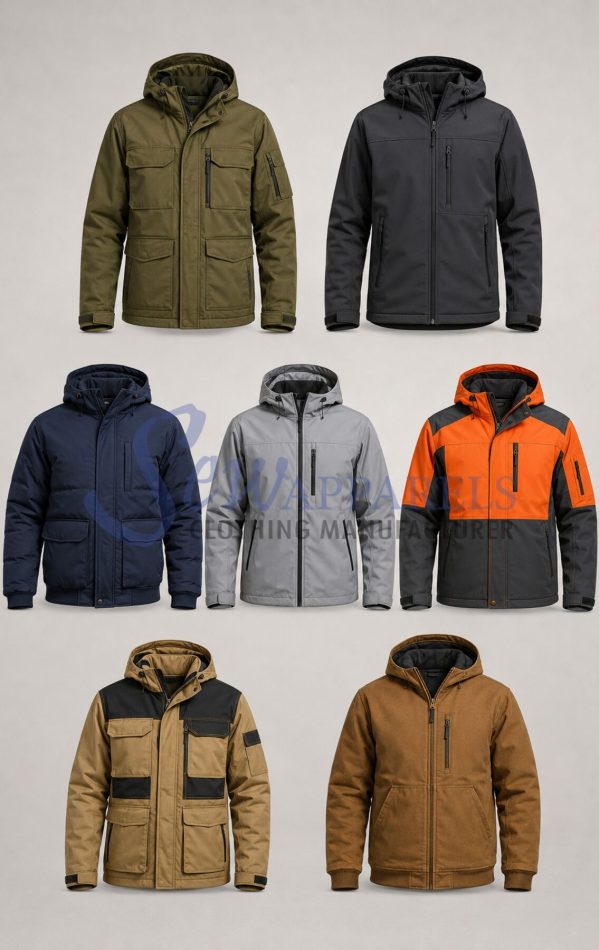
Begin with the jacket model and the reason for ordering the hood. A hood supplied with a new garment, an additional spare and a replacement for an older style can involve different requirements. The purchasing team should distinguish those situations before asking suppliers to quote. An apparently identical hood may have a different attachment arrangement, so photographs and broad style names should support a defined specification rather than replace it.
1. Define the detachable work jacket hood quotation scope
Identify the jacket model, revision and intended order configuration. State whether the enquiry covers complete jackets with removable hoods, hood components only or an additional spare quantity. Give the required colour and size allocation. A detachable work hood quote should explain whether every hood corresponds to one jacket size or whether an approved hood size serves a specified range.
For an existing garment, the work jacket replacement hood identity should include the model reference, production revision where known and the attachment details that can be established. Do not assume that a replacement from a newer production run fits an older jacket. If the original identity is incomplete, identify that uncertainty in the enquiry and agree how it will be resolved.
Use the Hooded Work Jackets product page when preparing a custom hooded work jacket manufacturing enquiry. Supply the proposed specification and ask for confirmation of feasible options. Keep requested features separate from agreed features until the supplier has reviewed them. This prevents an initial discussion about a removable hood from becoming an unsupported promise of compatibility.
A concise scope statement might describe a fictional jacket model WJ-A with a matching hood revision H-A, specified colour and an agreed attachment drawing. That example is a record structure, not an actual Sew Apparels model. Add the drawing reference and revision to every quotation comparison so purchasing staff do not compare responses based on different versions.
2. Specify the attachment and jacket interface
The work jacket hood interface specification should describe the complete connection. Depending on the design, that may involve a zipper, snaps, hook-and-loop sections or another attachment. Record the actual construction selected, its position and relevant supplier references. Define which pieces are on the hood and which remain on the jacket. Avoid replacing a precise component description with the phrase standard attachment.
A detachable work jacket hood quotation should address the mating parts as a system. For a zipper attachment, investigate the specified components, orientation, lengths and finishing with the responsible development team. A matching nominal size or colour alone does not establish that two halves will operate together. Record confirmed compatibility instead of relying on an assumed universal fit.
YKK’s explanation of zipper structure describes elements, slider and tape, and explains the importance of component shapes and dimensions to operation. That supports careful component identification; it does not validate a particular hood or prove that unrelated zipper parts are interchangeable. Obtain confirmation for the actual attachment selected and evaluate the assembled garment sample.
Specify the surrounding construction as well as the fastener. Describe the attachment seam, protective overlap, neckline relationship and how the hood sits when connected. Where a weather protection claim or workplace requirement is proposed, ask what evidence is needed for the final configuration. A detachable hood should not be described as protective or waterproof simply because its fabric resembles the jacket shell.
3. Compare the component price basis and bundle contents
The detachable hood component price basis should identify the quoted unit. Confirm whether the figure applies to one finished hood, a matched set of attachment components or a jacket-and-hood assembly. Record the currency, quantity basis, colour allocation and specification revision. Separate quoted optional features so a buyer can see why two offers differ.
For a detachable work jacket hood quotation, the work jacket hood bundle contents need an explicit list. Clarify whether the price includes lining, adjustment components, fasteners, labels, packaging and any agreed spare parts. Distinguish components sewn onto the hood from those supplied loose. If a jacket-side attachment must be fitted separately, identify the responsibility and cost rather than leaving it implied.
Within a detachable work jacket hood quotation, a work jacket spare hood quotation may differ from the cost allocated to a hood ordered alongside new jackets. Ask suppliers to explain the relevant production and procurement assumptions. Do not treat the component allocation within a complete garment price as an automatic standalone replacement price. The separate order may involve different preparation, quantities or packaging.
When reviewing private label hooded work jacket production, specify the requested branding and label details within the same scope. Confirm where the label will appear and whether the hood needs its own component identity. Avoid adding brand requirements after comparing quotations, because those changes may alter the confirmed price basis and approval sample.
4. Establish minimum quantities and sample requirements
A detachable work jacket hood quotation should distinguish the finished hood minimum from any material, colour or attachment procurement constraints. Ask about the work jacket hood unit minimum for the requested configuration. Record the supplier’s actual response, including whether mixed sizes or colours count together. No universal minimum quantity can be inferred from the fact that the component is smaller than a jacket.
For a detachable work jacket hood quotation, detachable hood sample requirements should include the mating jacket or an agreed representative interface, not just a hood viewed separately. Define the checks to be completed, the sample identity and who approves the outcome. Evaluate attachment operation, neckline fit, movement and the agreed configuration using appropriate responsible personnel. Record observations without converting a development sample into an unsubstantiated certification claim.
Spare work hood size compatibility needs a clear mapping. Request the proposed hood-to-jacket size relationship and validate the relevant combinations through the agreed sample plan. Do not assume that success on one jacket size establishes the entire range. Where a shared hood size is proposed, record which jacket sizes it is intended to serve and the basis for approving that arrangement.
Clarify sample charges, preparation time, shipping responsibility and whether changes require another sample. Record any proposed credit against a later production order as a supplier-specific term requiring confirmation. An enquiry can ask about those arrangements without promising that a sample is free or that its cost will always be refunded.
5. Resolve supplier terms and order assumptions
Work jacket hood supplier terms should explain quotation validity, payment arrangements, agreed approval milestones and the basis for the production schedule. Identify what starts the lead-time calculation. A provisional estimate made before material confirmation and sample approval should remain distinguishable from a confirmed production commitment.
In a detachable work jacket hood quotation, record the delivery term alongside the named place and version when Incoterms rules are incorporated. ICC’s explanation of Incoterms and commercial contracts distinguishes obligations, risk and cost allocation from matters such as goods specifications, payment and ownership. Those additional matters need their own agreement. A shipping abbreviation alone cannot complete the quotation.
Detachable hood order assumptions should be visible in the comparison sheet. Examples include buyer approval of an attachment reference, material availability, a proposed colour match or an unconfirmed size allocation. Assign an owner and next action to each unresolved item. Do not mark quotations equivalent when one includes an approved interface and another relies on an unanswered assumption.
For a hooded work jacket removable hood order, confirm how changes will be handled after approval. A substituted fastener or changed jacket revision can affect the matching component even if the hood price remains unchanged. Require the revised specification and applicable sample review to be agreed before accepting the substitution into the production order.
6. Keep the approved component traceable through receipt
A detachable work jacket hood quotation becomes actionable when it connects to an approved work jacket hood replacement brief. Include the jacket reference, hood revision, confirmed attachment, size relationship, quantity allocation, packaging and accepted terms. Preserve the quotation revision and approval record so a later replacement request can refer to the same configuration.
The work jacket detachable component register can record component identity and approved garment compatibility without becoming a complicated system. Keep the reference consistent on the purchase order, sample approval and receiving record. If old and new versions coexist, label and store them distinctly. Staff should not need to guess which spare belongs to which jacket.
At receipt, compare the delivered component identities and quantities with the approved order. Use the agreed receiving checks for attachment and construction concerns. Quarantine unresolved mismatches through the buyer’s established process rather than distributing uncertain replacements. A record of receipt demonstrates what was received; it does not independently establish every performance claim.
The existing Hooded Work Jackets Buying Guides connects related construction topics with buying decisions. Refer to those guides while preparing the enquiry, keeping each approved detail within the final specification. This makes future hood purchasing more consistent without treating every guide as a substitute for the supplier’s actual quotation.
Use the hooded work jackets hood adjustment construction review alongside the component brief so adjustment and attachment details refer to the same approved garment revision.
Buyer questions before quotation approval
Is a spare hood interchangeable with any jacket?
No universal compatibility should be assumed. Identify the garment, attachment and relevant size relationship. Confirm the actual pairing through the agreed development and approval process, particularly when buying for an older style.
Can the cheapest unit price be compared directly?
Only when the quoted scope is comparable. Check the unit, included components, quantity basis, sample requirements and delivery arrangements. An excluded attachment or packaging item can change the practical comparison.
What completes a detachable work jacket hood quotation?
A defined component, confirmed garment relationship, clear inclusions, resolved assumptions and accepted commercial terms make the quotation reviewable. Connect those details to the approval sample and purchase order, then preserve the component reference for future replacement enquiries.