
Work jacket embroidery access determines whether a logo can be applied to the intended outer panel without accidentally catching the lining, restricting a pocket or leaving an unfinished interior. Buyers should consider access during garment development, before the jacket assembly and branding workflow is fixed. This guide explains six checks for planning the opening, decoration sequence, sample review and final closure. It does not establish a universal decoration method or confirm protective performance for a modified jacket.
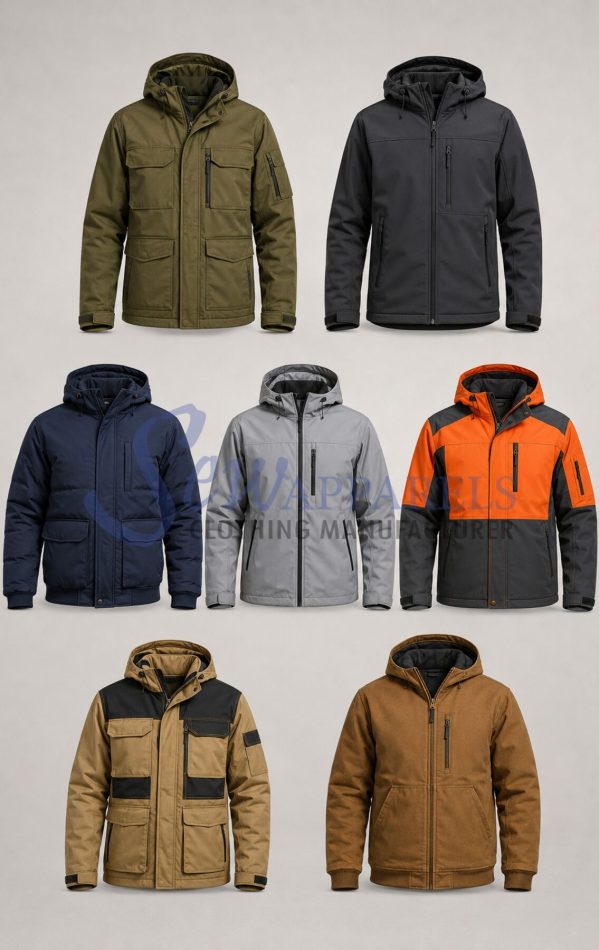
A logo approval on a flat fabric swatch answers only part of the production question. The assembled hooded jacket has layers, seams, pockets and attachment details that can change how the embroidery area is reached. The decorator and garment manufacturer need the same specification. Define the exact logo location and planned construction, then test whether the actual sample can be decorated and finished as intended.
1. Build the work jacket embroidery access brief
The work jacket logo access specification should identify the jacket model, construction revision and decoration location. Include the artwork version, finished logo dimensions and placement reference points. Identify the layers intended to receive stitching and those intended to remain separate. An instruction such as chest logo is too broad when pocket bags or lining sections sit behind that area.
A work jacket embroidery access brief should also state the planned decoration stage. Is the design applied to a panel before assembly, through a planned lining opening after assembly or through another agreed arrangement? The answer affects sample preparation and responsibility. Avoid approving an access detail solely from a drawing when the decorator has not confirmed the practical route to the embroidery area.
Use the Hooded Work Jackets product page to frame a custom hooded work jacket manufacturing enquiry. Supply the proposed artwork, location and access requirements for review. Keep requested features distinguishable from confirmed construction details. An enquiry about branding access does not mean every jacket automatically includes an opening or supports every logo location.
Separate visual requirements from performance requirements. If the jacket is intended to provide a particular protective function, refer any proposed alteration to the responsible manufacturer and assessment process. A neat lining finish alone does not demonstrate that the final decorated garment retains the original claimed performance. Capture the required review before production assumptions become fixed.
2. Compare panel decoration with post-assembly access
Work jacket embroidered panel access is often easier to discuss before the panel becomes part of a complete garment. The development team can evaluate how artwork positioning relates to seams and later assembly. However, that sequence still requires an approved placement reference and handling process. Decoration performed early should not drift into a seam allowance or a later pocket construction.
Work jacket embroidery access after assembly needs a different review. Hooded jacket post assembly embroidery requires the decorator to reach the intended panel while keeping unwanted layers clear. Confirm the opening location and the working arrangement on an actual sample. The fact that a hand can reach the area does not prove the embroidery equipment can hold it correctly.
The hooded work jacket embroidery sequence should show the agreed handover points. Identify who supplies artwork, who approves digitising, who decorates, who closes the access and who performs the final inspection. These responsibilities may sit with one facility or several. A clear sequence prevents a finished garment from arriving at the decorator with no approved access route.
A fictional workflow could identify jacket revision J-A, artwork L-A and lining opening O-A. Each reference would then appear in the relevant sample and production records. These are illustrative codes, not Sew Apparels production references. Their purpose is to demonstrate how the garment and branding details can remain connected when different teams handle different stages.
3. Define the opening without assuming a universal size
A work jacket decoration access opening should be specified by position, construction and the closure method expected after branding. Its practical suitability depends on the garment, logo area, equipment and decorator’s process. Do not select a universal opening length from another jacket and assume it works for a different placement or lining construction.
For work jacket embroidery access, ask the decorator to review the actual working path and identify obstacles. Pocket bags, inner facings, insulation or seam junctions may affect the intended operation. Document which layers need to remain clear and how they will be managed through the agreed process. The sample should establish feasibility before the detail is released for bulk production.
Embroidery Library’s jacket lining tutorial illustrates reaching an outer layer through a lining opening and closing the lining afterwards. It provides a craft example, not an industrial specification for every work jacket. Use its explanation of layer separation as context; agree the actual opening and closure with the garment manufacturer and decorator.
Work jacket internal decoration access should remain understandable after handover. Mark the agreed access location in the technical documentation and explain whether it is temporary or a permanent closure feature. Do not leave production staff to choose an opening by cutting or unpicking an arbitrary seam. Any alteration to an existing garment should follow the approved method for that construction.
4. Review materials and performance implications
Work jacket lining embroidery access solves a physical access question. It does not automatically solve thread selection, stabiliser compatibility, fabric distortion or needle-hole effects. The decoration team should review the actual shell, artwork and intended care conditions. Record the materials proposed for the sample and preserve their identity when the sample is approved.
Madeira’s workwear embroidery guidance discusses matching embroidery supplies to end use and notes that needle penetration can affect waterproof fabrics. Its discussion supports evaluating the complete decorated construction. It does not establish that a particular repair film, thread or embroidery arrangement restores a specific jacket’s claimed performance without further verification.
A work jacket embroidery access decision should therefore include any required review of the modified garment. Do not use a general statement about suitable embroidery thread as evidence that every decorated jacket remains compliant with a protective requirement. Where a claim applies, the responsible parties should determine the relevant evidence and approval route for the actual configuration.
Agree the care conditions used to evaluate the sample rather than borrowing temperatures or treatment cycles from unrelated materials. A successful initial appearance check does not demonstrate performance after repeated care. Record what was evaluated and what remains unverified. This keeps a development observation from becoming a broader durability or water-protection claim.
5. Close and inspect the lining after decoration
Jacket lining closure after embroidery should be part of the approved operation rather than an informal final task. Specify the method appropriate to the garment construction and the expected finished appearance. Assign responsibility for closure and inspection. If another contractor performs the embroidery, confirm whether jackets return with the lining finished or require a separate completion stage.
For work jacket embroidery access, hooded jacket lining inspection should check the interior as well as the visible logo. Look for unintended attachment between layers, restrictions at pockets or seams, loose materials and closure concerns under the agreed criteria. Verify that the lining lies as intended when the garment is worn or handled for the specified sample review.
The work jacket lining repair after branding process needs a separate decision if an error occurs. Record the issue and ask the responsible team to approve the correction. Do not treat every rework as equivalent to the original construction. Where an alteration affects a claimed function, include the required assessment rather than releasing it on appearance alone.
Keep sample findings specific. A record can state that a pocket remained usable or that the lining closure matched the agreed sample, if those observations were actually made. It should not state that the entire garment is proven suitable for every application. Define the evidence needed for each requirement instead of using one general approval signature for all concerns.
The jacket assembly branding workflow should identify the approved handover from decoration to lining closure and final inspection, with one released garment and artwork revision shared by all responsible teams.
6. Approve the complete branding workflow
Jacket decoration process responsibility should be recorded alongside the specification. Identify the owner of artwork changes, sample approval, access construction, embroidery operation, closure and final release. Explain how a proposed change reaches the other parties. An updated logo size can affect the access arrangement even when the jacket model remains the same.
Work jacket embroidery access approval should connect the finished lined jacket decoration sample to the actual production method. Jacket embroidery stage approval should recognise that a flat panel sample and a fully assembled sample serve different purposes. Preserve the reference sample or agreed evidence and document which features were approved. Require a review if the artwork, garment materials, access detail or decoration sequence changes.
When discussing private label hooded work jacket production, include the confirmed branding workflow within the product brief. Ask how decoration and final inspection will be coordinated for the proposed order. Avoid assuming a fixed service arrangement or production capability before it is confirmed. A well-defined enquiry gives the supplier a clear basis for reviewing the actual requirement.
The existing Hooded Work Jackets Buying Guides brings related construction decisions together. Use those references alongside the access brief while keeping the approved specification authoritative for the order. This supports consistent development without turning a general guide into an instruction to alter every jacket in the same way.
Compare the hooded work jackets weather flap design review when planning artwork near the front, keeping fastening access and any weather-performance claim separate from embroidery appearance.
Questions to resolve before bulk production
Does every lined jacket have a decoration opening?
No. Confirm the actual construction and agreed access method. The presence of a lining does not establish that an opening exists, that it reaches the requested location or that it supports the decorator’s equipment.
Can a lining opening prove waterproof performance?
No. Access concerns and performance evidence are separate. The complete decorated configuration needs the review appropriate to its proposed claims. Needle penetration and any subsequent treatment should be considered within that review.
What completes work jacket embroidery access approval?
A confirmed route to the panel, defined layers, agreed decoration sequence, finished lining closure and recorded sample findings complete the practical access review. Keep unresolved performance questions separate and resolve the required evidence before accepting related claims.
Plan work jacket embroidery access early enough that branding and garment construction support each other. A clear brief reduces avoidable alterations, makes responsibilities visible and gives receiving teams a specific finished sample against which to check the ordered jackets.