
A work jacket shell abrasion comparison should connect the material being ordered with the evidence being reviewed. Two reports can show different numbers while measuring different surfaces, conditions or endpoints. Buyers need to establish comparability before using those results to select a hooded work jacket shell. This guide explains six evidence checks covering material identity, method eligibility, contact zones, surface observations, a controlled wear pilot and the final selection record.
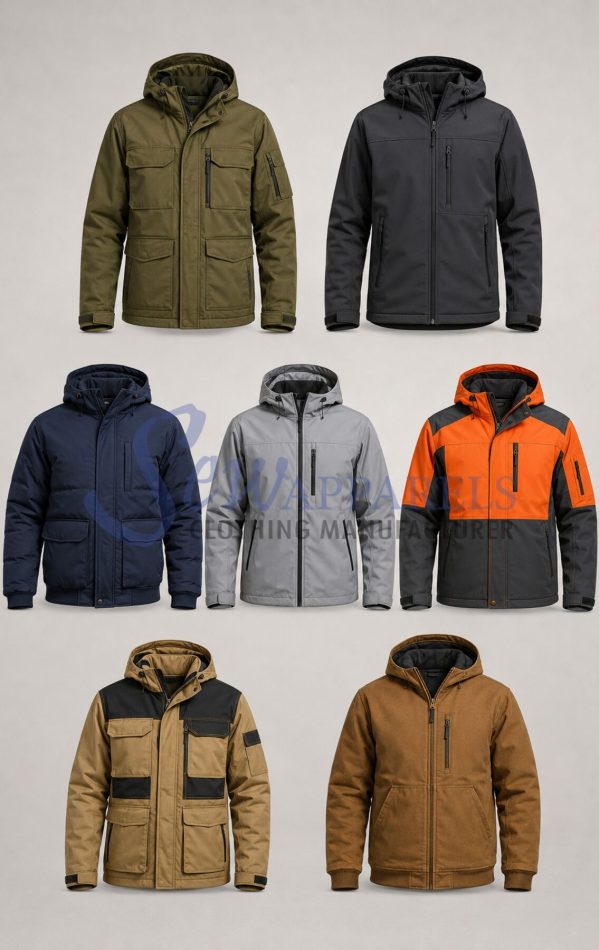
A work jacket shell abrasion comparison is one part of a product decision. It does not independently establish garment service life, water protection, seam durability or suitability for a hazardous task. Keep those requirements separate and identify the evidence needed for each. A higher laboratory result should not become a claim that the jacket will last a particular number of months without a justified basis.
1. Establish work jacket shell abrasion comparison identity
Start with the exact shell reference, colour, construction and finish. Record whether the material is an uncoated textile, a coated fabric or a laminated construction. Identify the face under review and preserve the sample reference. A report for a similarly named fabric should not be treated as evidence for the ordered material until the relationship is confirmed.
For hooded work jackets, shell sample reference identity should connect the supplier material code, sample revision and relevant report. Include any finishing or treatment information needed to distinguish the sample. If a supplier changes the material or finish, record that change and ask whether the previous evidence remains relevant. Do not silently carry the earlier result into a new specification.
Discuss a custom hooded work jacket manufacturing enquiry through the Hooded Work Jackets product page with those references and the proposed use. Ask which evidence is available for the actual configuration. Keep requested performance distinct from confirmed evidence so the enquiry does not imply that every shell option has already been tested.
A fictional selection file might identify materials S-A and S-B, each with its own surface description and report reference. These are illustrative identifiers, not Sew Apparels materials. Their purpose is to prevent a purchasing comparison from reducing two different constructions to an unsupported statement such as fabric A is stronger.
2. Check method eligibility for the tested surface
Work jacket fabric test comparability begins with the method and its scope. Identify the standard, edition, tested surface and reported outcome. Confirm with the laboratory that the method is appropriate to the material under review. The term Martindale alone does not provide enough information to establish that two reports measured the same property under comparable conditions.
A work jacket shell abrasion comparison must distinguish ordinary textile specimen breakdown from testing the coated surface of a coated material. ISO’s description of ISO 12947-2:2016 identifies specimen breakdown as its endpoint and states that it is not applicable to coated fabrics, including laminated fabrics. Its public description directs coated-surface abrasion assessment to the ISO 5470 methods.
ISO’s description of ISO 5470-2:2021 covers separate wet and dry abrasion methods for coated surfaces. It distinguishes those surfaces from an uncoated face of a coated fabric. That distinction matters when requesting work jacket coated fabric abrasion evidence. The laboratory should determine applicability for the actual material and face, rather than the buyer choosing a method from the jacket’s marketing description.
For hooded work jackets, coated shell test eligibility and the laminated fabric abrasion method need deliberate review. A laminate description can include several layers with different roles. Identify what is exposed, what is being tested and what the report can support. Do not assume that a result for one layer establishes the abrasion behaviour of the entire assembled garment.
3. Compare report conditions and endpoints
In a work jacket shell abrasion comparison, request the complete report rather than a cycle figure copied into a quotation. Review the sample identity, method, conditions, endpoint and any stated limitations or deviations. Ask the laboratory to explain ambiguities. A result without a clear endpoint may be unsuitable for the purchasing decision even if the number appears impressive.
Keep fabric breakdown versus surface change distinct in the evidence worksheet for hooded work jackets. A structural endpoint, a visible colour change and an observation about a coating are different findings. Do not combine them into a single ranking without an agreed basis. Describe each observation accurately and connect it to the requirement it addresses.
A work jacket shell abrasion comparison also needs comparable preparation and test conditions. If reports concern different treatment histories or different faces, record that difference explicitly. Ask whether a further matched comparison is needed. Avoid treating incomparable results as a direct competition simply because both suppliers used the word abrasion in their summaries.
Where the buyer sets an acceptance criterion, identify its source, purpose and responsible approval. This guide supplies no universal cycle threshold. The relevant requirement depends on the product brief and applicable specification. A laboratory can help clarify the method and result, while the buyer and responsible technical team define the decision criteria appropriate to the order.
4. Map equipment contact and observe cosmetic wear
Laboratory reports do not describe every contact that occurs when a finished jacket is worn. Prepare an equipment contact zone map for hooded work jackets, covering the intended bags, straps and other relevant equipment. Identify areas such as shoulders or upper back where contact is expected. Keep the map specific to the proposed arrangement rather than assuming every wearer has the same exposure.
For a work jacket shell abrasion comparison, outer shell backpack contact damage should be recorded as an observation with context. Note the equipment reference, contact location, activity and garment sample. Distinguish observed damage from an opinion about its cause. A mark noticed after use does not alone establish that the backpack was responsible or that the material failed a laboratory requirement.
Shell bag contact wear on hooded work jackets can involve both appearance and construction concerns. Record visible rubbing, colour differences or surface changes separately from evidence of breakdown. Photograph observations within the buyer’s own evaluation records where appropriate. The product reference image above is not trial evidence; a controlled development record should preserve what evaluators actually saw.
Shell cosmetic wear observations should have agreed descriptions and review conditions. Keep initial appearance, later observations and any care events traceable to the same sample. Do not label a cosmetic change as structural failure without the appropriate assessment. Equally, do not dismiss an observation merely because it is cosmetic when appearance is an explicit buyer requirement.
5. Use a controlled jacket wear pilot appropriately
A hooded work jacket shell wear trial should supplement relevant laboratory evidence, not replace it. Define the objective, garment identity, equipment, permitted activities and observation process before starting. The responsible organisation should ensure that any evaluation is appropriate and does not expose wearers to an unsuitable garment or unsafe activity.
In a work jacket shell abrasion comparison, a controlled jacket wear pilot for hooded work jackets should record differences that could affect interpretation. Consider the garment size and fit, equipment configuration, care history and actual use conditions. If those differ, explain the limitations of comparing observations. A pilot with uncontrolled differences cannot provide a precise material ranking.
Use a consistent reporting format for participants or evaluators. Record the observation date, zone and sample reference, then separate factual notes from interpretation. Agree who reviews concerns and how an item is removed from evaluation when needed. The pilot should not continue simply to produce more wear evidence after a concern requires responsible review.
Do not translate pilot duration into a promised service life. A short evaluation may identify a concern or help refine a specification, but it cannot establish every future use condition. Preserve the actual scope and limitations in the decision record. Any broader durability claim needs an appropriate supporting basis rather than an extrapolation from a small trial.
6. Build the shell wear decision worksheet
The shell wear decision worksheet for hooded work jackets should connect each requirement with the evidence reviewed. Include material identity, method applicability, report comparability, relevant observations and unresolved questions. Mark items awaiting clarification instead of filling gaps with assumptions. A decision record is more useful when another person can see why a material was accepted, held or rejected.
A work jacket shell abrasion comparison should separate abrasion report relevance from the full outer fabric selection evidence. A relevant report may support a particular abrasion outcome while leaving other properties unverified. Identify additional requirements independently, including any proposed care, comfort or protective claims. Do not let a strong result for one property stand in for every product requirement.
When reviewing private label hooded work jacket production, preserve the approved shell identity in the product specification and purchasing record. Ask how a proposed substitute will be reviewed before acceptance. A change in material, finish or layer arrangement may require new evidence even when the colour and nominal fabric description remain similar.
The existing Hooded Work Jackets Buying Guides connects this evidence review with other construction and purchasing topics. Use those guides to prepare clear questions, while keeping the order specification and actual evidence authoritative. A general guide should support the decision rather than serve as proof that a particular supplied material meets it.
Keep the work jacket embroidery access review linked to proposed decoration changes, since the approved shell construction and the completed branding process need distinct evidence.
Questions before approving the shell
Does a larger cycle number always mean a better fabric?
No. Compare the method, surface, conditions and endpoint first. Different outcomes or test arrangements can make the figures unsuitable for a direct ranking. Ask the laboratory to clarify whether the reports are comparable.
Can a wear pilot replace a coated-surface test?
No. A pilot records the defined use observations, while a laboratory method addresses its specified outcome. Their evidence can complement each other, but neither automatically proves every performance requirement.
What completes work jacket shell abrasion comparison?
Traceable sample identities, applicable methods, comparable reports and a documented decision basis complete the review. Resolve gaps before accepting related claims, preserve limitations and require a fresh review when the ordered shell changes.