Tool Pocket Load Distribution: 7 Smart Checks
SA205 · TOOL POCKET LOAD DISTRIBUTION. Specify multi-pocket layout, bar-tack reinforcement and pocket-bag support before approving work cargo trousers for loaded movement.
Read the guide →
Use this guide to specify multi-pocket layout, bar-tack reinforcement and pocket-bag support so work cargo trousers remain balanced, accessible and comfortable when tools are carried.
Evaluate tool-pocket placement with a loaded garment, not only an empty sample. Record pocket dimensions, reinforcement and movement checks in one dated approval brief.
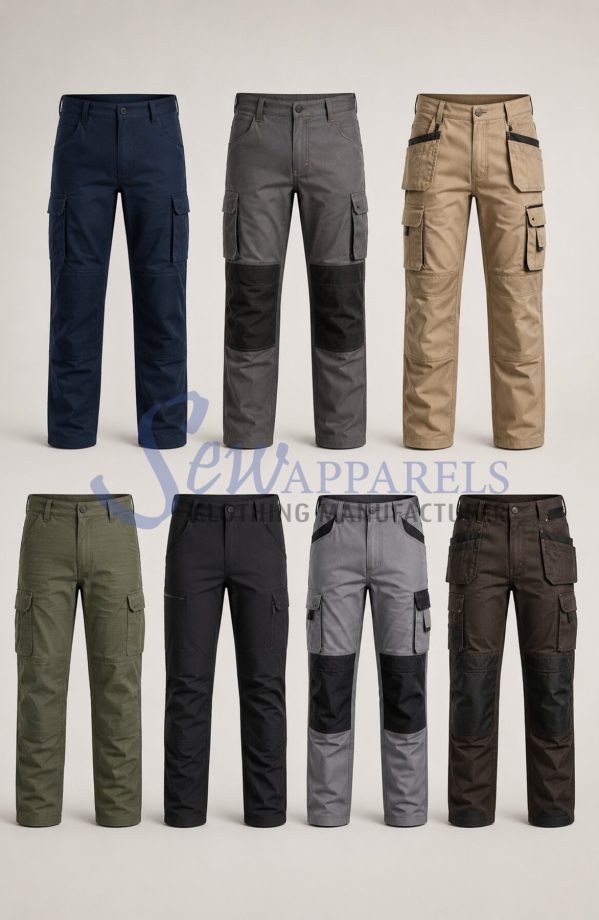
SA205 · TOOL POCKET LOAD DISTRIBUTION. Specify multi-pocket layout, bar-tack reinforcement and pocket-bag support before approving work cargo trousers for loaded movement.
Read the guide →Review fabrics, pocket options, sampling, MOQ and production details on the core product page.
View product page →Compare fit, pocket construction and sampling decisions across the work cargo trousers buying guides before confirming your tech pack.
View all work cargo trouser guidesTool pocket load distribution is a pattern and production decision. Trousers may look correct when empty yet pull at the waist, twist the side seam or sag at the knee when a worker carries tools. Approve the pocket system on a sample using the intended shell fabric, waistband, pocket bag, closures and reinforcement.
Record the wearer, tools, hand preference, base layer, footwear and work movements before finalising dimensions. Repeat the test on the smallest, middle and largest sizes so a comfortable sample does not hide a grading problem.
Start with the work task, then map every pocket from stable reference points: centre front, side seam, waistline, hip line and hem. State the finished opening, depth, width, flap or closure, and the distance from the waistband and side seam. A technical drawing should show which pocket is used by the right or left hand and which tool is carried in it.
When deciding how to specify multi-pocket layout for work cargo trousers, separate storage capacity from usable access. A deep pocket may hold more but become difficult to reach while seated. A wide pocket may interfere with a tool belt. Test the empty and loaded garment while walking, bending, kneeling, climbing and sitting. 1. Work cargo trousers multi-pocket layout. Balance the load across the body rather than placing every heavy item on one side. Mark pocket centres and check how the contents change the trouser silhouette. If a side pocket sits too far forward it may pull the leg inward; too far back can make access awkward. Record the approved position, pocket-bag shape, grain direction and allowance for shrinkage.
Define each bartack by location, length, stitch density, thread and backing method. Identify the stress point: pocket opening, belt-loop join, flap corner or side-seam attachment. Do not use “add bartacks” as a complete instruction. State where the reinforcement begins and ends, what seam allowance it catches and whether the bartack is applied before or after the pocket bag is closed.
2. Work cargo trousers bartack reinforcement. Check that a bartack supports the seam without creating a hard ridge that catches against tools or the wearer’s hand. Compare the same reinforcement after washing and pressing. Inspect for thread breakage, fabric tearing, skipped stitches, puckering and a pocket opening that no longer lies flat. For a new brand, one controlled reinforcement block is easier to approve than several untracked variations.
Build a repeatable trial: walk, take a long step, sit, squat, kneel, climb and reach across the body. Repeat it with the actual tools or calibrated equivalents. Record whether the waistband stays stable, the seat remains comfortable, the side seams stay aligned, the pocket openings remain accessible and the hem clears the footwear.
For each test, use the same tool weight and record whether the waistband, side seam or knee position changes. Photograph the garment from front and side views, then attach the observations to the sample approval record.
Review the smallest and largest sizes first. Grading can move a pocket closer to the knee, alter a bartack position or increase the leverage on a pocket bag. Keep a measurement table for pocket centres, opening width, depth, bag support and reinforcement so each size can be audited.
State whether the pocket bag uses shell fabric, a lighter woven support or a reinforced combination. Give the finished depth, width, seam allowance, anchoring points and any drainage opening. The bag should support the intended load without swinging below the hem or pulling the outer panel out of alignment. Check the attachment at the top, bottom and side edges.
3. Work cargo trousers pocket bag support. Load the bag with representative tools and inspect the outer garment from front, side and seated views. Look for a pocket that turns outward, a bag that catches on the knee, or a seam that transfers the full load to one point. When the pocket bag is substituted, repeat the loaded-use test because fabric weight, shrinkage and recovery can change the result.
Document the pocket-bag fabric, grain direction, finished depth and anchoring points in the tech pack. A substitute lining or altered seam allowance needs a fresh loaded sample check before bulk approval.
Inspect pocket joins, side seams, inseams, belt loops and bartacks after the movement trial. ASTM D7506/D7506M provides a test approach for localized weakness due to bar-tacking in pocket areas; use the official ASTM D7506/D7506M reference as technical context while setting a product-specific loaded-use and wash plan.
For stitch and seam characteristics, ASTM D6193 describes strength, elasticity, durability, security and appearance considerations. The official ASTM D6193 reference can help the technical team choose a seam and stitch configuration, but the finished garment still needs an approval test with the intended fabric and load.
Use standards as technical context and state the actual test load, garment condition and pass criteria in your own brief. Inspect both new and laundered samples so reinforcement remains secure in the intended use.
Common work cargo trousers tool pocket load distribution mistakes include copying a casual trouser pocket map, placing all heavy tools on one side, measuring a curved bag as if it were flat, adding reinforcement without checking seam allowance and approving an empty garment. Another mistake is increasing pocket depth to solve capacity without checking knee clearance, seat comfort or the hem.
Do not solve every complaint by adding more fabric. First identify whether the problem is pocket position, opening angle, bag support, bartack placement, rise, seat width or waistband stability. Change one variable at a time and repeat the same loaded movement trial.
Treat each complaint as a measurable construction issue. Record the affected size, pocket position, tool weight and movement. Change one variable and repeat the same trial before approving a new pattern.
Freeze the base size, pocket map, load examples, bartack schedule, pocket-bag fabric, grain direction, seam allowance, grading rule and tolerance in the tech pack. State which changes require buyer approval. Keep the signed sample and measurement chart together. If a fabric or trim substitution is proposed, require a comparison sample and a fresh loaded-use check before bulk cutting.
Add the approval date, sample code, reviewer and revision number. Include front, side and seated observations for the loaded garment, plus the confirmed fabric and trim sources.
A production-ready brief should make the pocket positions and reinforcement methods reproducible across sizes. Identify which parts of the sample are approved and which still require testing before bulk cutting.
Use this checklist at the sample approval meeting. Mark each item against the actual loaded garment and attach the findings to the tech pack.
Do not release bulk cutting until the sample, pocket map and reinforcement schedule agree. If the order changes fabric, pocket-bag material or tool load, revisit the affected checks.
Ask which measurement method will be used, which pocket carries each tool, how the pocket bag is anchored, and whether the bar-tack catches the intended seam allowance. Agree what may change between sample rounds and require the factory to identify the exact pattern or sewing point affected. A clear record protects approved work cargo trousers tool pocket load distribution when the order moves from development to production.
Ask the production team to show the measurement points and identify how a revised pocket position affects access while sitting, squatting and kneeling. Confirm who approves pattern and sewing changes.
Keep one dated record of open questions, answers, tests and approvals. This helps a startup brand compare sample rounds and prevents approved tool-pocket details from changing unnoticed in bulk production.
Startup clothing brands can develop work cargo trousers with Sew Apparels by sharing a focused brief for fabric, fit, pockets, reinforcement and order quantity. A low MOQ work cargo trousers manufacturer should confirm the applicable minimum by design and colour in the quotation; do not assume a sample quantity is the bulk-production minimum. Keep the tool load and pocket-bag tests consistent through sampling and bulk approval.
Sew Apparels welcomes startup brands planning their first work cargo trousers collection. Share your intended wearer, tools, size range, fabric, branding and launch schedule so the production team can identify the key sample decisions. Prioritise a small, well-defined style range, record any fabric or trim substitutions, and confirm pricing, sample charges and production milestones in the quotation.
After reviewing the work cargo trousers tool pocket load distribution guide, keep the approved pocket map, bag construction, bartack schedule and loaded-use observations together. Use the custom work cargo trousers manufacturing page to explore core product options and discuss a production brief with Sew Apparels.
Explore work cargo trouser manufacturing