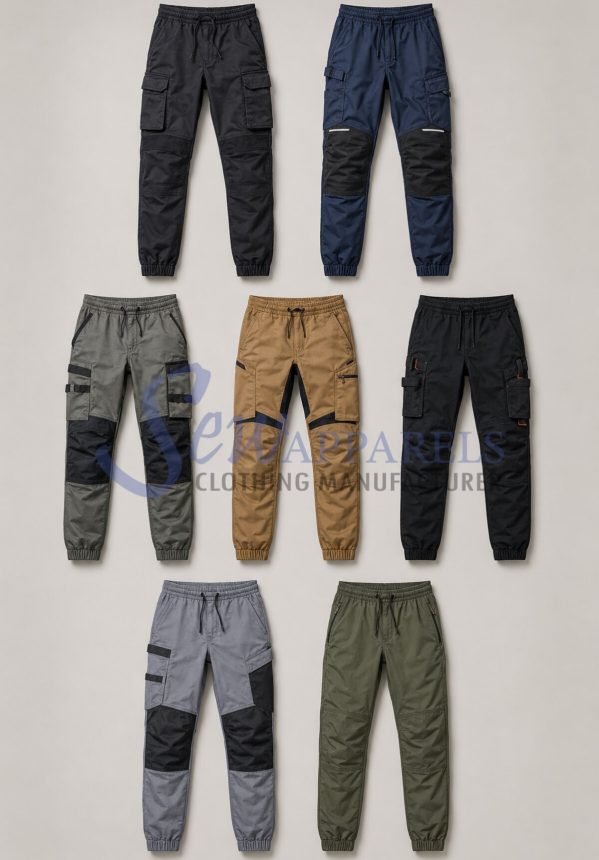
Stretch panel positioning
Plan knee panels, seat panels and crotch gussets around the movement zones relevant to the intended work. Record placement reference points, stretch direction, seam interaction, grading and agreed approval poses. Use the linked technical article to prepare the sample review, then assess the panel in the complete garment. A material that extends easily does not establish that the seam or pattern permits the same movement. Keep the accepted panel map and fabric version with the dated fitting comments, and repeat relevant observations after a change. Use the stretch panel positioning buying checklist to record the approval details.
Read the article
Cuffed hem clearance
Coordinate cuff width, ankle fit, lower-leg taper and the intended footwear on an identified sample. Record relaxed and extended openings, garment position and ordinary movement observations. Use the linked cuff clearance article to prepare a measurable review without inventing one universal boot gap. Compare the accepted garment before and after the planned care route. Check whether a changed cuff or taper affects comfort, garment removal or the intended presentation, and record the actual footwear reference rather than treating all work boots as interchangeable. Use the cuffed hem clearance buying checklist to document the matched footwear and cuff review.
Read the article
Woven Versus Knit Work Jogger Quotation: Materials, Details and Cost Scope
Align the material specification, shared garment details, sample work and order allocation before comparing prices. Confirm evidence inclusions, commercial terms and exclusions against the selected garment version.
Read the woven versus knit quotation guide
Work Jogger Phone Pocket Usability: Fit, Access and Sample Limits
Review identified phones and cases, standing and seated access, closure operation and ordinary retention observations. Record sample versions and compatibility limits before approving the pocket specification.
Read the phone pocket usability guide
Work Joggers Pilling Evidence Comparison: Matched Reports and Surface Approval
Compare identified fabric samples, reported methods, finish and wash states before ranking pilling evidence. Keep laboratory assessments separate from garment observations and define the appearance approval scope.
Read the pilling evidence comparison guide
Work Joggers Waistband Elastic Wash Recovery: Measurements and Care Evidence
Review relaxed waist dimensions, extension observations, wash and dry routes, and casing changes. Keep component reports separate from finished assembly evidence when approving the waistband specification.
Read the waistband wash recovery guide
Plan the first work joggers sample
Define the wearer role, movement profile, size range and fabric system before asking for a quotation. Separate stretch-panel placement from cuffed-hem clearance in the tech pack, then approve both on the same fit sample so one correction does not hide a new mobility problem.
Plan custom work joggers
Work Joggers Buying Guides: Build a Clearer Specification
Work joggers combine activewear mobility with the durability expected from occupational clothing. Buyers must coordinate fabric recovery, panel placement, pocket load, seam construction and fit across every size. This guide hub keeps each technical topic connected to the custom work joggers manufacturer page while giving development teams a direct path to detailed articles and practical buying guides. Translate these requirements into panel maps, fabric references, pocket load assumptions and measurable movement poses rather than broad statements such as “comfortable stretch.”
Start with the requirement that presents the greatest wearer risk or sample uncertainty. Record measurements, materials, test poses and acceptance criteria before development. As new work joggers articles are published, they will be added here in the same card format so buyers can follow one organised product-specific library. Keep one dated decision record so the pattern, fabric and production teams work from the same approved version.
How to use this guide hub
Use this sequence to keep every linked resource tied to an approval decision.
- Choose the issue that affects fit, movement or durability.
- Read the article to understand the technical decision.
- Open the matching guide for measurements and sample checks.
- Add the relevant checkpoints to the technical pack.
- Record changes by sample version before approval.
Start with the most demanding posture and garment size in the brief. Read the relevant article for the construction choices, then use its buying guide to turn those choices into sample measurements and pass criteria. Revisit both after fabric or pattern revisions, because a new cuff or panel can change the movement result.
Prepare the development brief
A factory can quote and sample more accurately when the first brief states the following items explicitly.
- Target market, wearer role and work environment.
- Required sizes and expected movement profile.
- Main fabric, stretch insert and trim references.
- Pocket, reinforcement and branding positions.
- Testing, packaging and delivery expectations.
Mark stretch direction on the pattern, define the finished cuff opening both relaxed and stretched, and photograph the approval poses. A measurement without its testing condition can be misread across sizes. Keep the approved fit sample, fabric swatch and versioned tech pack together before releasing the order to production.
Test stretch recovery and cuff clearance together
The CottonWorks weaving basics resource explains woven construction through the interlacing of warp and filling yarns. The CottonWorks knit basics resource explains loop-based knitted construction. Use these definitions to describe candidate materials accurately when preparing a woven versus knit work jogger quotation. They do not establish a quoted cost, a protective property or the performance of Sew Apparels’ finished garments. State the actual composition, construction, weight basis, finish and sample identity. A construction family is useful background, but the supplier still needs the garment’s specific requirements to propose a meaningful material and commercial scope.
Keep laboratory fabric findings separate from finished garment observations. Agree relevant methods, specimen identity, condition and acceptance references with the responsible technical team. A pilling assessment should identify the method and finish or wash state before one material is ranked against another. A waistband component report cannot by itself approve the assembled waist after washing and drying. For phone pockets, use identified devices and cases, record standing and seated access and review ordinary retention without overstating compatibility. Bring these findings back to the actual sample and its intended use. If a result changes, review the affected material, assembly or pattern evidence rather than assuming that a previous garment approval covers the revision.
Low MOQ support for startup brands
A low MOQ work joggers manufacturer discussion should start with a clear fabric system, colour allocation, size range, pocket requirements, waist components and sampling scope. Ask the supplier to confirm the achievable order arrangement for that specification instead of applying an invented general minimum. A startup can focus the first brief on one controlled material and the features that affect the intended wearer most directly. Approve panel and cuff observations separately, then review them together in the complete garment. Include the phone pocket, pilling and waistband requirements so they are visible before quotation rather than becoming unexpected changes after release. If the material or construction route changes, check whether the earlier sample work and commercial offer still apply.
Giving priority to startup brands
Sew Apparels gives startup companies a structured route from design concept to production brief. Clear panel maps, target measurements and approval photos create a repeatable base for future colours, size extensions and larger quantities. The linked resources help the buyer arrive at supplier discussions with decisions that can be measured and confirmed. Startup teams can begin with a concise design sketch, wearer profile and realistic quantity plan. The factory can then map a focused development route, explain material options and record decisions for later replenishment or expanded sizing.
Turn your development decisions into a product brief
Use these work joggers buying guides to prepare one coordinated enquiry. Bring the wearer activity, size allocation, fabric identities, panel map, cuff and footwear references, phone and case list, pilling evidence and waistband care observations. Compare woven and knit offers against the same intended garment requirements, while making necessary construction adaptations and exclusions visible. Keep the selected sample, quotation, labels and packing instruction tied to the same version. Discuss the actual development and production scope with Sew Apparels, and reopen relevant checks if a component, material or pattern changes. A useful approval records what was assessed and what still needs confirmation; it should not extend a limited trial into an unsupported lifetime or universal performance claim.
Contact Sew Apparels about work joggers