01 · Review all panel checks
Use the technical article as a compact reference for knee, seat and gusset panel location, stretch direction, seam construction and sample approval.
Read the technical article
A practical sourcing framework for placing knee panels, seat panels and crotch gussets where they support real work movement without creating weak seams, unwanted bulk or inconsistent production.
Use the work joggers buying guides hub to connect stretch-panel decisions with cuff clearance and the wider garment brief. This guide turns panel placement into measurable fit, material and seam checks that can be reviewed on a sample before bulk production.
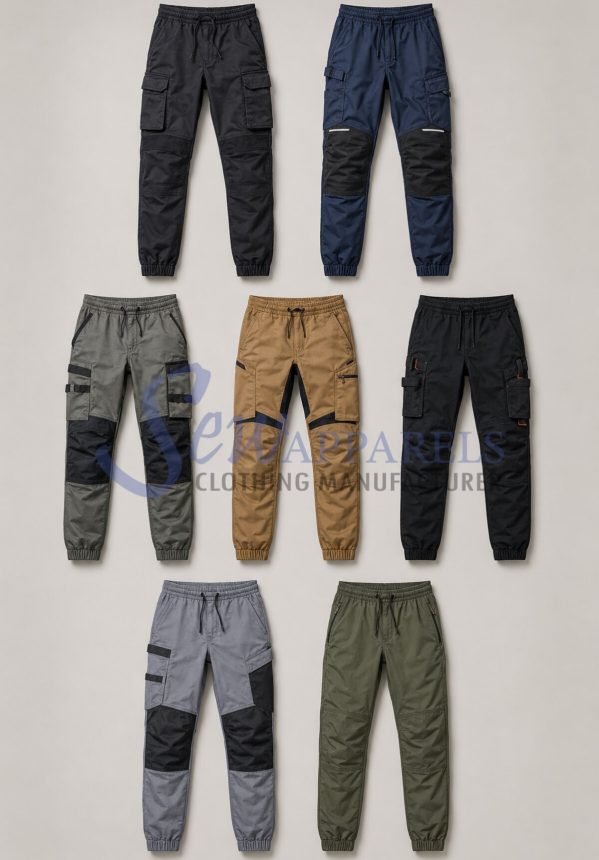
Use the technical article as a compact reference for knee, seat and gusset panel location, stretch direction, seam construction and sample approval.
Read the technical articleCompare stretch-panel placement with other fit and construction decisions in the work joggers development guide hub.
Explore all work joggers guidesPanel mobility and ankle clearance should be judged together in the complete workwear fit. Review the separate cuffed-hem buying guide.
Read the cuff clearance guideStretch fabric only improves mobility when the panel follows the body area that actually changes shape during kneeling, climbing, squatting and reaching. A large panel in the wrong location can cost more without improving movement. It can also create seam lines that rub against the knee, pull across the seat or twist around the leg. A clear work joggers stretch panel positioning plan therefore connects the garment pattern, fabric direction, seam construction and expected task before the first sample is cut.
Start with wearer activities and the base size. Mark the knee center, seat expansion zone and crotch stress lines on a fitted sample. Then compare those marks with the proposed seam map. This simple exercise gives the buyer and factory a shared reference and reduces subjective comments such as “make it more flexible.” The stretch panel positioning article explains the technical checkpoints behind this guide.
Document the job movements that matter most: repeated kneeling, ladder climbing, vehicle entry, deep squatting, tool carrying or long periods of sitting. Each motion changes a different part of the trouser. A warehouse team may need balanced knee flexion and seat recovery, while a maintenance team may place greater stress on the crotch and upper thigh. Include footwear and expected tool weight because both influence posture and garment tension.
During fitting, photograph the front, side and back at standing, half squat and full work pose. Use the same model, size and camera angle for every revision. The image set becomes a practical approval record and helps the pattern team distinguish a placement issue from a sizing issue.
Work joggers knee panels should cover the bending zone rather than merely align with a flat standing knee point. The panel usually needs enough vertical allowance to remain over the kneecap when the wearer drops into a kneeling position. If it sits too high, the lower seam may cut across the knee; if it sits too low, the benefit moves toward the shin.
Check panel width as well as height. A narrow insert may pull at its side seams, while an oversized insert can look uncontrolled and collect excess fabric. Ask the factory to mark the knee center and finished panel dimensions on the pattern and sample report so later sizes can be graded consistently.
When deciding how to specify knee panels for work joggers, state the reference point, finished dimensions, fabric direction, stretch direction and seam type. Do not rely on a sketch alone. A useful specification might measure the top and bottom panel seams from the crotch line or finished inseam, then add a tolerance that production can inspect.
Confirm whether the panel is designed for mobility, abrasion support or both. A highly elastic knit may improve flex but may not suit direct floor contact. A durable woven stretch insert can be more appropriate for industrial use. The sample should be tested with the intended main fabric, thread and seam allowance because the surrounding materials control how the panel behaves. For suitable woven stretch panels, ISO 13934-1:2013 describes a current strip method for fabric maximum force and elongation; select tests against the actual fabric and application.
Work joggers seat panels must support the expansion that occurs when the wearer bends or sits without creating a visible droop when standing. Place the panel around the high-strain seat zone and keep its seam away from pressure points. A panel that ends directly under a belt or tool pouch can add bulk and discomfort.
Evaluate the back rise, yoke angle and pocket position together. Moving one element can change the available stretch path or distort a pocket opening. After a movement test, allow the garment to recover and check for permanent bagging, seam grin and puckering. The goal is useful extension followed by a clean return to shape.
For how to specify seat panels for work joggers, provide a measured seam map and explain the expected load. Record the distance from the waistband, center-back seam and side seams at key points. Note whether the stretch runs horizontally, vertically or in both directions, because an incorrectly rotated piece can remove the intended benefit.
Keep rear pockets, reflective details and branding clear of the highest extension zone. If a pocket must cross the panel, review reinforcement and recovery around the opening. Approve the seat area in standing, seated and deep-squat positions and compare all views before releasing the pattern for grading.
A work joggers crotch gusset redistributes strain away from intersecting inseam and rise seams. Diamond or elongated shapes can improve step length, climbing comfort and squat depth, but the gusset must be proportioned to the pattern. Too small provides little improvement; too large can introduce folds or make assembly harder to control.
Align the gusset stretch with the direction of greatest movement and confirm seam allowance symmetry. The ends should taper smoothly into the inseam so they do not form hard stress points. Inspect the inside finish because bulky overlock stacks can cause rubbing during active use.
When documenting how to specify crotch gusset for work joggers, include the finished shape, length, width, material code, grain or stretch direction and seam construction. Provide placement measurements from stable pattern points instead of relying on photographs. Tell the supplier which movements the gusset must support and include the required poses in the sample fitting checklist.
Review seam strength alongside mobility. Stretch material can transfer load into adjoining non-stretch fabric or thread. Inspect the gusset ends after repeated squats and steps for skipped stitches, seam opening or distortion. A controlled trial reveals whether the full system works, not just whether the insert stretches by hand. When the panel and adjacent fabric are woven, ASTM D1683/D1683M-22 provides a current sewn-seam failure test to help evaluate the approved seam assembly.
Common work joggers stretch panel positioning mistakes include measuring from unstable edges, ignoring stretch direction, grading every size by a fixed amount, placing a seam on the kneecap and approving only a standing photo. Another mistake is mixing fabrics with incompatible recovery. The panel may extend easily while the main fabric restricts the seam, producing puckering or early failure.
Use a revision table that records pattern version, panel measurements, fabric batch, sample size and fit result. This prevents an approved adjustment from being lost between prototypes. Keep the final placement map inside the technical pack and make it part of pre-production sample approval.
Keep photographs and measurements with the approval record so production teams can repeat the accepted result.
For a startup brand, a low MOQ work joggers manufacturer should help narrow the first development round to the features that affect fit, durability and customer use. Instead of launching many panel variations at once, choose one clear movement profile, one approved fabric combination and a controlled size range. This reduces sampling complexity while preserving the evidence needed for a dependable production decision.
Sew Apparels gives startup brands a practical route from design brief to sample review. Buyers can prepare target measurements, panel maps, colour references, logo placement and packaging needs before costing. Clear inputs make a smaller order easier to manage and create a stable base for future colours or repeat quantities. Visit the custom work joggers manufacturer page for the broader product-development service.
Share the wearer activity, target market, size range, fabric idea and panel priorities. The development team can translate those inputs into a sample plan with measurable checkpoints for knee, seat and crotch mobility. Review all seven panel-positioning checks before releasing the pattern for production.
Plan custom work joggers