
Work joggers pilling evidence comparison helps a buyer decide whether competing fabric reports actually describe comparable samples. A higher-looking grade on a quotation sheet is not enough when the reports use different methods, specimen histories or assessment points. The useful question is whether the evidence supports the appearance requirement for the proposed garment and the material version being ordered.
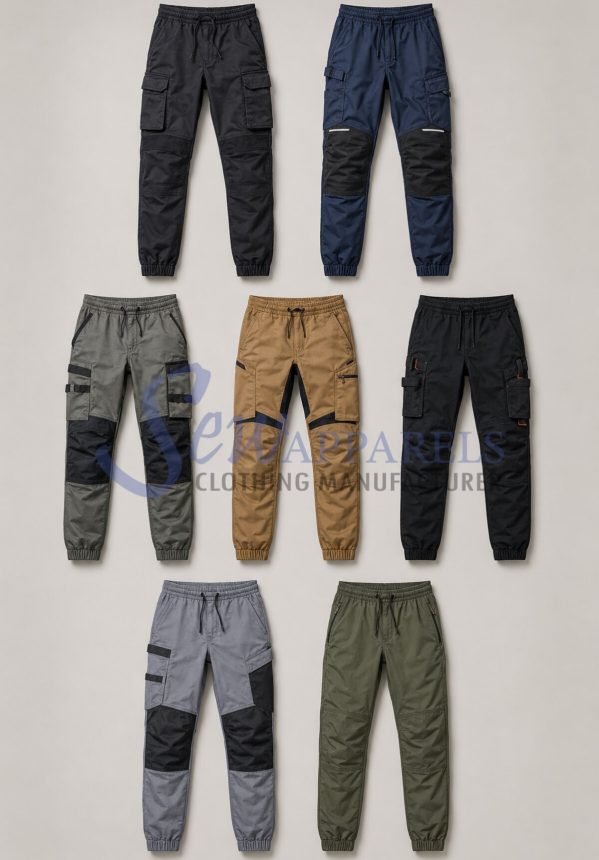
This guide to work joggers pilling evidence comparison connects sample identity, test scope, surface observations and approval decisions. It does not prescribe a universal passing grade or claim laboratory performance for a Sew Apparels fabric. Buyers should agree the appropriate method and acceptance criteria with their technical team and testing provider before using reports to select materials.
1. Start work joggers pilling evidence comparison with identity
A work joggers pilling report sample identity check starts with the material code, supplier reference, colour, construction and finish. Confirm whether the report describes the same fabric proposed for production. Similar fibre labels or nominal weights cannot establish that two materials share yarn, processing or surface characteristics. Keep the submitted sample and its supporting specification connected.
Record which face of the fabric was examined and whether the garment uses that face externally. A brushed reverse may serve a different function from the outer face. If the report does not identify the surface, ask for clarification before treating its result as relevant to the visible garment. Avoid filling a missing field with an assumption based on a photograph.
A work joggers finish state comparison should identify whether the sample is unfinished, finished, washed or otherwise processed. Record the actual sequence supplied by the material team. Evidence from an earlier development stage should remain attached to that stage, with any need for further testing shown explicitly. A report date alone does not establish the processing history.
Keep each candidate in its own evidence folder with report identifiers and a retained swatch where available. This prevents a development team from combining the appearance of one sample with the score of another. When a supplier substitutes a material, review the evidence link again rather than carrying the previous approval over automatically.
2. Match the method and reported conditions
Work joggers pilling evidence comparison requires an identified method and edition. A work jogger pilling report method entry should include the complete reference, reported procedure and assessment stages. A short description such as Martindale result may leave important distinctions unresolved. Ask the testing provider to explain the scope actually used and any departures documented in the report.
The public scope of ISO 12945-2:2020 identifies a modified Martindale method for examining fabric resistance to pilling, fuzzing and matting. The public description does not supply a complete operating procedure or an acceptance value for a work jogger. Use the relevant full method through a competent testing provider when commissioning evidence.
For work joggers matched pilling conditions, compare the reported exposure stages, specimen preparation, conditioning and assessment basis. Use the information actually available in each report. If a condition is missing, mark the comparison as unresolved and request it. Do not convert a grade from one method into another using a convenient numerical assumption.
Work joggers laboratory grade comparability depends on this shared basis. Two reports can contain the same grade while documenting different arrangements. Conversely, different grades may not justify ranking materials when the conditions differ. A matched new test can sometimes be a clearer decision route than an elaborate comparison of incompatible historical reports.
3. Separate pilling, fuzz and matting observations
Work joggers pilling evidence comparison should preserve the appearance categories reported by the testing provider. Do not silently combine all surface change into one favourable number. Ask the laboratory to identify what each assessment covers and which results apply to the buyer’s brief. Keep original terminology and explanatory notes available to the people making the decision.
The public description of ISO 12945-4:2020 concerns visual assessment of pilling, fuzzing and matting, with applicability to many woven and knitted fabrics, including napped constructions. Its public scope is background for choosing an assessment route. It is not a complete grading instruction or proof that a proposed sample has been assessed.
A work jogger surface fuzz evaluation needs an identified baseline and consistent viewing arrangement for development observations. Photograph the original and reviewed samples under agreed conditions, and keep the actual samples where practical. A photograph taken with a different angle or lighting can change apparent contrast. Do not use image processing to conceal a surface change.
For work joggers fuzz and matting evaluation, keep the laboratory assessment separate from informal buyer comments. Both can contribute to development, but they have different evidence scope. An informal description such as cleaner-looking should not be rewritten as a laboratory grade. Record who made the observation, what was examined and whether a formal assessment is still needed.
4. Track washed and unwashed samples
Work joggers pilling evidence comparison becomes misleading when washed and unwashed material records are mixed. A work jogger washed pilling samples register should identify the care route and sequence used before the relevant evaluation. Keep untreated references available so the team can distinguish a pre-existing finish appearance from a change observed after the agreed processing.
Create a work joggers washed fabric surface reference for the condition included in the buyer’s brief. Record detergent, drying and other preparation information provided by the test or development team. Do not invent missing conditions, and do not assume that a domestic development wash represents every customer’s care practice or an industrial laundry route.
Examine whether the report is for a fabric specimen or a finished garment material taken from a defined location. The garment may include processing or local interactions absent from an earlier swatch. Describe the level of evidence accurately. A fabric report can inform selection without automatically settling the appearance of every seam, pocket or contact area.
Label samples physically and in the evidence worksheet using the same version system. If two wash routes are under review, keep separate sets rather than placing loose swatches into a single pile. This simple control makes later approval discussions more reliable and helps identify which version needs another assessment following a material change.
5. Connect evidence to the garment brief
Work joggers pilling evidence comparison should support an agreed work jogger fabric surface acceptance requirement. Define what appearance matters to the buyer, the applicable assessment stage and how borderline results will be handled. Acceptance belongs in the purchasing and technical agreement; it should not be assumed from a generic fabric description or an unrelated brand’s programme.
Consider work joggers work contact surface wear as a separate development observation. Ordinary contact with a chair or other approved surface may produce a local appearance issue worth reviewing. A controlled wearer observation is not automatically equivalent to a pilling method. Avoid translating a laboratory exposure count into a promised number of working days.
For work joggers garment surface approval, identify the relevant garment version and record any local concerns. Review the practical appearance requirement alongside other material needs, including fit, care and construction. A single report number should not replace the wider development decision. If an important trade-off remains, show it openly in the approval record.
Work joggers visual pilling acceptance should state the evidence used, the decision maker and the limits of approval. A successful result for one colour or finish does not prove all later variants without a justified scope. Ask the material and testing teams which changes require further evidence and make that decision part of the control plan.
6. Build a clear comparison worksheet
Work joggers pilling evidence comparison works best with a short, traceable table behind the decision. A work joggers pilling evidence worksheet can list candidate identity, report reference, method edition, preparation state, reported assessment stages, observations and approval status. Keep separate columns for confirmed information and unanswered questions so gaps cannot disappear inside a summary score.
For example, suppose candidate A has a report for an unwashed development swatch while candidate B has a report for a processed sample. This is an illustration, not a Sew Apparels test result. Even if A appears to have a better grade, the buyer should resolve the preparation mismatch before announcing it as the better-performing choice.
During work joggers fabric appearance selection, summarize why a candidate meets the defined brief and which evidence remains conditional. If the decision relies on a new matched assessment, keep the order release connected to that result. Do not present a planned test as completed or conceal an unresolved sample identity behind a quotation deadline.
For custom work jogger manufacturing, include the accepted material version and evidence scope in the development pack. For private label work jogger production, preserve those references when adding branding, colours or packaging requirements. Ask the supplier to identify any material or processing change that could affect the approved basis before production release.
Buyer questions before approving fabric
Can the highest reported grade decide the order?
No. Work joggers pilling evidence comparison needs matched identity, methods and conditions before a numerical ranking is meaningful. The report must also address the buyer’s appearance requirement. If the comparison basis is incomplete, request clarification or arrange suitable matched evidence instead of turning an attractive quotation number into a performance promise.
Do photographs replace a report?
Photographs can preserve a development observation and help reviewers locate a concern. They do not automatically establish a formal grade or recreate the laboratory’s assessment arrangement. Keep images connected to the actual sample and report, and distinguish informal review from the specified assessment. Retained samples can help resolve questions that images leave unclear.
Where should the decision sit in the product brief?
Discuss the complete garment through the work joggers manufacturing page, and connect related development topics through Work Joggers Buying Guides. Keep work joggers pilling evidence comparison attached to the approved material specification. This keeps surface appearance decisions traceable without implying universal durability, guaranteed service life or unperformed testing.
Connect the selected fabric reference to the woven versus knit work jogger quotation record. Keep the finish, sample state and agreed evidence scope consistent across the commercial comparison. A quoted construction family does not replace the identified material or its relevant surface-appearance assessment.