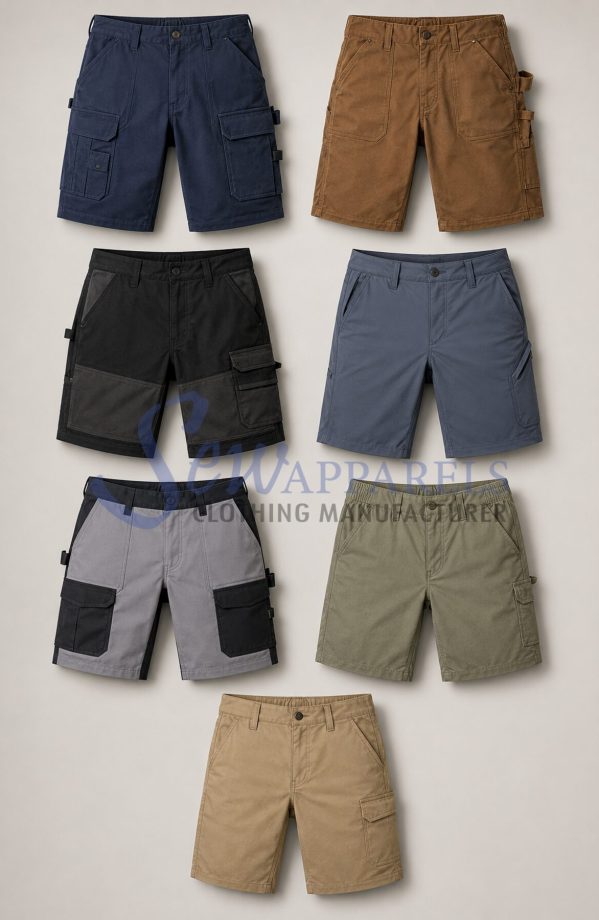
Approve coverage while the wearer moves
Work shorts must hold the intended coverage through walking, squatting, climbing and seated work. A standing fit photo cannot prove that result. Inseam, front and back rise, crotch extension, leg opening, fabric and waistband position act together, so the brief should define the wearing condition before dimensions are locked.
The sections below turn the requirement into a technical pack, fit session and bulk-control sequence. Use production-representative fabric and keep the same fit model, measurement points and movement routine during every comparison.
Control rise allowance
Work shorts rise allowance provides vertical and body-depth room through the crotch. Too little can pull the waistband down and reduce back coverage; too much can sag and obstruct movement. Review front rise, back rise and crotch extension together. Watch for diagonal pressure lines, waist displacement and concentrated pressure during sitting and squatting.
For how to specify rise allowance for work shorts, show the exact start and finish points for front rise, back rise and crotch depth. State how the waistband is included. Test seated and squat positions, then record centre-back coverage and waist movement. Keep fit comments tied to photographs and measurements instead of general comfort descriptions.
Set the leg opening
The work shorts leg opening affects thigh clearance, ventilation, silhouette and seated coverage. State whether the value is half width or circumference and name the measurement line. Link it to thigh width and taper. Use the real fabric because stiffness, friction and stretch determine whether the hem grips, rotates or climbs.
For how to specify leg opening for work shorts, record finished width, tolerance, hem depth, thigh reference and grading rule. Dimension vents, gussets or shaped hems separately. Compare both legs flat and worn. After care, repeat the same points because shrinkage and seam torque can change opening, taper and effective coverage.
Grade the inseam, rise and opening as one system
Record how the approved middle-size proportions change at the smallest and largest sizes. An inseam that looks balanced in one size can place the hem at a different point on another wearer, while rise and leg-opening grades alter seated exposure. Photograph each boundary size in the same standing, squat and high-step positions before signing the size chart.
Change one major pattern variable per sample round and log the reason. If the waistband drops during a squat, check rise, crotch extension, waistband grip and pocket load before adding hem length. If the hem catches on a step, review opening, thigh ease and fabric friction before shortening the inseam. This decision record makes corrections traceable.
Review fit evidence after care
Wash or otherwise care for the sample using the route intended for the finished uniform, then remeasure inseam, rises, thigh and leg opening. Compare the same fit-model photographs before and after care. Shrinkage, seam torque or a changed hand feel can move the waistband and hem even when the nominal pattern stays the same.
Do not approve a revised sample from a hanger photograph or a single standing pose. Use front, side and back views at rest, then repeat walking, high steps, squatting and seated work with the prescribed equipment. State the allowed hem rise, waist drop and centre-back exposure in the brief so the reviewer has a measurable decision rule.
Prevent balance mistakes
Work shorts movement and coverage balance mistakes include choosing inseam from appearance alone, adding length while ignoring rise and widening a leg without checking seated exposure. Avoid changing several major variables in one sample round. Observe front, back and inner-thigh behaviour through the full movement routine before sealing the approval.
A longer inseam alone does not fix a short rise or a narrow leg opening. Likewise, adding ease at the thigh can change the silhouette without preventing waistband displacement. Keep the fabric and waistband configuration constant while comparing pattern alternatives, and record the failed movement with a photograph, measurement and correction note. Repeat the relevant checks whenever fabric, finish, pattern, hem construction or attached tools change. The approved movement result should remain visible in production rather than relying on memory from the sample room.
Use consistent measurement and wear evidence
The official ISO 8559-1 anthropometric standard provides a consistent body-measurement basis for garment development. Select fit models and size references using the same definitions throughout development. Connect those body references to finished inseam, rise, thigh and opening measurements.
The active ASTM D3181 textile wear-test guide supports trials under actual-use conditions. Build a short task sequence, repeat it consistently and compare with a known sample. Record displacement, restriction, exposure, distortion and wearer comments at defined checkpoints. Condition garments after the approved care route, measure again and repeat the movement trial before final approval.
Sample approval checklist
- Name wearer, task, layer and equipment.
- Lock waistband position and fabric.
- Measure inseam, front rise and back rise.
- Record thigh and leg-opening methods.
- Photograph standing coverage.
- Complete the defined movement sequence.
- Check waist drop, hem rise and seam strain.
- Approve middle and boundary sizes.
- Repeat after care and conditioning.
- Seal sample, pattern, photos and report.
Use the checklist as a sign-off record rather than a generic inspection list. Name the responsible reviewer, sample version, size, fabric lot and care state. Put the approved movement photographs beside the measurements so the production team can compare a new garment with the same acceptance evidence.
Write the movement pass rule
Define the movement pass criteria before the fit session. A sample is approved only when waistband displacement, hem rise, centre-back coverage and seam strain stay within the written limits. Record the start position, number of repetitions and any carried tools; otherwise two reviewers can reach different conclusions from the same garment.
For a startup brand, the first approved sample should become a reusable reference for replenishment. Retain the pattern revision, sealed garment, measurement chart and movement images together. If a later order changes fabric, finish, attached tools or size range, repeat the relevant checks rather than assuming the previous result still holds.
Production checkpoints for movement balance
Before cutting bulk, compare the approved pattern with the graded inseam, front rise, back rise, thigh and leg-opening rules. Confirm that the fabric lot matches the approved weight, stretch, recovery and shrinkage evidence. Inspect the first complete garments on the same size references used during development.
During early production, measure both legs and check side-seam balance, hem level and waistband position. Repeat the squat, high-step and seated checks with pockets or tools loaded as specified. Record any drift before the full run continues. After pressing and packing, confirm that creases, stacking or hanger presentation have not changed the approved waist or hem shape.
Low MOQ work shorts for startup brands
A low MOQ work shorts manufacturer can help a startup brand prove one functional fit before expanding colours, branding or trims. Start with one fabric, one waistband position, one inseam and one movement protocol. Approve the middle size and a boundary size, then preserve the measured sample and comparison photographs.
Sew Apparels gives startup companies a structured path from product requirement to sample evidence. Share the wearer profile, work routine, required coverage, care route and size range. A controlled first order reduces subjective revisions and creates a repeatable reference for replenishment.
Startup brands can scale from a controlled fit
Start with the work routine and wearer profile, then agree one fabric, one waistband position and one movement protocol. A focused first run gives a startup company clearer feedback than several untested colour or trim variations. Once the middle and boundary sizes pass, preserve the approved sample evidence and apply the same checks when extending the range or repeating an order.