
Denim shorts wash assortment order planning connects the collection a buyer wants to sell with the material and finishing commitments needed to supply it. An opening buy may include several wash looks, but a shared base fabric does not automatically make those looks one production batch. The quantity allocated to each wash, size and style must be clear before quotations are compared.
Build one assortment matrix, then ask the supplier to separate confirmed commitments from development assumptions. This guide explains how to consolidate the opening buy without hiding small finishing allocations, unapproved wash samples or incomplete size totals. The examples are planning illustrations rather than recommended sales ratios or promises of a particular minimum order.
1. Define the collection and wash identities
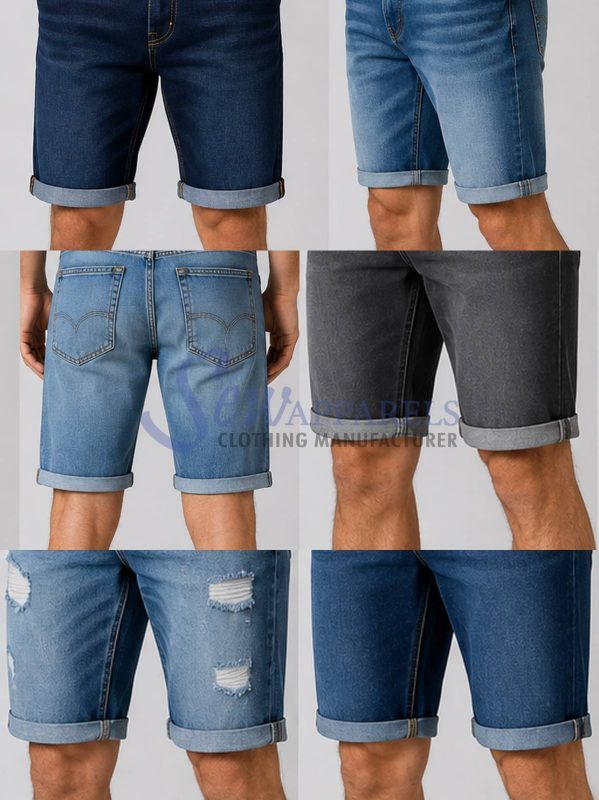
A denim shorts opening buy wash mix should begin with the proposed garment styles and finished references. Identify which silhouettes, lengths and hem details share a development brief. Give each wash an internal reference linked to a physical sample or a clearly described development target. Names such as light, vintage or worn blue are insufficient when several offers must refer to the same appearance.
For denim shorts colourway order split planning, distinguish a dye colour, a finished wash look and an internal retail name. They may not be interchangeable. Record the terminology used in the sample approval, order and packing documents. If the collection changes from two wash options to three, identify the additional reference and review the quantities before treating the revised assortment as already quoted.
Denim shorts wash assortment order planning should also identify whether the finished looks are confirmed or provisional. A development image can communicate direction, but it does not establish a production result. Mark the samples still required and keep the commercial estimate conditional where appropriate. This avoids placing an apparently complete collection order around wash options that have not been reviewed on the proposed material.
2. Confirm what the base fabric actually shares
Denim shorts shared base fabric sourcing requires an identifiable material specification. Record composition, construction, weight basis, supplier reference and the proposed material state. Ask whether each wash option uses that same material or requires a different base. A shared denim name is not evidence that every option uses the same lot or has the same sourcing commitment.
Use a denim shorts shared base denim matrix to connect material references with styles and wash options. Show which proposed garments use each fabric and what quantity is allocated to them. If one finish needs a different material, separate it visibly. Do not combine incompatible proposals simply to create a larger fabric total that looks easier to source.
A denim shorts fabric commitment brief should state what the buyer is being asked to reserve, purchase or approve. Distinguish forecast quantity from a firm commitment and ask how unused material would be treated. Denim shorts wash assortment order planning benefits from consolidated material quantities only when the supplier confirms that the proposed arrangement is feasible for the actual styles and finishes.
3. Separate fabric and finishing minimums
Denim short collection minimum order inputs should cover the different commitment levels involved. Ask about material sourcing, sewing style, wash option and any trim or packaging requirement separately. A total collection quantity can meet one commitment while leaving another unresolved. Request the basis for each minimum instead of comparing an unexplained single number.
A denim shorts finishing batch enquiry should identify the garment and finished appearance allocated to each proposed batch. Ask what the processor needs to assess feasibility and whether sample work is separate from bulk processing. Do not assume that different looks can be combined in one load because their garments begin with the same denim.
CottonWorks’ denim finishing overview describes processing lots that can differ in their preparation and subsequent finishing needs. It also explains that processing load arrangements relate to the process being run. This background supports asking for batch-specific confirmation; it does not establish a universal minimum or a recipe for the requested shorts.
For denim shorts supplier minimum comparison, put each quoted condition beside its applicable level. Record whether a number applies per fabric, style, wash or another agreed basis. Denim shorts wash assortment order planning should retain those distinctions when the buyer changes the collection. A total quantity increase does not automatically resolve an undersized wash allocation.
4. Reconcile quantities by wash and size
A denim shorts wash option quantity plan needs totals that purchasing and production can both reproduce. Start with quantities by style, wash reference and size. Sum each wash allocation, then reconcile those totals with the overall opening buy. Add development samples or other quantities separately if they are part of the commercial scope.
Record denim shorts colour size quantities in explicit units. Distinguish garments from packs or cartons. If the buyer provides an assortment pack ratio, show how it converts into garment counts before placing those counts in the wash matrix. Keep any residual quantities visible so the supplier is not expected to choose the remaining sizes.
For an illustrative collection, a buyer requests 360 garments in one style, split into 180 for wash A, 120 for wash B and 60 for wash C. The total is correct, but wash C still needs its own feasibility review. If the supplier cannot confirm that allocation, the buyer must revise the wash mix or another commercial condition. Denim shorts wash assortment order planning should record the decision rather than silently moving pieces to another wash.
Within denim shorts wash assortment order planning, a denim shorts wash sku matrix should distinguish the variants the buyer needs to order and receive. Include the approved style, wash name and size alongside the internal SKU, or stock keeping unit. Confirm the buyer’s identification system instead of inventing identifiers. A clear quantity total cannot prevent a receiving error if two visibly different wash options share an ambiguous label.
5. Sequence samples and quotation review
Use the denim shorts wash shade matching guide to connect each assortment option with its accepted visual reference and review conditions.
A denim shorts wash sample sequence should establish what needs approval before the opening order is released. Identify the base material review, representative garment development and finished wash references. Clarify whether a sample is intended to approve colour direction, surface effect, fit after finishing or a combination. Keep these decisions attached to sample versions.
When a wash changes the finished garment, review the affected specifications rather than approving appearance alone. Ask which measurements, trims, hem details and care observations need reassessment. A sample that looks right may still leave an unresolved development point. Denim shorts wash assortment order planning should identify such conditions before describing the assortment as ready for production.
A denim shorts wash RFQ scenario should give suppliers the same request for quotation. Send the style references, material proposal, wash allocations, size quantities and required sample scope. Ask the offer to disclose which assumptions remain conditional. Compare the revised scope after trial review, not just an early unit price that excluded the work later required.
6. Control assortment changes and repeat orders
A denim shorts assortment revision log should show what changed, who approved it and which documents are affected. Changing a wash quantity may alter a processing commitment, while changing the base material can affect several wash references. Give the revised matrix a date and version. State which earlier offer or allocation it supersedes.
Denim shorts repeat wash order inputs should include the retained finished reference and the material identity from the earlier approved order. Confirm whether the current material and process proposal remain comparable. An earlier retail wash name cannot by itself prove that the next supply will match. Ask what must be reviewed if the material, component or finishing arrangement changes.
Denim shorts wash assortment order planning should distinguish a repeat forecast from a confirmed reorder. Keep optional additions separate until their quantities and approvals are accepted. Record whether the supplier’s offer depends on a wider commitment and what happens if the buyer removes an option. This makes the commercial decision visible instead of relying on an informal understanding.
Link identification with the order matrix
GS1’s new product introduction guidance uses apparel style, colour and size variations as an example of distinct products receiving distinct GTINs. Where GS1 identification applies, confirm the buyer’s approved variant data. An internal SKU and a GTIN have different roles; an assortment spreadsheet does not create a valid barcode identifier.
For private label denim shorts production, align variant descriptions across the order, labels and packing list. Decide who supplies and checks the identifiers, and review the printed information against the matrix. Keep the wash reference traceable even when the retail name changes. These checks help the receiving team recognise the assortment actually ordered.
Prepare one release worksheet
The release worksheet should bring together the denim shorts wash assortment order planning decisions. Show the accepted material, style and wash references with confirmed quantities. Include unresolved conditions only if the release explicitly allows them; otherwise resolve them before production starts. Make the current version available to the teams using it.
- Collection identity: garment styles, wash references and development status.
- Material allocation: base denim references, quantities and sourcing commitments.
- Processing scope: confirmed wash allocations and applicable batch conditions.
- Quantity checks: size totals, wash totals and complete order reconciliation.
- Commercial review: included trial work, quotation assumptions and exclusions.
- Release record: approvals, variant identifiers and accepted revisions.
Use the existing Denim Shorts Buying Guides to connect assortment decisions with wash shade and hem development. Keep the finished references consistent with those technical choices. A collection plan should not approve a new wash while leaving the associated garment details disconnected from the current brief.
For a custom denim shorts manufacturing enquiry, send the matrix, proposed material and sample references through the Denim Shorts manufacturing page. Startup brands can begin with a focused collection and ask which combinations are feasible. This guide does not promise a minimum, material reservation or processing service for every proposed arrangement.
Denim shorts wash assortment order planning is most useful when it makes the remaining decisions visible. A smaller confirmed assortment may be easier to release than a larger provisional one, but the buyer should choose the scope deliberately. Preserve the accepted quantities and references so a later addition follows the same review process.
Frequently asked questions
Does shared base denim mean one wash batch?
No. Ask the supplier to confirm the processing arrangement for each finished look. Shared material sourcing and finishing batch feasibility are separate commercial questions.
Should every wash have a size allocation?
Yes. State the quantities by size and reconcile them with each wash total. A collection total alone cannot tell production or receiving teams what the buyer expects.
Can a wash name replace a physical reference?
No. Use an identifiable approved sample and document its scope. Retail names can support communication, but they do not establish a repeatable finished appearance.
What should be checked before release?
Match the current matrix with the accepted quotation, samples and variant descriptions. Confirm material and finishing commitments separately, and resolve any allocation that remains provisional.