
Knit Nightwear Buying Guides
Knit nightwear buying guides help brands approve sleep comfort construction before sampling and bulk production. Start with seam placement, fabric softness and ventilation, then connect those decisions to fit, movement, laundering and the intended sleep environment. Keep the approved reference connected to the product brief so a small startup label and an established retailer can review the same construction logic.
Sleep comfort depends on the relationship between a soft hand feel, low-bulk seams, breathable fabric and a stable fit. Use these knit nightwear buying guides to compare construction options, record wearer feedback and confirm the sample after movement and washing. The published sleep comfort construction article covers seam placement, fabric softness, ventilation and common mistakes in one decision path.
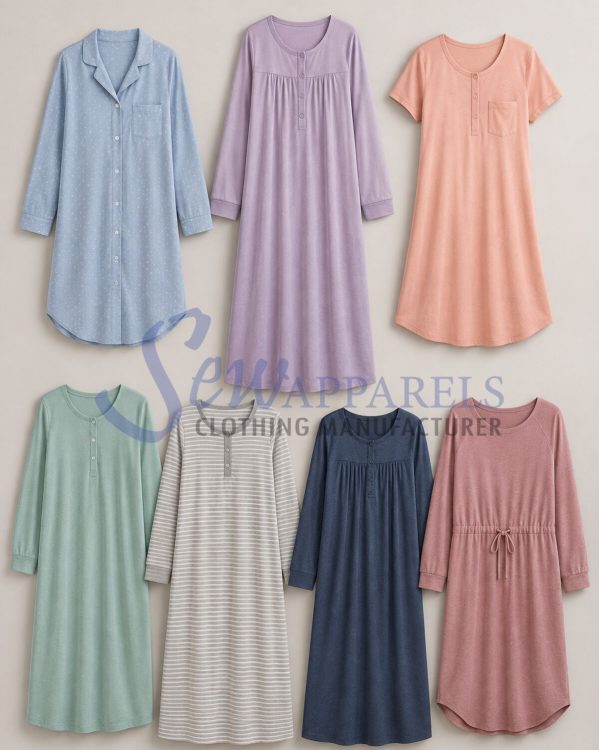
Knit Nightwear Sleep Comfort Construction: 9 Smart Checks
Review seam placement, fabric softness, ventilation, stretch comfort and wash response on the approved nightwear sample. Use the complete sleep comfort construction checklist to keep the garment soft, balanced and repeatable before bulk production.
Read the knit nightwear sleep comfort construction guideNightwear Seam Placement and Low-Bulk Comfort Review
Compare side seams, shoulder seams, rise seams and finishing choices on the actual nightwear sample. Record where pressure, rubbing or bulk appears during sleep movement, then keep the accepted seam route with the production brief.
Read low-bulk seam guidanceNightwear Fabric Softness and Hand Feel Checklist
Review softness, surface friction, fabric weight and stretch recovery after the first wash. Note the hand feel against the intended sleep environment and confirm that finishing remains comfortable without weakening the fabric or changing the approved fit.
Review the nightwear fabric softness checklistNightwear Ventilation and Moisture Management Review
Connect fabric openness, garment ease, panel placement and ventilation zones to the intended climate and sleep use. For technical approval, compare fabric results with an appropriate moisture or air-permeability test plan instead of relying on a generic breathability claim. Liquid moisture management results do not establish air permeability or total sleep comfort; agree separate checks for those requirements.
Review liquid moisture management test guidanceNightwear Fit, Movement and Wash Approval
Check shoulder balance, body ease, armhole comfort, rise position, hem recovery and seam appearance in natural movement. Repeat the review after laundering so the approved nightwear fit remains comfortable across sizes and repeat orders.
Review the nightwear fit and wash checklistHow to Use These Knit Nightwear Buying Guides
Start with the sleep comfort construction article, then record the seam, fabric and ventilation decisions that still need sample confirmation. Keep the approved reference, measurement sheet, wash notes and comments together so every revision can be checked against the same nightwear brief.
Use the complete knit nightwear buying guideKnit Nightwear Neck and Armhole Finishing
Specify binding width, seam stretch, edge curling control and wash checks for knit nightwear neck and armhole finishing. Use the published SA102 decision guide to compare samples, document the approved construction and keep a low MOQ route clear for startup brands.
Read the knit nightwear neck and armhole finishing guideAdult Knit Sleepwear Compliance Brief: 5 Essential Checks
Use five documented scope decisions to define the adult wearer, US destination, fibre and surface details, laboratory questions and evidence ownership before production.
Read the adult sleepwear compliance guideBamboo Viscose Nightwear Label Claims: 7 Essential Checks
Verify fibre identity, supplier evidence, bamboo-source wording, performance claims and environmental statements before approving knit nightwear production.
Read the bamboo viscose claims guideKnit Nightwear Button Front Development: 7 Essential Checks
Compare opening support, buttonhole behaviour, fastening spacing, skin-side bulk and after-wash stability before approving a knit nightwear button front.
Read the nightwear button-front guideKnit Nightwear Pilling Approval: 7 Essential Checks
Compare fuzz, pill formation, repeated-care surface change, reference samples and claim evidence before releasing knit nightwear fabric.
Read the nightwear pilling approval guideHow to Approve Knit Nightwear Sleep Comfort Construction
Begin with the wearer, climate, sleep position and intended product type before reviewing the garment. These knit nightwear buying guides turn sleep comfort into decisions that can be sampled: seam placement, fabric softness, ventilation, garment ease, neckline finish, hem recovery and wash response. Keep a reference garment or annotated sketch beside the measurement chart so comments refer to a clear construction point rather than a general feeling.
Review the approved nightwear sample in relaxed standing, sitting and sleeping movement. Note pressure at the shoulder, underarm, side seam and rise; check whether the fabric feels soft without becoming unstable; and record any heat or moisture concern. After laundering, compare the same points again. The goal is a repeatable approval record that a factory can use for costing, sampling and bulk production.
Specify Seam Placement for Knit Nightwear
Seam placement changes how sleepwear feels during extended contact with the body. Side seams, shoulder seams, armholes, crotch seams and waistband joins should be positioned with the intended silhouette, fabric stretch and movement pattern in mind. Mark the seam route on the technical sketch, identify the seam type and finish, and define where low-bulk construction is required.
Sample reviews using these knit nightwear buying guides should include turning, stretching, sitting and lying movement rather than a flat-table check alone. Record thread, stitch, seam allowance, coverstitch or binding details and any area that causes rubbing. When a seam must move with the fabric, confirm extension and recovery on the actual sample so a comfortable first fitting also remains practical after laundering.
Choose Soft Knit Nightwear Fabric and Hand Feel
Fabric softness is a product decision, not a vague marketing phrase. Record fibre composition, knit structure, fabric weight, finish, stretch, recovery and surface feel against the intended sleep use. A lightweight jersey may feel cool and flexible, while a denser interlock can provide coverage and stability; the correct choice depends on climate, fit, opacity, care route and target price.
Ask the sample team to review the fabric before and after washing, including surface friction, pilling risk, shade change and shape recovery. A soft finish should not conceal weak construction or uncontrolled shrinkage. Keep the approved swatch, fabric code and wash comments with the nightwear brief so a low MOQ programme can reproduce the same hand feel when more colours or sizes are added.
Plan Ventilation and Moisture Management for Nightwear
Ventilation depends on fabric structure, garment ease, openings, panel arrangement and the wearer’s environment. Review air movement around the torso, sleeve and leg openings, and decide whether the nightwear needs a more open knit, lighter panel, controlled ease or a construction detail that reduces heat retention. Avoid promising a performance result until the selected fabric and garment have been tested for the intended claim.
For technical development, these knit nightwear buying guides call for an appropriate test plan to compare air permeability or liquid moisture behaviour across candidate fabrics and finished constructions. The result should be recorded beside GSM, stretch, recovery and wash observations. This keeps a ventilation discussion specific to the sample rather than treating the word breathable as a universal guarantee.
Low MOQ Knit Nightwear Manufacturer: Prepare the Sample Route
A buyer comparing a low MOQ knit nightwear manufacturer should clarify the fabric route, colour count, size range, branding, trims and packing before requesting a quotation. These knit nightwear buying guides treat custom fabric as the normal sourcing route. Matching export-quality stock knit fabric may be considered only by special request, subject to suitability, availability and written confirmation for the specific design and colour. Prepare the sleep comfort construction brief first, then confirm which components require custom development and which approvals must happen before bulk production. A clear sample route helps a startup brand compare quotations without losing the comfort decisions that define the product.
Sew Apparels manufactures garments in its own factory and does not manufacture fabric. Custom fabric sourcing and development through suppliers are the normal route. Export-quality stock fabric is considered only by special request, subject to availability, quality review and sample approval for the actual style and colour. For knit sleepwear, approve softness, seam bulk, recovery and after-care behaviour on the complete sample. Ask the quotation to distinguish sets from single garments and confirm each applicable minimum. A supplier certificate covers only its stated material, holder and validity period; it does not automatically certify Sew Apparels or the finished sleepwear.
Support for Startup Brands Developing Knit Nightwear
Sew Apparels supports startup brands by turning an early sleepwear idea into an organized development record. Bring the reference garment or sketch, intended wearer, size chart, fabric preference, seam comments, ventilation expectation, branding artwork and planned quantity. Keep the approved sample, wash notes, revision history and packing details together so the next discussion starts from evidence. This approach gives a growing label room to refine the product while keeping the production team aligned with the original sleep comfort goal.
Startup brand product-development enquiries receive priority. Use these knit nightwear buying guides to define the wearer, age group, silhouette, fabric, size range and quantities per style and colour. Keep neckline, armhole, seam placement and wash comments in one sample revision record. Confirm sample charges, revisions, material commitments, testing, packing and delivery responsibilities in the quotation. Sampling and production milestones use calendar days against agreed approvals and material readiness; support does not imply free samples, waived minimums or a guaranteed launch date. Confirm the intended destination and sample evidence before expanding the collection.
Turn the Approved Nightwear Comfort Into a Clear Product Brief
After using these knit nightwear buying guides, collect the approved garment reference, fabric composition, softness notes, seam map, ventilation decisions, fit measurements, wash comments and size-set feedback. Keep the decision record with the quotation so the production team can review the exact sleep comfort construction before sampling. Add colour standards, trim notes, labels and packaging instructions to the same file, and identify the sample date, fabric lot and requested change for every revision. Startup brands can use this record to compare options while protecting the original hand feel and fit. Before bulk approval, review the garment in natural sleep movement, confirm the post-wash result and sign off the size set against the approved reference.
Explore custom knit nightwear manufacturing