
Recycled stretch fit cap traceability connects a material claim to the component, supplier records and finished order that support it. A fabric swatch described as recycled is not enough to establish the content of every cap component. Buyers need a clear account of what is claimed, how the material moves through production and which evidence applies to the shipment.
Start with a component map and an identified claim. Separate the crown fabric from the band, visor insert, thread, decoration and packaging. Then review relevant supplier, transaction and production records before approving customer-facing wording. This guide provides sourcing questions; it does not assert that Sew Apparels or any particular product holds a certification.
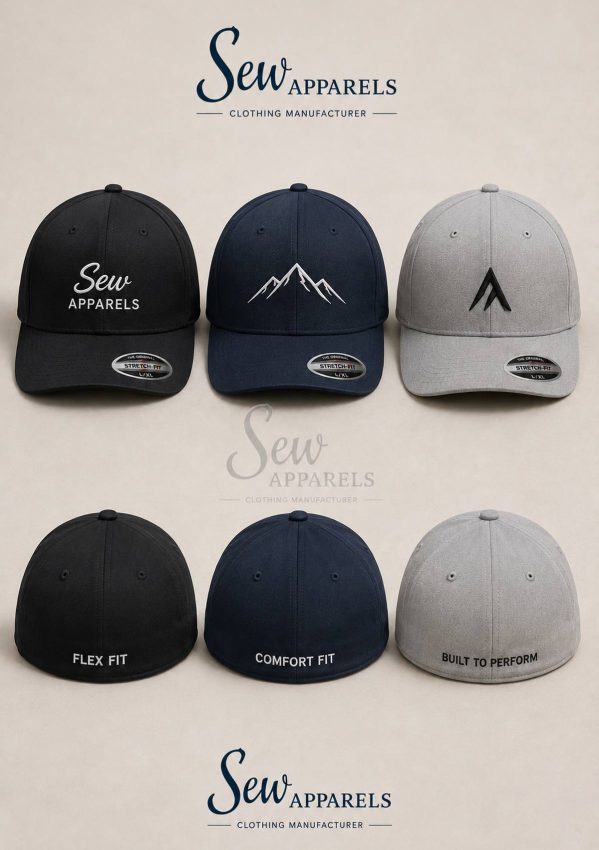
Recycled stretch fit cap traceability: 6 critical checks
- Define the claimed component and recycled-content wording.
- Verify supplier identity and relevant certification scope.
- Connect purchased material to transaction and lot records.
- Track material through storage, cutting and subcontracting.
- Reconcile quantities with the finished order.
- Approve claims and changes using the applicable requirements.
1. Map the component covered by the claim
The claimed component map should identify the fabric or other part described as recycled. Record its composition, supplier reference and the claimed proportion with the basis for that figure. Do not extend a crown-fabric claim to the whole cap when other parts are outside the evidence.
For unclaimed band components, mark the distinction plainly in the specification. A stretch band can contain different materials from the crown fabric. Thread, labels and decoration may also differ. A useful map identifies each component and whether its recycled content is claimed, not claimed or still under review.
Recycled stretch fit cap traceability should preserve this boundary throughout sampling, purchasing and marketing. If the buyer changes the proposed wording from a component statement to a whole-product percentage, the evidence and calculation need review. Do not treat that wording change as an artwork correction with no effect on the claim.
2. Check supplier and scope relevance
A supplier’s certification status and a specific shipment’s evidence answer different questions. Review the legal entity, facility, validity and relevant product or processing scope. The scope certificate relevance check should confirm that the certificate is meaningful for the transaction being proposed.
Do not rely on a logo in a quotation or an old certificate copied from another supplier. Ask the relevant certification body or authorised verification route where confirmation is needed. A certificate for a different site or activity may not cover the material handling described in the offer. Keep any uncertainty visible before purchase approval.
Textile Exchange’s Content Claim Standard overview describes chain-of-custody documentation, volume reconciliation and material controls. Use it to understand the evidence categories. It is not proof that a particular supplier, cap or order complies. Confirm the applicable standard, version and certification requirements for the actual programme.
For stretch cap certified material scope, identify whether the buyer requests a certified claim or a substantiated recycled-content statement without that certification claim. These are not interchangeable approvals. Recycled stretch fit cap traceability should record the chosen route and the evidence needed for it.
3. Connect input material to transaction evidence
Record the fabric purchase reference, supplier, delivered quantity and lot identity. The certified input material records should match the material offered and received. A sample made from one lot does not establish the identity of another lot delivered later for production.
Review cap recycled content transaction records for relevance to the actual purchase. Where the certification system uses transaction certificates or another authorised transaction record, confirm the parties, material description and quantities. Ask how the document will be supplied and verified rather than assuming a scope certificate alone establishes every delivery.
The transaction evidence review should identify mismatches in names, dates, material descriptions and quantity units. Resolve them with the responsible party before approving the claim. An unexplained document difference is not fixed by attaching more certificates that relate to other products.
Keep stretch fit cap recycled polyester evidence specific to the claimed material. A general statement about recycled polyester availability or a supplier’s broad sustainability policy does not trace the fabric in the order. Ask for records that connect the purchased material with the production version being approved.
4. Follow the material through production
Recycled stretch cap chain of custody depends on controls that preserve identity after receiving. Record how rolls are identified, stored and issued to cutting. Ask how the factory separates or otherwise controls the claimed input under the applicable system. Do not assume that visual similarity allows it to be exchanged with ordinary fabric.
The recycled fabric lot identity should appear in the production record or an equivalent controlled link. Include roll issue, cutting allocation and relevant returned material. Keep the link readable for people who were not involved in sampling so the shipment can be reviewed from the retained records.
For subcontractor material traceability, identify outside decoration or processing stages. Ask how material or finished pieces are transferred, counted and returned, and how the applicable certification requirements treat that activity. A subcontractor’s role should not disappear from the record merely because it occurs after cutting.
Use the existing Stretch-Fit Cap Buying Guides to coordinate product-development decisions with traceability requirements. Keep fit and construction approval alongside the material record. An identified recycled input still needs to meet the cap’s functional specification.
5. Reconcile input and finished quantities
The material volume reconciliation should compare input received, material issued, production use, waste and remaining stock in the units appropriate to the process. Record conversion assumptions where rolls, metres, weight and finished-piece counts differ. Do not simply equate a fabric invoice quantity with the number of caps shipped.
Recycled stretch fit cap traceability benefits from a clear order allocation. If one material lot supplies multiple orders, document the allocation and remaining balance. If an order uses several approved lots, retain those links. The evidence should not allocate the same material quantity twice or leave the finished shipment connected only to a general warehouse balance.
Check that the claimed recycled proportion and the quantity calculation use the same basis. A fabric composition percentage and a whole-cap content percentage are different measures. Where whole-product calculations are proposed, identify the relevant component weights and exclusions under the applicable rules instead of guessing from the number of panels.
Label unresolved quantities as unresolved. An incomplete reconciliation should not become a confirmed claim merely because the shipment date is approaching. Keep the review proportionate to the requirement while ensuring that the final order evidence can be traced to the actual input.
6. Approve wording and control supplier changes
The recycled wording authorisation should identify the claim, its placement and the person or body responsible for approval. Where a certification claim or logo is requested, follow the scheme’s current authorization process. Do not assume that a supplier’s permission covers a brand’s final artwork.
The FTC Green Guides summary explains principles for environmental claims in the United States, including qualified recycled-content claims. Review the destination’s applicable requirements. Under the US guidance, recycled inputs must come from manufacturing waste or material recovered after consumer use; describe any partial recycled content clearly. Recycled content does not automatically establish recyclability, biodegradability or a general environmental benefit for the finished cap.
For supplier change claim risk, require review before substituting fabric or changing a processing site. A technically acceptable replacement may have different claim evidence. Use the stock fabric substitution cost review to keep resampling and documentation work visible in the proposed change. Recycled stretch fit cap traceability should connect the revised purchase and production decision with any required change in customer wording.
Check current scheme requirements at the time of approval. Textile certification and claim policies can change, including transition arrangements. Record the applicable version and decision date rather than presenting one historical certificate or threshold as permanently sufficient for future orders.
Build the finished-order evidence file
The finished order claim evidence file should contain the component map, supplier identity, relevant scope confirmation, transaction records, lot allocation and production reconciliation. Include the approved artwork and the final release decision. Organise it by order so the buyer can review the specific shipment.
Retain revisions without confusing them with the approved version. If the claim was narrowed after evidence review, keep both the reason and the final wording. Recycled stretch fit cap traceability is useful when it supports a clear answer to what this shipment contains, not only a folder of unrelated documents.
Prepare a realistic manufacturing request
For custom stretch fit cap manufacturing, state the recycled-material requirement before sampling and ask which evidence route is available for the design. The Sew Apparels stretch-fit cap manufacturing page provides the product discussion route. For private label stretch fit cap production, clarify who approves material sourcing and final claim wording.
Startup brands can ask about sample development and quantity options while keeping claim requirements specific. Do not assume a universal low MOQ or that every available recycled fabric comes with the same certification evidence. A precise brief helps assess the actual sourcing and documentation work.
Frequently asked questions
Does a scope certificate prove the shipment?
It is part of the evidence where applicable, but review the transaction and production records relevant to the actual order. Confirm scope, identity and validity.
Can a recycled crown fabric claim cover the band?
Only where the band is included in the supporting evidence and the claim accurately describes it. Keep component boundaries clear.
When is the review complete?
Archive the recycled stretch fit cap traceability file after the input, production, shipment and approved wording have been reconciled. Resolve evidence gaps before releasing the claim.
Startup brands: define evidence before a low MOQ order
A startup brand can make its first sourcing request easier to evaluate by describing the exact recycled component and the wording it hopes to use. Ask which documents will be available for the sample and which will accompany the production shipment. Recycled stretch fit cap traceability should be discussed alongside proposed low MOQ quantities, because material purchase increments and documentation charges may differ from the finished-cap minimum. A smaller order does not remove the need to connect the claim to the actual material.
Keep the initial claim narrow until the evidence is complete. For example, a crown-fabric statement should remain a crown-fabric statement while the band and other components are unclaimed. Record who approves the wording and who checks any supplier substitution. Before reordering, confirm that the retained approval still covers the new lot and processing route. This gives a new brand a practical release process without implying certification or promising that a specific recycled material is always available.