
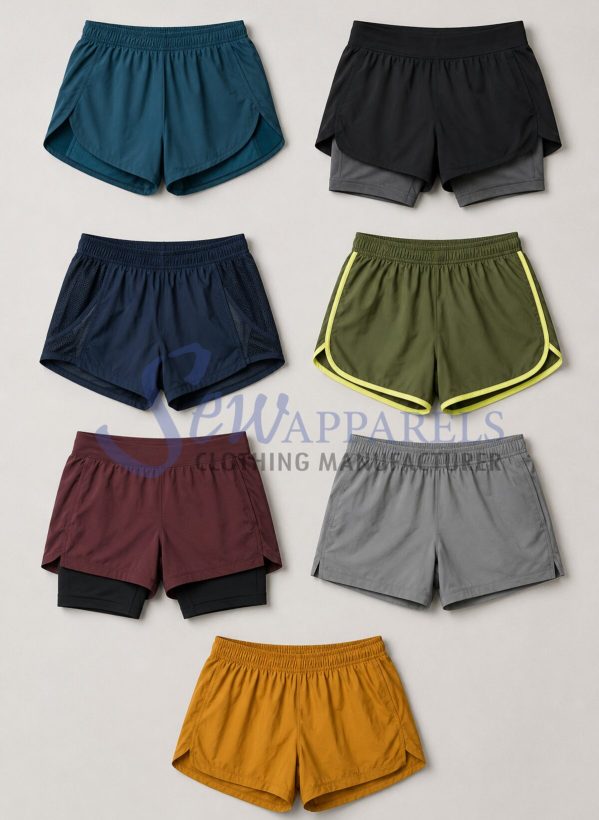
Running shorts fabric rustling assessment helps an activewear buyer compare the sound of finished shorts during movement before approving a fabric or making a quietness claim. A lightweight shell may feel suitable in the hand while producing a noticeable sound when panels rub during running. The assessment should connect the observation to the actual garment, fit and movement used.
Start with a clear comparison question rather than a promise of silent performance. Identify the reference short, the candidate construction and the conditions under which reviewers will listen. This guide sets out six controls for separating fabric rustle from trim noise, recording wearer and observer feedback, reviewing care exposure and deciding what the evidence can support. It does not establish a universal acoustic limit or a certified test method.
1. Define running shorts fabric rustling assessment around a comparison
A running short fabric noise comparison needs an identified reference. The buyer might be comparing two shell candidates or assessing a revised finish against the current approved sample. State which question is being answered and what result would justify another development round. An undefined instruction to “make it quieter” gives the supplier little guidance.
Running shorts fabric rustling assessment should describe the intended activity. Walking, jogging and a particular running movement can produce different panel contact. Select a repeatable movement sequence that represents the comparison being made, and record its duration or repetitions as agreed trial details. Do not present an internally chosen sequence as a recognised industry standard.
Set a rustle acceptance reference before reviewing candidates. This can be a retained garment and an agreed descriptive scale for the buyer’s programme. Explain whether the buyer is assessing noticeability, unpleasantness or a difference from the reference. Those are related observations, but they are not interchangeable conclusions.
Separate a preference from a market claim
A buyer may prefer one sample’s sound without having evidence for a broad quiet movement short claim. Record the development preference accurately. If marketing intends a measurable or comparative claim, define the wording and ask an appropriately qualified reviewer what evidence is needed. A sample review should not silently become a promise about every wearer and environment.
2. Identify fabric rustle, rubbing and trim noise separately
Lightweight shell rustling sound can be heard when the fabric bends or contacts another surface. In a finished short, the observer may also hear closures, pocket contents or accessories. Begin by checking what is present in the sample and removing unrelated carried items from the controlled comparison where appropriate.
For running shorts fabric rustling assessment, document side fabric rubbing noise as its own observation. Identify the contact location and movement that produces it. If a sound occurs only when the shell and liner contact in a particular area, the supplier needs that detail. A general comment about “noisy fabric” may overlook the actual construction interaction.
Short trim rattle diagnosis should follow a separate review. Ask whether the sound comes from a zipper pull, fastening or another component rather than the shell. Compare carefully while keeping the garment configuration recorded. Do not change several components and the fabric at once, then attribute any improvement solely to the new shell material.
The research article Subjective Evaluation of the Rustling Sound of Fabrics by Sukigara and Ishibashi examined perceived unpleasantness and sound similarity alongside recorded sound parameters. It supports treating perception and recorded characteristics as distinct evidence. The study is not a certification scheme or a universal running-shorts pass threshold.
Keep the material description complete
Record the shell composition, construction and finish reference supplied for the sample. Nylon short rustle feedback should concern the particular fabric and garment reviewed, not an assumption that all nylon shorts sound alike. Keep the sample identity intact so the supplier can connect comments to the correct material route.
3. Control fit, movement and the listening environment
Sound comparison fit controls are essential for a useful review. Compare garments in the intended size and record the wearer and fit observations. A loose panel may contact another panel differently from a closer fit. If the two samples differ in pattern or size, note that difference rather than describing the result as a fabric-only comparison.
Running shorts fabric rustling assessment also needs a stable listening environment. Choose a setting appropriate to the review, record background noise and keep the observer’s position consistent. Footsteps, ventilation and nearby conversation can make a fabric sound more or less noticeable. Avoid switching environments midway without marking that change.
A controlled garment sound trial should keep the movement sequence, footwear, carried items and garment configuration as consistent as practical. List the factors intentionally varied and those held constant. If a reviewer changes pace or movement because a sample fits differently, retain that information with the result.
Keep recording arrangements consistent when audio is used. Record the device, location, settings and any changes relevant to the comparison. Phone recordings can support a documented development observation, but they should not be presented as calibrated acoustic measurements. For numerical claims, ask a qualified acoustic specialist about equipment, method and interpretation.
Check whether the comparison is repeatable
Repeat the agreed sequence enough to identify whether an observation is consistent within the programme’s trial plan. If results vary noticeably, record the variation and review the controls before declaring a winner. Repetition does not automatically make an informal trial a validated test; it helps reveal whether the development comparison is stable.
4. Record wearer and observer responses without hiding differences
Wearer observer noise scoring should distinguish what the wearer hears from what another person hears at the agreed position. Use the same written descriptors for each candidate. Provide enough explanation that a rating such as “noticeable” has a shared meaning in the review rather than depending entirely on each person’s interpretation.
Running shorts fabric rustling assessment should preserve individual responses before summarising them. A wearer who notices a sound only during one movement provides different information from an observer who hears it throughout the sequence. Record the movement and location associated with the comment, including any disagreement.
A running shell acoustic observation should avoid leading language. Identify candidates with neutral sample references where practical and ask reviewers to describe the sound before revealing a development preference. The purpose is a useful comparison, not a vote influenced by the supplier’s description of a “premium quiet” material.
Maintain a running garment sound record containing sample identities, fit notes, trial conditions, reviewer roles and the agreed descriptors. If audio files are used, link them to the correct run and keep any edited version separate from the original record. A recording that removes inconvenient sections should not be used to imply the complete sequence was quieter.
Use numbers carefully
An internal rating scale can help organise observations, but it is not automatically an acoustic unit. Label it as the programme’s descriptive score and explain its limits. Do not convert a preference score into a percentage reduction in sound or a decibel claim. Those conclusions require appropriate measurements and interpretation.
5. Review care exposure and the fabric-hand tradeoff
Fabric noise after care may be relevant when the buyer expects regular washing. Use the agreed care route and record the sample’s before-and-after condition. Keep the fit and listening comparison controls consistent, and identify any change in garment shape or surface condition that could affect panel contact.
Running shorts fabric rustling assessment should treat a care result as evidence for the recorded exposure. One trial does not establish permanent quietness through every cleaning process. If the fabric finish or construction is revised, determine which checks need to be repeated before carrying the previous approval forward.
A fabric hand noise tradeoff needs a broader product review. A candidate preferred for sound may differ in drape, perceived softness, coverage or construction behaviour. Record these observations separately so purchasing does not approve a quieter sample that fails another agreed requirement. The development team should make the combined decision explicitly.
For private label running shorts production, keep the shell, liner, trims and finish in one controlled specification. Ask the supplier to identify substitutions that could change the reviewed sound or garment contact. Do not assume an alternative of similar weight or composition reproduces the same acoustic observation.
Plan a focused revision
If the trial identifies a problem, give the supplier the relevant movement, contact area and comparison record. Request a specific development review, such as the shell candidate or trim responsible for the observation. Where possible, change one defined factor so the next result can be interpreted. Confirm material availability and commercial implications directly.
6. Match quietness claims to the evidence before release
Shorts quietness claim evidence must support the actual wording proposed. A statement that one identified sample was preferred in an internal comparison is narrower than “silent running shorts” or a quantified reduction against competing products. Do not broaden the conclusion simply because the development team liked the result.
As a U.S. advertising reference, the FTC policy statement on advertising substantiation explains the need for a reasonable basis for objective claims before publication. Evidence must also match any stated or implied level of testing. Have the responsible claims reviewer assess the proposed wording and relevant market requirements. A general research paper does not prove the performance of the buyer’s own short.
Running shorts fabric rustling assessment should finish with a decision record identifying the approved sample, trial scope, unresolved limitations and any claim permitted by the review. Keep the retained reference and supporting observations with the specification. If the evidence supports only a development choice, use it for that purpose.
Use the Running Shorts Buying Guides to coordinate shell sound with hem coverage, liner selection and sample approval. Each topic should retain its own evidence and acceptance criteria. A favourable noise comparison does not automatically resolve fit, coverage or care questions. Review the brief versus compression liner choices separately when shell-to-liner contact affects the sample.
For custom running shorts manufacturing, share the finished comparison brief with the custom running shorts manufacturer in Bangladesh. Ask for review of the specific shell, construction and trim observations. Startup activewear programmes can follow the same focused process, with development scope and minimum quantities confirmed in the supplier quotation.
Final sound comparison checklist
- The reference and candidate samples are identifiable.
- Fabric rustle and trim rattle are recorded separately.
- Fit, movement and listening conditions are controlled and documented.
- Wearer and observer responses remain distinguishable.
- Care exposure and other product tradeoffs are reviewed.
- Any quietness claim matches the evidence actually held.
Running shorts fabric rustling assessment is complete when another reviewer can understand the comparison and its limits from the record. Preserve the approved sample and revisit the decision when fabric, finish, fit or trims change.