
Trucker cap mesh snag test selection must begin with the open-net construction and the real contact hazards around the finished cap. A test designed for a close textile surface may not hold, strike or grade a wide mesh correctly. Buyers therefore need a method-selection record before requesting a score or using the result to support a durability claim.
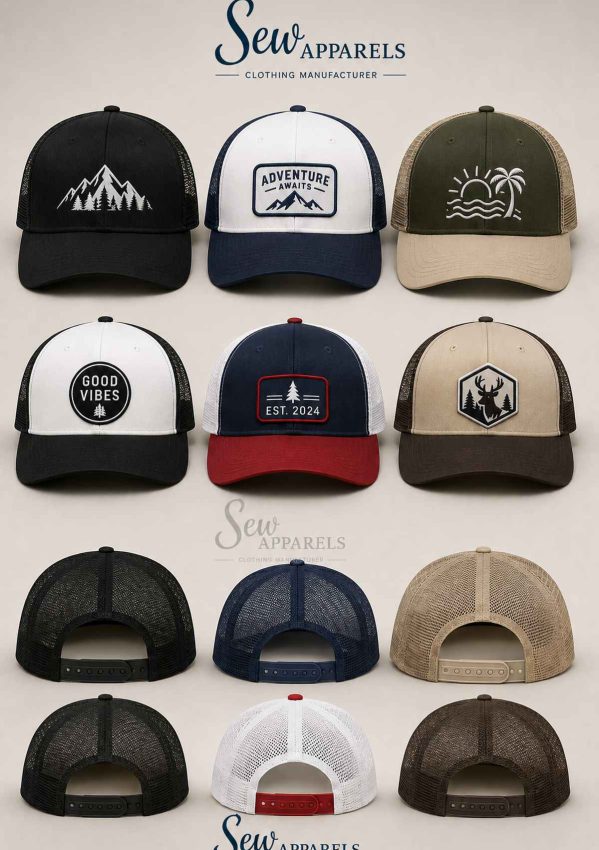
This guide helps sourcing, development and quality teams define likely hooks, document mesh openness, check exclusions, agree alternatives with a laboratory and compare component results with finished-cap observations. It does not convert a development trial into certification or guaranteed service life.
1. Define Likely Hooks and Contact Surfaces
Start with the intended use. List the objects that may catch the rear mesh: bag hardware, hook-and-loop fasteners, branches, display fixtures, rough storage bins, zipper pulls or other caps. Record the contact shape, direction, force and frequency that appear credible for the customer. The trucker cap mesh snag hook contact use scenario should explain the hazard rather than describe a severe but unrelated laboratory action.
Map exposed zones on a complete cap. Rear crown panels, lower mesh edges, closure corners and mesh-to-solid seams can face different contact. A trucker hat hook snag wear trial should identify where the hook touches, whether the cap is worn or supported and how the contact is repeated. Avoid uncontrolled hand pulling, because different operators can create incomparable damage.
Separate a single accidental catch from repeated rubbing or flexing. Snag tests target yarn displacement or loop formation; they do not automatically measure abrasion, seam strength or tear resistance. A sound trucker cap mesh snag test selection links the observed complaint to the property being assessed.
2. Document Mesh Openness Before Choosing a Method
Photograph the mesh against a contrasting scale and record the construction, opening shape, approximate opening size, yarn form, coating and stretch direction. Identify whether the structure is knitted, woven, moulded or another open network. Two meshes with similar airflow can interact very differently with a hook, pin or rotating test surface.
Open mesh cap snag testing limits arise when the test device passes through a large opening, catches an edge unpredictably or cannot keep the specimen under representative tension. A method that produces repeatable grades on a close fabric may produce fixture-driven damage on a net. Document any slippage, hole penetration or contact that bypasses the yarn surface.
Condition samples consistently before comparison. The trucker cap mesh snag snag sample conditioning record should state temperature and humidity requirements supplied by the laboratory, conditioning time, specimen orientation and whether the material was tested as received, after care or after ageing. Use the current method’s requirements rather than inventing one setting for every mesh.
3. Trucker Cap Mesh Snag Test Selection: Check Scope
Read the current standard’s scope, specimen requirements, exclusions and rating system before naming it in a specification. ASTM D3939/D3939M addresses snagging resistance for many woven and knitted fabrics but its published scope excludes open net constructions. The mace points can catch the underlying felt pad instead of the net specimen, producing an unsuitable contact mechanism. That creates a direct trucker cap mesh snag open net method exclusion issue for many trucker-cap meshes.
Review the current official ASTM D3939/D3939M standard page with the laboratory. Do not apply its apparatus, cycles or visual rating uncritically when the specimen falls outside the scope. The exclusion does not mean the mesh cannot be evaluated; it means the buyer and laboratory must document a suitable alternative. The published method also cautions against commercial-shipment acceptance testing because between-laboratory precision is poor. Keep comparative development results distinct from a shipment release decision.
A trucker mesh snag method suitability review should answer whether the specimen can be mounted, whether the contact mechanism represents the hazard, whether damage is repeatable and whether the grading reference fits open mesh. Record the reason for accepting, modifying or rejecting a candidate method. The final trucker cap mesh snag lab method suitability review should be signed or otherwise traceable.
4. Agree an Alternative with the Laboratory
Send the laboratory representative mesh, a complete cap, complaint photographs and the use scenario. Ask it to recommend an established method when one is applicable. When no standard method suits the open network, prepare a controlled comparative protocol with fixed hook geometry, contact direction, specimen support, cycles or load, conditioning and stop criteria.
A trucker cap mesh snag alternative snag method request must clearly identify any departure from a published standard. The report should not imply formal conformance to a method whose scope or procedure was changed. Instead, label the work as a buyer-agreed comparative trial and list every condition needed to reproduce it.
Consult the AATCC standards and testing resources as another official starting point for discussing textile assessment with a qualified laboratory. Current editions and product applicability still require confirmation. A laboratory recommendation is more reliable than selecting a method only because its title contains the word “snag.”
Define sample count and variant coverage based on the development risk. Include relevant mesh colours, coatings or suppliers when they change construction. Keep an untested reference and photograph every sample before exposure. Trucker cap mesh snag test selection becomes auditable only when the chosen protocol and samples are traceable.
5. Grade Pulled Yarns Separately from Torn Mesh
Create defect categories before the trial. A protruding filament, displaced yarn, enlarged opening, broken strand and propagated tear should not receive one vague “snag” result. A mesh cap pulled yarn assessment can record the number, length and visibility of loops or filaments under fixed lighting and viewing distance.
The trucker cap mesh snag pulled filament grading sheet should also identify whether the filament can be returned without damage, whether neighbouring cells deform and whether the effect is visible on the worn cap. Avoid trimming a pulled yarn before the structure has been examined, because trimming can hide the route by which damage began.
Use a separate decision for trucker cap mesh snag mesh tear versus snag. A tear involves broken yarns or an opening that propagates; a snag may displace yarn without rupture. If damage begins at the seam, use the trucker cap mesh seam tearing investigation rather than the snag score alone.
Build a photographed trucker cap mesh snag snag severity reference with acceptable, review and reject examples. The reference must come from the actual product family or an agreed equivalent. A universal picture scale can misrepresent how different net sizes and yarn colours look.
6. Compare Component and Finished-Cap Observations
A flat mesh specimen helps compare materials under controlled contact, but the finished cap adds crown curvature, seams, tension, closure hardware and backing surfaces. Complete both levels when those assembly effects matter. A trucker cap mesh snag finished mesh panel trial should support the crown consistently and document the exact contact route.
Compare laboratory observations with controlled wear or field evidence. The trucker cap mesh snag use feedback comparison should separate confirmed product events from unverified comments and record where, when and how the damage appeared. Field feedback can reveal relevant hazards, while controlled tests make candidate constructions easier to compare.
Write the limitations beside the result. Trucker cap mesh snag mesh durability report limits should state the tested mesh, conditioning, method or buyer protocol, specimen form, grading criteria and variants not covered. Do not translate one score into an expected lifetime or a promise that a cap cannot snag.
Open-Mesh Snag Test Selection Sheet
Complete the trucker cap mesh snag test selection sheet before samples are sent, then reconcile it with the laboratory proposal. Any difference in specimen support, contact or grading should be resolved before exposure begins.
- Use hazard: expected hooks, surfaces, contact zones, direction and frequency.
- Mesh identity: construction, opening, yarn, coating, stretch direction, colour and supplier lot.
- Method screening: scope, exclusion, mounting, contact relevance, repeatability and grading fit.
- Agreed protocol: apparatus, hook, support, conditioning, exposure, stop rule and deviations.
- Damage grades: pulled filament, displaced yarn, enlarged cell, broken yarn and propagated tear.
- Comparison: flat component, finished panel, controls, use feedback and photographed references.
- Decision: approved mesh, limitations, recheck triggers, owner and sign-off.
Use this sheet for every trucker cap mesh snag test selection. It prevents an excluded method from becoming an automatic purchase specification and keeps the final decision connected to actual mesh and cap evidence.
Low MOQ Trucker Cap Development
For a low-MOQ style, screen the production-intent mesh and one backup before creating many colour or decoration samples. Focused custom trucker cap manufacturing development reduces duplicate testing while retaining a traceable durability decision. Confirm that any later material substitution receives the same suitability review.
Startup Brand Snag-Assessment Brief
Startup brands can prepare the use scenario, mesh photos, reference damage and acceptance examples before requesting samples. In private label trucker cap production, this concise evidence helps the supplier and laboratory understand the real concern without inventing a guaranteed snag rating. Sew Apparels can discuss feasibility subject to confirmed materials, sample scope, development charges and order conditions.
Move the Snag Decision into the Product Brief
Attach the trucker cap mesh snag test selection decision to the material specification, approved sample and inspection references. This prevents a later mesh substitution from inheriting evidence that belongs to another construction.
Use the related Trucker Cap Buying Guides to connect this durability decision with mesh selection, profile and front-panel development. When the selection sheet and reference samples are ready, review the custom trucker cap manufacturing service and request a quote with your snag-assessment brief to discuss sample feasibility.
The final trucker cap mesh snag test selection record should say why the method suits the mesh, how pulled yarns and tears are graded, and what the evidence does not prove. Keep capability, MOQ, price, lead time, certification and measured performance subject to actual confirmation.
Before bulk approval, verify that the report and retained cap refer to the same construction revision. A repeatable trucker cap mesh snag test selection process gives sourcing teams a stronger decision than a borrowed method name or an unsupported durability claim.