
Woven blouse bust dart specification translates a shaping decision into pattern, sewing and approval instructions that a production team can follow. The dart’s position, intake and endpoint must relate to the intended fit and fabric. A sketch showing a diagonal line is useful for design discussion, but it does not define a repeatable construction.
For custom woven blouse manufacturing, prepare the target silhouette, body reference, sample size and material information together. This guide explains how buyers can organise dart instructions, distinguish pattern changes from sewing defects and approve the finished shape. Exact dimensions and tolerances need agreement for the actual style rather than adoption from a generic rule.
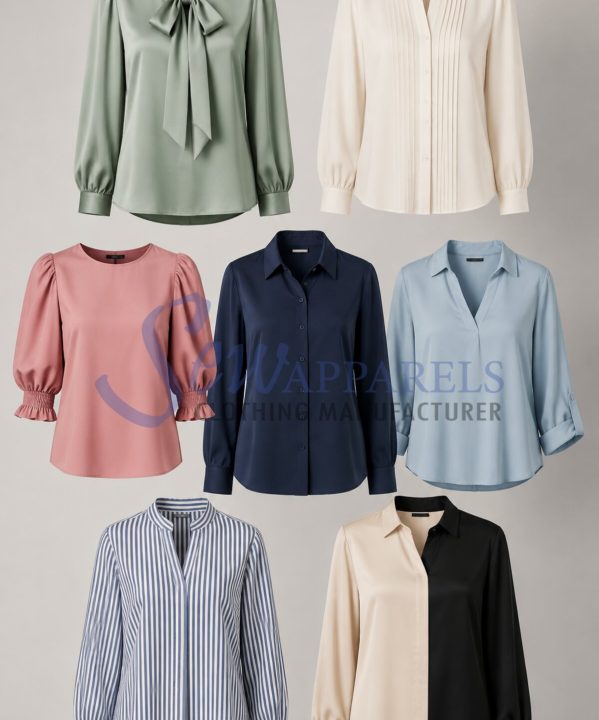
Why Woven Blouse Bust Dart Specification Matters
A dart removes fabric at its base and allows the panel to shape around the body. Its purpose differs from simply reducing the blouse’s overall circumference. A sample can meet a bust measurement while still placing the shaping too high, too low or in an unsuitable direction for the intended wearer.
Closet Core’s dart orientation tutorial explains the relationship between shaping and the fullest part of the bust. It also distinguishes the bust apex from the end of the sewn dart and discusses how undergarments affect the reference position. Use this fitting principle to frame a sample review; individual fitting guidance is not a universal size specification for a commercial range.
Woven blouse bust dart specification should connect the approved shape to defined references. Record where the dart begins, where it ends and how much intake is removed. Keep these requirements separate from the finished garment’s bust circumference, ease and placket approval.
1. Establish the Bust Reference and Sample Conditions
Define the blouse bust point reference used by the pattern team. Identify the body chart, fit model or approved form relevant to the sample. State whether the point is marked on the pattern and explain the references used to locate it.
Keep seam lines, cutting lines and finished edges distinct. Measurements taken from a shoulder cutting edge will differ from those taken from the seam line. A specification should identify which one is intended rather than leave the technician to infer it from a sketch.
Record the sample’s wearer or form conditions consistently, including the relevant undergarment expectation. Keep posture and garment fastening comparable during reviews. Differences in how the blouse is worn can change the apparent relationship between the dart and the body.
Woven blouse bust dart specification should distinguish the intended bust point from the sewn endpoint. The dart normally releases its shaping before reaching the fullest point. Agree the actual endpoint through pattern development and representative samples rather than inserting an unverified clearance into every style.
Use a marked development sample when clarification is needed. Show the intended reference and current dart on the same garment, then record the proposed correction. Retain that annotation with the revision so the pattern team can understand the reason for the change.
2. Specify Dart Position, Direction and Intake
For blouse side dart position, name the starting point on the side seam and the reference used to measure it. State how the dart is oriented toward the shaping area. Keep the placement requirement distinct from the length of the sewn dart.
A woven blouse dart intake brief identifies the amount removed at the dart base and how it is represented on the pattern. Ask the patternmaker to show the dart legs, centre line and endpoint. Confirm that terminology and measurement convention are shared by the buyer and factory.
Document woven blouse dart direction with a drawing rather than a phrase such as higher dart. A request to raise the starting point, change the angle or move the shaping reference can mean different alterations. Identify the actual geometry that should change.
Consider blouse waist dart shaping choice separately from bust-side shaping. A waist dart can affect the intended silhouette below the bust as well as the local contour. Discuss whether the design needs this additional shaping and review the effect on movement and overall fit.
Woven blouse bust dart specification should preserve the design intent when a dart is moved. Seamwork’s dart rotation tutorial demonstrates repositioning a dart around a bust apex reference. This is a pattern development concept; the altered blouse still needs its construction, silhouette and fit checked in the selected fabric.
Keep changes to intake, direction and garment ease identifiable. If several variables change together, record them individually. That makes the next sample easier to interpret and avoids attributing every improvement or problem to the dart location alone.
3. Define the Endpoint and Construction Sample
Review blouse bust dart apex clearance on the actual pattern and sample. Record the agreed relationship between the shaping reference and sewn endpoint. Fabric behaviour, silhouette and body proportions can influence the decision; an educational example should not become an automatic production value.
A blouse dart construction sample should use the intended fabric or a clearly identified development substitute. Include the dart marking, sewing approach and pressing condition. Explain any difference between the trial material and the planned production fabric.
Inspect blouse dart tip appearance under consistent lighting and garment presentation. Look for an abrupt point, local distortion or other observations that differ from the intended smooth contour. Record what is visible before deciding whether the pattern, sewing or pressing needs correction.
Agree blouse dart press direction and relevant finishing instructions with the technical team. The pressed construction should support the intended appearance without introducing unwanted impressions or distortion. Confirm the result in the selected material rather than applying one pressing approach to every blouse.
Woven blouse bust dart specification should include the approved construction reference and any relevant sewing instructions. Keep the endpoint, dart legs and local appearance traceable to the same pattern revision. A neat-looking trial in a different material is not complete evidence for the production blouse.
If a sample uses an alternative seam or shaping construction, identify it explicitly. A gathered area, shaped seam and sewn dart are not interchangeable approval records. Confirm which construction is being released and make the technical drawing consistent with that choice.
4. Separate Fit Observations from Sewing Defects
Collect blouse dart sample wearer feedback alongside technical observations. Ask where the garment pulls, collapses or restricts movement, then relate those comments to visible evidence. Avoid treating a general request for more room as a confirmed dart correction without reviewing the rest of the blouse.
Use blouse dart end puckering distinction to separate local stitching or finishing issues from an unsuitable shaping position. Check the sewn path, fabric handling and pressing against the trial record. A wrinkle near the dart does not by itself prove which variable caused it.
Review the blouse closed as intended. Compare the placket, neckline, shoulder and armhole together with the dart. A broader fit problem can influence the apparent dart behaviour, so the team should investigate the full sample before adjusting only one feature.
Woven blouse bust dart specification should record observations in plain, testable terms. For example, note the location of a visible point or pulling line and the sample conditions. Then identify the proposed change and what the next sample should demonstrate.
Use side-by-side sample comparisons where practical. Keep the material, size and presentation comparable, and label each revision. Photographs are most useful when they show the same views and are connected to a written change record.
Do not confuse an individual fit model’s adjustment with a range-wide decision. Discuss how the feedback relates to the target body chart and intended customer. Confirm the commercial fit policy with the responsible pattern and fit team before applying the change across sizes.
5. Review Grading and Measurement Instructions
A blouse dart grading review should identify how position, length and intake develop through the size range. Ask the pattern team to explain the intended rule and show the graded result. Copying the base-size dart unchanged is a decision that needs justification, not a default assumption.
Check blouse dart position size extremes using representative samples or the agreed development process. Review whether the shaping remains appropriate at the smaller and larger ends of the range. A satisfactory base sample does not establish that every graded size has the intended contour.
Prepare a blouse dart measurement chart with named points, units and measurement state. State whether each value belongs to the flat pattern, a sewn unpressed sample or the finished garment. These states can produce different readings and should not be mixed in one comparison.
Woven blouse bust dart specification should connect tolerances to those defined measurements. Agree the applicable allowance with the technical team and document how it will be checked. Do not substitute an arbitrary tolerance for a review of the construction and intended appearance.
Include any size-dependent construction changes in the release documents. If the style uses different shaping for part of the range, mark that clearly. Purchasing, cutting and sewing need the correct pattern and instructions for each affected size.
Review the selected fabric after the relevant care or finishing process when that affects approval. Note changes in the contour, local appearance or garment balance. Keep the care-state evidence linked to the same size and pattern revision as the original review.
6. Release the Pattern and Approval Worksheet
A blouse shaping approval worksheet brings together the design intent, body reference, dart geometry, construction trial and fit observations. Identify the approved sample, pattern version and release owner. Keep outstanding corrections visible until the revised result is reviewed.
Woven blouse bust dart specification should define what has been approved and which later changes trigger another assessment. Fabric, pattern, intake, placement, sewing and pressing changes can affect the result. Review their relevance to the earlier evidence rather than treating approval as permanent.
- Reference: target fit, sample size, bust point and named measurement origins.
- Geometry: starting location, direction, intake and sewn endpoint.
- Construction: marking, sewing trial, pressing and approved appearance.
- Range: grading policy, representative sizes and measurement conventions.
- Release: sample identification, revision, decision and responsible owner.
For private label woven blouse production, discuss the shaping brief with the Sew Apparels woven blouse manufacturing team. Share the intended fit and development references, and request project-specific confirmation of the sampling scope. Do not assume an approved fit or grading result before the actual samples have been reviewed.
Questions Before Dart Approval
Should the sewn dart end at the bust point?
Keep the shaping reference and sewn endpoint distinct. Woven blouse bust dart specification should define their approved relationship through the actual pattern and sample. A universal endpoint copied from another style may not suit the intended material or fit.
Can a dart correction solve every placket problem?
No. Review overall fit, ease, fastening and construction alongside the shaping. The placket gaping prevention review helps separate closure symptoms from dart changes. Establish the cause from the sample before deciding which pattern or sewing variable to change.
What makes the approval usable for production?
Named references, a clear pattern revision and representative sample evidence make the instruction traceable. Use the Woven Blouse Buying Guides to connect shaping with other blouse development decisions. Completed woven blouse bust dart specification gives the team a defined construction and review basis.