
5 panel cap seam tape wash durability should be approved for the actual tape system, complete cap and intended care route. Interior tape may be sewn, bonded or combined with stitching, and each construction can respond differently to moisture, detergent, heat, drying, flexing and repeated handling.
This guide provides a tape-specific durability record for sourcing teams. Review related decisions in the 5-panel cap buying guides. For development and quotation support, visit the custom 5-panel cap manufacturing page.
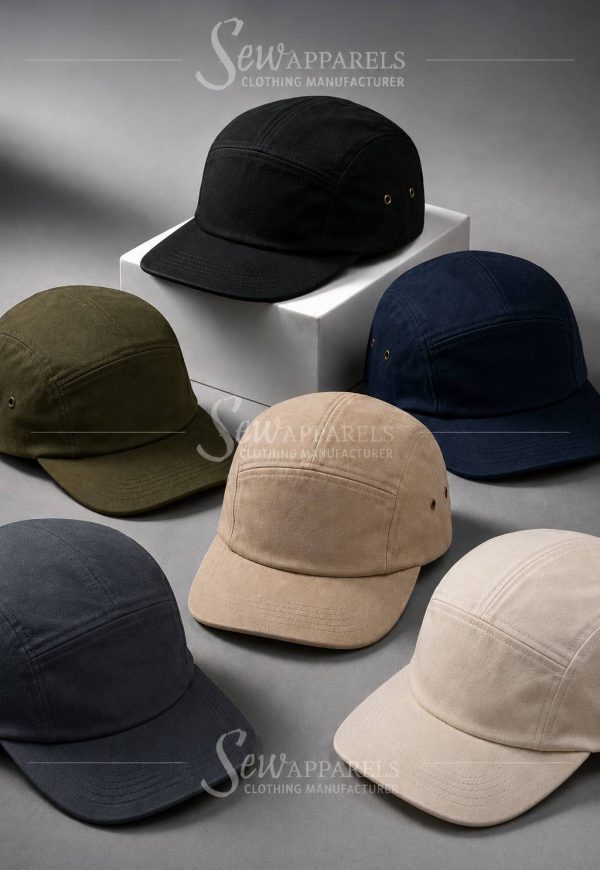
1. 5 panel cap seam tape wash durability: map tape systems
Map crown seams, visor joins, back openings, sweatband areas and any reinforcement covered by tape. Record tape supplier, article, fibre or film type, width, thickness, colour, finish, adhesive identification, stitching and application equipment. Do not call every narrow interior strip “seam tape” without confirming how it is secured.
A five panel cap interior tape inspection begins with the construction map and labelled sample. Photograph the starting condition and mark each tape location. For 5 panel cap seam tape wash durability, keep sewn, bonded and hybrid components separate because one successful area cannot approve another material or application route.
2. Verify tape and adhesive compatibility
Ask the tape or adhesive supplier for current processing guidance relevant to the nominated shell, lining, thread, coating and finishing. Confirm application temperature, pressure, time, cooling and conditioning where bonding is used. A strong initial bond does not prove performance after care, and excessive heat can damage fabric or leave a visible impression.
The 5 panel cap tape adhesive compatibility record should list the exact substrates and process settings. Preserve failed trials. If the shell fabric, finish or tape changes, trigger 5 panel cap tape material substitution approval rather than relying on an old cap that used a different adhesive or surface.
3. Distinguish sewn and bonded constructions
Sewn tape may depend on stitch formation, thread, allowance and edge control; bonded tape depends on compatible surfaces and controlled application. A hybrid system requires both. Document how each construction covers the seam, supports comfort and remains accessible for inspection without assuming one route is always more durable.
A 5 panel cap sewn versus bonded tape care comparison should use the same cap fabric and defined care conditions. For 5 panel cap seam tape wash durability, record tape movement, stitch damage, bond lifting and exposed seam edges separately. Select the construction from verified product evidence, not a generic preference.
4. Choose the care route from the complete cap
Review shell, visor insert, sweatband, decoration, closure, labels, thread, tape and adhesive before specifying care. For a corduroy shell, include the corduroy nap-direction and care-appearance review alongside the interior tape assessment. The most sensitive component may control the permitted route. Confirm whether the programme expects washing, spot cleaning, professional care or another method, and involve qualified technical teams when applicability is uncertain.
The cap tape compatibility with care instructions entry should identify method, temperature, detergent, agitation, extraction, drying, reshaping and conditioning. Do not invent a universal wash-cycle requirement. The approved care route must reflect the complete product and target market rather than testing tape in isolation under convenient laboratory conditions.
5. Prepare controlled starting samples
Use production-intent caps with unique codes, material lots, operator, machine or bonding equipment, settings and dates. Measure or photograph tape position, edge contact, overlaps, seam coverage and surface condition before care. Keep an unexposed reference under controlled storage for side-by-side review.
The 5 panel cap bonded tape care evidence should connect every image and observation to a sample code. For a 5 panel cap interior tape wash trial, include more than one relevant location and size where construction differs. Do not combine results from unrelated prototypes into a single pass.
6. Inspect lifting after care
Examine tape ends, curves, seam intersections, high-flex zones and areas near the sweatband. Record the location and length of any lift, blister, tunnel, curl or separation. Inspect without pulling first, then apply only the agreed assessment method so one reviewer does not create damage that another would classify as a failure.
The 5 panel cap tape lifting after washing log should distinguish isolated edge movement from progressive delamination. A 5 panel cap tape edge lift assessment needs photographs, measurements or graded boundary samples agreed by the buyer. For 5 panel cap seam tape wash durability, blank cells are not passes.
7. Check residue and surface transfer
Look for adhesive migration, tackiness, staining, shine, hard spots and deposits on adjacent fabric. Review both tape face and surrounding seam under consistent light. Residue can affect comfort and appearance even when the tape remains attached, so adhesion and cleanliness require separate findings.
A cap seam tape adhesive residue observation should name colour, location, extent and care state. The 5 panel cap tape residue inspection record should also state whether the mark existed before care. Quarantine uncertain samples until the factory and material supplier identify the likely cause and corrective action.
8. Examine exposed seam edges
Tape movement may uncover raw edges, thread tails, stiff allowances or abrasive points. Turn the cap through its natural wearing shape and check contact zones without stretching it beyond normal use. Record whether coverage loss comes from tape shrinkage, bond failure, inaccurate placement, allowance movement or stitch damage.
The 5 panel cap tape exposed seam defects map should use panel and seam names from the technical pack. Assess comfort risk separately from appearance. A cap should not pass merely because lifting is hidden from the outside when the interior edge no longer meets the approved coverage or wearer requirement.
9. Control drying and conditioning
Drying temperature, tumbling, air flow, support and reshaping can change a cap more than the wet stage. Follow the nominated route and record deviations. Condition samples for a defined period before final inspection, while also noting temporary problems observed immediately after removal from the care process.
The 5 panel cap tape drying condition review should identify equipment, setting, duration, cap support and conditioning environment. For 5 panel cap seam tape wash durability, compare samples only after equivalent treatment. Do not use extra heat or pressing to hide a lift unless that correction is an approved production process.
10. Compare initial and repeated-care samples
Inspect after the initial agreed exposure and at planned repeat points selected by the buyer’s technical programme. Use the same viewing, handling and recording procedure each time. The purpose is to detect progression, not to claim a universal lifetime from an arbitrary number of cycles.
A 5 panel cap tape repeat wash comparison should show each sample’s history, not only final photographs. Record lifting, residue, exposed edges, shrinkage, puckering, stiffness, colour and comfort comments. Stop testing and investigate when severe failure could contaminate later observations or make further cycles meaningless.
11. Separate tape failure from cap distortion
A distorted shell, visor or sweatband can pull tape even when the adhesive process was consistent. Measure key cap dimensions and inspect seam balance before and after care. Link tape findings to shell shrinkage, seam tension or shaping changes where evidence supports that relationship, while avoiding an unsupported root-cause claim.
The durability record should show whether the tape detached first or whether surrounding construction changed. Repeat a controlled trial after corrective action. For final 5 panel cap seam tape wash durability approval, preserve both the tape result and the complete-cap appearance result.
12. Define acceptance and corrective action
Agree who may approve, reject or accept a conditional result. Set product-specific limits for lifting, residue, seam exposure, stiffness and comfort using measurable descriptions and boundary samples where practical. Identify when production must adjust tape, adhesive, settings, placement, seam construction or care instructions.
The 5 panel cap tape durability acceptance record should contain sample codes, care history, observations, decision, owner and date. Do not rework a failed sample and present it as the original result. Link every correction to a new trial and revision before bulk release.
13. Use current care and test references
AATCC’s standards catalogue includes methods for appearance and dimensional change after home laundering. Qualified technical teams should select the current applicable method and buyer criteria; the catalogue does not establish one universal seam-tape cycle or pass threshold.
The US FTC’s Care Labeling Rule text should be reviewed for current scope and market obligations. The rule’s definition of textile wearing apparel excludes hats and articles used exclusively to cover or protect the head or hands. Treat this as a scope check, not a claim that the rule requires a cap care label; verify other market obligations and support any voluntary care instruction with product evidence.
14. Plan low MOQ tape development
A low MOQ 5-panel cap manufacturer enquiry can reduce trial cost by using one shell fabric, one nominated tape system and a focused care route. Share quantities, materials, decoration, closure, packing and market before quotation. Confirm what sampling and testing are included without inventing a universal minimum, price or lead time.
For custom 5 panel cap manufacturing, ask whether production equipment can reproduce the approved application settings. Private label 5 panel cap production should identify who supplies tape, owns unused material, approves substitutions and releases bulk after evidence review.
15. Give startup brands a clear evidence route
Startup brands should appoint one decision owner and keep feedback tied to sample codes. Begin with the intended use, care expectation and complete cap specification. A focused first range makes it easier to compare one construction change at a time and prevents uncontrolled tape substitutions across colours or suppliers.
Sew Apparels can discuss feasibility subject to confirmed material availability, sample scope, development charges and order conditions. Review our 5-panel cap manufacturing service and request a quote with your tape specification; performance decisions require suitable evidence. Complete 5 panel cap seam tape wash durability review before bulk release and preserve failures as part of the learning record.
16. Release the production record
The final tape file should contain supplier articles, lots, application settings, seam map, care method, starting photographs, repeat-care results, defects, corrections, approved cap and signatures. Define change triggers for tape, adhesive, fabric finish, seam allowance, equipment, operator route or care instruction.
Audit first production and representative bulk units against the approved reference. Archive exceptions and actual corrective actions. This makes 5 panel cap seam tape wash durability a traceable product decision rather than a broad promise that every tape will survive every care process.