
A packable cap is not approved because it can be pushed into a pouch once. Buyers need repeatable evidence that its crown, seams, visor and trims recover after the exact storage and delivery conditions promised to the customer.
A packable 5 panel cap crush recovery test turns that claim into a controlled product decision. It defines how the finished cap is folded or compressed, how long it stays packed, how it is unpacked and how its appearance is judged after a fixed recovery period.
This guide is for sourcing teams, product developers and quality teams preparing a travel, outdoor or promotional cap program. It explains how to build a practical trial without presenting the trial as a laboratory certification. Use the record to compare samples, identify damaging packing methods and write realistic approval limits before bulk production.
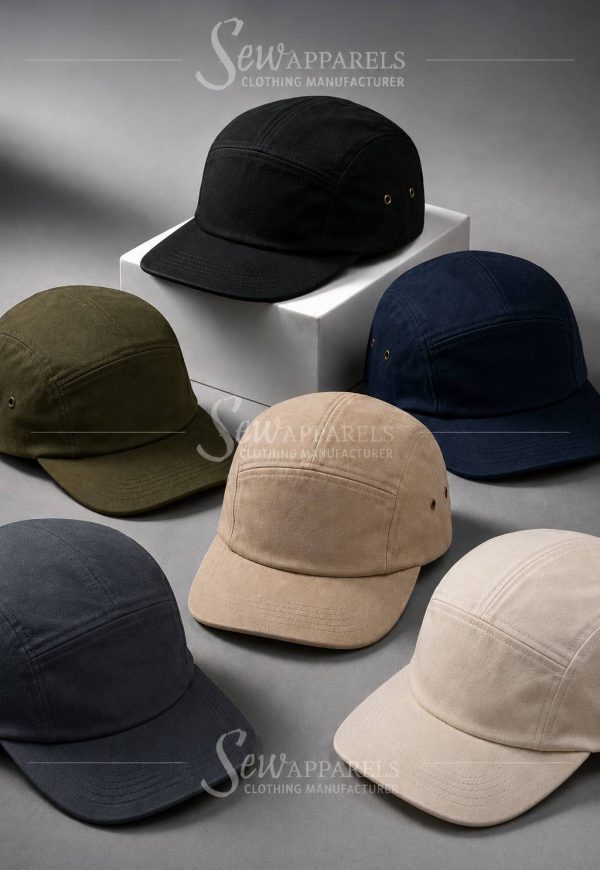
1. Packable 5 Panel Cap Crush Recovery Test: Define the Claim
Start with the customer promise. “Packable” can mean that a soft cap fits inside luggage, that a cap can be folded into a pocket for several hours, or that packed units survive warehouse and parcel handling. Those situations apply different pressure, duration, temperature and humidity. The test brief should state the intended use, the packing container, the folding method, the number of caps, the expected storage time and the recovery time allowed after unpacking.
A useful packable 5 panel cap crush recovery test therefore begins with an advertised-use statement rather than a random crushing action. Record whether the visor may be rolled, whether the crown may be inverted and whether the cap is expected to look wearable immediately or after reshaping. This prevents a severe but irrelevant test from rejecting a suitable product, and it prevents a gentle demonstration from supporting a claim the finished cap cannot consistently meet.
Create one reference photo set before packing. Include front, side, rear and top views under consistent lighting, with the closure set to the approved position. Measure any critical crown height or visor curve only when those dimensions are part of the approved specification. The reference becomes the comparison point for a later packable five panel cap crease evaluation.
2. Separate Temporary Wrinkles from Permanent Damage
Not every post-packing mark is a failure. A light wrinkle that relaxes within the stated recovery period differs from a sharp fold line, delaminated support, distorted visor or seam that remains twisted. Define defect classes before testing. Temporary appearance changes may include shallow wrinkles or minor crown flattening. Permanent damage may include a fixed crease, cracked coating, broken reinforcement, displaced seam tape, irreversible visor deformation or print damage.
The acceptance sheet should describe what the assessor can see rather than using vague terms such as “good recovery.” A packable 5 panel cap fold crease permanence record can identify the crease location, length, visibility distance and whether gentle hand shaping removes it. A packable 5 panel cap unpacking appearance limit should also state the allowed recovery time and viewing conditions. This makes supplier, buyer and inspection decisions easier to reproduce.
Pay special attention to transitions: the front-to-side seam, crown apex, sweatband edge, closure opening and visor attachment. These locations can concentrate pressure when the cap is folded. Compare the appearance with the approved 5-panel cap crown-development reference rather than assuming every construction behaves alike.
3. Fix Compression Load, Duration and Recovery Time
A trial is comparable only when its conditions are recorded. Define the packed orientation, compression method, approximate load, dwell time and environment. If a plate, weighted carton or filled travel pouch is used, document its dimensions and setup. The phrase packable 5 panel cap packing compression conditions should point to this controlled setup, not to an unrecorded person pressing the cap by hand.
Run a short cap compressed storage trial first to identify immediate risks. Then use a duration that represents the actual program, such as a planned travel interval or warehouse holding period. For longer scenarios, note temperature and humidity because heat and moisture can change how foam, interlining, adhesive, coatings and visor materials recover. Do not claim a distribution result unless the actual protocol and acceptance criteria have been agreed with the appropriate laboratory.
After unpacking, inspect at fixed intervals. A practical travel cap recovery time protocol may record appearance immediately, after gentle reshaping, and after the buyer-defined rest period. The packable 5 panel cap storage recovery period must be the same for every candidate. A packable 5 panel cap prolonged storage appearance check can be added when inventory may remain packed for weeks, but its duration should reflect a real commercial risk.
For independent distribution testing, consult the current procedures and professional guidance published by the International Safe Transit Association. A buyer’s cap trial is not ISTA certification. Select any formal distribution protocol with the test laboratory and report only the conditions and results actually completed.
4. Compare Empty and Supported Packing Formats
Test the cap in the configurations a customer or warehouse may use. An empty crown packed flat can behave differently from a crown supported by tissue, a shaped insert or another cap. Compare at least the proposed retail or shipping pack with one reasonable alternative. Keep the cap specification constant so the packing method, rather than a material change, explains the result.
A packable 5 panel cap packed shape comparison should record fold lines, nesting direction, visor position and the space available around the closure. If a pouch is part of the offer, perform a packable 5 panel cap travel pouch protection review for seam pressure, zipper contact, abrasion and moisture retention. The pouch must not create a new hard edge that damages the cap it is intended to protect.
The packable 5 panel cap packing insert decision should consider recovery improvement, material use, packing labour, shipping cube and disposal. An insert may protect a structured area, but it can conflict with a compact-pack claim. Write the selected format into the packaging specification with a simple diagram so production teams do not improvise the fold.
Packaging development should also consider material reduction and recovery systems. The Sustainable Packaging Coalition provides broader resources for evaluating packaging choices. Use those principles as context while making product-specific decisions from actual cap and distribution evidence.
5. Assess Finished Caps After Unpacking
Test finished production-intent samples, not only loose fabric or an unfinished crown. Visor components, sweatband, labels, closures, decoration and seam construction can change recovery. Sample selection should cover the intended colour and material combinations when they differ in stiffness, coating, print area or support. Do not average away a failure that affects one commercially important variant.
Set a defensible packable 5 panel cap crush trial sample count based on development stage and risk. Early screening can use a small comparison set, while final approval should represent relevant sizes, colours, decoration routes and packing positions. Record each sample separately. The sample count is evidence coverage, not a guarantee of future production quality.
Use a packable 5 panel cap compression damage checklist with crown symmetry, seam alignment, visor shape, surface creases, coating or print condition, sweatband distortion, closure function and trim security. Photograph the same views used before packing. Note whether recovery occurred without intervention, after permitted hand shaping or not at all. A folded cap appearance approval is valid only when the allowed shaping and recovery period match the customer instructions.
The packable 5 panel cap crush recovery test should also include basic wear assessment after unpacking. Put the cap on the intended headform or fit model and check whether crown distortion, seam torque or visor shift becomes more visible in use. Functional fit can reveal damage that is difficult to see on a flat table.
6. Write the Approval, Evidence and Exclusions
Conclude with a signed scorecard. The record should identify the sample, material and trim versions; the fold and pack method; compression conditions; duration; recovery intervals; defect observations; photographs; decision; and approvers. A clear packable 5 panel cap packability claim evidence file links the marketing wording to the tested configuration.
A complete packable 5 panel cap crush recovery test approval must also list exclusions. For example, approval for a soft uncoated fabric cannot automatically cover a foam-supported crown, heavy embroidery or a different visor insert. A pass in a travel pouch cannot prove performance in compressed bulk cartons. Changes to shell fabric, support, adhesive, seam construction, decoration, visor or packing format should trigger a documented review and, when relevant, a repeat trial.
Packability Trial Scorecard
Use the same scorecard for every candidate in the packable 5 panel cap crush recovery test. Consistent fields make material, construction and packing-route comparisons visible without replacing product judgement with a single unqualified score.
- Claim and use: customer promise, packing situation, maximum storage duration and allowed recovery time.
- Sample identity: style, colour, materials, decoration, closure, visor and production-intent status.
- Method: fold diagram, pouch or carton, support insert, load, duration, environment and unpacking steps.
- Observations: immediate, reshaped and final crown, seam, visor, surface, trim and fit condition.
- Evidence: matched before-and-after photos, defect location, assessor, date and sample-level result.
- Decision: approved packing format, limits, exclusions, corrective action and retest requirement.
This scorecard keeps the packable 5 panel cap crush recovery test focused on the buyer’s actual claim. It also prevents a successful development sample from being treated as universal evidence for every material and packing combination.
Low MOQ Packable 5-Panel Cap Development
For a low-MOQ program, reduce variables before multiplying samples. Select one production-intent shell, visor, closure, decoration route and packing method, then complete the controlled trial. This makes custom 5 panel cap manufacturing decisions easier to trace and limits the cost of repeating every combination. Low quantity does not remove the need for a written method. Review the 5-panel cap manufacturing service and request a quote with your fold and packing brief for a feasibility review.
Startup Brand Packability Brief
Startup brands can prepare a concise brief with the use claim, reference sample, packing diagram, expected storage duration and acceptance photographs. For private label 5 panel cap production, this evidence helps separate a realistic packable product promise from an unsupported marketing phrase. Keep early claims narrow, test the actual configuration and expand only when evidence supports it. Sew Apparels can discuss feasibility subject to confirmed materials, sample scope, development charges and order conditions.
Move from Trial to Production Brief
Before sign-off, confirm that the packable 5 panel cap crush recovery test record names the exact approved sample and packing method. File the evidence with the product specification so purchasing, production and inspection teams work from the same decision.
Review the related 5-Panel Cap Buying Guides for connected development decisions. When your scorecard, material references, packing format and target use are ready, share them through the custom 5-panel cap manufacturer page to discuss sample feasibility. The commercial discussion should use the tested conditions and exclusions recorded in the packable 5 panel cap crush recovery test, without assuming unverified performance, MOQ, price or lead time.