
Chef coats developed for kitchen mobility, professional presentation, practical ventilation, secure closures and repeat uniform programs
Custom Chef Coats Manufacturer in Bangladesh
Custom Chef Coats Manufacturer in Bangladesh for restaurants, hotels, catering groups, culinary schools and food-production teams. We develop double-breasted and single-breasted kitchen jackets with buyer-specified fabrics, sleeve lengths, ventilation, pockets, embroidery, labels and professional finishing. Explore our complete workwear manufacturing program for coordinated culinary uniforms, service apparel and professional staff clothing.
MOQ
1500 Pcs Per Design / Color
Sampling Lead Time
10–15 DAYS
Sampling Time
Production Lead Time
15–30 DAYS
At MOQ after PP approval; quantity-dependent
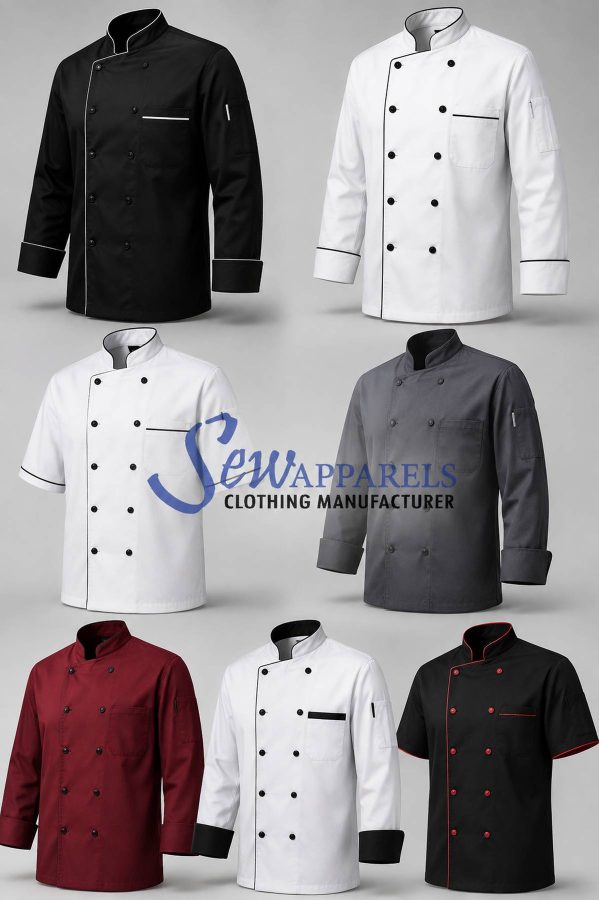
ABOUT OUR CHEF COATS MANUFACTURING
Chef Coats Engineered for Kitchen Movement and Presentation
Sew Apparels is a Custom Chef Coats Manufacturer in Bangladesh developing culinary jackets from tech packs, physical samples and size charts. We coordinate front overlap, collar shape, sleeve mobility, closure spacing, ventilation panels, pocket placement and decoration so approved details remain practical for kitchen service.
Double-Breasted Front & Closure Engineering
Sleeve Mobility & Cuff Development
Ventilation Panel Integration
Kitchen-Uniform Fit Grading
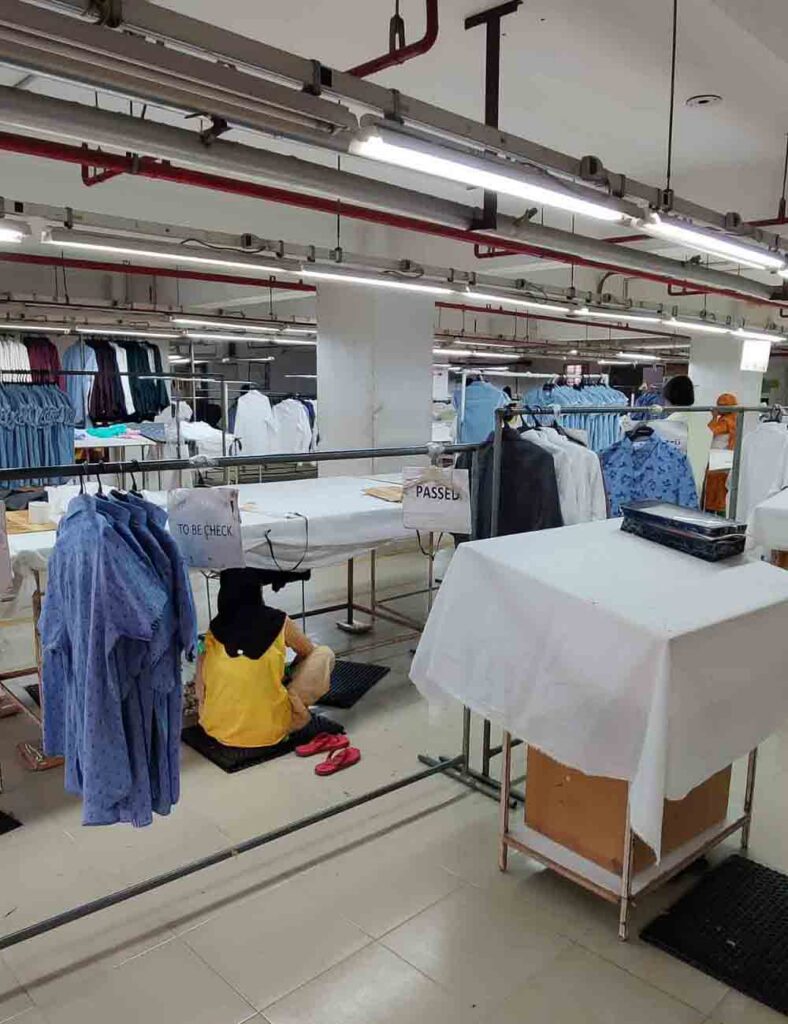
Our Impact
2018
Established
850+
Skilled Workers
40,000+
sq.ft Factory Area
40+
Export Countries
Kitchen Fabrics for Chef Coats
As a Custom Chef Coats Manufacturer in Bangladesh, we select woven fabrics around kitchen temperature, garment structure, laundering expectations, opacity, hand feel and decoration. Buyers can approve GSM, fiber blend, weave, finish and color after reviewing swatches or development samples.
Polyester-Cotton Twill
180–220 GSM 65/35 or buyer-specified blends for structured uniforms, practical care and stable embroidery areas.
100% Cotton Twill
180–230 GSM option with a natural hand feel for premium culinary programs and buyer-defined washing requirements.
Poly-Cotton Poplin
140–180 GSM lighter woven option for warm kitchens, banquet service and less bulky long-sleeve chef jackets.
Cotton-Rich CVC Twill
180–220 GSM cotton-rich blends balancing a familiar cotton touch with structured woven uniform construction.
Stretch Workwear Twill
180–220 GSM woven option with controlled elastane content when buyers prioritize reach, bending and shoulder mobility.
Lightweight Herringbone / Dobby
150–190 GSM textured woven option for culinary collections seeking visual distinction without heavy jacket weight.
Chef Coat Branding & Functional Details
Branding and trims are planned around front overlap, collar, chest position, sleeve movement and repeated washing. Artwork and component placement follow the approved sample so names, logos and functional details remain balanced without obstructing closure or ventilation zones.
▦
Bib-Front Logo Embroidery
♜
Screen-Printed Culinary Graphics
✓
Woven, Size & Care Labels
◈
Custom Buttons, Snaps & Closures
▤
Contrast Piping & Stitch Accents
⌂
Mesh Ventilation Panel Options
⤢
Branded Polybags & Carton Marking
▦
Heat-Transfer Names & Logos
SCALABLE CHEF COAT PRODUCTION
Our woven apparel team supports chef coat programs through flexible line allocation, shell and collar preparation, closure construction, quality inspection, finishing and export coordination.
UP TO 80K
Woven Apparel Monthly Capacity
Flexible Woven Sewing Line
Allocation
Skilled Workwear
Production Team
40+
Export Countries with Worldwide Shipment Support
Our Chef Coat Production Process
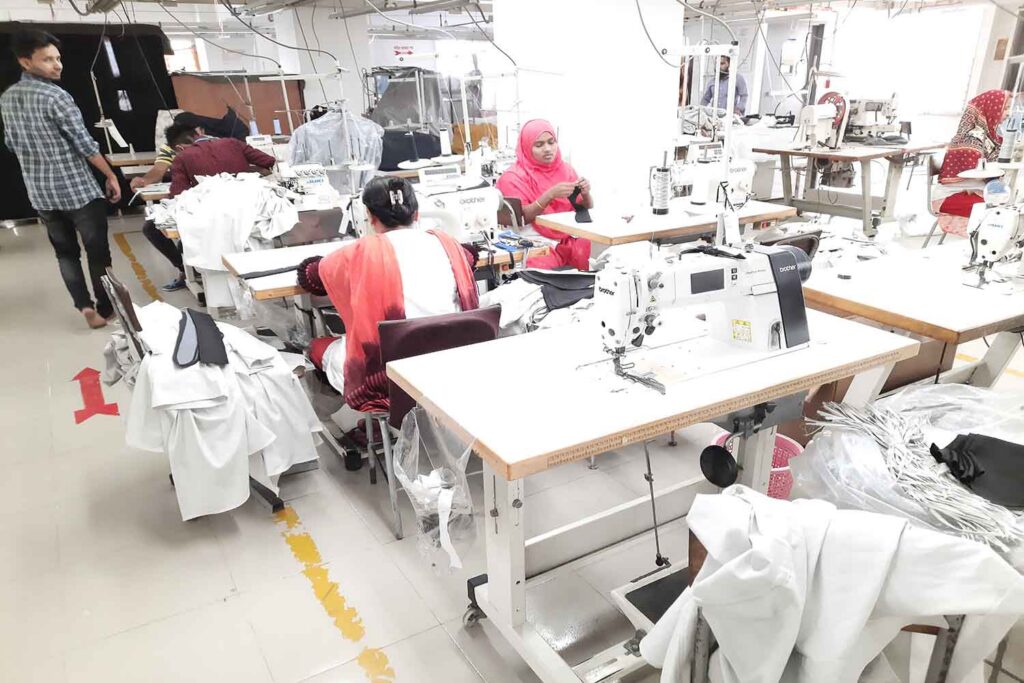
As a Custom Chef Coats Manufacturer in Bangladesh, Sew Apparels confirms jacket silhouette, front overlap, collar, sleeve length, closure system, pockets, ventilation, fabric, labels, embroidery and size chart before sampling. Approved orders proceed through marker planning, cutting, component preparation, sewing, decoration, measurement inspection, pressing, final QC and packing.
Quality Control for Chef Coats
Fabric Weight, Shade & Surface Review
Chest, Length, Sleeve & Collar Measurement Control
Front Overlap, Button & Closure Alignment Check
Pocket, Embroidery & Ventilation Position Review
Armhole, Side-Seam & Stress-Point Workmanship Check
AQL 2.5 Final & Packing Inspection
WHY INTERNATIONAL HOSPITALITY & UNIFORM BUYERS CHOOSE SEW APPARELS FOR CHEF COATS
Our Custom Chef Coats Manufacturer in Bangladesh supports culinary fit control, functional detailing, clean decoration placement and repeat-order documentation for professional uniform programs.
💰
Kitchen-Focused Pattern Engineering
Front overlap, shoulder ease, sleeve reach and jacket length are balanced for active kitchen movement and professional uniform presentation.
⏱
Closure & Overlap Control
Button spacing and front overlap are developed together to maintain coverage, alignment and a clean appearance during service.
🛡
Practical Ventilation Planning
Mesh or lighter panels can be positioned at selected zones without disrupting seams, branding areas or overall jacket structure.
♻
Culinary Pocket Placement
Thermometer and utility pockets are engineered by task, reach direction and sleeve or chest movement during active kitchen service.
⚙
Fabric Selection by Environment
Fabric choices are matched to heat exposure, jacket structure, care routines and the visual standard required for each culinary program.
☑
Repeat-Order Specification Control
Stored pattern versions, trim codes and artwork coordinates help restaurant groups reorder uniforms without rebuilding every approved detail.
CHEF COATS APPLICATIONS
Restaurants & Hotels
Professional jackets for chefs, sous chefs and kitchen brigades.
Catering & Banquet Teams
Coordinated uniforms for event kitchens and mobile catering crews.
Bakeries & Pastry Kitchens
Clean culinary coats for bakery and pastry production teams.
Culinary Schools
Student and instructor uniforms for practical kitchen training programs.
Food Production Facilities
Uniform jackets for central kitchens and prepared-food operations.
Private-Label Uniform Brands
Custom programs for importers, distributors and hospitality suppliers.
Frequently Asked Questions
What is your MOQ for custom chef coats?
Programs can typically begin at 1,500 pieces per design and color using customized materials. As a Custom Chef Coats Manufacturer in Bangladesh, we confirm final MOQ after reviewing fabric, color, closure system, embroidery, size range and packaging requirements.
Which chef coat constructions can you develop?
We can develop classic double-breasted jackets, modern single-breasted coats, short- or long-sleeve versions, mandarin or stand collars, roll-up sleeve systems, contrast piping, vented backs or underarm panels, and buyer-specified pocket arrangements. Fit and styling follow the approved tech pack or physical sample.
Which fabrics are suitable for professional chef coats?
We commonly develop polyester-cotton twill, 100% cotton twill, cotton-rich CVC twill, lightweight poly-cotton poplin, stretch twill and selected herringbone or dobby fabrics. Final GSM, blend, weave and finish should be confirmed against kitchen environment, desired appearance and laundering expectations.
Can you add ventilation, pockets and custom closures?
Yes. Sleeve thermometer pockets, chest pockets, side-seam or internal pockets, mesh ventilation panels, underarm eyelets, fabric-covered buttons, plastic buttons, snaps and concealed closures can be developed when technically suitable. Placement and construction are confirmed during sampling.
Do you provide private labels and chef-name embroidery?
Yes. We support woven labels, care labels, size labels, branded neck labels, embroidered names, chest or sleeve logos, printed identification, custom trims, barcode labels and branded packaging. Embroidery size and position are approved before bulk production.
Can you make a chef coat sample before bulk production?
Yes. Sampling lets buyers review front overlap, collar, sleeve mobility, pocket access, ventilation, closure spacing, embroidery placement, garment measurements and overall presentation before bulk approval. Typical sample development is around 10–15 days, depending on fabric and trim availability.
What is the bulk production lead time?
Typical bulk scheduling is 15–30 days at the applicable MOQ once the PP sample and all material, trim and artwork approvals are complete. Lead time depends on order quantity. Specially developed fabrics, unusual closure components, detailed embroidery programs, testing or broad size assortments can require extra production planning.
Can you ship chef coats internationally?
International orders can move by the buyer’s agreed sea, air or express route. We prepare commercial export documents and can quote FOB, CIF, CNF or feasible DDP arrangements after destination, shipment size and service requirements are confirmed.
Related Products
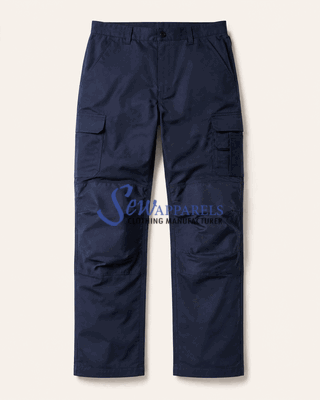
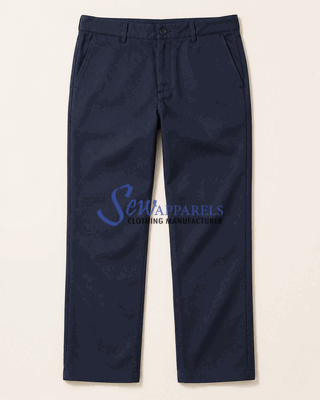
Clean-Fit Woven Trousers for Hospitality, Facility and Corporate Uniform Programs
Double-Breasted Construction Needs Pattern Precision
A Custom Chef Coats Manufacturer in Bangladesh must control front overlap, button rows, chest width and jacket length before production. Buyers developing double breasted chef coats should review how the overlapping front sits when the wearer bends, reaches or works beside hot equipment.
A traditional double front depends on accurate button spacing and matching edges. Poor balance can twist toward one side, expose the inner layer or make embroidery look off-center even when the garment appears correct on a table.
Pattern engineering also needs enough shoulder and upper-back ease for reaching across prep tables and lifting trays. Sleeve pitch, chest allowance and back width should be evaluated together during fitting so movement does not distort the front.
Buyers may select fabric-covered buttons, plastic studs, snaps or another approved closure. Each option affects buttonhole construction, overlap thickness and replacement practicality, so closure details should be locked before the PP sample and graded size set.
Choosing Kitchen Fabrics Beyond Fiber Content
A Custom Chef Coats Manufacturer in Bangladesh should evaluate fabric by weave, weight, opacity, thermal comfort and maintenance rather than fiber percentage alone. Buyers specifying polyester cotton chef coats can use the CottonWorks woven fabric guide to review twill structures, then approve GSM and finish from physical swatches.
Cotton twill chef coats can provide a familiar woven hand, while poly-cotton constructions suit structured hospitality programs. Fabrics with the same nominal blend may still differ in yarn, density, finish and shrinkage, making physical approval important.
Lightweight poplins can reduce bulk in warm kitchens, whereas medium twills give more body for double-breasted jackets and embroidery. Stretch-woven options may support mobility when fabric behavior and pattern allowance are engineered together.
White culinary uniforms need specific opacity review because lighter fabrics can show pocket bags, seam allowances or underlayers under strong lighting. Buyers should assess finished garment appearance and embroidery backing before approving a lightweight white fabric.
Ventilation and Sleeve Mobility for Busy Kitchens
A Custom Chef Coats Manufacturer in Bangladesh can develop ventilation where it supports the buyer’s design and remains compatible with seams and branding. Underarm mesh, back yokes, side panels or vented inserts should be positioned and approved on the sample.
Ventilation fabric should coordinate with the shell in color, recovery and washing behavior. Excessively stretchy mesh can distort a woven seam, while a rigid insert can restrict movement, so panel geometry and seam construction need joint planning.
Long sleeves can use plain hems, cuffs or roll-up systems, while short sleeves need balanced openings around the upper arm. Sleeve width and armhole depth influence reach, so mobility should be checked during fitting rather than from flat measurements alone.
Hospitality groups operating across different climates can keep one visual identity across several sleeve or ventilation configurations. Consistent collar, logo, color and trim specifications help the collection remain coordinated while construction adapts to kitchen conditions.
Closures and Pockets Should Support Workflow
A Custom Chef Coats Manufacturer in Bangladesh should treat closures and pockets as functional components. A professional chef uniform supplier may need thermometer pockets, chest compartments, sleeve storage or discreet internal pockets, with each position checked against reaching and arm movement.
Thermometer pockets are often narrow and vertical, but width, depth and opening angle should follow the actual tool requirement. Oversized pockets can disturb sleeve drape, while shallow pockets may not retain contents securely during repeated movement.
Button type also affects maintenance. Removable studs, sewn buttons, snaps and concealed closures create different production and replacement requirements. Buyers should define component material, finish, color and attachment method in the approved specification.
Pocket corners, closure points and sleeve tabs can receive bartacks or other reinforcement according to the construction plan. Stitch density should suit fabric weight because excessive reinforcement can stiffen lightweight material or create visible puckering.
Branding Chef Coats Without Compromising Finish
A Custom Chef Coats Manufacturer in Bangladesh can coordinate embroidered chef coats with names, restaurant logos, sleeve marks or culinary-school identification. Decoration should be positioned after overlap, collar and pocket geometry are established so artwork looks balanced while worn.
Embroidery density needs to suit the fabric. Heavy fill on lightweight poplin may distort the panel, while large designs can stiffen the chest area. Backing, needle choice, thread count and hoop placement should follow approved artwork and fabric.
For private label chef coats, branding can extend to neck labels, size labels, care labels, custom buttons, piping, hangtags and packaging. These details should be recorded in a trim sheet so repeat production follows the same references.
Wholesale chef jackets may serve restaurant groups where staff names or location identifiers change. Buyers can separate fixed brand elements from variable personalization, helping the factory control core garment specifications while managing approved decoration lists.
Laundering Performance Needs Defined Expectations
A Custom Chef Coats Manufacturer in Bangladesh should discuss laundering expectations before fabric and trim approval because culinary garments may be washed frequently. Buyers can reference AATCC textile testing methods when dimensional change, colorfastness or appearance requires formal evaluation.
Fabric, thread, piping, labels and embroidery should be considered as one system. Components that behave differently after washing can create puckering, twisted seams, color migration or uneven shrinkage despite looking acceptable before laundering.
Buyers should state whether garments are intended for home laundering, commercial service or another process. The factory should not assume bleach exposure, drying temperature, wash chemistry or stain-release performance unless those requirements are documented.
Bulk chef coat production is more predictable when approved samples, fabric expectations and care instructions align before cutting. Specific dimensional or appearance tolerances should be written into the purchase specification instead of introduced after finished goods are completed.
Private-Label Programs Depend on Repeatable Specifications
A Custom Chef Coats Manufacturer in Bangladesh can support private label chef coats for hospitality suppliers, culinary brands and uniform distributors. Strong programs document pattern version, approved fabric, trim codes, embroidery placement, measurement tolerances and packing instructions before replenishment orders begin.
Custom chef coats may include several colors, sleeve lengths or role distinctions within one account. A structured matrix can identify common and variable components, reducing accidental differences in buttons, piping, logo position or care labeling.
A chef coat manufacturer in Bangladesh handling recurring programs should retain clear approval references for grading and construction. Repeat business benefits when new production is checked against an agreed specification rather than memory or photographs from an earlier shipment.
From first sample through bulk chef coat production, technical approvals should connect with quantities and delivery planning. Clear SKU breakdowns, carton marking, barcode instructions and destination requirements help importers manage replenishment across restaurants, distributors or warehouse networks.
Develop Your Next Chef Coat Program
Send your tech pack, physical reference, size chart, fabric target, closure details, ventilation plan and branding to our Custom Chef Coats Manufacturer in Bangladesh team for sampling, costing and bulk production planning.
For coordinated staff uniforms, explore our custom woven work trousers.