
Chef Coats Buying Guides
These chef coats buying guides bring together the decisions that matter before a hospitality uniform enters sampling: front closure, kitchen heat comfort, fit, fabric care and repeat-order consistency. Use the linked articles as practical checklists, then turn your choices into a short product brief for the manufacturer. The aim is to compare construction options against the real conditions in your kitchen, not to choose a coat from a photo alone.
Sew Apparels develops custom chef coats for restaurants, hotels, catering teams, culinary schools and food-production buyers. The eight technical guides below address distinct design, care and order-control questions. Start with the issue that is most likely to affect your wearers, record a sample decision, and then review the original chef-coat manufacturing page for available customization and production discussion. The guides support buying decisions; they do not replace a wear trial or an approved pre-production sample.
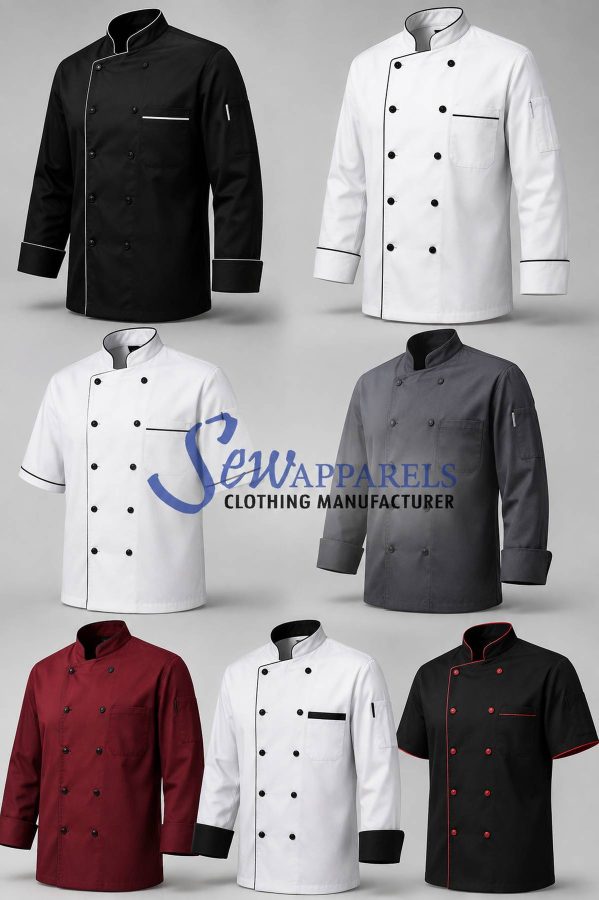
Double-Breasted Closure Design
Compare front overlap, button placement and reversible fastening so the coat closes neatly during movement and repeated laundering. The article includes specific sample checks for placket stability and fit.
Explore double-breasted closuresKitchen Heat Comfort Features
Review back ventilation, underarm panels, sleeve openings and fabric weight together. Comfort should be tested with realistic work movements while maintaining appropriate coverage.
Read the heat-comfort guideCustom Chef Coat Manufacturing
See the original product page for buyer-specified fabric, sleeve length, pocket, ventilation and embroidery options, then discuss the sampling and production scope for your order.
Explore chef coat manufacturingChef Coat Replacement Trims: Compatibility and Quotation Scope
Identify the coat revision and replacement part, then agree sample care checks, repair labour, delivery terms and spare-part continuity before comparing offers.
Read the replacement trim quotation guideWhite Chef Coat Laundry Trials: Stain Removal and Appearance Evidence
Identify samples and controls, document the complete laundry route and assess residual stains, whiteness and trim changes separately before care approval.
Read the white coat laundry trial guideChef Coat Sleeve Assortment: Role Requirements, Fit and Order Allocation
Compare short and long sleeve constructions with employer requirements, wearer movement and apron interaction, then release a clear variant and size allocation.
Read the sleeve assortment planning guideChef Coat Name Orders: Spelling, Size Mapping and Packing Control
Connect approved display names to garment sizes, physical proofs and wearer-code packs, with controlled revisions and only the staff information needed for the order.
Read the name personalization order guideChef Coat Contrast Trims: Cleaning Evidence and White-Panel Appearance
Match piping and shell identities, review wash-report scope and inspect the assembled coat for staining, fading and care compatibility before approval.
Read the contrast trim cleaning guideBlack Chef Coat Colour Transfer: Rubbing Reports and Apron Contact
Separate dry rubbing, wet rubbing and laundering evidence, then match fabric identity and defined apron-contact observations before approving the black material.
Read the colour transfer testing guideHow to Use These Chef Coats Buying Guides
Use these chef coats buying guides as parts of one connected specification. A double-breasted front can affect fabric bulk across the chest; a lighter fabric can improve perceived comfort but changes how the placket holds its shape. A ventilation panel can help air movement but needs to work with the intended coverage, seam placement and laundering routine. Read the closure guide first if your current coat gapes, twists, or is awkward to fasten. Read the heat-comfort guide first if wearers report warmth, restricted movement or bulky sleeves.
As you read, record a decision and a test for each feature. For example, note the requested overlap width and have a wearer bend, reach and turn in the sample. For ventilation, specify where the panel should sit and assess it during a realistic shift, not only while the sample is standing still. Keep a single approval sheet with photos, measurements, fabric identity and wash observations. This makes later reorder conversations more precise and prevents different teams from approving conflicting versions of the same coat.
Define the Wearer and Kitchen Brief
For these chef coats buying guides, start with the work environment: open kitchen or back-of-house, service temperature, expected shift length, movement, likely spills and cleaning frequency. Identify whether the buyer needs a consistent uniform across multiple roles or distinct coats for chefs, line cooks and trainees. Write down the required sleeve length, front style, collar, pocket position and embroidery placement. A restaurant group may prioritize repeatability across locations, while a culinary school may value easy size identification and durable laundering. Those different uses can lead to different construction choices even when the garment is called a chef coat in both cases.
Build a measurement chart from the actual wearer population. Include chest, waist, length, shoulder width and sleeve length, then define the allowed tolerance with the supplier. Check the size range on at least one fitting sample at both ends of the range; grading errors often appear at the extremes. Decide whether the coat must sit over another layer, and test reaching across a worktop and lifting both arms. Record where the hem rises and whether pockets remain accessible. A clear fit brief is more useful than vague instructions such as “standard chef fit.”
Coordinate Closure, Ventilation and Fabric
Within these chef coats buying guides, a double-breasted front is assessed for appearance and function, but its performance depends on overlap, button spacing and the way the layers sit after washing. Ask for a sample showing the selected button or fastening system. Check that the coat can be fastened consistently, that the front does not flare while seated or leaning, and that stress points remain stable. If reversible wearing matters to your team, include that requirement at the start. The double-breasted closure guide walks through these decisions and sample checks in more detail.
Heat comfort should be designed as a system rather than a single fabric claim. Compare fabric weight and hand feel with sleeve shape, back ventilation and underarm construction. Avoid placing a breathable panel where it compromises the coverage or durability your workplace needs. Test the sample with normal work movements and under the intended layering conditions. For consistent evaluation, use the same wearer tasks and washing method across samples. The kitchen heat-comfort guide covers feature trade-offs and helps buyers document a practical approval decision.
Care Tests, Technical References and Sample Approval
Use these chef coats buying guides to define care and performance questions before choosing the relevant test methods. ISO 6330:2021 describes domestic washing and drying procedures used for textile testing; it is a reference point for agreeing how a wash evaluation will be carried out. ISO 13935-2:2026 describes a grab method for determining the maximum force to rupture a fabric seam. These references do not mean a particular chef coat is certified or has passed testing. Specify the needed test, sample condition and acceptance threshold in writing with your supplier or laboratory.
Approve a physical pre-production sample only after checking measurements, seam appearance, fastening operation, pocket placement, embroidery position and post-wash behavior against the agreed brief. Photograph the front, back and key details with a ruler where useful. If you request a change, make the revision explicit and require a new confirmation for the changed area. Keep the final approved sample and construction notes as the comparison standard for bulk inspection and future orders. This is especially important when multiple teams approve different features; one person should consolidate the final comments before production starts.
Low MOQ Chef Coat Manufacturing: Plan the First Order
A startup or smaller hospitality buyer may search for a low MOQ chef coat manufacturer, but “low MOQ” should not be treated as an automatic promise. Sew Apparels’ chef-coat product page states a minimum of 1,500 pieces per design and colour. A focused first order can still be planned efficiently: limit unnecessary style and colour variation, prepare one clear measurement chart, and agree which details are essential before sampling. Send the intended quantity and breakdown to the team for a current quotation. Confirm sample charges, production terms and any material minimums in writing rather than assuming that a sample or inquiry guarantees a smaller bulk run.
Support for Startup Hospitality Brands
Startup restaurant groups, new culinary brands and growing catering businesses can work with a manufacturer when they present a clear, realistic brief. Start with the wearer role, expected care routine, target look, branding location, size ratio and delivery requirements. A good brief helps the factory tell you what can be sampled and quoted within its current production terms. Give the team a priority order: for example, safe movement and easy laundering first, followed by trim or decorative choices. Review sample feedback with the people who will wear the coat, then lock the specification before bulk production. Startup support means a collaborative development process, not a claim that every order quantity or timeline is available.
Turn Chef Coat Decisions Into a Product Brief
Bring the decisions from these chef coats buying guides together on one page: garment style, front fastening, fabric composition and weight, ventilation location, sleeve and pocket details, embroidery artwork, size chart, care method and sample comments. Attach photographs of the approved sample and state the intended quantity by design and colour. Then visit the manufacturing page using the button below to review product options and discuss sampling, pricing and timing with Sew Apparels. A complete brief makes the next conversation more useful and gives your team a clear record for approval.
Explore chef coat manufacturing