
A baby bodysuit jersey interlock quotation becomes useful when both fabric offers describe the same garment, size mix and purchasing conditions. A low unit price can reflect a different weight, usable width, finishing route or sample requirement. Before choosing a construction, ask suppliers to separate those inputs and show what their offer actually includes.
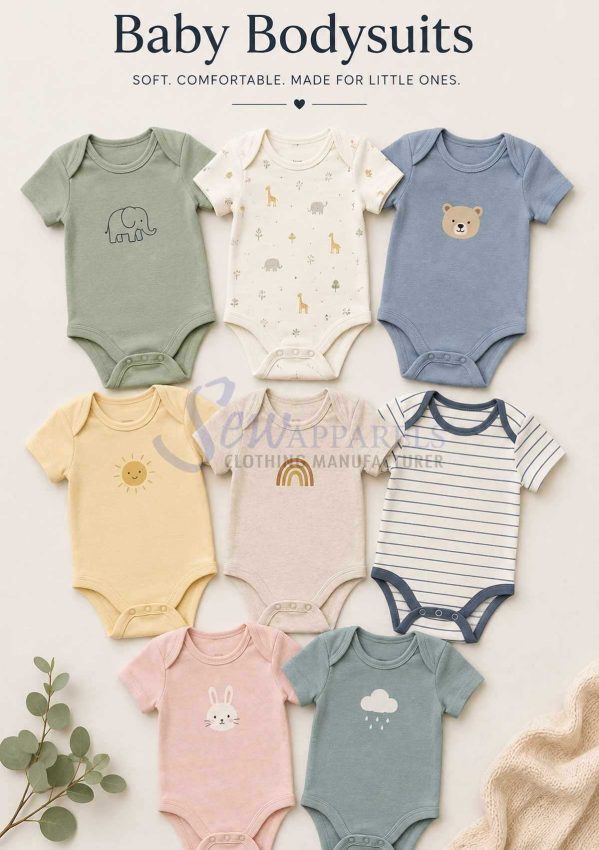
This guide helps buyers prepare a baby bodysuit jersey interlock quote with evidence they can compare. It focuses on fabric construction and the resulting quotation assumptions. The aim is to approve an appropriate material and a clear price basis together, rather than treat the fabric name as a complete specification.
1. Define the garment behind the baby bodysuit jersey interlock quotation
Start with one controlled bodysuit specification. Record the intended size range, sleeve length, neckline, leg opening, closure arrangement, binding, decoration and packing format. Give the document a revision number. Both suppliers should quote that revision, even if they propose different fabric constructions. If the brief uses a lap opening, keep the baby bodysuit envelope neckline design reference consistent so a neckline change is not mistaken for a fabric-cost difference.
Describe the desired appearance and handle using physical references where possible. “Soft cotton” leaves questions about structure, finished weight and treatment unanswered. A buyer might prefer a lighter garment with fluid handling or a fuller fabric with a more substantial appearance. Those preferences need review on actual samples and must not become untested comfort or safety claims.
A baby bodysuit finish specification should identify the finish being quoted and the evidence needed before approval. Ask whether the submitted fabric is in its intended finished condition. If the sample and priced fabric have different treatments, the comparison may not predict the delivered garment.
State the target sales market and intended care instructions for development. Market requirements need a separate, product-specific review. Selecting jersey or interlock does not establish that a baby garment meets applicable requirements. Keep any proposed material claims, labeling and component evidence in the approval file.
2. Compare actual constructions beyond the fibre name
For a baby bodysuit jersey interlock quotation, distinguish the knit structure from its fibre composition. Cotton identifies a fibre. Jersey and interlock describe constructions. Two cotton offers can therefore require different consumption calculations and sample reviews.
CottonWorks explains single and double knit constructions, including jersey and interlock. Its overview describes differences in structure, handling and yarn use. Use that background to frame supplier questions. The particular finished fabric still needs to be measured and sampled before choosing it for a bodysuit.
A bodysuit fabric structure comparison should list composition, construction, yarn information supplied by the mill, finished weight, usable width and finish. Attach clearly identified swatches. Ask the supplier to confirm the sample reference associated with each price, rather than rely on an informal description such as “regular interlock.”
A single jersey bodysuit quotation needs its own verified fabric inputs. Likewise, interlock bodysuit fabric costing should use the offered interlock rather than a general assumption about double knits. Different weights, widths, treatments and commercial conditions can change the relationship between fabric price and garment cost.
Review cut-edge behavior, handling during sewing, garment dimensions and appearance after the agreed care trial. Record observations for both candidates using the same review method. Avoid declaring either construction universally better, cheaper or more suitable for every infant product. The chosen fabric should fit the specific development brief.
3. Hold garment details and size mix constant
The baby bodysuit construction price basis should state exactly which operations and components are included. A quote that includes binding, closures, labels and packing is difficult to compare with a quote that excludes them. Request separate notes for exclusions and buyer-supplied items.
Use the same approved garment measurements when comparing fabric options. Suppliers may need construction-specific pattern adjustments after trials, but those changes should be identified. If one sample has a larger body or different binding arrangement, its consumption difference cannot be attributed entirely to fabric structure.
A baby bodysuit size mix costing sheet should show quantities by size and color. An average price based on mostly smaller sizes may not represent an order containing more larger sizes. Ask whether the stated unit price is an overall average or a size-specific price and preserve that distinction in the comparison.
For a baby bodysuit jersey interlock quotation, also align decoration placement, label specifications and packing quantities. Even when these details do not change, including them helps suppliers avoid filling gaps with different assumptions. Document any alternative as a separate priced option.
Keep order quantity, quotation currency, delivery basis and payment assumptions visible. Ask for validity dates and the conditions that could require a refreshed offer. These fields do not guarantee a production slot or delivery time. They explain the commercial scope of the numbers being compared.
4. Ask for consumption and evidence behind the price
A baby bodysuit material consumption quote should identify its calculation basis. Ask whether consumption is measured in kilograms or length, which sizes it represents, and which fabric width and finished condition were used. Confirm how allowances are described and whether they are already included in the garment price.
The bodysuit fabric weight cost inputs belong beside the consumption figure. A fabric price per kilogram cannot be compared directly with a price per metre without the required conversion inputs. Ask the supplier to explain its calculation using the actual finished weight and usable width. Avoid estimating from a generic fabric label.
Discuss the sample route, fabric minimums and any charges separately. Proposed small orders can have different purchasing conditions from repeat bulk orders. A startup should ask which inputs remain provisional and what sample evidence is required before a firm offer. No minimum quantity or price should be assumed from this worksheet.
The bodysuit material quotation assumptions in a baby bodysuit jersey interlock quotation should also address substitutions. If a quoted fabric becomes unavailable, the supplier should identify the replacement and request review of any affected price, dimensions, finish or sample evidence. An unchanged fibre name is insufficient to approve a replacement construction.
Labeling can create another difference between offers. The FTC textile labeling guide explains fibre content, origin and business identification requirements for covered US products. Confirm the applicable requirements for the intended market and use verified composition information when preparing labels. This reference does not establish approval of a particular bodysuit.
5. Approve paired samples before deciding
A baby bodysuit jersey interlock quotation should remain connected to the samples that support it. Label each sample with construction, fabric reference, garment revision and submission date. Keep the supplier’s price sheet with the corresponding sample record.
To validate the baby bodysuit jersey interlock quotation, request a jersey infant body sample and an interlock infant body sample built to the controlled specification. Review measurements, binding appearance, seam behavior, closures, fabric handle and packing using the same checklist. If a sample differs from the intended production version, identify the difference before drawing conclusions.
For bodysuit paired fabric sample approval, record observations before and after the agreed care procedure. Use the same measurement points and document the procedure, conditions and sample identities. Acceptance criteria should come from the development specification and applicable requirements, rather than an arbitrary percentage inserted into the quotation.
An infant bodysuit comparable quote includes both the cost and the outstanding questions. Mark any fabric option that still needs confirmation of dimensions, finish, composition or commercial terms. A buyer can then see why a provisional offer cannot yet support a purchasing decision.
When one candidate is approved, retain its sample reference and the final quotation revision together. If the approval requires a change, ask for an updated offer. This keeps the approved material, garment and price aligned instead of leaving a sample decision disconnected from the buying document.
A practical comparison worksheet
Use the following fields for the baby bodysuit jersey interlock quotation. Let suppliers enter their own material references and prices. Blank or unconfirmed fields should remain visible until resolved.
- Garment: specification revision, size range, size/color quantities, components and packing.
- Fabric: sample reference, composition, construction, finished weight, usable width and finish.
- Consumption: unit, size basis, calculation inputs and included allowances.
- Commercial scope: quoted currency, unit price basis, exclusions, sample charges, validity and delivery terms.
- Evidence: paired sample IDs, measurement record, care trial observations, open questions and approval owner.
Consider an illustrative comparison where Offer A prices jersey by kilogram and Offer B prices interlock by metre. Neither number alone shows the lower garment cost. First obtain the relevant width, weight, consumption unit and size mix. Then ask each supplier for a garment offer covering the same components and terms. This example provides a method, not a market price or a predicted saving.
Questions buyers often ask
Should the two fabrics have the same weight?
Record actual finished weight for both. Matching weights may help answer one comparison question, but the buying brief may require different constructions with different intended appearances. State what is being held constant and what is deliberately different. Do not treat equal weight as proof of equal performance.
Can the cheaper fabric produce the more expensive garment?
It can be possible when consumption, operations or purchasing conditions differ. Request the complete cost basis instead of inferring the outcome from fabric price alone. A documented supplier calculation is more useful than a universal rule about jersey and interlock.
What should a startup send first?
Send a garment reference, intended size mix, target market and the two fabric offers if available. Identify what still needs development. This creates a clear starting point for discussing feasibility and sampling without assuming that a particular fabric, minimum or commercial arrangement is already available.
Prepare the product-specific request
Complete the baby bodysuit fabric offer review by resolving the open fields and identifying the candidate that meets the agreed brief. Keep rejected and approved alternatives distinguishable so an older fabric offer cannot accidentally become the purchasing reference.
For custom baby bodysuit manufacturing, share the controlled garment specification and material evidence for a feasibility discussion. Buyers planning private label baby bodysuit production can include brand labeling and packing requirements in the same request. Available materials, sampling scope and commercial terms require confirmation for the actual project.
Keep the final baby bodysuit jersey interlock quotation alongside the approved sample and revision record. Explore the related development topics in the baby bodysuit buying guides when preparing the wider product brief. A clear comparison makes the fabric decision traceable from initial offer through final approval.