
Baby bodysuit multipack assortment planning starts with a simple question: what exactly will the customer receive in one saleable pack? Size, colour, garment identity and piece count need to agree across the packing sheet, product record and physical sample. A description such as “mixed three-pack” leaves too much room for different interpretations.
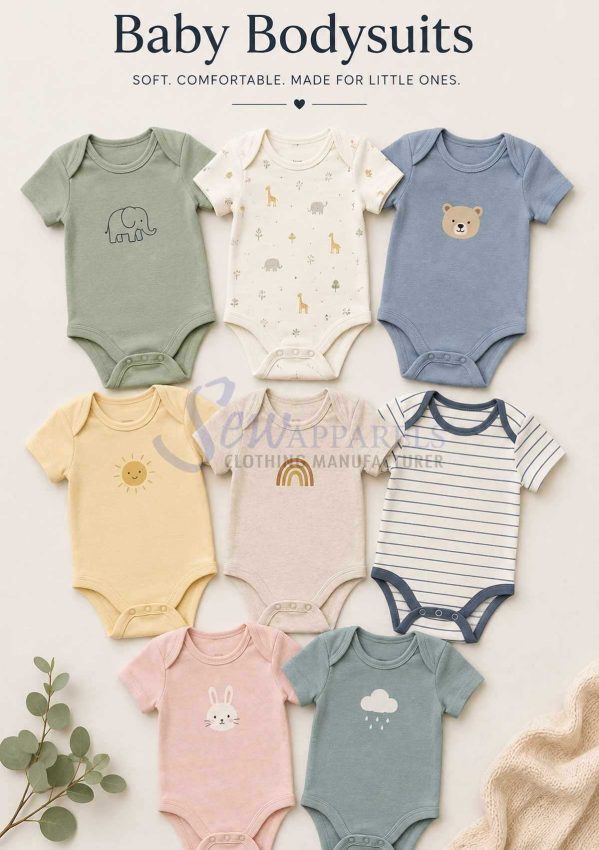
This guide turns baby bodysuit multipack assortment planning into a controlled composition record. It helps buyers separate retail bundles from shipping assortments, identify each included garment and approve changes before packing. The examples illustrate documentation methods, not recommended sales ratios, minimum quantities or confirmed Sew Apparels packing options.
1. Define baby bodysuit multipack assortment planning contents
Give each proposed pack a clear working name and revision. State whether all garments share one labelled size or whether the pack deliberately combines sizes. A consumer buying a single-size pack should not receive a mixed-size shipment because a packing instruction was unclear.
Record the bodysuit multipack colour ratio as quantities of named, approved colour references. “Two light colours and one dark colour” is less precise than identifying the exact colour codes. Keep artwork and fabric references with the item record when those features help distinguish otherwise similar garments.
For baby bodysuits retail bundle size identity, use the same size terminology on the composition sheet and packaging draft. If a retailer uses an age range, verify how that wording relates to the garment size record. Do not silently replace the approved size code with a different marketing description.
A baby bodysuits fixed colour pack composition record should state whether every pack contains the same combination. If a buyer wants variable contents, that requires a separately defined arrangement with the trading partner. A fixed assortment should not become variable simply because one colour runs short.
The baby bodysuits bodysuit pack component count field should distinguish garments from packaging materials. A three-bodysuit pack contains three garments even when tissue, a sleeve or an insert is also included. List packing materials separately so a component quantity cannot be mistaken for a saleable piece count.
2. Separate the consumer bundle from the shipping assortment
Baby bodysuit multipack assortment planning needs more than one level of quantity information. A retail bundle describes the unit sold to the customer. A shipping case describes the units packed together for storage or transport. The same word “pack” can refer to either, so label each level explicitly.
A baby bodysuits bundle versus case assortment note should explain the relationship between those levels. For example, one hypothetical retail bundle might contain three same-size bodysuits, while one shipping case contains several completed retail bundles. The case contents do not change the contents of each retail bundle.
Specify whether a case holds one bundle variant or a mixture of variants. If cases are mixed by size, show the number of each bundle size in the case record. Keep these quantities separate from the colour composition within a single retail bundle.
Use baby bodysuits retail bodysuit assortment mapping to connect each retail unit to its shipping configuration. A useful map identifies the bundle, its components and the case configuration in separate fields. It should let a packing reviewer trace a carton quantity back to the exact customer-facing unit.
Ask the buyer’s fulfilment team to confirm the intended handling route. A retailer may need bundles ready for individual sale, while another project may involve separate units assembled elsewhere. Packaging feasibility, materials and labour should be confirmed for the actual order instead of assumed from the word multipack.
3. Map every component to an item record
A baby bodysuit bundle sku structure should identify the bundle and the garments that compose it. An internal SKU is a business identifier. It should not be treated automatically as a GTIN, barcode or batch code. Keep the identifier type visible beside each number.
For the baby bodysuits component item record, include style, colour, labelled size, material reference and approved revision. Add the quantity of that item in one bundle. Similar-looking bodysuits may differ in closure, decoration or construction, so a colour name alone may not identify the intended component.
When using the GS1 system, review the applicable identification rules with the responsible trading partner. The GS1 GTIN Management Standard defines predefined assortments as fixed combinations sold together and addresses changes to their contents. Its rules require a new GTIN when a trade item is changed, added or replaced in such an assortment. They also address affected higher packaging levels. This guidance applies within the GS1 identification system.
Record the outcome of the baby bodysuits multipack GTIN change review when composition changes. The person responsible for product identifiers should confirm the decision before new labels or product records are released. A packing operator should not decide whether an existing identifier remains suitable.
Baby bodysuit multipack assortment planning should keep identification and traceability connected but distinct. Product identity answers which item is being sold. Production traceability identifies its source or batch. Putting a retail barcode on a bundle does not automatically supply the traceability information needed for the included garments.
4. Define substitutions and revision control
Bodysuit multipack change control starts with naming who can approve a change. List the current composition revision and the date it takes effect. When a garment colour, style or quantity changes, record the affected bundle and the actions needed in labels, records and packing instructions.
A baby bodysuits pack substitution approval field should identify proposed alternatives individually. Avoid a general instruction to use any similar colour. An alternative can alter the customer’s expected assortment even when the size and overall garment count remain the same.
For baby bodysuit multipack assortment planning, separate permission to discuss an alternative from permission to pack it. A supplier can propose a replacement, but approval should identify the revised composition and any product-record changes. Keep the decision with the pack specification so the packing team sees the correct instruction.
Maintain a record of rejected substitutions too. It can prevent an earlier proposal from being mistaken for the approved option. Mark old packing sheets as superseded through the team’s normal document process and ensure the current revision is available where packing instructions are used.
For US children’s products, the CPSC tracking label guidance explains permanent distinguishing marks on the product and packaging to the extent practicable. These allow relevant source and production information to be ascertained. Confirm how the actual garments and packaging will satisfy applicable requirements. A bundle specification or identifier alone does not establish product compliance.
5. Approve the packed sample against the record
The baby bodysuits pack master specification should be the reference for physical sample review. Compare each garment’s identity, colour, size and quantity with that document. Then review the packaging text and any identifiers against the approved product record.
For baby bodysuits approved packed reference control, label the sample with the composition revision, review date and approval owner. Keep a written record of the contents even if the sample is later opened. A photograph may help a buyer’s internal file, but it cannot replace the item list when visually similar components are involved.
Inspect the pack as received, then open it and verify every component. Check whether the arrangement keeps required product information available and whether the specified garments fit the proposed packaging. Any packaging dimension or material decision requires confirmation with the actual packed sample.
Baby bodysuit multipack assortment planning should include a response to a failed sample. Record the discrepancy, the requested correction and whether a new packed reference is required. Do not approve an incorrect combination merely because the garment quality looks acceptable.
Use the approved reference to brief the packing and inspection teams. Agree on the inspection method for the order rather than inventing a universal sample size. The review record should identify what was inspected and which decision remains unresolved.
An infant bodysuit pack composition worksheet
Prepare one worksheet per bundle variant for baby bodysuit multipack assortment planning. Include the following fields and keep component quantities separate from case quantities.
- Bundle identity: working name, internal SKU, external identifier where applicable, revision and intended sales channel.
- Components: garment item reference, style, colour, labelled size and quantity per retail bundle.
- Packaging: material references, label draft, arrangement and information that must remain available.
- Shipping configuration: bundle variants per case, quantities and the separate case identifier where required.
- Change decisions: permitted alternatives, prohibited substitutions, approval owner and product-record review.
- Packed reference: sample identity, observed discrepancies, accepted revision and review date.
In an illustrative pack, the buyer specifies one cream bodysuit, one blue bodysuit and one striped bodysuit, all in the same labelled size. Each component has its own internal item reference. If the striped item becomes unavailable, replacing it with another blue item changes the fixed composition. The buyer reviews the revised offer, relevant identifiers and packaging before allowing the revised pack to be used. This example sets no preferred colour ratio or order quantity.
Keep reorders tied to the approved composition
Baby bodysuits multipack reorder accuracy depends on specifying the actual approved variant. A repeat request stating only “same three-pack” may overlook a later revision or a previous substitution. Include the bundle identifier, composition revision and requested quantities in the reorder brief.
Ask whether every component remains available in the approved form. If a fabric or decoration changes, review its effect on the item and bundle records before treating the order as unchanged. Use the baby bodysuit jersey and interlock quotation comparison when a proposed component changes fabric construction; retain the approved material reference with the bundle record. Keep confirmed continuity separate from proposed alternatives.
Baby bodysuit multipack assortment planning also helps new brands avoid an unnecessarily complicated first assortment. Define the desired customer-facing packs clearly and discuss feasibility before expanding variants. This is a development choice for the project, not a promise of lower costs or easier production.
Prepare the assortment request
For custom baby bodysuit manufacturing, send the intended pack contents, size quantities and retail channel with the garment references. Buyers considering private label baby bodysuit production can add their label drafts and brand packaging requirements. Materials, packing scope and commercial conditions need confirmation for the specific request.
Keep the final baby bodysuit multipack assortment planning record with the accepted packed reference. Use the related baby bodysuit buying guides to review garment development questions separately. The pack is ready for a documented decision when the composition, product identity and physical reference all agree.