
A baby romper applique print quotation should compare two clearly described ways of developing the same motif. Artwork size, garment fabric, placement and intended order conditions need to agree before the prices become useful. An applique offer and a print offer may include different materials, setup work and sample stages.
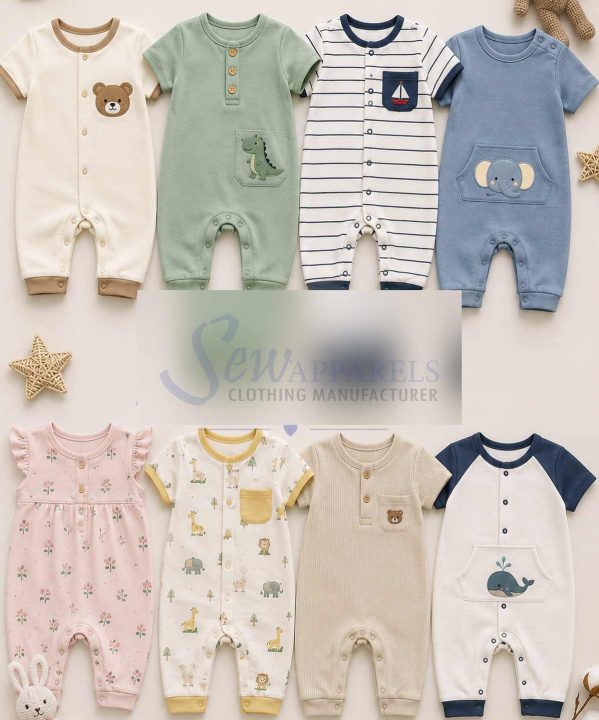
This guide helps buyers build a baby romper applique print quotation around those differences. It explains what to ask vendors, how to separate development charges from recurring costs and how to keep sample approval connected with the final offer. Neither method should be assumed safer, cheaper or more suitable for every infant garment.
1. Define the baby romper applique print quotation brief
Begin with the current artwork revision, intended dimensions and placement drawing. Identify the base romper style, fabric reference and colour. Suppliers need a common starting point even when their proposed methods create visibly different results.
A baby romper motif method quote should state what the buyer wants to preserve across both routes. That might include the overall motif outline, its position on the front panel and the approved colour references. Raised applique edges and a printed surface will not necessarily look or feel identical, so record the acceptable differences.
Describe the intended result on the actual garment size range. A motif that works on one sample size may need a separate placement or dimension review on another. Ask whether the quotation assumes one artwork size or multiple versions and identify any resulting development charges.
Keep garment construction details constant in the initial baby romper applique print quotation. Sleeve length, closure arrangement, fabric weight and packing scope can otherwise make the total offers difficult to compare. Price an alternative garment configuration separately if it is proposed.
State the target market and intended care expectations. These inputs help the responsible team identify the review needed for materials and decorated samples. A decoration method name is not evidence that the finished infant garment meets its applicable requirements.
2. List the work required by each method
Romper applique quotation inputs should identify the actual proposed assembly. Ask which fabric pieces, backing or other components are included, how edges are finished and how the motif is attached. The supplier should describe its intended method rather than assume the buyer will infer it from an artwork file.
For baby romper applique component cost, request the material references and quantities relevant to the offer. A layered motif may involve different preparation and assembly from a single piece. Confirm whether thread, stabilizing materials or other additions are already included in the quoted garment cost.
Romper decoration assembly work should be described sufficiently to explain the quotation. Ask about cutting or preparing motif pieces, positioning, attachment and any finishing steps included. Do not prescribe universal stitch settings or claim that one attachment description establishes durability or safety.
A baby romper printed motif quote should name the proposed print process and identify the artwork and fabric combination it covers. Different print routes can involve different preparation, colour handling and finishing. Ask the vendor to describe the actual offer rather than quote a generic “print charge.”
Use a romper decoration method comparison sheet to place these descriptions beside each other. It should show the motif reference, added components, process work, sample route and exclusions. Buyers can then see which differences belong to the decoration and which arise from another part of the garment offer.
3. Identify components and evidence requirements
A baby romper applique print quotation needs an evidence scope as well as a visual specification. Record which materials or components are proposed and ask what documentation is available for those exact references. Keep general supplier information separate from item-specific evidence.
For US children’s products, the CPSC material change testing guidance addresses changes to design, process or component source that could affect compliance. It explains retesting and a new Children’s Product Certificate after a material change. Qualified review should determine how a proposed decoration change affects the applicable requirements and existing evidence.
The romper decoration evidence cost field should identify the assessment or testing included in the offer, who arranges it and which item it covers. If the scope is unresolved, record it as an open input. Do not assume an unpriced evidence requirement will be supplied free or that a component document approves the finished garment.
Care evidence also needs to account for the decoration. The FTC care labeling guidance requires a reasonable basis for care instructions for covered garments. Where a garment contains several components, reliable evidence must support the garment as a whole. A base-fabric result alone may not address its interaction with added decoration.
Ask how the development team will review colour change, appearance, attachment and other relevant observations after the agreed care procedure. Acceptance criteria and any required specialist testing should be set for the actual product. Avoid treating an informal sample observation as proof of child safety.
4. Compare setup and recurring charges
For baby romper applique print cost, distinguish a one-time or development charge from the recurring unit charge. An offer with a small unit cost may carry preparation charges that another offer includes in its unit price. Compare both on the same stated order quantity.
An infant romper print setup charge should identify what it covers and whether it applies again for another colour, artwork version or order. Ask the supplier to confirm reuse conditions and any limitations. A buyer should not infer ownership or future reuse rights from the fact that a setup charge has been paid.
The romper motif development charge can include artwork adaptation, sample preparation or other vendor-defined tasks. Request the scope and number of submissions included. If the buyer requests a change after approval, ask whether the updated offer includes another development round.
Printed romper supplier inclusions should state whether the offer covers sample decoration, bulk decoration, finishing and relevant handling. For applique, record the equivalent inclusions in its own column. A price comparison needs clear exclusions as well as included work.
A baby romper applique print quotation should also state currency, validity, order quantity, delivery basis and the garment revision being priced. Ask whether charges are quoted per garment, per motif, per artwork version or as a separate total. Keep those units visible instead of combining unlike numbers.
5. Approve decorated samples before choosing
Applique romper sample requirements should identify the intended base fabric and the proposed decoration components. Review the assembled sample, including the reverse side where relevant to the construction. Record placement, edges, handling and attachment observations using the agreed development checklist.
For the printed sample, use the specified fabric and current artwork version. Ask the vendor to identify any difference between the sample process and the proposed bulk route. A sample made with another material or method may not represent the quotation being assessed.
Romper applique print sample approval should connect the accepted sample with its supplier offer. Record the motif, garment, process and component references that were approved. If a sample needs changes, refresh the specification and quotation together rather than accept a price for an earlier version.
Check the smallest and largest relevant garment sizes through the agreed sample plan. Placement can interact with seams, openings and garment proportions. Keep the baby romper snaps versus zipper decision visible when a motif approaches the fastening area, so decoration approval does not silently alter the garment opening. The buyer should identify which sizes were reviewed and which still require confirmation.
Keep the final baby romper applique print quotation with the sample decision and supporting records. The chosen route should satisfy the defined appearance, development and evidence requirements. A lower number does not resolve an outstanding sample concern or an unconfirmed component reference.
A decoration cost worksheet
For the baby romper applique print quotation, use a baby romper decoration cost worksheet with separate columns for applique and print. Ask each vendor to enter its actual scope and charges. Leave unresolved fields visible instead of replacing them with estimates presented as supplier prices.
- Shared brief: garment revision, fabric, motif artwork, dimensions, placement, size range and order quantity.
- Method: proposed process, added component references, preparation and assembly work.
- Development: setup scope, sample submissions, artwork adaptation and revision charges.
- Recurring price: charge unit, garment inclusions, exclusions and relevant order conditions.
- Evidence: documentation references, review owner and included or unresolved assessment costs.
- Approval: decorated sample identity, required corrections and accepted specification revision.
For baby romper comparable decoration prices, reconcile the units first. In a hypothetical comparison, Vendor A separates setup from its garment charge while Vendor B includes preparation within the garment offer. Request a breakdown that lets the buyer compare the same quantity and scope. The worksheet establishes a comparison method, not a market price or a predicted saving.
Where needed, calculate the supplier-stated recurring charge multiplied by the proposed quantity and add separately quoted fixed charges. Avoid counting a setup cost twice if it is already included. Keep freight, assessment or other excluded items separate until their actual scope and price are confirmed.
Manage changes after approval
A baby romper applique print quotation can lose its relevance if the artwork, fabric or components change later. Record the original reference and proposed change, then ask which price and evidence inputs require another review. Even a visually minor change may need more than a refreshed artwork file.
Retain rejected options separately from the accepted route. The production request should identify the approved method and sample, rather than offer two alternatives without a decision. Confirm that the purchasing and development records refer to the same version.
When refreshing a baby romper applique print quotation for a repeat order, ask whether the approved materials and process remain available. An earlier quotation is useful history, but it should not be treated as a current offer without confirmation. Record any updated commercial terms beside the unchanged or revised decoration reference.
Questions buyers often ask
Is applique always more expensive than print?
No universal answer applies to every motif and order. Compare the actual components, method, setup, unit charges and included development work. The garment fabric and requested quantities also need to be held clear in the comparison.
Can a print sample approve an applique version?
It can provide a motif reference, but it does not establish approval of another assembly method. Review the proposed applique components and decorated garment in their own sample process.
What should a startup send first?
Send the artwork, desired dimensions, garment reference and intended market. Identify whether both methods are still under consideration. This lets the development discussion focus on feasible routes and comparable scope without assuming available processes or minimum quantities.
Prepare the decoration request
For custom baby romper manufacturing, share the motif brief and any existing offers. Buyers planning private label baby romper production can include label, packing and market requirements with the same garment file. Decoration feasibility, sample scope and commercial terms require confirmation for the actual project.
Keep the final baby romper applique print quotation beside the approved decorated sample record. Explore the related baby romper buying guides for closure and garment-development topics. A useful decision aligns the intended motif, actual process, evidence scope and supplier price.