
Baby romper directional print costing begins with an artwork decision, not a guessed fabric allowance. A motif may need to remain upright on some panels while other areas permit more freedom. The buyer and cutter need the same rules before comparing fabric requirements or accepting a quotation.
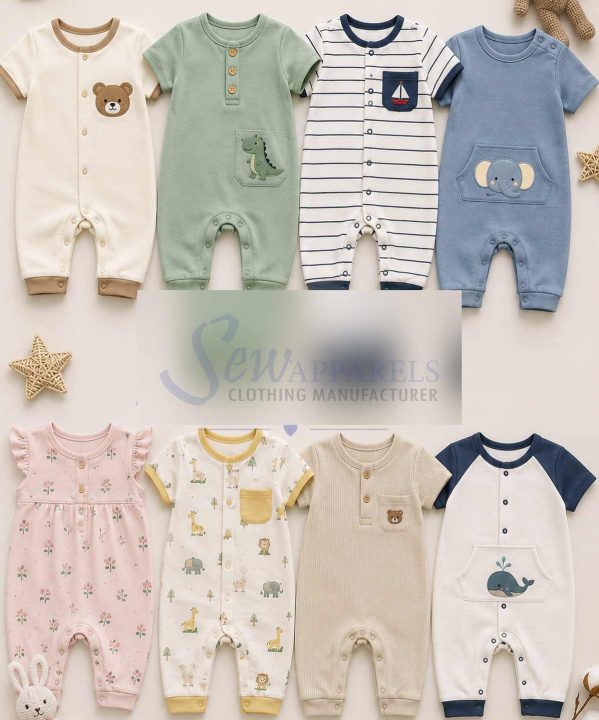
This guide explains baby romper directional print costing through five practical decisions. Define the artwork direction, identify visible panels, distinguish repeat dimensions from usable width, compare measured layouts and record the accepted assumptions. The purpose is a clear cutting brief; it does not promise a saving or replace the factory’s actual consumption calculation.
1. Define baby romper directional print costing rules
Start with the approved print artwork and identify its top and bottom. Animals, letters or other recognisable shapes can make a change in orientation noticeable. An abstract pattern may offer different possibilities, but the buyer should approve those possibilities rather than let the cutting team assume them.
For a baby romper one way print layout, state whether every relevant pattern piece follows the same artwork direction. Separate that requirement from the fabric grain direction. A piece can follow its specified grain line and still place a directional motif upside down when turned end for end.
The baby rompers artwork direction approval should include a labelled artwork reference and garment drawing. Mark the front, back, sleeves and any other visible areas. If one panel has an exception, name it explicitly. A general comment such as “keep the print correct” gives the cutter too little information.
Use a sample or a clearly marked mock-up to discuss the intended appearance. It can show how an upright motif looks when the romper is laid flat, worn or opened. Those views help explain the design decision, but they do not establish a measured bulk fabric requirement.
Keep this decision visible throughout baby romper directional print costing. Changing an orientation rule after the quotation can change the permitted layout. Record the date and artwork revision accepted by the buyer so that later questions can be traced to a specific brief.
2. Identify the visible panels and matching zones
For baby rompers upright motif panel layout, list the pieces requiring a consistent direction. Include paired components where relevant and distinguish exterior panels from enclosed parts. Ask the pattern team to confirm how the requirements apply to the actual construction.
The baby rompers romper panel print orientation entry should describe the intended result for each panel. A front panel, sleeve or pocket may carry its own visible motif requirement. Do not assume that approval of a single front photograph covers the back and smaller components.
Direction and matching are separate decisions. Keeping a motif upright does not necessarily mean its position must align across a seam. If the buyer wants a particular alignment, identify the seam, visible zone and acceptable relationship in the artwork or garment drawing.
Discuss baby rompers matching zone consumption impact with the cutter using the specified matching rules. Request an actual layout comparison where those rules affect placement. There is no universal allowance that can be applied to every repeat, size range and romper construction.
For baby romper directional print costing, distinguish required matching from a preference that can be relaxed. A buyer may approve upright motifs without exact seam continuity, or may require a specific central placement. These are different design choices and should remain separate in the quotation record.
3. Separate repeat size from usable fabric width
Romper pattern repeat costing inputs should include the measured repeat in both relevant directions and the artwork reference used to obtain those measurements. Record units clearly. A small artwork thumbnail does not tell the cutter the scale of the production print.
The baby rompers print repeat usable width field needs two distinct inputs. Repeat dimensions describe how the motif repeats; usable width describes the fabric area available for the approved cutting plan. Neither can be substituted for the other.
Ask the supplier to identify how usable width was established and which fabric reference it represents. Keep nominal width, any excluded edges and the width used in the marker calculation clear. If the production fabric is not yet confirmed, label the estimate accordingly.
For baby romper directional print costing, record any agreed preparation or dimensional assumptions affecting the cutting width and pattern. Request clarification of how those assumptions relate to the fabric supplied. Avoid applying an invented shrinkage percentage or unexplained general wastage figure.
Material identity also belongs in the brief. The FTC textile labeling guidance explains fiber content, origin and responsible-business disclosures for covered US products. This reference helps the buyer keep material and labeling records consistent; it does not provide directional-print consumption figures or approve a garment’s layout.
4. Compare approved layouts with the cutter
A baby rompers directional fabric cutting plan should identify the pattern revision, size range, quantities and orientation rules. Give the cutter an agreed basis for the calculation rather than asking for an allowance on an unspecified romper style.
For baby rompers one way marker scenario, request the layout that observes the approved direction and matching zones. If an alternative is useful, define exactly which rule changes. The comparison should retain the same pattern and quantity basis so that the effect can be understood.
The Lectra AccuMark Easy Marking overview describes placing pattern pieces in a marker representing the fabric to be cut. It notes that rotation and other placement options depend on limits in the marker order. Buyers should therefore ask which restrictions were used, rather than assume every available placement option suits their approved print.
A baby rompers size ratio cutting estimate should use the proposed quantities by size. A result calculated for an equal size mix may not represent an order with another distribution. Identify the size ratio and ask whether the requested quantity needs multiple layouts or another calculation approach.
Keep baby romper directional print costing tied to the actual marker references. Ask for the measured consumption basis and an explanation of any additional allowance included in the fabric requirement. Marker utilisation alone should not be presented as the final purchasing quantity without that explanation.
The baby rompers actual marker yield request should ask the factory to provide its calculated result for the chosen scenario. Do not replace an unresolved result with a generic efficiency claim. If two scenarios are being considered, keep both results and their associated rules visible until one is accepted.
5. Record the accepted quotation assumptions
The baby rompers directional print quote assumptions need to state which layout supports the offer. Include its pattern, fabric, artwork and size-ratio references. A price without those inputs may be difficult to reproduce when the order moves into development.
For baby rompers printed romper fabric requirement, ask whether the figure represents consumption per garment, a marker result or the total fabric request. Record the units and included allowances. Separate fabric cost from other garment charges so that the buyer can see what the layout discussion changes.
A romper motif direction fabric allowance should be supported by the factory’s calculation and defined scope. Ask why an allowance is included, which scenario it covers and whether it is already counted elsewhere. Avoid adding another allowance simply because the print has a direction.
In baby romper directional print costing, compare quotations only after reconciling their assumptions. Two offers may use different widths, matching requirements or size quantities. Ask for a revised comparison before treating the lower total as a better result.
Once the buyer chooses a scenario, attach that decision to the current quotation and development brief. Record outstanding inputs separately. If production fabric, artwork scale or order quantities change, request a refreshed calculation before relying on the earlier offer.
A print-layout costing worksheet
For baby romper directional print costing, a useful worksheet connects the design decision with the factory’s measured figures. For baby romper printed fabric yield, distinguish an estimated result from a confirmed calculation on the specified inputs. The following fields help keep that distinction visible.
- Product reference: romper style, pattern revision and approved size range.
- Artwork: print reference, repeat dimensions, units and direction markers.
- Fabric: material identity, usable cutting width and preparation assumptions.
- Placement: permitted orientations, visible panels and required matching zones.
- Order: quantities by size and the calculation basis.
- Result: marker reference, measured consumption, additional allowances and quoted fabric basis.
- Decision: accepted scenario, review owner, approval date and unresolved items.
For example, a buyer might compare Scenario A with upright motifs on all specified exterior panels and Scenario B with a permitted exception on one named component. The cutter should calculate both on the same approved inputs. This hypothetical example explains how to organise a comparison; it supplies no efficiency percentage, consumption figure or predicted saving.
Control changes before a repeat order
For baby romper directional print costing, a repeat print order still needs a current input check. Confirm that the artwork scale, fabric width, pattern and size ratio remain the same. An earlier consumption record is useful history, but it is not automatically a valid calculation for another order.
Keep rejected layout options away from the final production brief. The team should be able to identify the accepted direction rules without interpreting several competing comments. If an exception is approved later, update the drawing and the calculation request together. Where the alternative involves a placed decoration rather than all-over fabric, use the baby romper applique and print quotation comparison to separate decoration charges from the directional cutting calculation.
Review the sample against the approved direction and matching zones. Record any deviation and decide whether it requires a sample correction, a brief change or another layout calculation. Appearance approval and fabric purchasing should refer to the same version.
Questions buyers often ask
Does a directional print always require a fixed extra percentage?
No fixed percentage can represent every fabric repeat and garment layout. Ask the cutter to calculate the actual pattern, width, size ratio and placement restrictions. Request a clear explanation of any additional allowance.
Can a larger repeat be assessed from an artwork thumbnail?
A thumbnail helps communicate appearance, but the cutter needs production-scale dimensions and the fabric reference. Confirm the repeat measurements and usable width before using a layout result in the quotation.
Should a startup approve the cheapest layout immediately?
First confirm what its orientation and matching rules produce. A lower fabric figure is useful only when the resulting garment meets the accepted design. Record the chosen scenario and its open development inputs before requesting a final offer.
Prepare a layout-based costing request
For custom baby romper manufacturing, send the artwork, repeat dimensions, fabric reference and proposed size quantities together. Buyers planning private label baby romper production can include their material and labeling requirements in the same file. Actual layout feasibility, consumption and commercial terms need confirmation for the project.
Use the baby romper buying guides to connect this fabric decision with other development topics. Keep the final baby romper directional print costing record beside the approved artwork and accepted layout. A clear brief makes the quotation easier to review without inventing savings or overlooking the intended garment appearance.