
Baby sleepsuit folded packaging review connects the approved garment with its presentation inside a retail pack. The fold should make the intended size and style identifiable while keeping the feet, sleeves and closure arrangement consistent with the packing brief. Buyers need to examine an actual packed sample and the garment after unpacking before releasing a repeatable instruction.
This guide covers five packing checks for footed or other specified sleepsuit configurations. It addresses the starting garment condition, fold sequence, closure position, information access and unpacked appearance. The process is a development review, not a packaging-safety certification or a promise that every material will remain unchanged in storage or transport. Agree the intended channel, destination and assessment conditions for the specific program.
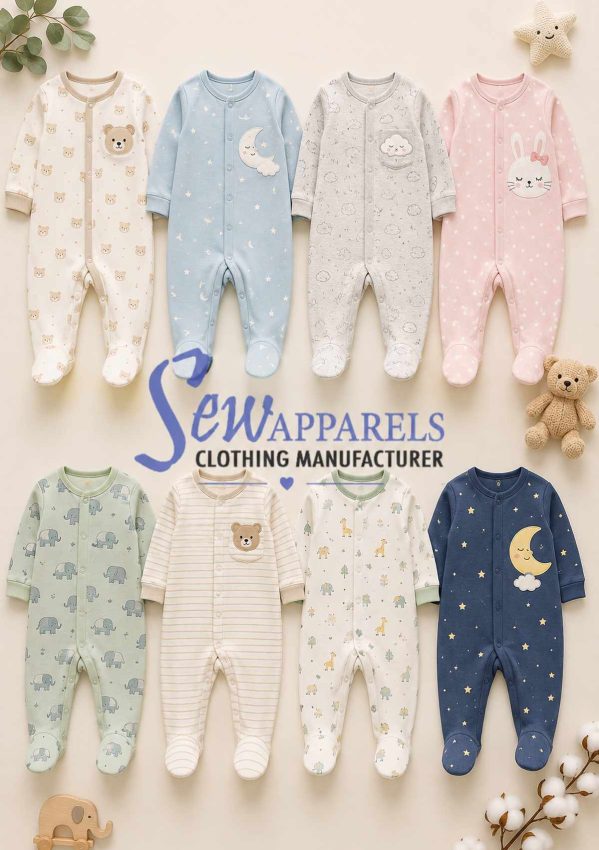
1. Baby sleepsuit folded packaging review samples
Begin baby sleepsuit folded packaging review with the exact style and sample version to be packed. Identify its size, material, closure arrangement and foot configuration. Confirm that the sample is representative of the version being proposed for production. A convenient substitute may demonstrate a folding idea but should not silently become the reference for the approved garment.
A footed sleepsuit fold specification needs named reference points on the complete garment. Show which parts are positioned first and which are folded over them. Identify the sleeve and foot locations at each stage. Keep a written sequence with the sample so another operator can reproduce the arrangement without guessing from the final packed shape.
For baby sleepsuits footed garment fold sequence, distinguish the starting condition from the finished presentation. State whether the garment is laid flat, how the opening is positioned and which sample preparation applies. Do not use a different preparation for each size without recording it. Consistent starting conditions make later observations easier to interpret.
Define the Package Alongside the Fold
The baby sleepsuits sleepsuit package dimension brief should identify the intended retail format and its usable space. Record the pack reference, dimensions and any proposed insert or support as separate items. A nominal bag or box size does not explain how the actual garment is placed inside it. Review the selected material and format for the program rather than assuming that appearance confirms suitability.
Use representative sizes agreed with the buyer or packing owner. A fold demonstrated on one small sample may not describe the presentation of another size or a different foot construction. Review footed fit. Keep the retail sales unit distinct from the outer shipping carton, since their dimensions and information requirements serve different purposes.
2. Locate Feet and Closure Hardware Within the Fold
Baby sleepsuit folded packaging review should identify where the foot sections and closure components sit in the proposed arrangement. Examine whether a slider, stop or other hard component lies directly beneath a prominent garment area. These are locations to review on the sample, not evidence that a particular fold will always cause or prevent an imprint.
A baby sleepsuits zipper packing pressure point note can mark the closure position relative to the surrounding fabric layers. Show the component location before the pack is closed, then assess the assembled pack under the agreed conditions. If the hardware moves during folding, record the movement and request a clearer positioning instruction.
Use an infant sleepsuit zipper imprint packing record to distinguish a suspected cause from an observed mark. Identify the garment area, closure component and sample condition associated with the observation. A mark on the unpacked fabric needs investigation; do not automatically attribute every crease or distortion to the zipper without comparing the actual fold and starting sample.
Review the Feet as Shaped Garment Parts
Plan baby sleepsuit folded packaging review around the actual foot construction. Locate the heel, toe and ankle transition in the folded arrangement so the reviewer can understand how the shaped parts are positioned. Avoid an instruction that simply says tuck in the feet without showing the intended placement and the evidence used to accept it.
For baby sleepsuits folded sample presentation, compare the visible arrangement with the unpacked garment. Neatness inside the pack is one observation; the appearance after unpacking is another. If a proposed change improves the folded outline but introduces an unwanted local shape change, keep that issue visible rather than accepting the pack solely because it looks tidier.
3. Make the Correct Size and Style Identifiable
Baby sleepsuit folded packaging review should connect the visible identifier to the garment actually enclosed. Record the required style, size and relevant variant information. Similar prints or colours can make two garments look alike, so the packing instruction should use identifiable references rather than expecting staff to select the right unit from appearance alone.
A baby sleepsuit package size visibility check can compare the intended external identifier with the enclosed sample. State where the size is shown and whether it remains readable after the final fold and closure. If the retail channel uses a separate pack label, verify its information against the garment rather than treating the presence of a label as proof of accuracy.
Use baby sleepsuits sleepsuit size label visibility to describe the information accessible during packing and the information visible to the buyer. These may be different locations. A garment label checked before folding can support the assembly process, while the final retail pack still needs its own accurate presentation and any applicable information requirements.
Keep Retail Identity and Production Traceability Distinct
For covered U.S. children’s products, the CPSC tracking-label guidance describes visible, legible, permanent distinguishing marks on the product and packaging to the extent practicable. They must make identifying information ascertainable, including the responsible business, production location and date, and batch or other source information. The guidance allows coded information under its stated conditions.
For baby sleepsuit folded packaging review, a retail size identifier should therefore not be treated as the whole traceability record. Check the intended product and package markings with the responsible reviewer. Keep their meaning connected to the applicable production records. This article does not prescribe one universal code format or conclude that a proposed pack meets every destination requirement.
4. Check Information Hidden by the Pack
Baby sleepsuit folded packaging review needs an information-access check after the pack is completely assembled. Review what a buyer can see or find in the intended sales presentation, including information obscured by folds, inserts or packaging. A label that was accessible on the packing table may no longer be accessible in the finished retail unit.
The baby sleepsuits retail packaging information access record should distinguish required care information, product identification and other applicable statements. Name the source and approved version for each item. Ask the responsible market or channel reviewer to identify required warnings and placement; do not invent wording or assume that a statement suitable for another product applies here.
For clothing covered by the U.S. Care Labeling Rule, the FTC care-label guidance says care labels must be easy to see or find at the point of sale and remain permanently and securely attached. When packaging obstructs access, additional care information belongs outside the package or on an attached hangtag. The extra information does not replace the required permanent garment label.
Verify the Extra Information Against the Garment
For baby sleepsuit folded packaging review, if the approved packing plan includes an external care statement, compare it with the current garment instructions. A packaging revision should not introduce a conflicting instruction or carry forward a statement from another material version. Record the reviewed artwork or label reference together with the packing sample.
Check the final arrangement rather than reviewing loose packaging artwork alone. A fold, sticker or insert may obscure otherwise correct information. Identify the obstruction precisely and request a change that can be evaluated on the next assembled sample. Keep the release pending when a required statement or identifier cannot be verified in its intended location.
5. Unpack the Trial and Record the Appearance
Complete baby sleepsuit folded packaging review by opening the trial pack and comparing the garment with its recorded starting condition. Agree the trial duration, handling and other conditions with the buyer or quality owner. This article does not supply universal storage periods, compression forces or transport-test limits. The assessment needs to match the actual question being reviewed.
A baby sleepsuits foot shape unpacking review should locate any observed changes at the toe, heel or ankle transition. Record what is visible immediately after unpacking and any later observation required by the agreed method. Keep sample identity and elapsed time clear. Do not assume that a visual change is permanent or harmless without the relevant evaluation.
For baby sleepsuits closure imprint observation, connect a visible mark with its location in the approved folding sequence. Compare the proposed revision under the same conditions before drawing a conclusion. If a different pack size or hardware position is suggested, change the documented variable and retain the previous result so the decision can be reconstructed.
Use One Fold Approval Checklist
A baby sleepsuits packed garment distortion check can use the planning checklist below. Adapt the fields to the specific garment and pack. Describe observations plainly and keep acceptance criteria with the responsible reviewer, rather than marking a trial passed because the garment can be placed back on a hanger.
On small screens, each checklist field appears as a labelled record.
| Checklist field | Evidence to record | Release question |
|---|---|---|
| Fold sequence | Named steps, garment version and size | Can the approved arrangement be reproduced? |
| Hardware and feet | Component locations and shaped-part placement | Were the identified pressure points reviewed? |
| Information visibility | Actual size, style, care and required package statements | Is the information accurate and accessible? |
| Unpacked appearance | Starting condition, trial conditions and observed differences | Does the result meet the agreed requirements? |
| Revision decision | Requested change, revised trial and approver | Are all required questions resolved? |
For baby sleepsuit packed sample approval, retain the actual accepted configuration and its supporting record. A package sample alone may not reveal the sequence used to assemble it, while written steps alone may miss subtle placement details. Keep the two references together so the packing team can identify the current version.
Control the Released Packing Reference
The baby sleepsuits approved folding reference should identify its effective style, size range and pack version. State which variations need their own instruction. Retain superseded references in the historical file while keeping current working instructions unambiguous. This avoids a packing run that combines two arrangements because both examples remain on the worktable.
A baby sleepsuits sleepsuit pack revision note should explain what changed, why and which evidence supported acceptance. If the material, closure, foot shape or retail pack changes later, review the affected instruction again. An earlier acceptance describes the tested or reviewed configuration; it does not authorize every visually similar alternative automatically.
For a fictional example, revision A places a closure component beneath a prominent folded area and the trial records a visible mark at that location. Revision B changes the documented position and is assessed under the same agreed conditions. The review records the actual outcome without claiming that repositioning always eliminates marks on every sleepsuit or fabric.
Prepare the Baby Sleepsuit Folded Packaging Review Discussion
For custom baby sleepsuit manufacturing, share the intended retail format, sample size range and proposed fold sequence together. Sew Apparels’ baby sleepsuit manufacturing page provides the product context for discussing the actual garment and packing requirements. Confirm the program-specific scope and required reviews.
For private label baby sleepsuit production, use the related baby sleepsuit buying guides to connect packing with the wider development brief. Baby sleepsuit folded packaging review is ready for release when the garment identity, reproducible fold, accessible information and unpacked trial findings agree with the current approved record.