
SEW APPARELS · DEVELOPMENT RESOURCES
Baby Sleepsuit Buying Guides
These baby sleepsuit buying guides help brands turn an infant sleepwear concept into a clear development brief. Start with the opening, body proportions and material, then bring the guard, seams, feet and cuffs into the same sample review. Each article examines a specific technical decision, while this page keeps the broader buying process organised. Use the guidance to prepare questions and record requirements before accepting a quotation or approving a sample.
Choose the article below for detailed zipper guard planning, then use the six sections to coordinate the rest of the style. The library can grow as further technical posts are published; the current links lead to completed resources. Keep one current specification for each style so the sample team can distinguish approved details from ideas still under discussion.
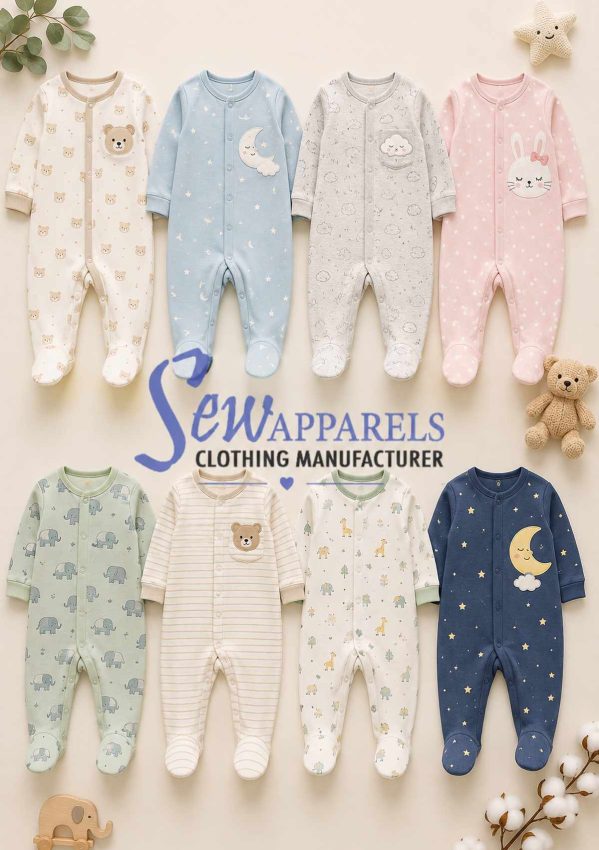
Footed one-piece style references reused from the baby sleepsuit product page. Confirm the selected fabric, opening and size specification on the actual sample; this image does not establish care performance, sleepwear classification or product compliance.
Zipper guard construction: seven buyer checks
Coordinate the chin tab, backing strip and skin-side seams. Review an annotated construction example, compare the evidence needed for approval and record changes across the size range.
Read the zipper guard checklistFabric change approval: five evidence checks
Compare approved and replacement materials, identify fit and care impacts, review relevant testing evidence and release a traceable sleepsuit version.
Read the fabric change checklistFold-over mitten cuffs: five development checks
Document open and folded sleeve states, inspect interior seams and operation, compare care observations and request the relevant product review before approval.
Read the mitten cuff checklistFolded packaging: five sample review checks
Review the approved fold sequence, foot and closure placement, visible size information, accessible labels and unpacked garment condition before releasing the packing reference.
Read the folded packaging checklistTwo-way zipper operation: five sample checks
Identify the exact zipper mechanism, map opening and closing sequences, record engagement or fabric catching, compare care states and resolve supplier questions before approval.
Read the zipper operation checklistUS sleepwear classification: six intake checks
Organise intended use, size and age evidence, measurements, label gaps and review ownership before a qualified product-specific classification decision.
Read the classification intake checklist1. Define the sleepsuit and its intended opening
Use these baby sleepsuit buying guides to establish the garment configuration before comparing suppliers. Identify whether the design is footed, footless or uses a convertible detail, and define the size range and intended opening route. A zipper or snap arrangement affects access, component placement and construction at nearby seams. Mark the proposed design on front and back drawings, with an inside view where needed. Keep styling preferences separate from finished measurements so both remain easy to review.
Record the selected closure and the questions that need sample evidence. A two-way zipper requires its opening directions to be described clearly; a chin tab does not replace a specification for the backing behind the zipper. Identify the exact component reference when it becomes available, then document changes rather than assuming visually similar trims behave identically. This allows the buyer and sample team to discuss a single configuration throughout development.
2. Coordinate fabric, guard coverage and internal seams
These baby sleepsuit buying guides connect fabric selection with the assembled opening. Confirm fabric construction, composition, finish and availability with Sew Apparels for the specific sleepsuit program. Select the proposed material for the intended design and review the actual sample. Soft handfeel alone does not describe how multiple layers meet at a neckline or how a backing strip lies behind a zipper. Note the fabric, trim and construction version on every sample comment sheet.
Check the space around the slider together with the backing and seam finish. YKK's zipper sewing guidance identifies adjacent fabric catching and insufficient operating space as issues to avoid, with clearance dependent on the selected application. Use that principle to plan a specific sample review. Define the finished edge, attachment route and layer junction, then ask the technical team to resolve any observed interference before approving the opening.
3. Review fit and sample changes as one package
Use baby sleepsuit buying guides alongside the approved body and garment references. Record the torso measurement route, chest and seat references, sleeve arrangement and the treatment of feet or cuffs. Keep the diaper assumption and selected size range explicit. A local zipper comment may be connected to wider garment proportions, so the reviewer should locate the issue before changing several measurements. Compare the revised sample with the preceding version and record which changes were accepted. Use the footed sleepsuit fit checklist to coordinate foot length, ankle shaping and toe room with the complete garment.
Create a sample decision sheet covering appearance, internal construction, opening operation and the agreed care review. Name the sample, material and trim references so the evidence is traceable. If the development sample uses a substitute fabric or zipper, identify which decisions remain provisional. These baby sleepsuit buying guides organise the discussion, but approval belongs to the actual style and its evidence. Keep any product-specific laboratory requirements and intended-market review as distinct tasks with their own responsible parties.
4. Plan private labels and the first production brief
These baby sleepsuit buying guides also support the details around the main garment. Define the print position, size identification, label location, packing assortment and the information required for the destination market. Put each item in the same revision-controlled brief as the fabric and opening construction. A label or binding should be reviewed in its finished location, especially where it joins other layers. Avoid leaving these decisions until the approved sample no longer represents the proposed production configuration.
Use a retail example to understand a feature without copying its claims into your own specification. Carter's zip-up Sleep & Play listing describes a chin-protection tab on that particular product. Your own design still needs its component, fit and construction decisions documented. Keep brand artwork, trim references and packaging instructions attached to the current brief, and ask for confirmation when a proposed change affects the accepted sample.
5. Low MOQ baby sleepsuit manufacturer planning
Brands searching for a low MOQ baby sleepsuit manufacturer should align the first order with the published minimum and the actual style requirements. Sew Apparels lists 500 pieces per design and colour for baby sleepsuits. These baby sleepsuit buying guides help buyers prepare a focused brief before requesting confirmation of sizes, colours, fabric availability and trim requirements. The product page lists sampling at 10–15 days and production at 15–30 days at MOQ after pre-production approval; confirm the current schedule for the specific order. Do not assume a smaller quantity or a special trim is automatically available.
6. Development support for startup babywear brands
These baby sleepsuit buying guides give startup babywear brands a practical way to prepare their first supplier discussion. Begin with a manageable style plan, a named size reference, the proposed fabric and clear opening details. Sew Apparels' custom baby sleepsuit manufacturing service describes its sampling, private-label and production support. Request confirmation of the scope, quotation assumptions and approval steps before committing to the order. Keep the first sample comments specific, consolidate conflicting feedback and retain a single current brief so a developing brand can make decisions with a clearer record.
Turn your sleepsuit decisions into a development brief
Bring the chosen silhouette, opening, fabric, size range and branding requirements together. These baby sleepsuit buying guides support a clearer conversation; the next step is to review the proposed style, sample scope and order requirements with the manufacturing team.
Explore baby sleepsuit manufacturing