
A small beanie launch can look simple until every colour requires a separate yarn purchase. The finished order may contain only a few hundred pieces, while the yarn supplier sells cones, bags or dye lots that do not divide neatly into the planned quantities. Beanie yarn colour minimum planning gives the buyer a way to translate those purchasing units into finished-colour decisions before approving samples, packaging or launch photography.
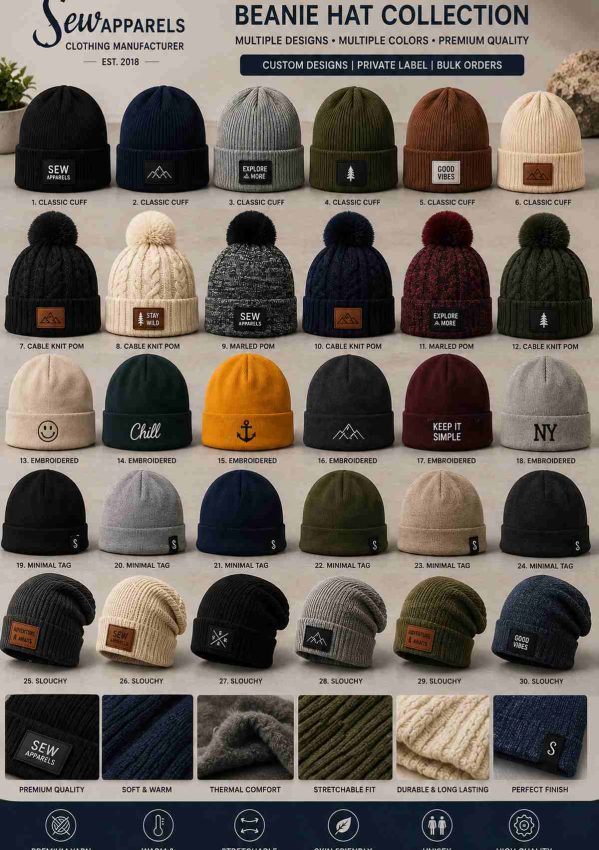
The objective is not to guess a factory minimum. It is to build a transparent commitment model from written supplier data: yarn specification, purchasing unit, estimated consumption, expected process loss, shade route and usable balance. A buyer can then compare a narrow stock-colour launch with a broader custom-colour range on the same commercial basis.
1. Confirm the Yarn Specification Before Comparing Minimums
Start with the approved construction, fibre content, yarn count or commercial yarn description, ply, twist, colour standard and required performance. A cone minimum quoted for one yarn cannot safely be transferred to another yarn merely because both produce a similar-looking beanie. Gauge, elasticity, yarn bulk and finishing can change consumption and appearance.
Ask the supplier to state the beanies yarn colour purchase minimum and the unit in which it must be purchased. Record whether the quotation concerns an existing stock shade, a newly dyed shade, a mill stock service or a special fibre blend. The answer should identify the seller, currency, validity period and any condition that could change the commitment.
Use the Craft Yarn Council’s Standard Yarn Weight System only as general terminology for yarn thickness. Its gauge and needle ranges are general craft guidelines, not settings for an industrial knitting machine or a measure of cone purchase weight. It does not replace the actual mill specification, knitting trial or finished-beanie approval. The approved sample and technical record remain the relevant production references.
2. Separate Yarn Commitment from Finished-Beanie Quantity
A buyer should distinguish how much yarn must be purchased from how many sellable beanies will be ordered. The two figures are connected, but they are not interchangeable. The beanies cone quantity finished beanie demand calculation should begin with a verified net yarn consumption per approved size and construction, then add stated allowances for sampling, knitting, linking, finishing and quality losses.
Create one line for each colour in the beanie yarn colour minimum planning model. Include the planned finished units, approved consumption per unit, documented allowance, total required yarn, purchasing-unit weight, number of purchasing units and expected balance. Round purchases only at the point required by the supplier’s selling unit. Avoid rounding every earlier step because repeated rounding can materially overstate a small programme.
For example, if a supplier sells yarn by a fixed cone or package, use that confirmed weight rather than a generic online estimate. The beanies cone weight purchasing unit must come from the quotation or current technical document. Do not publish a guaranteed finished yield until the approved knitting trial supports the consumption assumption.
3. Compare Stock Shades and Custom-Dyed Shades
Beanie yarn colour minimum planning should model stock and custom shades separately. A stock shade may reduce initial purchase exposure, but the buyer still needs confirmation of continued availability, lot variation and reorder conditions. A custom shade may improve brand control while creating dye-lot, laboratory approval and unused-balance obligations.
Build a beanies stock yarn colour scenario using only shades that the supplier confirms as currently orderable for the chosen yarn. Then build a beanies custom yarn shade order exposure scenario from the quoted dye-lot or purchase unit. Show the commercial difference without claiming that one route is universally cheaper or better.
Keep colour approval evidence linked to the model. A digital swatch is useful for briefing, but the final reference may require a physical lab dip, yarn winding, knitted panel or complete sample under agreed lighting. Record the colour standard, approval date, approver and accepted tolerance route.
4. Allocate Shared Yarn Across the Range
Several styles may use the same yarn specification and colour. If the supplier confirms that the yarn can be shared without construction or performance conflicts, a beanies shared yarn colour allocation can reduce fragmented purchasing. The beanie yarn colour minimum planning file should allocate the common commitment across styles by planned consumption rather than by equal unit counts.
Document every beanies per colour yarn commitment before deciding the final number of colourways. One popular neutral may support several styles, while a unique seasonal shade may serve only one. The buyer should see which colour absorbs each purchase unit and how a change in one style affects the remaining range.
A beanies small range yarn consolidation exercise can test whether two nearly identical shades should become one approved shade, whether a cuff and body can share yarn, or whether a launch colour should move to a later order. Consolidation must follow design approval; it should not quietly alter an approved product.
5. Calculate the Usable Balance, Not Just the Leftover Weight
The beanies beanie yarn balance worksheet should show opening purchase, development use, production issue, returned usable yarn, quarantined material, confirmed waste and closing balance. A positive closing number is not automatically reusable inventory. It may be insufficient for a new lot, affected by storage, or separated from its shade and batch records.
Agree beanies leftover yarn ownership in writing. State who paid for the balance, who physically holds it, whether storage fees apply, how it is identified and who may authorize its use. If the supplier holds buyer-owned yarn, the record should include the location, quantity, lot, condition, review date and release process.
Set beanies yarn carryover storage terms that reflect the material and the supplier’s actual capability. Address identification, contamination prevention, moisture protection, shade-lot segregation, stock checks and disposal authority. Do not promise indefinite storage or unchanged performance. Confirm the condition again before a repeat order.
A beanies unused yarn reorder option should state whether the balance can support sampling, partial production or only a future combined purchase. Recheck the required quantity, lot compatibility and approved construction at the time of reuse. Never subtract an unverified historical balance from a new commitment.
6. Approve the Colour Range Against the Launch Budget
Convert the beanie yarn colour minimum planning model into a beanies yarn colour launch budget. Show yarn purchases, expected finished usage, balance exposure and any quoted development or storage cost by colour. Keep confirmed quotations separate from buyer estimates so decision-makers can see which values still need supplier confirmation.
The beanies colourway quantity decision should combine commercial exposure with assortment logic. Review expected demand, channel needs, colour distinctiveness, identification requirements, replenishment plans and the cost of holding incomplete yarn balances. A commercially sensible range may use fewer launch colours with a documented route for later additions.
If each colour will be sold as a distinct trade item, review the GS1 GTIN Management Standard. GS1 explains consistent identification decisions for trade items, and its guidance treats style, colour and size variations as distinct products in relevant examples. Apply the current rules for the target market and selling system; yarn planning does not replace identification governance.
Questions to Put in the Yarn Quotation
Use beanies yarn minimum quotation questions that produce auditable answers:
- What exact yarn specification, shade route and purchasing unit does the quotation cover?
- Is the minimum stated per colour, per yarn, per dye lot, per order or under another condition?
- What weight is included in each cone, package or selling unit, and what tolerance applies?
- Which development, test, waste or finishing allowances are included in the consumption estimate?
- Who owns unused yarn, where can it be stored and when must it be reviewed or collected?
- Can balances be shared across approved styles, and what evidence is required before reuse?
- Which charges, lead-time effects or new approvals apply to a custom shade or later reorder?
Attach the supplier’s response to the beanie yarn colour minimum planning file. If a value changes, preserve the earlier quotation and record the effective date of the new assumption. This keeps a later range revision from being evaluated against a mixture of old and current inputs.
Beanie Yarn Colour Minimum Planning Model
Use one controlled worksheet with the following fields:
- Product: style code, construction, size range and approved sample reference.
- Yarn: fibre, count or description, ply, supplier, stock or custom route and shade code.
- Demand: finished units by colour and verified net consumption per unit.
- Allowance: sampling, knitting, linking, finishing and documented loss assumptions.
- Purchase: unit weight, minimum units, purchased weight and quotation reference.
- Balance: expected unused weight, ownership, storage location and reuse status.
- Decision: approve, consolidate, postpone or reject, with owner and date.
Run a sensitivity check before approval. Test a lower finished quantity, a change in consumption and the loss of one shared style. The purpose is to show where the commitment becomes uneconomic or leaves an unusable balance. It is not a forecast of actual waste or sales.
Review beanie yarn colour minimum planning again after the approved sample because construction changes can alter consumption. Freeze the final planning version beside the purchase order and record every later change through a dated revision.
Low MOQ Beanie Manufacturer Planning
Low-MOQ programmes work best when buyers narrow variables early and fund only confirmed commitments. In custom beanie manufacturing, the useful question is not simply “What is the MOQ?” It is which yarn, shade and purchase unit drives the minimum for the approved design, and what commercially usable output the commitment can support.
Startup Brand Yarn Commitment Brief
Startup brands can use the model to launch a controlled range without hiding material exposure. For private label beanie production, start with the strongest colours, preserve the verified assumptions and add colourways only when the next purchase can be allocated responsibly. This creates a repeatable sourcing record without inventing a universal minimum. Confirm yarn availability, the applicable order conditions and any sample or development charges in the written proposal before funding the range.
Use the beanie rib knit construction review to identify the approved structure behind each consumption estimate. Sharing a colour name does not make two yarn-and-construction combinations interchangeable for purchasing or finished-yield planning.
Connect Yarn Planning with Beanie Development
Use the Beanie Buying Guides to connect yarn decisions with other development checks. Review the custom beanie manufacturing service and request a quote with your yarn-colour planning brief to discuss the proposed construction and sample feasibility before relying on a consumption figure, because gauge and structure affect material use and finished performance.
When the worksheet is complete, the buyer can take a clear brief to the product team: confirmed yarn route, purchasing unit, colour quantities, expected balances, ownership terms and approval status. That is the practical output of beanie yarn colour minimum planning—a range decision based on documented commitments rather than a headline finished-piece minimum.