
SEW APPARELS · BUYER RESOURCES
Beanie Buying Guides
Beanie buying guides help brands connect yarn selection, knitted construction, fit and branding before sampling. Use this resource to organize the decisions behind a cuffed, fisherman or slouch beanie, then keep the approved references together so the supplier and buyer are reviewing the same finished product.
Start with the technical guide below and use our custom beanie manufacturing page for the product range, yarn routes and order discussion. These beanie buying guides will expand with relevant development topics, keeping detailed articles connected to one clear buyer resource.
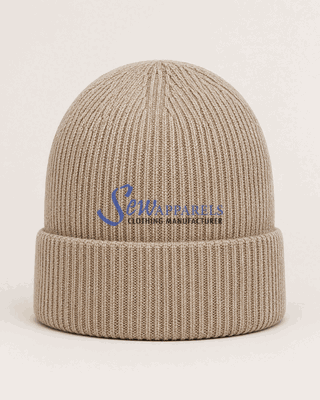
Rib knit construction: gauge, recovery and crown shape
Review seven practical checks for the knitted body, yarn and machine specification, recovery method and crown shaping. The guide includes an annotated construction example and a decision table to help turn sample observations into clear questions for your supplier.
Read the rib knit construction guideCuff decoration placement: artwork, scale and fold
Plan logo size and position on the folded cuff, and test how the artwork looks when the beanie is worn. The article covers placement checks for a repeatable sample.
Read the cuff decoration guide1. Beanie Yarn Colour Minimum Planning
Translate yarn purchasing units into colourway commitments, compare stock and custom shades, allocate shared yarn, and control usable balances before approving a small range.
Read the yarn colour planning guide2. Beanie Crown Seam Bulk Comfort
Map inside contact points, compare controlled crown joins, inspect allowance stacking and yarn ends, record wear feedback, and recheck the approved assembly after representative care.
Read the crown seam comfort guide3. Beanie Pilling Test Yarn Approval
Separate fuzz, pills and intentional hairiness, compare controlled knits, select an applicable method, grade against an approved reference, and record care-response limits.
Read the yarn pilling approval guide4. Beanie Warmth Claim Substantiation
Define the exact warmth statement, separate airflow from insulation, compare identified assemblies, qualify wind and moisture context, and keep wear feedback distinct from laboratory evidence.
Read the warmth evidence guide5. Wool Beanie Felting Risk Care Review
Confirm the wool blend and finish, distinguish relaxation from felting, trial complete beanies, track dimensions and surface together, and approve only evidence-backed care wording.
Read the wool care review6. Wool Blend Beanie Fibre Label Evidence
Separate yarn names from fibre declarations, trace lots through finished hats, reconcile component percentages, verify specialty and recycled claims, and approve market-specific wording.
Read the fibre label evidence guide1. Beanie buying guides for a clear product brief
Begin a beanie brief with the intended wearer, season, silhouette and wearing position. A close fisherman style and a longer slouch profile need different discussions about height, lower opening and the way the crown sits. Identify the desired cuff condition, texture and branding before asking for a sample. Photographs are useful for explaining the look, but written measurements and construction notes should resolve details they cannot show. Beanie buying guides help organize these decisions so the inquiry describes a specific knitted headwear product rather than relying on a broad style name alone.
Keep one reference file for each proposed style and record the quantity, colour breakdown, yarn preference and target delivery window. Include the intended care requirements and any testing expectations at the inquiry stage so the supplier can review the development scope. If a reference sample is available, explain which features should be retained and which should change. Avoid approving separate details through disconnected messages. A controlled brief makes it easier to track revisions and ensures that the final quotation, sample comments and production specification all refer to the same version of the beanie.
2. Match yarn, gauge and rib texture
Yarn composition, count and construction influence how a knitted surface looks and feels, so the material choice should remain connected to the intended beanie design. Ask for an identified swatch in the proposed yarn and structure rather than choosing from a fibre name alone. Review softness, surface appearance, thickness and the required care behaviour with the supplier. Beanie buying guides support this comparison by keeping material references alongside sample decisions. If the yarn article changes during development, review the consequences for colour, texture and fit before assuming the replacement will reproduce the approved result.
A machine gauge number needs context. SHIMA SEIKI explains gauge terminology in relation to needle density; it is distinct from the dimensions measured on a finished hat. Ask the supplier to identify the machine convention, proposed yarn and knitted structure together. Compare finished swatches prepared under the same conditions, and attach the selected reference to the product brief. This keeps the discussion focused on the intended outcome while allowing the knitting team to propose a workable technical route for the actual yarn, silhouette and quantity under consideration for the order.
3. Review rib recovery, crown shape and cuff details
A beanie sample should be assessed in both its relaxed and intended wearing condition. Record the opening measurement, finished height and cuff position, then agree how extension and recovery will be reviewed. CottonWorks describes rib stitch structures and the role of construction in stretch behaviour. The finished product still needs its own evaluation method and documented acceptance requirements. Beanie buying guides connect these fabric decisions with a complete hat review, helping buyers discuss fit using comparable measurements and observations rather than an unrecorded pull by hand during a sample meeting.
Examine the crown from the front, side and top to confirm the intended silhouette and closure appearance. Identify where shaping starts and how the visible rib lines approach the apex. A label or embroidered logo also needs to be reviewed on the finished cuff, with its fold depth and wearing condition clearly stated. Keep artwork size, placement and attachment details together with the construction notes. When revisions are needed, reference a marked location and the relevant sample version so the supplier can address the specific concern without changing previously accepted details elsewhere on the hat.
4. Low MOQ beanie manufacturer: compare yarn routes
Buyers looking for a low MOQ beanie manufacturer should distinguish stock yarn availability from custom yarn development. The Sew Apparels beanie product page currently lists 500 pieces using matching export-quality stock yarn, or 2,000 pieces using custom yarn, per colour and style. These are different material routes rather than interchangeable quantity promises. Beanie buying guides help prepare that discussion by identifying the requested colour, yarn composition and construction before quotation. Confirm that the selected stock material is available and suitable for the design, and obtain the applicable order terms for the actual style.
A small MOQ beanie enquiry benefits from a focused assortment and a clear list of essential features. Separate requirements that define the brand from details that can be reviewed against available materials, such as an exact custom shade or a specialised yarn combination. Ask how colour choices and style variations affect the proposed order rather than assuming quantities can be shared across all designs. The product page lists sampling at 10–15 days and production at 15–30 days at MOQ after pre-production approval, with quantity dependence; confirm current availability, approval stages and timing for the specific order.
5. Development support for startup brands
Sew Apparels welcomes startup brands and prioritizes a clear development discussion that helps new teams explain their first beanie collection. Bring the target customer, reference silhouette, intended retail presentation and available order plan to the conversation. Identify where help is needed with yarn selection, sample comments, labels or packing so the scope can be agreed early. Beanie buying guides give founders a practical starting point for those decisions. Confirm costs, revisions and responsibilities for the proposed project rather than assuming that development services, samples or custom material work are included without a separate agreement.
6. Approve samples, inspection and packing together
Before production, identify the approved sample and retain its yarn reference, measurements, crown views, decoration details and care instructions. Agree how critical construction points will be checked during inspection and how substitutions must be reviewed. Packing requirements should cover the intended fold, labels, product identification and carton presentation so the approved hat reaches the buyer in the expected condition. Use these beanie buying guides as a connected development reference while keeping the final order specification authoritative. Any change in materials, artwork or construction should be recorded against the relevant style and assessed before bulk approval.
Turn your beanie decisions into a product brief
Bring your yarn preferences, rib reference, intended fit, branding and quantity breakdown together. Our team can review the proposed beanie and identify the information needed for sampling and quotation, with order-specific material availability and timing confirmed before the production plan is agreed.
Explore custom beanie manufacturing