
A circular skirt fabric consumption quotation should identify the pattern shape, finished length, usable fabric width and size assortment behind the estimate. A full circle and a half circle are different designs, and a longer skirt can require a different panel layout. A price based only on the words circle skirt leaves too much room for inconsistent assumptions.
This guide explains six checks for preparing a clear fabric-consumption request and comparing the responses. It distinguishes pattern geometry from actual cutting layout, and marker consumption from fabric booking. It does not propose a universal meterage, waste percentage or price for every circular skirt.
Use the skirt manufacturing page for the product enquiry. Include the circular skirt fabric consumption quotation brief with the pattern, fabric reference and order assortment so the estimate corresponds to the style you intend to approve.
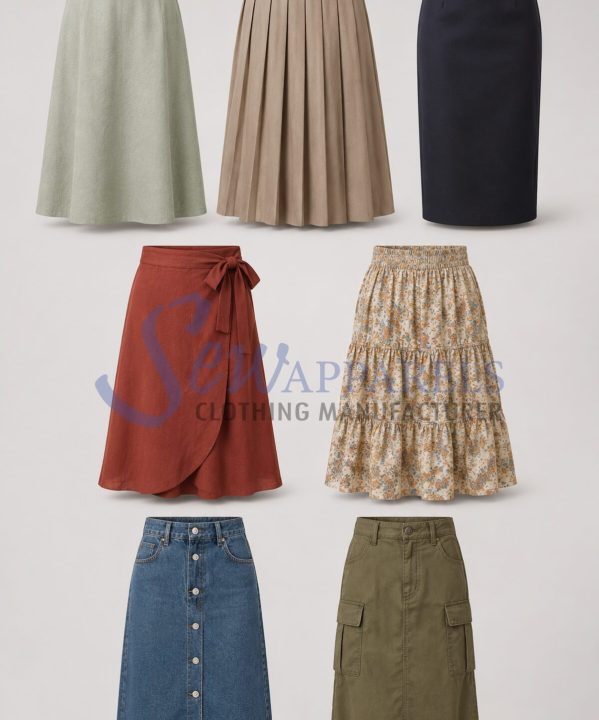
1. Define the circular skirt fabric consumption quotation geometry
State whether the design is a full circle, half circle or another specified circular construction. Identify the waist opening, finished length, closure and waistband or facing. Two garments described with the same broad name may have different fullness and pattern pieces, so the quotation should identify the chosen version.
Circle skirt radius pattern data should distinguish the stitching line from the cutting edge. Record the pattern’s actual dimensions and allowances rather than quoting a radius without explaining its reference. An estimate based on the waist opening alone does not account for hem treatment, seams, closures or additional components.
Gretchen Hirsch’s circle-skirt project for Threads introduces the full-circle shape with a central waist opening. That is a useful illustration of the geometry, not a production consumption guarantee. The factory quotation still needs the actual graded pattern, components and usable material width.
For a half circle skirt fabric quote, keep the design option separate from the full-circle version. Ask for equivalent fabric and order assumptions where you want to compare cost, while acknowledging the different silhouette. Do not describe a lower-consumption half-circle option as the same garment at a cheaper price.
Retain these design choices in the circular skirt fabric consumption quotation record. If fullness or length changes during development, identify the new pattern revision before asking for an updated estimate. This preserves a meaningful relationship between the accepted design and the quoted fabric requirement.
2. Confirm usable width and directional restrictions
Record full circle skirt usable fabric width from the proposed material reference. Distinguish nominal supplier width from the width available to the cutting layout. Selvages, usable-area restrictions or order-specific fabric information should be identified by the responsible team instead of assumed from a generic fabric description.
A circle skirt width constraint RFQ should explain when a required piece cannot fit the proposed material layout. Ask the pattern and cutting team to identify the issue and the available options. More purchased length cannot automatically solve a piece that requires a different width or panel construction.
List circular skirt directional fabric allowance assumptions where nap, one-way prints or surface orientation matter. A layout that rotates pieces freely may not represent the intended appearance. Identify permitted orientations and any matching requirement so different estimators do not use different rules without stating them.
For stripes, checks or placed prints, describe what needs to match and where. A general statement to match the fabric is not enough to establish the layout. Ask for the relevant marker or cutting evidence and keep any provisional allowance separate from a verified layout result.
The circular skirt fabric consumption quotation should name the fabric reference and width used for each scenario. If a wider material is proposed, compare its availability and price along with the consumption change. Lower meterage does not establish a lower total material cost when the fabric offer has changed.
3. Compare panel options and length scenarios using actual layouts
A circular skirt panel seam option may help the design work within available width, but it changes the pattern and construction. Mark proposed seam locations, grain orientation and the intended appearance. Include seam allowances and any matching requirements before treating the option as a valid alternative.
Review the panelled sample where appearance or drape is important. A quotation comparison should not accept a new seam location purely because the layout uses less fabric. The buyer should understand whether the option changes the visible design, closure position, lining or finishing work.
Record each circle skirt length cost scenario with its own pattern dimensions. A change from a shorter style to a longer style can affect more than the outer radius; it may change whether pieces fit across the usable width and how the layout is arranged. Do not apply an unexplained price increment without confirming the resulting construction.
A circular skirt cutting layout quote should identify which shell and additional pieces are included. Waistbands, facings, belts and pocket components may use the same material or a different one. List them clearly so the estimate does not appear complete while excluding a fabric component needed for the approved garment.
Lectra’s AccuMark marker-making documentation describes placing pattern pieces within a representation of the fabric, subject to marker-order limits. It supports evaluating an actual layout. It does not establish that unrestricted rotation is suitable for this skirt or that Sew Apparels uses a particular software system.
4. Relate graded consumption to the ordered size ratio
Circle skirt graded consumption should cover the identified sizes in the order. Larger waist openings and different graded dimensions can change piece geometry and available layout combinations. A development sample consumption is useful early information, but it is not automatically the average requirement for a bulk assortment.
Record circle skirt size ratio fabric estimate inputs with quantities per size and color in the circular skirt fabric consumption quotation. Ask whether the estimate uses separate size markers, mixed-size markers or another identified calculation. Keep that method visible so a later assortment change can be reviewed against the same basis.
Circle skirt marker consumption inputs should include pattern revision, size mix, fabric width, component inclusion and orientation rules. Record the marker identity and length where an actual marker supports the quote. If the estimate is preliminary, identify what remains to be confirmed before booking material.
Do not compare two order averages without checking their assortments. One estimate may contain more of the larger sizes, use a different length or omit a lining. Those are scope differences to clarify before assuming that one supplier’s consumption is inefficient.
Use the circular skirt fabric consumption quotation to retain the original assortment and each approved revision. A quantity change across colors may affect sourcing and booking even when the per-garment layout is unchanged. Ask for the revised material requirements instead of extending the earlier total without confirmation.
5. Separate layout evidence from booking allowances
Circle skirt fabric waste evidence should explain what the term waste means in the comparison. Unused area within a marker, cutting-related allowances and other booking provisions are not necessarily the same calculation. Request the basis of each relevant estimate rather than accepting one percentage as an explanation for the whole order.
A circular skirt fabric booking estimate should identify how marker consumption becomes the amount to procure. Confirm which relevant allowances, material conditions and order quantities have been included by the responsible team. Avoid adding a generic percentage from an unrelated project and presenting it as a tested requirement for this fabric.
Keep development uncertainty visible. If fabric width, shrinkage-related pattern treatment or final components are not confirmed, record the estimate as provisional and list the missing decisions. This helps the buyer avoid interpreting an early costing number as the final material booking instruction.
Check that the unit of measure and price basis are clear. A quoted consumption in meters should not be compared casually with a price based on a different unit or material basis. Record the currency, fabric price reference and relevant conversion assumptions where the actual offer requires them.
The circular skirt fabric consumption quotation should separate a consumption difference from a sourcing-price difference. If a proposed alternative reduces layout requirement but uses a more expensive material, show both changes. That makes the commercial choice understandable without disguising a design or sourcing substitution.
6. Release a traceable comparison and revised quotation
A circular skirt pattern version quotation should name the pattern and technical revision used for the offer. Keep the fabric reference, size assortment and cutting assumptions attached to that version. When development changes the geometry or construction, request a revised offer against the updated inputs.
Use a circular skirt consumption worksheet with separate rows for each approved scenario. Include shape, length, width, panel arrangement, size ratio, included pieces, consumption basis and booking assumptions. Mark provisional information so it cannot be mistaken for a confirmed production instruction.
For custom skirt manufacturing, send the technical brief early enough to discuss material and construction options together. A clear request helps the development team identify width or panel constraints before the buyer commits to a fabric. It also supports comparing equivalent offers rather than simply selecting the smallest number.
In private label skirt production, startup brands can begin with a focused style and size assortment, then compare a limited number of documented options. Discuss feasible sampling and sourcing arrangements through the enquiry. Minimum quantities, material availability and services should come from the actual offer.
Retain the approved circular skirt fabric consumption quotation with the final decision record. Note which option the buyer selected and why, especially where panel seams or length changed. The accepted consumption should describe that chosen garment, not an earlier version retained in a costing spreadsheet.
Before material booking, confirm that the latest pattern, width and order assortment still match the approved estimate. If one input changes, identify its effect and update the relevant figures. A traceable calculation is more useful than a confident fabric total whose assumptions nobody can reproduce.
Review skirt lining and shell compatibility when a lined option changes the included pieces or material specification. Keep shell and lining consumption separate in the comparison.
Common consumption-quotation questions
Can radius alone determine production fabric booking?
No. Radius helps describe geometry, while production booking also depends on the actual pieces, allowances, width, orientation, size mix and identified booking provisions. Keep the geometry reference and the cutting-layout evidence connected rather than treating a simple shape calculation as the complete procurement instruction.
Will adding panels always reduce cost?
A panel option may change layout possibilities, but it also adds construction and can affect appearance or matching. Compare the accepted design and complete cost scope. Do not assume that a lower material estimate produces a better garment or a lower final unit price.
What should accompany the quotation request?
Provide the pattern reference, shape, finished length, fabric width, orientation requirements, components and size quantities. Use the skirts buying guides to connect consumption decisions with shell, lining and waist construction before approving the brief.
The final circular skirt fabric consumption quotation should show how the chosen design fits the selected material and order assortment. Clear layout evidence and separate booking assumptions give the buyer a useful basis for comparison, revision and material planning.