
A white chef coat laundry trial plan should answer two separate questions: how well the agreed process removes representative soil, and how the complete garment looks and functions afterwards. A coat may look brighter while retaining a stain, or lose a stain while its trim changes appearance. Combining these outcomes into a single “wash passed” statement can hide the decision that matters to a hospitality buyer.
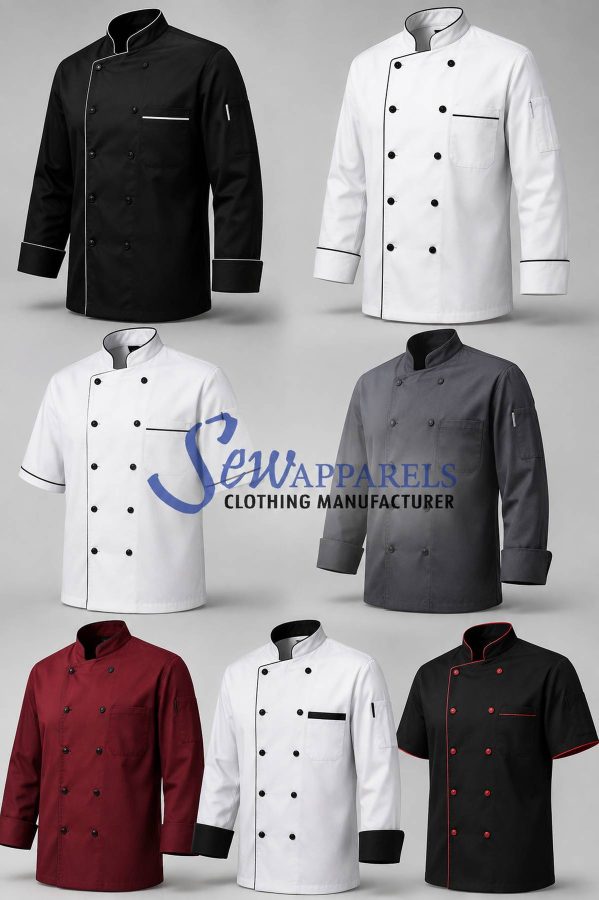
This guide explains how to identify samples, retain controls, document cleaning conditions and approve appearance evidence. It is intended for restaurant groups, culinary brands and uniform purchasers preparing a development brief. It does not supply a chemical recipe, guarantee stain removal or imply that Sew Apparels has already tested a particular garment. Agree the project-specific evaluation with the supplier and responsible laundry or laboratory.
1. Define the white chef coat laundry trial plan before selecting samples
Write a white coat cleaning specification that identifies the intended care route. Distinguish a domestic machine trial from a commercial service pilot or an industrial testing programme. Record the proposed cleaning, drying and finishing sequence, its restrictions and the people responsible for confirming compatibility with the garment.
Set the questions before choosing a procedure. A chef coat stain cleaning trial asks about residual soil under defined conditions. A white chef coat yellowing evaluation asks about changes in appearance. Fit retention, seam condition and closure function are additional questions that need their own observations. A single visual impression cannot establish all these outcomes.
Before sampling, identify the proposed decision: sample selection, care-route approval, investigation of an observed problem or repeat-order confirmation. The evidence needed may differ. Do not describe an investigative trial as final approval when the process or material identity is still being changed.
Separate appearance from hygiene requirements
A visibly clean coat is not proof of microbial performance or workplace hygiene compliance. Any relevant hygiene requirements belong in the responsible organisation’s programme and appropriate assessment. Keep this appearance-focused trial from being used as evidence of sanitisation or a protective function it has not measured.
2. Establish sample identity in the white chef coat laundry trial plan
Give each garment a sample identifier linked to the style revision, shell material, colour reference and relevant component lots. Include buttons, thread, piping, labels and embroidery where present. Whole garment care evidence is more useful when the reviewer can determine which assembled version was exposed to the process.
Retain an unwashed white coat control from the same identified material and construction where practical. Protect it from soiling and unintended exposure, and record how it is stored. Comparing a trial coat with an unrelated white garment can create a misleading impression because the original shade, finish or surface may differ.
For the white chef coat laundry trial plan, photograph and inspect samples before exposure. Note existing marks, unevenness, trim condition and seam appearance. If a sample has already been worn or cleaned, record that history. Do not label a previously treated garment as an unwashed reference.
Choose a comparison that answers the question
A kitchen coat laundry sample comparison should state whether it compares materials, constructions or processes. Keep the other variables as consistent as a suitable evaluation permits. If several features change together, acknowledge that the result cannot isolate the effect of one feature.
3. Define soil categories in the white chef coat laundry trial plan
Use kitchen soil sample categories relevant to the intended use, such as oily food marks, coloured food contact or general handling soil. These categories define observations and discussion with the evaluation provider; they are not instructions to apply unknown chemicals or improvise a standard laboratory protocol.
Record the source and condition of the soil sample, its location and the interval before cleaning where those details matter to the trial. Different exposures may be difficult to compare if one coat has a fresh mark and another has an older, dried mark. Ask the responsible provider how to make the evaluation repeatable enough for the intended decision.
For the white chef coat laundry trial plan, distinguish deliberately prepared specimens from garments returned after ordinary use. Both may provide useful information, but they answer different questions and can contain uncontrolled differences. Identify the evidence type rather than combining all coats in one score without context.
Inspect residual stains by location
Residual stain observations should specify the affected area, visible extent and comparison reference. Check collars, cuffs, fronts and pocket edges as appropriate to the garment. Keep pre-existing wear or damage visible in the record so it is not automatically attributed to the selected cleaning route.
4. Record the process in the white chef coat laundry trial plan
A commercial wash appearance pilot needs a traceable sequence supplied or confirmed by the laundry provider. Identify the machine or service process, load conditions relevant to the evaluation, cleaning agents, stated treatment conditions and drying or finishing stage. Record deviations from the agreed brief instead of silently treating them as the same trial.
ISO 15797:2017 provides defined washing and finishing procedures for evaluating workwear intended for industrial laundering. Its scope includes appearance-related properties and distinguishes testing from operating instructions for industrial laundries. It also recognises that actual intended processes may need evaluation when determining compatibility. Select an appropriate assessment with the technical parties; do not treat the standard’s name as a guarantee for every laundry route.
For the white chef coat laundry trial plan, retain the exact procedure reference when a standard method is used. An informal pilot should be described as such, with recorded conditions. Avoid converting an unidentified wash into a claim that the garment passed a recognised test or is certified for industrial service.
Include drying and finishing
Inspect the garment after the complete agreed sequence and in a defined condition. Damp appearance, finished appearance and appearance after storage can differ. Record when the observations were made so another reviewer does not compare unlike sample states.
5. Separate outcomes in the white chef coat laundry trial plan
Assess soil removal versus shade change independently. A washed coat whiteness comparison needs a suitable original reference and consistent viewing conditions. Brighter appearance alone does not establish removal of every stain, while a residual spot does not prove that the entire shell has yellowed.
For white workwear appearance assessment, record general colour impression separately from local marks and surface changes. Use consistent lighting and background for photographs, and avoid editing images in ways that alter the apparent shade. A photograph supports traceability, but it should not be treated as a calibrated measurement unless the assessment actually uses a suitable documented method.
Include a trim discoloration record for buttons, thread, labels and other components. Inspect seam puckering, garment shape and closures as separate items. A clean shell does not compensate automatically for an unusable fastening or a visibly changed trim; the buyer needs an explicit acceptance decision.
Investigate before naming a cause
A yellowish appearance can prompt an investigation, but a photograph alone does not establish its cause. Review sample identity, original appearance and process history with the responsible provider. Record hypotheses as hypotheses and request appropriate evidence before making a material or chemical explanation.
6. Close the white chef coat laundry trial plan with an approval record
A kitchen coat wash scorecard should identify the sample, process reference, inspection state and result for each question. Define acceptance criteria with the buyer and technical parties before the result is reviewed. Avoid creating a convenient threshold after seeing the outcome.
Laundry appearance approval should state which material, construction and care route it covers. Record limitations, unresolved observations and the authorised decision maker. If a change is required, identify the revision and the re-evaluation needed rather than carrying approval forward to a different garment without review.
GINETEX’s care-labelling principles explain that care instructions consider sensitive features of the article, including finishes and accessories, and do not promise removal of every stain. Use truthful, supported care communication for the complete coat. Do not strengthen the treatment instruction merely because the buyer prefers a whiter appearance.
Hypothetical scorecard comparison
Imagine one pilot leaves a local food mark while retaining the original general shade, and another removes that mark but changes a button’s appearance. The approval file should show both findings instead of describing the second pilot as universally better. This example illustrates a purchasing decision; it is not a Sew Apparels trial result or a prescribed acceptance rule.
Use the evidence for repeat orders and investigations
Retain the approved sample reference, scorecard and process record with the released specification. When a supplier proposes a change in fabric, finish or component, identify which appearance and compatibility questions need review. A successful original trial does not automatically approve every later lot or substitution.
If staff report a problem, compare the affected garment’s identity and care history with the approved file. Check whether the intended route was followed and whether the garment had different exposure or use. Keep the investigation factual rather than assuming that either the fabric or the laundry provider is responsible before reviewing evidence.
For custom chef coat manufacturing discussions, share the intended care route and the questions the sample must answer. For private label chef coat production, include the agreed appearance criteria and retained references in the brand’s specification. Confirm testing availability, quantities and charges for the actual enquiry rather than assuming that a particular service is included.
For a coat with dark piping or other contrast parts, use the chef coat contrast trim cleaning review alongside the scorecard to keep shell appearance and component compatibility distinct.
Common buyer questions
Does one successful wash establish lifetime appearance?
No. It supports only the documented exposure and observations. Agree any repeated-exposure programme with the responsible parties and describe its scope accurately. Do not convert a limited pilot into an unlimited whiteness or durability promise.
Should the trial prescribe a bleach recipe?
The process must be compatible with the complete garment and managed by the appropriate provider. This guide does not prescribe chemical concentrations, mixtures or temperatures. Confirm the permitted treatment and relevant restrictions before the evaluation.
Can a fabric swatch replace the finished coat?
A swatch may answer a material-specific question, but it does not display every seam, trim or closure interaction. Decide the required combination of material evidence and whole-garment evaluation according to the actual approval purpose.
How can a startup brand begin efficiently?
Start with a clearly identified sample, one intended route and a scorecard of the questions that matter. Confirm the evaluation scope before expanding the programme. A focused brief is more useful than requesting an undefined “premium washable” coat with no acceptance evidence.
Prepare the laundry brief for development
Bring the sample identity, intended care route, soil categories and appearance criteria to the chef coat manufacturing page when discussing development. Confirm project-specific sampling and assessment arrangements directly. Clear records make the next technical conversation more useful without implying that an untested garment has achieved a particular result.
The Chef Coats Buying Guides connect related construction and approval topics. Keep the trial decision tied to the approved coat and recorded conditions. A traceable appearance file helps a buyer distinguish satisfactory evidence from a broad cleaning promise that cannot be checked.