
PATIENT GOWN PRODUCT DEVELOPMENT
Patient Gowns Buying Guides
A practical development hub for brands planning patient gowns. Use these guides to control back overlap, tie placement, access openings, fit, laundering and bulk inspection while keeping product language aligned with the intended care setting.
Review the Patient Gowns product pageHow to use these patient gowns buying guides
Each guide converts one patient-gown decision into measurable requirements, sample checks and bulk controls. Begin with the intended wearer, care setting, dressing method, posture, underlayer, size range, fabric, opening route and care process. Then document panel geometry, closure positions, edge construction, points of measure, tolerance and visual standard. Keep the approved pattern, sealed sample, technical pack and change log together so development, cutting, sewing and inspection teams use the same version.
Review the gown in the real dressing condition rather than arranging it only on a table. Compare representative small, base and large sizes because overlap, tie reach and garment length change through the grade. Related articles will be added here as the permanent keyword plan progresses, with every card linking to its matching article and the product-page route remaining clear.
Plan back overlap and closure access as one system
A patient gown back opening cannot be approved from one flat overlap measurement. Neckline shape, shoulder balance, body ease, panel extension, closure spacing, gown length and wearer posture determine whether the panels remain controlled. Define full, upper or lower overlap and show which panel crosses over.
Measure at the neckline, mid-back, waist, hip and hem where relevant. Review standing, seated, turning and assisted-dressing positions with the intended underlayer. The approved sample should show both the closed arrangement and the access sequence so production teams understand how much opening is intentional and how the garment returns to its normal position.
Coordinate fabric, edge finishing and tie construction
Lightweight woven, knit and reusable patient-gown materials behave differently at an open back. Specify fabric reference, weight, opacity direction, dimensional-change expectation and the final care route. Select binding, facing, turned edge or overlock construction for the neckline and access edges, and document seam allowance, stitch type, thread and reinforcement.
Every tie needs a finished length, width, orientation, attachment coordinate and pairing instruction. Approve production-intent material because drape changes overlap and a narrow tie can curl, shrink or fray after laundering. Inspect the finished sample after the agreed care cycle rather than accepting a freshly pressed result only.
Balance dignity, movement and assisted dressing
Useful patient-gown fit depends on shoulder width, neckline stability, armhole shape, sleeve or arm opening, chest and hip ease, gown length and lower sweep. Fit over the clothing normally worn beneath the gown and review forward reach, seated posture, turning and side-lying simulation where appropriate. Observe whether the neckline shifts, the overlap separates, the armhole binds or the hem rides upward.
The closure should position a correctly balanced garment; it should not carry tension created by inadequate ease. Record the wearer posture, closure condition and assistance method used for approval so later samples are judged in the same way.
Develop access openings, closures and identification together
Map the intended access sequence before finalising the back panels. State which tie, snap, hook-and-loop part or other closure opens first, which part remains secured and how the panel is restored. Provide opening length, start and end points, overlap, closure spacing, edge finish and stress-point reinforcement.
Labels, size marks, department identification and ownership marks also compete for the neckline and upper-back area, so place them where they remain readable without irritating the wearer or interfering with access. Test the complete sequence on the intended size and posture instead of approving isolated components.
Verify laundering, measurement and workmanship
Finished-garment review should cover dimensional change, neckline shape, panel alignment, minimum overlap, tie length, attachment security, access-edge stability, seam puckering, garment twist and opacity after the specified care route. Use clearly illustrated points of measure and state whether the gown is open, tied, relaxed, pressed and conditioned. Agree additional overlap and access points where a standard garment chart does not describe the product.
Compare selected bulk units with the sealed sample under consistent lighting and resting conditions. Isolate any material, closure or process change that can affect fit, dignity, access or repeat-order consistency.
Low MOQ patient gown development for startup brands
Startup brands and small healthcare programmes often need disciplined development before committing to a broad patient-gown range. Low MOQ feasibility depends on fabric availability, colour, size count, opening design, closure type, labels, packing and any institution-specific identification. Sew Apparels gives startup-brand enquiries structured review and confirms the practical quantity after the complete brief is assessed. A focused opening style, stock-compatible fabric and controlled size range can reduce complexity.
The brand should still approve production-intent materials, measurements, closures and laundering results before bulk production. Keep the first range commercially focused: one dependable fit block, one back-opening system and a limited trim set are easier to cost and repeat than many small variants. If custom fabric, dyeing or specialised closures increase the feasible minimum, identify that during quotation.
Build a repeatable approval and reorder record
A useful patient-gown file contains the current pattern version, measurement chart, grade rules, material references, back-panel map, overlap points, tie or closure coordinates, seam instructions, labels, packing data and approved photographs. Record the reason for every revision and identify who approved it. Include dated standing, seated and assisted-dressing photographs plus notes on underlayer, posture, tying condition and laundering. A bulk inspection sheet should identify visible defects, measurement frequency, tolerance and escalation steps.
Retain approved fabric and trim codes with the purchase order so substitutions are checked before production. When a new fabric lot, closure or construction method is proposed, resample the affected area rather than assuming equivalence. This discipline supports costing, inspection and later replenishment without changing the original product-page content.
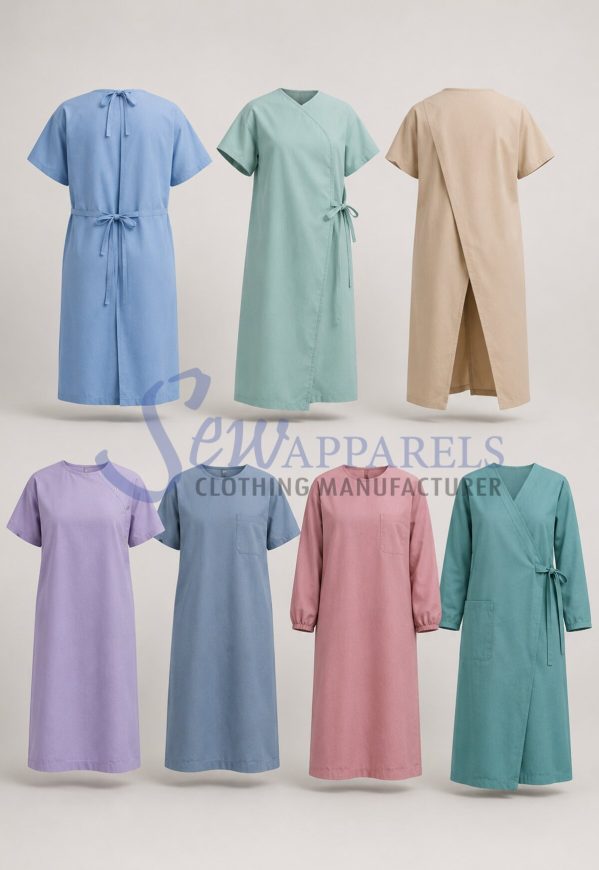
FEATURED BUYER GUIDE
Back Closure Design: Patient Gowns
Specify back overlap, tie placement, access opening, fit, edge construction, laundering and bulk inspection through one controlled patient-gown development method.
Read the back closure design guideFEATURED BUYER GUIDE
Fabric Opacity Selection: Patient Gowns
Compare light transmission, fabric weight, colour coverage, stretch, laundering and bulk-lot controls through one measurable patient-gown opacity method.
Read the fabric opacity selection guideFEATURED BUYER GUIDE
Procurement Size Allocation: Patient Gowns
Use six critical checks to connect department quantities with institution-approved gown blocks, size codes and packing requirements. Build a buyer-entered assortment worksheet, reconcile opening and replacement stock and request comparable quotations without inventing demand or universal size ratios.
Read the procurement size allocation guideFEATURED BUYER GUIDE
Rental Versus Purchase Cost Comparison: Patient Gowns
Use six critical checks to compare garment ownership and rental quotations within the same service boundary. Record recurring charges, transport, replacement inputs and unresolved exclusions in a transparent worksheet without inventing prices, useful life or savings.
Read the rental versus purchase comparisonFEATURED BUYER GUIDE
Identification Label Placement: Patient Gowns
Use five critical checks to separate required garment disclosures from institutional ownership identifiers. Approve a complete label map covering position, readability, wearer contact, attachment and care validation without using personal patient data or implying tracking-system certification.
Read the identification label placement guideFEATURED BUYER GUIDE
Reusable Laundering Durability: Patient Gowns
Use six critical checks to evaluate identified gowns under a defined laundry trial. Record fabric, seam, closure and label condition at agreed stages, preserve sample history and separate observed results from unsupported reuse-count or protective-performance claims.
Read the reusable laundering durability guideTechnical references for measurable patient-gown development
Use official sources as a framework and define product-specific acceptance criteria. The FDA medical-gowns overview distinguishes gown intended uses, regulatory classes and recognised liquid-barrier standards; it helps buyers avoid treating an ordinary patient gown description as a protective-performance claim. ISO 18890:2018 defines main garment measurement points and methods and allows additional points to be agreed between interested parties. Apply that principle to neckline opening, back overlap at selected levels, tie coordinates, access-opening length, gown length and other patient-gown-specific dimensions. The references below support a controlled technical conversation; the buyer still needs to state the exact intended use, procedure, sample quantity, conditioning, tolerance and acceptance level required for the product.
Open FDA medical gowns overview Open ISO 18890 garment measurement standardTurn your patient gown decisions into a product brief
Share the intended wearer, care setting, dressing route, gown length, fit block, fabric, back overlap, closures, sleeves, access opening, labels, size range, care process and packing requirements. The product page explains the available manufacturing scope, sampling path and buyer information needed for focused costing.
Review custom Patient Gowns manufacturing