
SOFTSHELL JACKET DEVELOPMENT LIBRARY
Softshell Jackets Buying Guides
A softshell jacket is a system, not just a fabric swatch. The face, any middle barrier and the inner backing must work together to meet the intended balance of movement, weather protection, comfort and care. Some styles are simple stretch constructions; others use a laminated membrane and backing. These Softshell Jackets Buying Guides help buyers describe the target use and evaluate the complete bonded cloth rather than assuming that every fabric called “softshell” performs the same way. Start with the wearer, climate, activity and care route, then compare candidate fabrics and sewn samples against that brief.
These Softshell Jackets Buying Guides connect six separate development decisions: bonded layer selection, seam-sealing sourcing, stretch direction, weather-claim evidence, zipper-garage construction and hem adjustment. Start with the intended use and identified fabric, then review each relevant sample detail before requesting a quotation. The cards open individual technical posts so buyers can record the evidence for each decision without treating one material test as approval of the complete jacket. Keep the original Softshell Jackets product page as the route for a manufacturing enquiry.
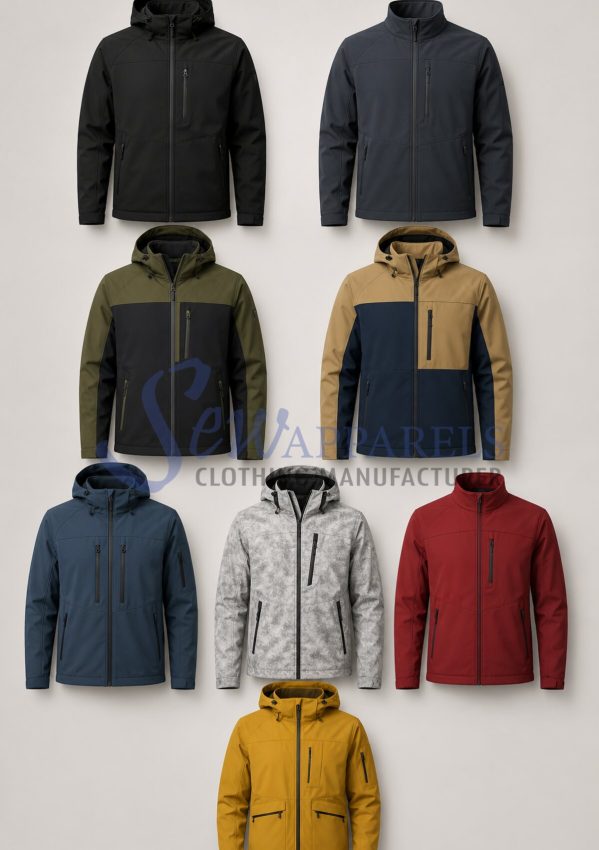
These Softshell Jackets Buying Guides use existing jacket style references to support development discussions. The image does not demonstrate bonded-layer composition, seam-tape compatibility, sealing equipment, approved test results or waterproof garment performance.
Softshell jackets bonded layer selection
Compare the outer face, middle barrier and inner backing against movement, comfort and weather-test needs.
Read the bonded-layer guideSoftshell Jacket Seam Sealing Sourcing Brief: Feasibility and Scope
Identify the backing, seam map and tape trials before accepting sealing capability. Separate prototype work, bulk inclusions, care evidence and process exclusions in the quotation.
Review seam sealing sourcingSoftshell Jacket Stretch Direction Brief: Panel Mapping and Recovery
Connect measured fabric extension and recovery to body and sleeve orientation. Review seam and trim restrictions on the complete sample before approving the cutting map.
Review directional stretchSoftshell Jacket Weather Claim Evidence: Scope and Wording
Separate surface repellency, water penetration and breathability evidence. Match reports to the actual fabric or garment, review closures and care conditions, and approve wording within the tested scope.
Review weather claim evidenceSoftshell Jacket Zipper Garage Specification: Coverage and Clearance
Match the chin-contact cover to the actual collar and zipper. Compare lining and seam bulk, review slider and puller clearance, and approve the assembled detail after care.
Review zipper garage detailsSoftshell Jackets Hem Adjustment Construction
Plan the drawcord channel, side exits and cord lock as a single construction system. This guide compares placement options, explains the sample checks and shows an annotated tech-pack example for a comfortable, repeatable hem.
Read the hem adjustment guideSoftshell Jackets Buying Guides: Use Case and Layer Selection
Decide whether the jacket is for light outdoor work, active travel, cool-weather training or a more exposed condition. Write the required wind resistance, water resistance, breathability, stretch, warmth and abrasion expectations in priority order. A two-layer bonded cloth and a three-layer laminate may both be described as softshell, yet offer different surfaces and sewing behavior. Ask whether the garment will be worn over a T-shirt or midlayer, whether a lining is added separately and how often it will be washed. Those decisions determine which tradeoffs a buyer can accept.
Treat a fabric test number as evidence for a particular method and condition, not a complete jacket guarantee. ISO 811 specifies a hydrostatic-pressure method for fabric resistance to water penetration. It does not by itself prove that untaped jacket seams, a zip or pocket openings will remain dry. If weather performance matters, ask for the fabric report and a finished-garment construction review. Match the test result to the proposed material lot and confirm whether the claim applies before or after washing.
Choose the face fabric for wear and appearance
The outer face controls appearance, surface hand, abrasion contact, colour and much of the first response to rain. Specify fibre composition, weave or knit, weight, stretch direction, finish and acceptable pilling or snagging. A durable water-repellent surface can shed light rain, but its behavior may change with wear and care. Look at the face under the intended work or outdoor conditions and check how it sews at curves and high-stress seams. A face that resists abrasion yet restricts movement may be wrong for an active style.
Compare candidate cloths using an approved colour and feel standard. Ask for the exact construction rather than relying on a broad fabric name. Note whether the outer face is bonded to a membrane or directly to a fleece-like backing. Check surface texture, laminate edge and needle marks after sewing. If the cloth is brushed or textured, inspect shade direction and batch variation. The buyer should keep the face specification tied to the approved garment rather than approving a loose swatch only.
Define what the middle layer actually does
A middle layer may be a membrane, coating or adhesive interface, depending on the fabric architecture. Its job should be stated in the brief: reduce wind passage, resist water penetration, retain breathability or simply bond two textiles. Do not assume a membrane is present because a sample feels thick. Ask the supplier to name the laminate structure, test methods, performance after care and any restrictions on seam sealing or pressing. A high fabric rating can be undermined by unsuitable seam and zip choices in the finished jacket.
Polartec describes its Power Shield Pro as a soft, stretchable membrane-based fabric with published water-resistance and breathability test claims for that specific product. It illustrates how a supplier can document a barrier, but those figures must not be copied to another softshell fabric. Compare data sheets on the same measurement basis where possible. Request a sewn sample for hydrostatic resistance, stretch recovery and seam behavior as needed for the end use.
Select the inner backing for comfort and mobility
The inner backing touches layers beneath the jacket and can add warmth, reduce clamminess or protect a membrane. A brushed fleece backing may feel warm but increase bulk; a lighter knit or tricot can slide over underlayers more easily. Specify backing material, weight, texture, pilling resistance, colour and care behavior. Check how easily the sleeve moves over a shirt and whether the inside catches at the elbow or shoulder. Backing stretch should support, not fight, the outer face.
Inspect the cross-section and the cut edge for delamination or fraying. Test a worn garment after the planned laundering process. If an inner fleece holds moisture or becomes rough, the user experience changes even if the outer face still looks good. Keep the backing specification with the approved material code, because changing it can alter total thickness, seam bulk, warmth and perceived breathability. A buyer decision must consider the complete laminate. Use these Softshell Jackets Buying Guides to connect the backing record with the agreed layer specification.
Use a marked sample and buyer decision table
Label A as the face, B as the middle layer and C as the inner backing on a cut-edge swatch. Record the total fabric weight and thickness, stretch direction, care method and supplier code. In a buyer table, make separate rows for face durability, water or wind claim, breathability, inner comfort, bonding after care and seam behavior. Add the test method, sample number, pass condition and action owner. If a layer fails, change one material or construction variable at a time before comparing the next sample. Keep this decision table alongside the relevant sample records from these Softshell Jackets Buying Guides.
Plan low MOQ softshell jackets for startup brands
A startup brand can reduce sampling cost by selecting one approved bonded fabric, one jacket fit block and a small set of trims before multiplying colours or custom laminates. For a low MOQ softshell jacket enquiry, state the estimated quantity, size curve, use case, fabric source and performance priorities. Ask the manufacturing team which stock materials and colours can meet the brief at that volume; minimums vary by supplier and finish.
For custom softshell jacket manufacturing, separate fabric minimums from garment quantities and confirm whether special tape, laminate or zipper development changes the order requirements. Private label softshell jacket production should begin with a traceable sample and an agreed scope, including any specialist operation that still needs capability confirmation. These Softshell Jackets Buying Guides help startup brands keep material data, trial results and construction approvals together before expanding the range.
Turn softshell development decisions into a product brief
Share the intended wearer, fabric construction, weather and comfort priorities, approved layer codes, care route, directional cutting map, seam-sealing feasibility record, zipper-garage clearance and hem adjustment specification. Identify the size range, responsible reviewers and accepted sample version. Keep a fabric test report separate from complete-garment evidence and state any quotation exclusions or unresolved trials. These Softshell Jackets Buying Guides support a coordinated development record; the original Softshell Jackets product page is the route for manufacturing discussions.
Explore Softshell Jackets manufacturing