
A softshell jacket weather claim evidence file should connect every performance statement to an identified material or garment, a suitable test and the conditions represented by its result. Water repellency, resistance to water penetration and breathability describe different questions. A successful fabric test does not automatically establish how a jacket performs at its seams, pockets or front opening.
This buyer guide explains six checks for approving weather wording. It keeps material selection separate from claim substantiation: choosing a bonded construction is a development decision, while deciding what a brand can say requires evidence for the actual product and intended wording. Avoid borrowing another fabric’s rating or turning a supplier’s general description into a finished-jacket guarantee.
For custom softshell jacket manufacturing, share the proposed use, material reference and draft claims with the enquiry. A softshell jacket weather claim evidence review can then identify the reports and garment assessments still needed before marketing approval.
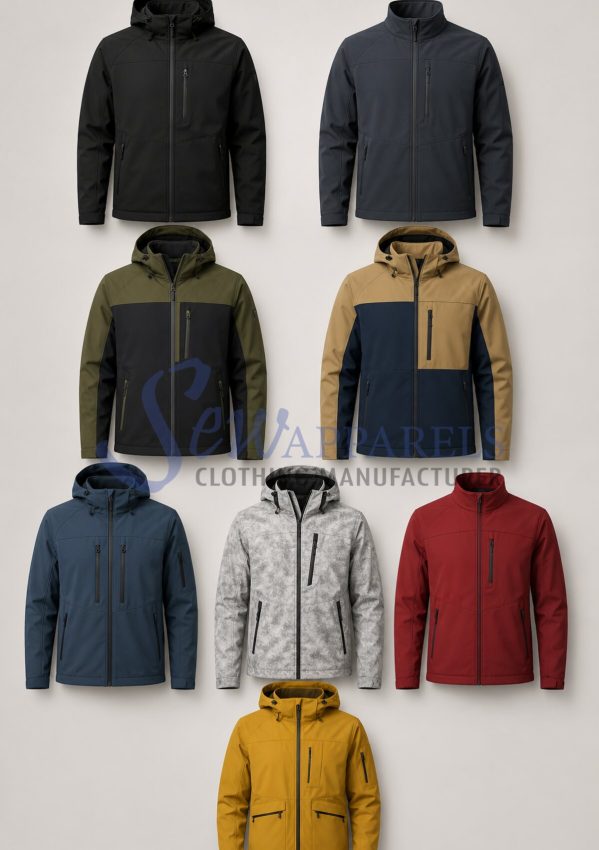
1. List claims in the softshell jacket weather claim evidence file
Write each intended statement separately. “Water repellent,” “water resistant,” “waterproof” and “breathable” should not be treated as interchangeable descriptions. Include the exact wording proposed for the product page, hangtag, packaging and buyer specification. A broad sentence may contain several claims, each requiring a different explanation of what was assessed.
Start softshell jacket rain performance wording with the intended wearer and conditions. Describe the exposure and activity the product is designed around without inventing a duration or performance level. A jacket for occasional light showers has a different brief from protective clothing intended for sustained exposure. Ask a qualified laboratory and destination-market adviser which requirements apply to the actual intended use.
Keep the softshell jacket weather claim evidence file tied to a style revision. Record the fabric construction, finish, backing, seams, closures and care route under discussion. These details identify the product behind the statement; the word “softshell” alone does not describe a fixed weather-performance class.
For softshell marketing claim signoff, assign responsibility for technical review and final wording approval. A supplier report, a buyer’s acceptance decision and a statement released to customers are different records. Retain the proposed sentence, evidence reference, reviewer, date and any limitations beside the final approved sentence.
2. Separate surface behavior from water penetration
Use softshell water repellency evidence to explain the behavior of the face under the recorded assessment. Water beading on a surface is an observation about that surface. It is not enough by itself to show that water will not pass through the material or enter through an assembled opening. Keep the test’s stated purpose visible alongside the result.
Define softshell DWR claim scope around the identified finish and assessed condition. If durable water repellency wording is proposed, ask what evidence supports the durability part and which care or exposure conditions were included. Do not imply indefinite performance merely because droplets bead on a new sample.
A softshell fabric versus garment weather claim comparison should name the specimen type. A flat material specimen, a seam assembly and a complete jacket answer different questions. Explain the tested scope accurately instead of changing “fabric result” into “jacket result” during copywriting.
The softshell jacket weather claim evidence review should also identify untested areas. If the report covers the main cloth only, list the front opening, pocket construction, shoulder seams, cuff arrangement and hem as garment questions for further review. An untested area is not necessarily a failure, but its performance has not been established by that fabric report.
3. Match reports and methods to the proposed wording
Agree softshell waterproof claim test scope with the responsible laboratory before commissioning work. Give the laboratory the draft claim, construction details and intended market rather than requesting a familiar test number without context. Confirm the current method, specimen requirements, reporting units, preparation and interpretation relevant to that decision.
For softshell breathability method selection, state which moisture-transfer question needs an answer. Different procedures and conditions can produce results that should not be compared as if they were interchangeable. Request an explanation of the method’s scope and limitations before using a number from one report to rank a material tested differently.
A softshell breathability report review should capture the method and edition, measured quantity, units, sample identity and conditions. Preserve the laboratory’s description instead of relabeling the result as a different performance measure. If the proposed wording implies wearer comfort, discuss what additional garment or use assessment is appropriate; a material number alone does not settle every comfort question.
Check softshell weather report identity carefully. Match material codes, finish, backing, colour or lot information where relevant, sample dates and style revision to the proposed production specification. Clarify any mismatch with the report issuer. A genuine report for another construction still does not establish the performance of the material being ordered.
A softshell jacket weather claim evidence file should include the complete report and its interpretation, not only a screenshot of a result. Keep qualifications, exclusions and specimen descriptions available to the person approving the statement. Ask about uncertainty or ambiguous results before making a stronger claim than the laboratory supports.
4. Review seams, zippers and the assembled jacket
Map possible softshell garment seam water entry locations on a drawing of the actual style. Include seam intersections, stitched attachments, pocket entrances and the main closure. Specify which areas will be reviewed, how the sample is prepared and what observations will be recorded. The map should distinguish construction details from assumptions about performance.
A softshell seam leakage assessment belongs to the identified assembly and assessment conditions. Record whether the sample uses the approved thread, needle, seam construction and any intended sealing process. If the construction changes after assessment, return that change for review instead of treating an earlier result as permanent approval.
Review softshell zipper water resistance limits against the exact component. YKK’s AquaGuard coil zipper information identifies that product as water resistant rather than waterproof or watertight. This is a useful example of why a component description must be read precisely. It does not establish that the same zipper is used in a particular Sew Apparels jacket or prove the assembled garment’s performance.
Bring the component instructions, installation and care restrictions into the garment brief. Consider how the closure joins the cloth and how the opening behaves when worn. An apparently protective zipper can still leave other garment questions unanswered. Approve the actual assembly through the agreed review rather than relying on the appearance of coated tape.
Keep the softshell jacket weather claim evidence record explicit about finished-garment scope. State what has been assessed and what remains outside the evidence. If only material and component data are available, avoid claiming that a complete rain-protection system has been demonstrated.
5. Record conditioning and care limitations
Define softshell rain test conditioning with the laboratory. Record specimen preparation and the exposure or conditioning used before measurement. Results without that context can encourage unsuitable comparisons. A new specimen and one assessed after an agreed care sequence represent different conditions, so keep those conditions beside the findings.
CottonWorks’ quality testing overview emphasizes proper sampling and conditioning as foundations of reliable testing and discusses assessment of textiles and garments. Its general principles help structure the evidence request; they are not a softshell weather test report or certification for the proposed jacket.
Make softshell after care claim review a separate approval item. Match the planned care instructions to the actual material and components, then ask which assessments need repeating after the specified care procedure. Do not use an unwashed result to imply a retained performance level after repeated care unless suitable evidence supports that wording.
Record the care procedure, assessment stage and sample reference. If results change, identify whether the statement needs qualification, the specification needs adjustment or further development is required. Keep the review focused on the product’s actual performance rather than selecting only the strongest isolated result.
6. Approve wording with a claim-to-evidence matrix
Build a simple matrix with six fields: proposed statement, tested item, report and method, conditions, limitations and approved wording. Add the reviewer and date to each row. This makes softshell waterproof wording evidence traceable and prevents a report attached to one claim from silently being used to support several unrelated statements.
For example, a row for surface repellency should identify the face material and assessment conditions. A row for penetration resistance should identify its own specimen and method. A breathability row should preserve its reporting basis. A garment row should record the assessed assembly and exposure. Leave unsupported wording unapproved until the relevant review is completed.
The softshell jacket weather claim evidence matrix should remain useful during reorders. Flag changes to the fabric finish, backing, supplier reference, seam process, zipper or care instructions. Ask the responsible reviewer whether existing evidence still applies. An unchanged style name does not guarantee that the tested construction remains unchanged.
Where the proposed wording depends on sealed seams, use the softshell seam sealing sourcing brief to identify the tape, material and assembly feasibility questions. A sourcing discussion establishes what needs investigation; it does not replace the report required to substantiate the final claim.
Buyer questions before release
Can a fabric rating be used as a jacket rating?
Only describe the scope the evidence supports. A material assessment does not automatically cover seams and openings in the finished garment. Keep the tested specimen clear and discuss any additional garment assessment before approving a broader statement.
Does a coated zipper make the jacket waterproof?
No component appearance can establish that conclusion. Read the exact supplier description and limitations, then assess the complete construction against an agreed brief. Avoid substituting a component feature for evidence about the assembled jacket.
What should a startup brand send first?
Send the intended use, market, draft claims, material and component references, care proposal and available reports. Identify missing evidence early so the testing discussion can focus on decisions that matter. Minimum quantities, testing availability and costs require confirmation for the enquiry.
Turn evidence questions into a development brief
For private label softshell jacket production, keep the draft wording, claim matrix and current specification together. Use the Softshell Jackets Buying Guides to organize related material and construction decisions. A complete softshell jacket weather claim evidence brief helps buyers discuss testing scope without overstating what has already been demonstrated.