
Work cargo shorts size mix costing should use the actual order distribution and the specification behind the quotation. A price based on an assumed middle-size assortment may not describe an order weighted towards different sizes. Buyers need to know which sizes, quantities, fabric inputs and cutting assumptions the supplier used. This guide explains six checks for creating a comparable quotation basis, reviewing consumption and recording an approved order scenario.
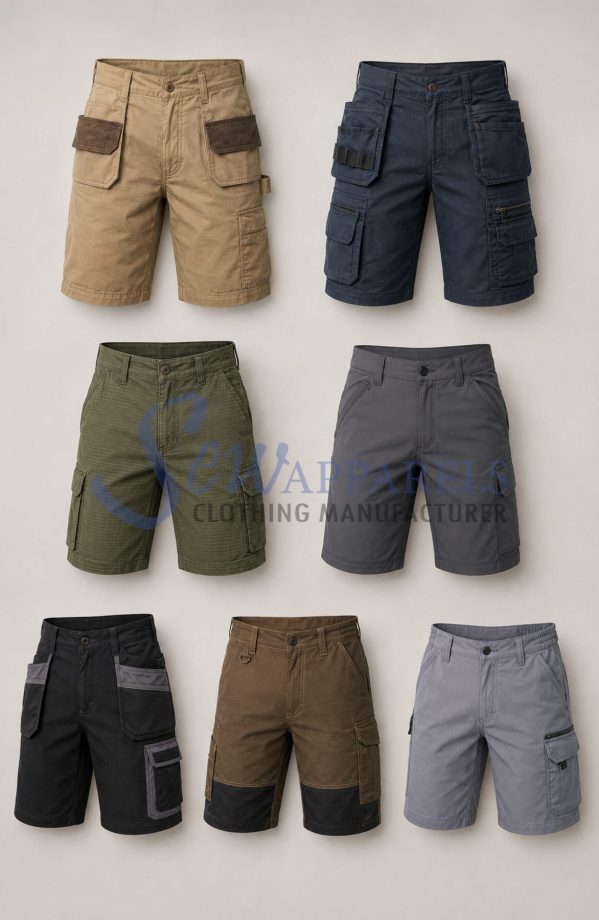
Work cargo shorts size mix costing is one input in the finished garment price. It should not be used to explain every cost difference without evidence. Fabric identity, usable width, construction, trims, order quantities and commercial terms also matter. This article supplies a purchasing review process, not a current Sew Apparels quotation, a guaranteed consumption rate or a universal surcharge for larger sizes.
1. Define work cargo shorts size mix costing quantities
Start with quantities by size and colour, then reconcile those quantities to the total order. A ratio is useful only when its relationship to actual pieces is clear. State whether the proposed ratio applies to the whole order or separately to each colour. Do not leave the supplier to infer the distribution from a total quantity alone.
Cargo work shorts size ratio costing should identify the size chart and pattern revision associated with the enquiry. A size label without its underlying measurement specification does not establish the same garment across suppliers. Keep the size references consistent in the technical pack, quotation request and comparison worksheet so the quoted assortment remains traceable.
Prepare a custom work cargo shorts manufacturing enquiry through the Work Cargo Shorts product page with those quantities and the proposed specification. Ask which assumptions are included in the response. Keep the requested distribution distinguishable from a provisional distribution used for estimating until both parties confirm the basis.
For example, a fictional order of one hundred pieces might contain twenty in size A, fifty in size B and thirty in size C. Its ratio is two to five to three. These figures illustrate arithmetic, not a recommended assortment or Sew Apparels minimum. The appropriate size allocation should reflect the buyer’s actual requirement and the approved size specification.
2. Keep material and width inputs consistent
A cargo short fabric cost input should identify the material, quoted purchase unit, price currency and relevant width basis. Distinguish nominal width from the usable width applied to the estimate. Ask the supplier to clarify the actual input rather than assuming that two fabrics with similar descriptions can use the same consumption estimate.
Work cargo shorts size mix costing should connect the cargo short quotation fabric width with the cutting estimate. Changes in usable width can affect how pattern pieces are arranged. Record the width assumption and any material constraints that the estimator used. A comparison that changes both size mix and fabric width cannot attribute the entire difference to size alone.
Lectra’s discussion of material estimation identifies cutting inputs such as width, shrinkage, motif repeats, rotation restrictions and size-mix constraints in its software workflow. That illustrates why the estimate needs defined inputs. It does not mean Sew Apparels uses that software or guarantees the savings described in the vendor’s product discussion.
Ask how directional materials, matching requirements or other relevant constraints were treated where they apply to the proposed fabric. Preserve the actual assumptions in the quotation record. Do not borrow an efficiency or waste percentage from another style and present it as the expected result for the cargo shorts being ordered.
3. Review the marker estimate and consumption basis
The work shorts marker size mix should correspond to the size allocation under review. Ask whether the estimate uses the actual graded pattern and proposed assortment or an earlier generic basis. Identify the estimator’s reference and revision. A provisional work shorts actual marker estimate should remain labelled provisional if the final pattern or material inputs are not confirmed.
For work cargo shorts size mix costing, a work cargo short fabric consumption quote should explain its unit and inclusions. Confirm whether the figure is expressed per garment, per marker or for the complete order. Establish whether stated allowances are included or separate. Avoid adding the same allowance again when converting an estimate into a purchasing requirement.
Cargo shorts quoted cutting assumptions should remain visible alongside the estimate. Record the pattern revision, width, assortment and relevant layout constraints. Ask what requires re-estimation if those inputs change. An estimate can support a particular quotation scenario without becoming a guarantee that every later order will consume the same material.
Work cargo shorts material requirement also needs to distinguish estimated use from procurement quantity. Ask the supplier how the proposed order requirement relates to the consumption figure and any confirmed purchasing constraints. Keep fabric procurement, cutting use and remaining material concepts separate so a buyer can follow the calculation without confusing them.
4. Normalise size scenarios before comparing prices
A work short size ratio normalization exercise expresses different assortments on a common basis, such as percentages or an equal total quantity. That helps reveal whether the quotations concern the same distribution. It does not make different technical specifications equivalent. Match the pattern, fabric and construction before drawing conclusions from the normalized size mix.
Work cargo shorts size mix costing can compare a fictional scenario X with twenty, fifty and thirty pieces across three sizes against scenario Y with ten, forty and fifty pieces. Both total one hundred, but the distributions differ. Ask the supplier to estimate each defined scenario under the same other assumptions. Do not invent the resulting consumption or price difference.
Cargo shorts large size order cost should be reviewed through the supplier’s actual basis. A different distribution can change the estimate, but this guide does not establish a fixed surcharge or a universal proportional increase. Pattern arrangement and the rest of the quotation inputs matter. Require an explanation tied to the proposed order rather than accepting a blanket claim.
Cargo shorts consumption comparison should record what changed and what stayed constant. If a supplier proposes a revised fabric, different usable width or altered pocket construction at the same time, identify those changes separately. A mixed comparison may still support a purchasing choice, but it cannot isolate the effect of size distribution alone.
5. Separate material effects from the full quotation
A cargo shorts size split price basis can be an agreed blended price or another clearly specified arrangement. Ask how the supplier presents its actual quotation and which assortment it covers. If individual size prices are supplied, calculate the order total using the quantities for each size. If a blended price is supplied, preserve the distribution on which it depends.
Work cargo shorts size mix costing should not conceal other construction inputs. Cargo pockets, reinforcement details, closures, labels and packaging belong in the specification and quotation scope. Confirm the proposed construction before attributing a price difference to the size mix. Two quotations for visibly similar shorts may still include different materials or operations.
Coats’ garment costing guidance explains that sewing thread consumption depends on factors including stitch and seam type, material thickness, layers and stitch density. That supports reviewing the actual construction alongside fabric estimates. It does not provide a complete cargo shorts price or prove that a single size-ratio change explains every sewing-cost difference.
When discussing private label work cargo shorts production, include requested branding, label content and packing details within the same quotation scope. Keep optional items separate from the confirmed base specification. A brand requirement added after comparison may change the agreed price basis, even when the size allocation remains unchanged.
6. Preserve the approved quotation worksheet
For work cargo shorts size mix costing, the work cargo shorts quotation worksheet should connect the order distribution, pattern reference, material inputs, consumption basis and commercial quotation. Record the quotation date, revision and validity terms supplied by the vendor. Identify unresolved assumptions and their owners. A worksheet should reveal gaps rather than turn an unconfirmed input into an apparently final number.
Work cargo shorts size mix costing should be reviewed again when the buyer changes the allocation. Ask whether the confirmed price still applies and what requires a revised estimate. Do not assume that approval of one cargo short bulk size scenario covers every later distribution. Preserve the accepted scenario in the purchase order and relevant production documentation.
Cargo shorts order mix analysis can help compare the original estimate with the final order requirement. Record any differences and ask the supplier to explain their effect before approval. Keep changes to specification, quantity, fabric and assortment distinguishable. That makes the review more useful than a single column showing an unexplained increase or decrease.
The existing Work Cargo Shorts Buying Guides connects costing preparation with related fit and construction decisions. Use those topics when preparing the technical pack, while keeping the actual quotation and approved specification authoritative. A guide provides context; it does not establish the supplier’s price for the order.
Questions buyers should answer before approval
Can two quotations be compared using total quantity alone?
Not reliably when their size distributions or specifications differ. Confirm the quantities by size and colour, the pattern reference and relevant material inputs. Identify differences before treating the prices as comparable.
Does a larger-size assortment always require a fixed surcharge?
No universal surcharge is established here. Ask the supplier to explain the actual estimate and price basis for the proposed distribution. Keep layout, width and construction assumptions visible in that review.
What completes work cargo shorts size mix costing?
An agreed size allocation, traceable specification, defined consumption basis and confirmed quotation terms complete the review. Resolve assumptions before ordering and obtain a fresh relevance check when the assortment or other costing inputs change.
Confirm the intended use of each pocket before fixing the construction basis. The work cargo shorts loaded pocket comfort review helps prepare that specification. A change to pocket dimensions, reinforcement or positioning should be recorded separately from a change to the size distribution, so the revised quotation remains explainable.