
Work cargo shorts dark fabric colour transfer deserves a separate approval check when a uniform will contact pale seating, light garments or equipment straps. A dark shade can look correct and still need evidence about rubbing and staining. Buyers should distinguish an attractive colour sample from a documented assessment of the actual material, colourway and care state being supplied.
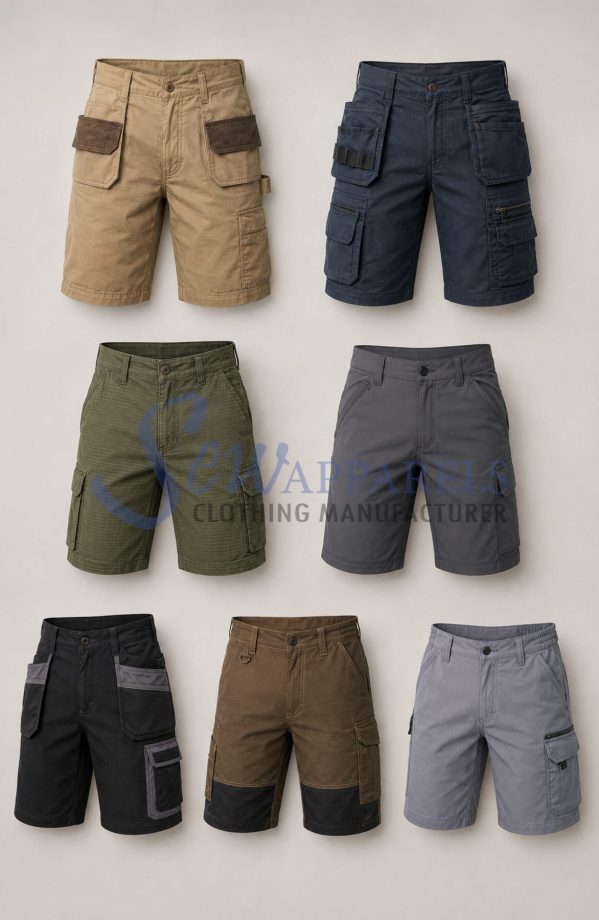
This guide explains how to build a practical evidence file for purchasing decisions. It covers sample identity, dry and wet rubbing reports, contact observations, lot coverage and approval wording. It does not claim that any Sew Apparels material has passed a specific test. Results, acceptance criteria and production coverage must be confirmed for the relevant order.
Work Cargo Shorts Dark Fabric Colour Transfer: 6 Easy Checks
The six checks below turn a general concern about staining into questions a supplier and laboratory can answer. Start with the intended contact surfaces, identify the tested shade and separate controlled laboratory results from observations made during a garment trial. Keep unresolved items visible rather than treating a missing report as proof of satisfactory performance.
1. Identify the fabric, shade and delivery scope
Record the fabric article, fibre description, construction, finish, shade reference and sample source. Include the production or sample lot where available. A report for another navy fabric is not automatically evidence for the selected black fabric. Even visually similar materials may have different dyeing, finishing or handling histories.
A work cargo shorts dark shade lot test should be connected to an identifiable submitted specimen. Ask whether it represents development material, an approved bulk lot or an earlier production run. Keep the connection between the sample, report and proposed shipment clear. If it cannot be established, mark that coverage as unresolved.
2. Separate dry and wet rubbing results
For work cargo shorts dark fabric colour transfer, review the conditions assessed rather than relying on a single phrase such as “colourfast.” Dry and wet rubbing evidence answer distinct questions. Record which conditions were evaluated, the method and edition stated on the report, the reported assessment and any relevant remarks or deviations.
The public abstract for ISO 105-X12 colour fastness to rubbing describes assessment of colour rubbing off and staining other materials, including separate dry and wet rubbing tests. This is a method reference, not an automatic pass criterion for an order. The laboratory should confirm the appropriate procedure and the buyer should agree the acceptance requirement.
Cargo work shorts wet rubbing evidence should not be replaced by a washing result. Likewise, a work cargo shorts dry rubbing evidence review should not imply the same outcome under wet contact. Preserve the condition labels when transferring results into a purchase comparison sheet.
3. Check whether reports can be compared
Two numbers are useful together only when their basis is understood. Compare method identity, specimen identity, preparation, care state and reporting conditions. Request clarification of missing information instead of assuming two reports are equivalent. A result copied into an email without the surrounding report can lose qualifications that matter to approval.
In work cargo shorts dark fabric colour transfer reviews, avoid inventing a universal grade that every customer must accept. The intended use and customer specification determine the requirement. A report can support a defined decision while leaving other exposures unassessed. Describe those limits in the approval record.
AATCC guidance on understanding test methods stresses careful attention to the method and its conditions. Its explanation of crocking concerns colour transferred to a white test cloth under controlled conditions. A work cargo shorts colourfastness report should identify the particular property tested. A supplier statement without a stated method and identifiable specimen should therefore be treated as a question to resolve, rather than interchangeable laboratory evidence.
4. Map real contact surfaces
Dark work shorts seat staining is a practical concern when wearers use pale upholstered seats. Also list light shirts, tucked layers, belts, harness contact and storage surfaces where relevant. For each contact, describe the surface and expected exposure without presenting an informal observation as a standardized test.
Work cargo shorts light seat contact stains may be investigated through a documented trial using an agreed representative surface. Record the sample, surface material, condition, activity and observation. A clean trial on one surface does not guarantee all upholstery will remain unaffected. Keep the trial narrow enough that another reviewer can understand what actually happened.
5. Preserve care and condition information
Work cargo shorts dark fabric colour transfer can be discussed accurately only when the sample condition is known. State whether material was new, washed or otherwise prepared, and record the actual preparation used. Do not prescribe repeated washing as a guaranteed remedy or substitute it for missing evidence.
Work cargo shorts dark shorts care state belongs beside the result. Comparing an untreated development specimen with a repeatedly laundered garment can obscure the reason for a difference. Ask the laboratory and supplier whether further assessment is appropriate for the intended care route. Keep the final care instructions consistent with confirmed product information.
6. Define the approval and its limits
Cargo shorts dye transfer approval should name the approved fabric, colourway, evidence references and acceptance requirement. State whether the decision covers a sample, a named lot or a broader arrangement supported by confirmed controls. Avoid expanding a limited report into an unrestricted claim about every dark garment.
For work cargo shorts dark fabric colour transfer, changes to material, shade, finish or processing should trigger a review of existing evidence. That does not mean every change has the same risk or requires the same response. It means the responsible parties should decide whether the current approval remains applicable and document the decision.
Build a Work Cargo Shorts Dark Fabric Colour Transfer Comparison Sheet
A work cargo shorts dye transfer comparison sheet should keep identity and evidence in separate fields. Begin with the fabric and shade reference, sample identifier and report reference. Add dry and wet conditions, care preparation, results as reported, buyer requirement and unresolved questions. Finish with the decision owner and approval date.
Work cargo shorts wet fabric rubbing comparison needs matched conditions or a clear explanation of differences. Do not rank suppliers solely by a reported result if one specimen was prepared differently or assessed using another method. Mark the records as not directly comparable until the relevant differences are understood.
- Identity: fabric article, shade, specimen and available lot reference.
- Evidence: report, stated method, conditions and preparation.
- Use context: likely contact materials and any documented trial.
- Decision: agreed requirement, coverage, open questions and review trigger.
These fields make work cargo shorts dark fabric colour transfer easier to manage across development and purchasing teams. They also prevent a colour approval swatch from being mistaken for a staining assessment. Keep report attachments accessible to the people making the decision rather than relying only on a condensed spreadsheet entry.
Account for Colourways, Layers and Contact Materials
Work cargo shorts colourway report coverage should be explicit. If an assortment includes black, navy and charcoal, list the evidence available for each shade. Do not quietly extend one report to the other colours. Ask what supports any proposed grouping and document the supplier or laboratory explanation.
Work cargo shorts garment layer rubbing contact may involve a light shirt or another garment worn underneath. Review the actual combination where it matters to the intended use. A fabric report and a garment trial provide different kinds of information; neither should be described as covering every possible layer arrangement.
Work cargo shorts upholstery colour transfer observation should identify the upholstery used. Work cargo shorts contact surface compatibility is broader than a single photograph of a clean seat. Record the boundaries of the observation and avoid promising that all vehicle or office seats will behave identically.
Use an Evidence-Based Supplier Brief
When discussing work cargo shorts manufacturing requirements, include the intended dark shades, contact concerns and evidence requests in the development brief. For custom work cargo shorts manufacturing, a precise brief helps separate colour appearance approval from performance information that still needs confirmation.
Private label work cargo shorts production should use the same approved identifiers in purchase documentation, samples and evidence records. Ask the supplier to flag substitutions or changes that affect the basis of approval. Confirm actual testing arrangements, costs and responsibilities before treating them as included in the quotation.
Work cargo shorts fabric colour approval limits should be written in practical terms: which shade and material are accepted, which evidence supports the decision and what remains open. Avoid statements such as “will never stain” when the evidence describes limited test conditions. A useful brief supports a purchasing decision without creating an unsupported guarantee.
Example: Two Dark Shades with Different Evidence
Consider a fictional assortment with shades A and B. Shade A has an identifiable dry and wet rubbing report for the submitted sample. Shade B has a visual colour approval but no corresponding report. The correct record shows different evidence coverage, even if both shades look acceptable to the buyer.
For work cargo shorts dark fabric colour transfer, the next step is to request the missing information for B and confirm the scope of A. This example supplies no actual grade, laboratory result or Sew Apparels approval. It illustrates why appearance, evidence and purchasing authorization should remain separate fields.
Questions Before Order Approval
Does a wash result settle rubbing concerns?
No. Ask for evidence relevant to the exposure being reviewed. Keep the stated test scope visible and do not relabel a laundering assessment as a dry or wet rubbing result.
Can a report cover every dark colour?
Only use coverage supported by identifiable evidence and a documented rationale. Similar appearance alone is insufficient to extend an approval to another colourway or material.
What should be recorded after a contact trial?
Record the sample, contact surface, preparation, activity and observation. State its limits, retain the relevant report and identify any unresolved question that affects purchasing approval.
Keep the Decision Connected to Development
Use the Work Cargo Shorts Buying Guides to connect this evidence review with fit, pocket and quotation decisions. Work cargo shorts dark fabric colour transfer should be resolved through identifiable samples, relevant reports and carefully scoped approval wording. Confirm open requirements before authorizing the order and review the evidence when the approved material changes.
If the accepted shade or fabric changes during price review, carry the revised identifiers into the work cargo shorts size mix costing worksheet. Keep the costing approval and colour-transfer evidence linked to the same material revision; a lower price does not resolve an outstanding staining question.