
Work cargo shorts exposed metal review starts with a simple purchasing question: which hard parts can contact the wearer’s surroundings during the intended task? A garment may include rivets, buttons, pocket fasteners or zipper parts that are unobtrusive while standing but accessible when sitting, bending or carrying equipment. Buyers need a component map and a clear site brief before approving those details.
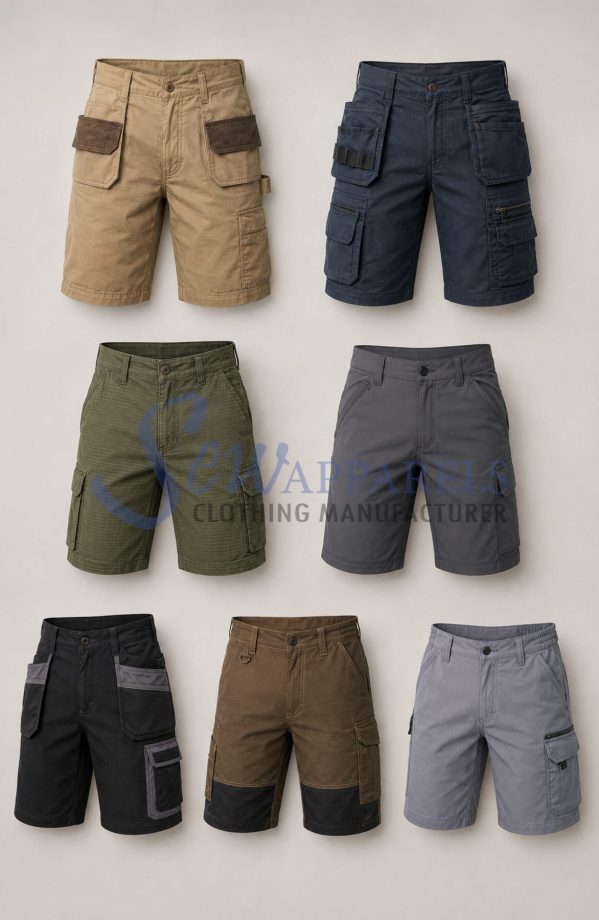
This guide explains how to review trim exposure, material information, covered fastening options and controlled sample observations. It does not certify a garment as safe for a particular workplace or claim that Sew Apparels shorts are metal free. The employer or responsible site team must confirm clothing suitability and any restrictions relevant to the actual work.
Work Cargo Shorts Exposed Metal Review: 6 Easy Checks
Use these six checks during development rather than after an order has been placed. Start with the site requirement, identify every relevant component, observe the garment in realistic positions and agree the approval limits. A clean appearance photograph is helpful for design discussion, but it cannot establish all material identities or workplace suitability.
1. Obtain the actual site requirement
Work shorts employer trim restrictions should be requested in writing. Ask whether the concern is contact with finished products, scratching a surface, loose components, snagging or another defined issue. These are different questions. Do not convert a restriction on exposed hardware into a claim that all metal is prohibited, or assume a metal-free instruction means only visible parts.
A cargo shorts site specification should name the relevant work area and the decision owner. Confirm that shorts themselves are acceptable for the task before discussing trim. If protective clothing is required, an ordinary uniform development review cannot replace that selection process or the evidence appropriate to it.
For work cargo shorts exposed metal review, treat HSE workplace risk assessment guidance as a useful process reference. It describes identifying hazards, assessing them, controlling them, recording findings and reviewing controls. HSE guidance applies to Great Britain; buyers elsewhere should use the requirements applicable to their location. It does not approve a particular shorts design.
2. Map hard components and their positions
A work shorts hard component map should list the waistband closure, fly, pocket corners, pocket openings, cargo pocket fasteners and any decorative parts. Include the inside and outside of the garment where relevant. Assign a clear location reference so a sample comment can be connected to the same component in the specification.
Cargo work shorts exposed rivets may be located at pocket corners or reinforcement points. Record where the heads and backing parts sit, whether fabric separates them from a contact surface and how that exposure changes in use. Avoid assuming that a small or colour-matched rivet is irrelevant to a site restriction.
Work cargo shorts exposed zip parts should be reviewed individually. A covered fly does not automatically conceal every slider, puller or other component in every position. Check the intended closed state and any pocket zip configuration without dismantling a garment or performing unsafe activities.
3. Confirm component identity separately from appearance
In work cargo shorts exposed metal review, ask for the actual trim description and available supplier documentation. Cargo shorts rivet material identity should not be inferred solely from colour, weight or a casual visual inspection. A finish can obscure the underlying material, and one component assembly can contain different materials.
Define the question precisely. “No exposed metal on the outside” is different from “no metal components anywhere.” If the site asks for the latter, the bill of materials and confirmation process must address concealed parts as well. Do not apply a metal-free label simply because the visible rivets have been removed.
YKK’s explanation of zipper structure distinguishes the elements, slider and tape and explains why component shape and dimensions matter to operation. This supports reviewing a zipper as an assembly rather than identifying it by one visible part. It does not establish the material composition of an unspecified zipper or confirm that a Sew Apparels garment uses YKK components.
4. Observe contact during relevant movements
Work cargo shorts metal surface contact should be assessed in positions that reflect the intended use. These might include sitting against a representative seat, reaching beside a bench or using pockets while wearing the normal approved equipment. The site team should decide which observations are appropriate and safe.
For work cargo shorts exposed metal review, record the sample size, fit, pocket loading and movement observed. Exposure can change when a garment is worn differently from the development mannequin. A component that sits away from a surface in one position may approach it in another. Document what was seen without extrapolating to every wearer or activity.
Cargo shorts trim scratch observations should identify the contact surface and the conditions. A mark observed during a trial needs investigation; a clean observation only describes that trial. Do not call an informal contact check a standardized scratch test or a guarantee that all painted, polished or upholstered surfaces will remain unaffected.
5. Review covers and alternatives as a complete design
A cargo shorts covered fastener review should check whether the cover remains in place during normal movement and access. Inspect the intended seam arrangement, overlap and fastening operation. Do not treat a cover shown on a flat garment as proof that it will conceal the component in every use position.
Cargo shorts metal trim alternatives may include a different fastening system, a revised pocket arrangement or removal of a decorative part. Each option should be reviewed against the functional requirement and the site specification. Changing a component can affect closure operation, appearance, care or reinforcement, so the alternative needs its own sample approval.
Work cargo shorts exposed metal review should also distinguish material substitution from exposure reduction. A non-metal hard part may still contact a finished surface or conflict with another restriction. Select an alternative because it answers the defined requirement, not because its material name is assumed to solve every concern.
6. Record approval and review triggers
Work shorts trim contact approval should reference the sample version, component list, observations and agreed site requirement. State who has accepted the design and what remains unresolved. If there is no confirmed material identity or the relevant exposure has not been reviewed, keep that issue open rather than quietly deleting it from the brief.
For work cargo shorts exposed metal review, identify changes that require the decision to be revisited. These may include a new trim supplier, a different component shape, a revised cover or a new work area. Agree the response with the responsible people; do not assume every change is equivalent or that a previous approval transfers automatically.
Prepare a Work Cargo Shorts Exposed Metal Review Brief
A work cargo shorts surface contact brief connects the clothing specification to the objects and activities that matter. Describe the representative surfaces, the tasks and the components being considered. Separate cosmetic concerns about a finished product from risks to people and from any site rule about clothing materials.
Cargo work shorts painted surface risk should be discussed with the site team using identifiable examples. “Painted surface” is a broad description, not a uniform material specification. Record the surface used for a sample observation and preserve its limitations. Avoid conducting a trial on a valuable finished item without an agreed approach.
- Garment: style, revision, size, fit and component locations.
- Requirement: the actual restriction and the responsible reviewer.
- Contact: surface identity, garment position and relevant movement.
- Evidence: supplier information, sample observations and outstanding questions.
- Decision: accepted configuration, limits and change review triggers.
These fields make work cargo shorts exposed metal review easier to hand over between purchasing, development and site teams. A short comment such as “use safe rivets” is not enough to specify a component or approve its exposure. Replace ambiguous wording with an identifiable design and a documented decision.
Plan a Controlled Sample Observation
A cargo short sample contact trial should have a clear purpose and an agreed method of observation. Use a representative sample and a suitable surface selected by the responsible team. Record the starting condition, normal approved activity and resulting observation. Stop if the activity introduces an unnecessary risk or threatens equipment.
Do not simulate hazardous work simply to evaluate a trim. Keep the activity within the site’s existing safe procedures. If the concern needs a formal test or specialist assessment, ask the appropriate provider to define it. A garment development trial cannot authorize a task or establish compliance with every workplace requirement.
Cargo shorts hard trim inspection should also check the sample against the approved component list. Record missing covers, unexpected substitutions, visibly damaged parts or attachment issues for investigation. Agree the inspection criteria and responsibilities before bulk production rather than inventing acceptance rules after delivery.
Connect the Review to the Manufacturing Brief
Include the approved trim configuration when discussing work cargo shorts manufacturing requirements. For custom work cargo shorts manufacturing, send the actual site restriction with the component map and sample comments. Ask the supplier to confirm feasibility and any effect on development or quotation scope.
Private label work cargo shorts production should keep the approved component references consistent across the bill of materials, sample and purchase specification. Confirm actual documentation, testing arrangements and responsibilities where required. This guide does not promise a specific material, certification, minimum quantity or performance outcome for an unspecified order.
Example: Covered Rivet Versus Revised Pocket
Consider a fictional sample A with an exposed pocket rivet and sample B with a revised reinforcement arrangement. The buyer records the site concern, checks the component information and observes the relevant contact positions. Neither design is approved simply because one has fewer visible parts.
Work cargo shorts exposed metal review then identifies the remaining questions: does the configuration meet the written restriction, does the pocket still function as intended and has the responsible reviewer accepted the sample? This example describes a decision process, not a Sew Apparels test result or a universal recommendation to remove rivets.
Before Final Sample Approval
Confirm that the actual site requirement, complete component map and relevant material information are attached. Review the observation limits, proposed alternatives and any unresolved item. Keep the accepted sample version identifiable so the production specification cannot drift into an unreviewed trim arrangement.
Use the Work Cargo Shorts Buying Guides alongside fit, pocket and fabric decisions. The useful outcome is a clearly scoped trim configuration supported by the evidence requested for its intended use. Review it again when the garment or workplace requirement changes.
Keep pocket use in the same development brief. The work cargo shorts loaded pocket comfort review helps identify the intended carried items and garment positions. A replacement fastener should preserve the required access and function as well as meeting the confirmed trim restriction.