
SEW APPARELS · WORKWEAR DEVELOPMENT
Work Vests Buying Guides
These work vests buying guides help purchasing teams turn a vest concept into a practical carrying system. Start with the wearer’s job, the tools handled each hour, the work posture and any other equipment worn over the shoulders or chest. A pocket layout that looks balanced on a flat sketch may pull to one side once loaded. Before requesting a sample, make a tool inventory with approximate item dimensions, loaded weight and frequency of access. Identify which items should remain on the vest and which should be carried in a separate toolbox. Record the intended fabric, season, fit range and care routine so pocket decisions are reviewed on the actual garment rather than a generic display sample.
Use this guide index to coordinate utility pockets, armhole layering, mesh versus solid back construction, detachable identification panels, lining wash compatibility and replacement zipper specifications. Each card leads to a separate, focused buyer checklist. Keep a common sample reference across those decisions so a change to the lining or closure does not disappear from the approved fit record. Retain the tool inventory, loaded photographs, intended layers and care route with the current technical pack. Choose the relevant article when a specific question arises; a supporting phrase does not require another guide page.
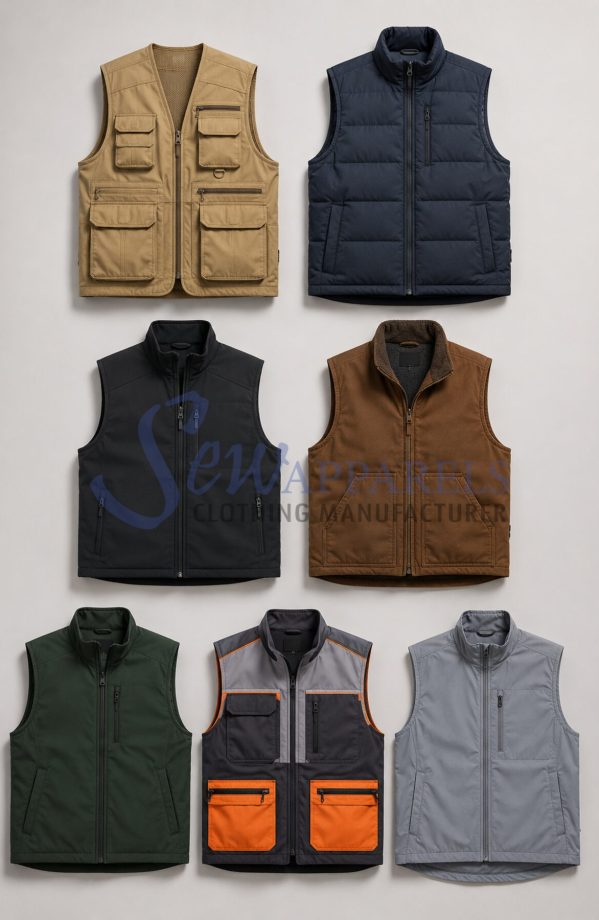
1. Plan utility pockets around the real tool set
Compare tool organisation, left-to-right load, chest clearance, pocket opening and reinforced attachment on a loaded sample. The detailed checklist turns these observations into measurements, wearer trials and a buyer approval table.
Read the utility-pocket layout checklist2. Specify armhole room for real work layers
Check work vests armhole layering allowance with the actual shirt or jacket, then coordinate shoulder width, side seam ease and front length in a loaded movement trial. The article includes seven fit checks and a buyer decision table.
Read the armhole layering checklistMesh Versus Solid Back Work Vests: Fit, Care and Evidence
Compare identified back fabrics on loaded samples. Review airflow claims, suitable snag evidence, care response and intended layers before choosing a construction.
Compare work vest back optionsWork Vest Detachable Identification Panel: Attachment, Care and Replacement
Specify the role display, mounting area and replacement part. Review loaded placement, handling, care instructions and artwork versions before releasing the sample.
Review detachable identification panelsWork Vest Lining Wash Compatibility: Shell, Care and Distortion
Record shell and lining references, choose the intended care route and compare dimensional change. Review the assembled vest for pulling, hem roll and loaded fit before release.
Review lining wash compatibilityWork Vest Replacement Zipper Specification: Identity, Repair and Approval
Identify the original closure and repair scope. Confirm component compatibility, mounting access, loaded operation and care evidence before releasing a replacement.
Review replacement zipper specificationsHow to Use These Work Vests Buying Guides
Begin with a short description of the role: electrician, installation technician, maintenance worker or another defined user. List each item expected on the vest, including its length, thickness, weight and access frequency. Mark a preferred location on the front and side panels, then check whether the wearer can reach it with gloves or while bending. These work vests buying guides are meant to support that development discussion, not prescribe one universal pocket map. Different tasks may need different arrangements, and an attractive symmetrical layout does not prove that the load will feel balanced.
Take front, side and inside photographs of the first loaded sample. Ask several representative wearers to stand, walk, crouch and reach, then note where the vest shifts, presses or obstructs movement. Measure opening width and usable pocket depth after the sample is worn, not only while it is flat. Keep the trial tools and fit layers consistent between revisions. A change in contents can make a pocket adjustment appear successful even when the construction itself has not improved.
Organise Tools by Access and Retention
Frequent-use tools should be reachable without repeated twisting or lifting the elbow into an awkward position. Group slim items where they cannot tangle with larger items and keep sharp edges away from the body. Decide whether a tool needs an open slot, flap, zip or other retention method based on the movement and drop risk of the actual job. OSHA advises reducing a carried tool set to what is needed for the task and distributing weight evenly in tool bags; the same reasoning is useful when reviewing a loaded work vest, although OSHA does not certify a particular vest design.
The buyer should approve a pocket map with numbered positions rather than a vague instruction such as “add more storage.” For each position, state the intended item, pocket opening, depth, closure, reinforcement and whether the wearer is left- or right-handed. Review access while standing and crouching. Separate genuinely necessary vest storage from tools better placed in a mobile box. A pocket that is empty in a showroom photograph can become uncomfortable once the team carries its real equipment for a full shift.
Balance Weight and Protect Chest Clearance
Pocket weight distribution affects how a work vest hangs and how its shoulder area feels. Weigh the normal tool set and note where each item sits. Move heavy pieces closer to the body where practical, compare left and right load, and check whether the front panels swing or twist during walking. This is a fit and task-specific trial rather than a claim that a certain pocket position prevents injury. Ask the wearer whether pressure develops at the shoulder, neck, waist or chest, especially when a jacket or safety equipment is also worn.
Chest clearance needs its own check. A high pocket or rigid tool can interfere with arm movement, a seatbelt, a harness or another job-specific item. Test the vest with the actual companion equipment before approving the pocket location. Lower positions can also clash with a belt or contact surrounding surfaces. Include the detachable identification panel in this review: record its position, attachment and whether it obscures access or catches during handling. These work vests buying guides encourage an annotated sample photograph showing the reach envelope, clearance zone and loaded silhouette for each approved size. Any protective-equipment compatibility decision needs the responsible specialist’s review.
Test Pocket Construction and Care Performance
Inspect pocket-bag fabric, opening shape, seam allowance, corner reinforcement and the way each pocket attaches to the shell. A large tool can stress the opening and bottom corners even when the shell fabric looks robust. Coats explains that seam type depends on position and end use; the actual vest should therefore be sampled and inspected instead of selecting a seam name alone. Check for loose threads, distorted corners, puckering and discomfort on the inside. Record stitch and thread details in the technical pack so later production follows the approved sample.
Run the agreed laundering checks with the vest prepared as specified for that care route, then perform the wearer review with the intended pocket load. Compare before-and-after dimensions, closure operation, pocket angle and panel alignment. Review shell and lining together for pulling or distortion; a stable material on its own does not establish compatibility in the assembled vest. For a replacement zipper, identify the original component, mounting access and required operating behaviour before reviewing a repaired sample. Keep the signed reference, tool map and inspection photographs. If the buyer changes fabric, back construction, lining or closure, repeat the relevant checks rather than assuming earlier approval transfers automatically.
Low MOQ Work Vests Manufacturer Planning
A brand seeking a low MOQ work vests manufacturer should reduce unnecessary complexity in its first specification. Choose a focused tool set, one pocket layout and a manageable material and colour range before requesting a quotation. Include the selected mesh or solid back, lining, identification panel and zipper in the brief so their sourcing requirements are visible. Confirm the minimum quantity, material availability, development charges and production schedule for that exact configuration. These work vests buying guides help a smaller programme retain a clear approval standard. A sample estimate does not guarantee production terms, and a minimum for one material or trim does not automatically apply to every alternative.
Development Support for Startup Workwear Brands
Startup workwear brands can use a single wearer trial to prioritise the features that matter most before expanding a range. Bring reference samples, a tool list, target users, size range, branding position and budget to the development discussion. The first prototype should answer the biggest fit, access and load questions; decorative options can follow after the functional layout works. These work vests buying guides are designed to keep that decision record readable. Confirm sampling scope, revision charges, trim availability and final order terms in the quotation, then retain the approved vest and photographs for repeat production.
Turn your work vest decisions into a product brief
Combine the tool inventory, pocket map, layered fit measurements and wearer observations in one product brief. Add the selected back construction, identification-panel reference, shell and lining evidence, closure specification and care-review findings. State which sample version is accepted and identify any unresolved question before arranging bulk release. The work vests buying guides connect those decisions through focused articles while keeping the manufacturing enquiry separate. For custom work vest manufacturing or private label work vest production, confirm material feasibility, sampling scope, quantities and commercial terms for the proposed programme. Retain the approved reference so repeat orders can be reviewed against documented product facts.
Explore work vest manufacturing