
A repeat order can use the same colour name and still look different beside the retailer’s earlier stock. Fitted cap replacement shade consistency depends on protected physical references, traceable dye and finishing records, controlled viewing conditions and a buyer-approved decision rule.
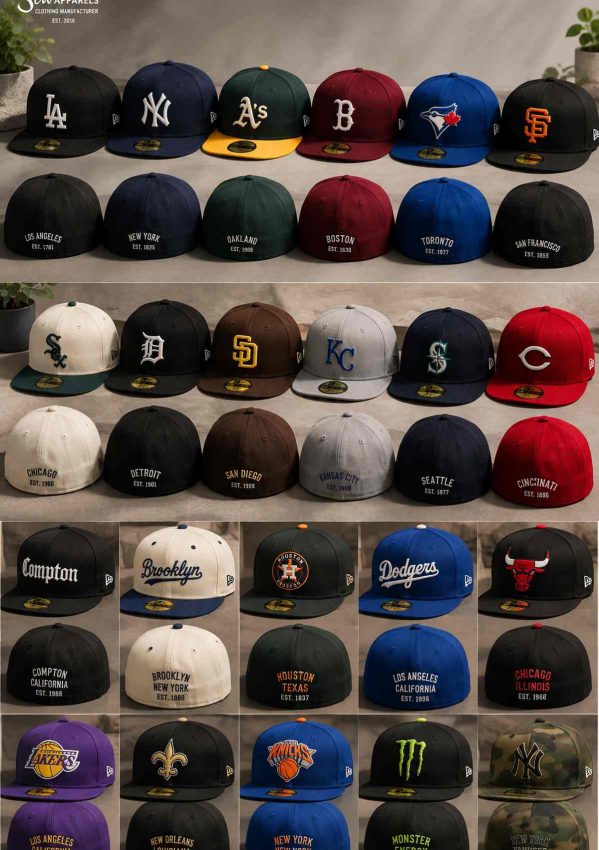
Old photographs cannot serve as the only standard because camera settings, screens, lighting and file processing alter appearance. The objective is controlled continuity, not a promise that every production lot will be visually identical under every condition.
Fitted Cap Replacement Shade Consistency: 7 Critical Checks
1. Archive a Physical Cap and Component Swatches
Create a fitted cap repeat order color standard from approved production, not from an unapproved development sample. Record these details with the reference:
- Style, colorway and size.
- Fabric and trim identifiers.
- Production order and approval date.
- The responsible buyer or technician.
Protect one complete cap as the appearance reference and retain a fitted hat archived production swatch large enough for future visual or instrumental comparison. Swatches should represent crown fabric, visor material, under-brim, sweatband, closure or labels where their colour affects the finished presentation.
Use a fitted cap reorder protected master sample that is sealed or otherwise protected from light, dust, handling, humidity and accidental laundering. Store it flat or on a suitable form so construction distortion does not create misleading light and shadow differences.
Prepare fitted cap reorder component swatches with supplier reference, material batch, face direction and orientation clearly marked. Retain a separate, traceable reference for every visible component, including its position on the approved assembled cap.
The fitted cap replacement shade consistency register should show where each reference is stored, its condition, review date and any replacement history. A missing or visibly changed master must be escalated before colour approval starts.
2. Record Dye-Lot and Finishing Identifiers
Capture the original fabric supplier, article number, fibre composition, construction, colour code, dye-lot identifier and finishing route. When fabric is cut from several lots, record which lot was used for each approved sample or production quantity.
Maintain a fitted cap reorder repeat finishing record for washing, brushing, coating, heat setting, pressing, embroidery, bonding and other processes that can affect apparent shade. Name the process version and relevant approved conditions instead of writing “same as before.”
A fitted cap reorder repeat dye lot comparison should compare the proposed new lot with the protected original reference under defined conditions. Supplier lab data can support the review, but the buyer must still decide whether the complete material and finished cap meet the approved appearance.
Link crown, visor, thread and trim records because colour relationships may matter as much as an individual component. A small shift in each part can accumulate into an obvious mismatch on the assembled cap.
Do not assume the same dye recipe guarantees the same result. Fibre source, yarn, fabric structure, preparation, water, machinery and finishing can influence shade. Fitted cap replacement shade consistency therefore relies on retained evidence and new-lot approval.
3. Compare New Samples Against Protected References
Plan a fitted cap reorder lot comparison using the protected master, original component swatches and representative new-lot specimens. Compare material face to face, in the same direction, on a neutral background and under the agreed light sources.
ASTM D1729 states that standardised visual examination improves uniformity and colour-match accuracy and identifies trained observers and specified illumination as important. Review the current ASTM D1729 visual colour appraisal overview and confirm its applicability with qualified personnel before setting the method.
Complete the fitted cap original versus replacement shade review under at least the agreed primary light source and any retail-relevant secondary source. Record source type, observer, background, specimen orientation and result. A match under one light may separate under another.
A fitted cap reorder replacement batch shade review should include crown panels, visor, under-brim and visible trims both separately and on an assembled sample. Curved surfaces, nap direction and stitching can change perceived shade compared with a flat swatch.
AATCC lists current textile colour evaluation procedures including visual colour difference, instrumental colour measurement and grey-scale assessment. Use the AATCC standards and evaluation-procedure directory to identify relevant current documents, then obtain and apply the actual approved procedure rather than relying on a summary.
Photograph the comparison only as supporting evidence. Include a colour-neutral reference and viewing setup, but keep the physical decision and signed record authoritative. Fitted cap replacement shade consistency cannot be verified from email images alone.
4. Reject Faded Retail Stock as the Only Master
A cap retrieved from a store, display, customer return or staff sample may have changed through daylight, heat, dust, handling, perspiration or cleaning. A fitted cap reorder aged sample colour drift assessment should compare that cap with the protected archive before anyone treats it as the target.
Record the history of any retail sample: approximate age, display location, packaging, exposure, cleaning and condition. If history is unknown, label it as an observation sample rather than an approved master.
When the protected standard and retail stock differ, decide which appearance the replacement must support. New stock should normally trace to the approved master and version, but the buyer may need a documented transition plan if consumers will see old and new items side by side.
Do not average the appearance of several aged caps into a new colour target. That approach can move the specification away from the approved colour and create an uncontrolled cycle across future reorders.
If the original protected master is unavailable, reconstruct evidence from approved swatches, supplier records, measurement data, sealed retained goods and buyer approvals. State the limitation openly and obtain a new master approval before release.
5. Define Buyer Tolerance for Replacement Batches
Create a fitted cap reorder colour tolerance agreement before bulk material or finished caps are released. Define the reference, method, instruments or visual scales, light sources, sample preparation, number of observations, acceptance boundary and escalation process.
Set criteria appropriate to the material and intended retail presentation. Instrumental colour difference can support consistency, while trained visual review can identify texture, gloss, directionality or component relationships that a single number may not explain. Do not invent a universal numerical tolerance.
Assess fitted cap reorder substitute fabric shade risk whenever supplier, fibre, yarn, construction, dye class or finish changes. A close flat colour does not prove that the substitute will match after shaping, pressing, embroidery or retail lighting.
The fitted cap reorder repeat order appearance approval should cover overall shade, component coordination, surface character, logo thread relationship and side-by-side presentation with the protected master. Record conditional approvals and required corrections precisely.
For values near the agreed boundary, require a second qualified review and preserve both results. A buyer tolerance should support consistent decisions; it must not be widened after a failed lot simply to protect the schedule.
Fitted cap replacement shade consistency is achieved when the selected evidence supports the agreed retail appearance under the defined assessment conditions.
6. Release Reorders with Versioned Colour Evidence
Maintain a fitted cap reorder colourway version history with original approval, every reference replacement, material change, accepted lot, rejected lot, corrective action and effective order. Keep old versions available so teams can trace stock already in the market.
The fitted cap reorder replacement stock release pack should include the purchase order, material identifiers, finishing record, protected-master comparison, observer or instrument results, assembled-sample approval, approved quantity and release signatures.
Mark retained samples from the new order with the same version and lot identifiers. Protect them separately from the original master. Future teams can then compare a proposed order with both the authorised target and the most recent production evidence.
Control mixed inventory during transition. Warehouses and retailers should know which version is being shipped, whether versions may be displayed together and how customer service should explain an approved update. Unlabelled mixing can make a technically accepted difference look like a picking error.
Monitor claims, returns and retailer feedback after release. Investigate whether an issue comes from true shade variation, aged old stock, mixed colour versions, lighting or customer expectations. Link the evidence to the relevant batch before changing the master.
Final fitted cap replacement shade consistency review should confirm that physical references, records and the released stock all carry the same traceable colourway version.
7. Build the Fitted Cap Reorder Master Register
Use one controlled register with fields for style, colourway, material, approved cap, component swatches, storage location, dye lot, finishing version, light sources, method, tolerance, order, quantity, decision, approvers and retained sample. Attach file references rather than relying on scattered email chains.
Assign an owner and review frequency. Check that physical references are present and undamaged, records remain readable and current supplier identifiers still map to the approved material. Replace a deteriorating working copy from the protected master under documented control.
Before every reorder, compare the request with the register. If the intended colourway, fabric or finish differs, create a new development or version approval instead of quietly editing the old record.
Train sourcing, quality, product development and warehouse teams on the same evidence chain. Each function should understand which sample controls the decision, where it is stored and who can approve a deviation.
Low MOQ Fitted Cap Development
Low-MOQ reorders should still reserve protected reference material and record lot identifiers. In custom fitted cap manufacturing, confirm whether available fabric comes from the original lot or requires a new shade comparison before committing trims and decoration.
Confirm available materials, minimum quantities, sample charges, new-lot colour trials and development costs for the specific reorder before committing to a delivery date. A previous order does not guarantee that its original dye lot remains available.
Startup Brand Reorder Shade Brief
Startup brands can use a simple master register, sealed cap and component swatches from the first approved order. During private label fitted cap production, this low-cost evidence protects the colour identity as the collection grows and suppliers or materials change.
Keep the appearance comparison separate from changes to fitted cap visor-to-crown balance. Changing the panel shape, visor projection or fabric direction can alter shadows and perceived colour even when a flat swatch appears close. Approve both construction and shade on the assembled sample.
Connect Reorder Colour with Fitted Cap Development
Use the Fitted Cap Buying Guides to coordinate repeat-order decisions. Review the custom fitted cap manufacturing options and request a quote with your retained colour reference and reorder quantity because shape, surface direction and curved components affect how shade relationships appear on the finished cap.
A controlled register and protected evidence let buyers judge a replacement batch against the approved product rather than memory or old photographs. That discipline makes fitted cap replacement shade consistency traceable across orders without claiming perfect identity between manufacturing lots. Reconfirm fitted cap replacement shade consistency whenever the material, finish, supplier, reference condition or retail presentation changes.