
A golf-cap logo can look premium as a metal badge or distinctive as embroidery, but the cheaper option cannot be decided from appearance alone. Golf cap metal badge versus embroidery cost must compare equivalent artwork, setup, materials, attachment, sampling, care evidence and order quantity.
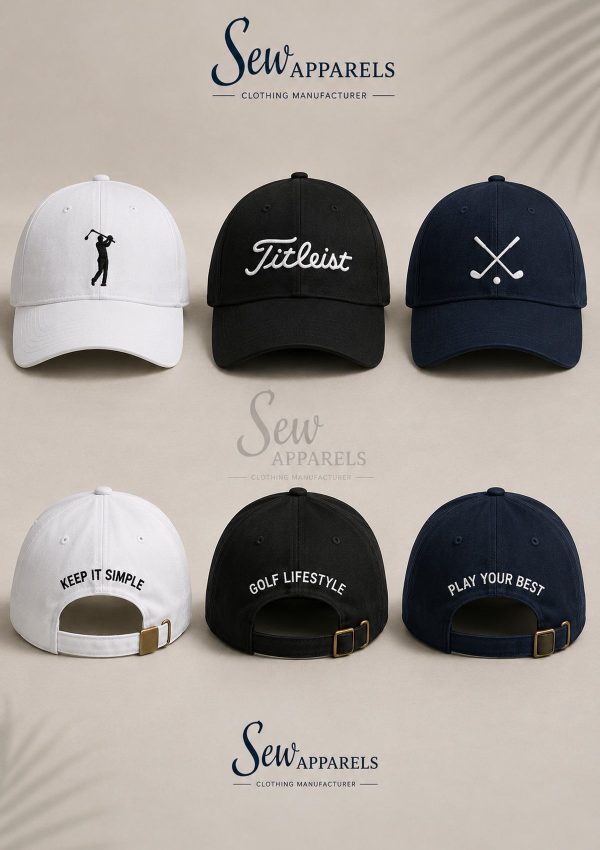
No method is assumed available or lower-priced for every factory, design or order. Buyers should request confirmed feasibility and itemised quotations for the actual cap, then record exclusions before choosing the decoration package.
Golf Cap Metal Badge Versus Embroidery Cost: 7 Critical Checks
1. Define the Same Artwork and Visible Target
Start with one approved logo source, intended finished dimensions, position, colours and viewing distance. A golf caps badge and embroidery scope should state which visual characteristics must remain equivalent and which differences are acceptable because metal and thread create different surfaces.
Prepare a golf cap logo material budget that identifies the cap fabric, backing, crown structure, logo area and target appearance. Metal finish, plating, enamel, relief, edge shape and attachment may influence one route; thread type, stitch density, underlay and digitising influence the other.
Check whether the buyer owns or is authorised to use the artwork. WIPO notes that using another party’s intellectual property without permission can create business risk and that access may require a licence or purchase. Review the current WIPO business guidance on obtaining and protecting IP, then confirm the relevant rights for the intended markets.
A fair golf cap metal badge versus embroidery cost comparison uses the same logo size and branding objective. Comparing a detailed dimensional badge with a simplified flat embroidery file can make price differences look more meaningful than they are.
Record unacceptable outcomes such as sharp edges, excessive shine, thread gaps, distorted lettering, heavy crown pull, blocked ventilation or poor contrast. These constraints belong in the request for quotation before suppliers calculate the package.
2. Separate Badge Tooling from Embroidery Setup
Ask suppliers to split one-time and repeatable costs. A golf cap badge tooling allocation should show mould, die, artwork conversion, plating or finishing development, physical proof and any ownership, storage or replacement terms for the tool.
For the stitch route, request a golf cap embroidery setup comparison covering digitising, test sew-out, artwork edits, thread colour matching, stabiliser selection and sample application. Confirm whether digitising is charged once, per size, per placement or again after a material change.
Do not spread setup cost across an optimistic future volume. Model the current purchase order first, then show an alternative only where the supplier confirms that tooling or digitising can be reused.
Ask who owns the badge tool, embroidery file and approved production data after payment. If a buyer cannot transfer or reuse them, the apparent setup investment may not reduce the cost of a future supplier change.
The golf caps metal badge embroidery quote should state currency, validity, taxes or duties where relevant, quantity basis, colour variants, size variants, sample stages and payment assumptions. Missing commercial terms can outweigh a small decoration-price difference.
3. Compare Attachment, Backing and Sample Costs
A badge price is incomplete without the fixing system. Obtain a golf caps badge attachment labour quote for sewing holes, prongs, rivets, screws, adhesive, heat application or another approved method. Include reinforcement, marking, positioning, inspection and protection during packing.
Confirm whether the attachment creates hard points or exposed backs inside the crown. Additional backing fabric, cover patches or reinforcement can change labour, weight, comfort and the usable embroidery or ventilation area.
For embroidery, include digitising, backing, topping, thread, machine time, trimming, cleaning and rejected test pieces. High stitch counts are not automatically better; the density must suit the artwork, material and crown structure.
A golf caps metal logo sample cost may include artwork review, prototype method, tool development, finishing, courier and approval revisions. Ask whether the sample is made with production tooling and materials or only demonstrates approximate appearance.
Build the golf cap decoration unit cost from every confirmed recurring item. Keep one-time development charges in a separate row so the decision-maker can see both cash due now and the expected per-cap cost for the quoted order.
Golf cap metal badge versus embroidery cost becomes comparable only after both routes include equivalent cap preparation, application, quality control and packing protection.
4. Assess Weight and Care Evidence Alongside Price
Evaluate golf caps badge versus stitch weight on the complete sample. Record badge mass, reinforcement and fixing components, then compare crown balance, pressure, drape and movement with the embroidered version. A small numerical difference can matter if it sits on a soft front panel.
Check abrasion, snagging, corrosion, plating change, sharp edges, detachment, thread damage, puckering and colour change as relevant to the intended use. Define the assessment and acceptance criteria rather than claiming durability from material names.
Develop golf cap branding care evidence for the finished cap and decoration. AATCC maintains textile test methods and evaluation procedures covering topics such as colourfastness, appearance and instrumental or visual assessment. Use the current AATCC standards directory to identify potentially relevant methods and verify applicability with qualified personnel.
Metal badges may require corrosion or attachment evidence outside textile methods, while embroidery may require review of thread, backing and fabric interaction. The buyer should choose standards and care claims appropriate to the actual materials and market.
Include packaging implications. A raised badge may need separation, surface protection or orientation control; embroidery may need protection from crushing or contact with hardware. Add confirmed packing materials and labour to the commercial comparison.
Reject a nominally cheaper option if required evidence, attachment correction or packaging makes it unsuitable. Golf cap metal badge versus embroidery cost supports a product decision, not simply the lowest line item.
5. Model Repeat Orders with Confirmed Setup Assumptions
Create golf caps repeat badge order assumptions for tool ownership, storage period, minimum reorder quantity, plating availability, logo revision, supplier continuity and replacement tooling. Mark every assumption as supplier-confirmed, buyer-confirmed or unresolved.
For embroidery, confirm whether the approved file, thread colours, backing and machine parameters can be reused on the same cap material. A fabric or crown-construction change may require a new sew-out even when the logo file remains available.
Use a golf caps decoration quantity price scenario with several realistic order quantities supplied by the buyer. For each route, show setup, recurring decoration, application, inspection, packing and total order cost. Divide only the recurring and applicable allocated costs by the matching quantity.
Do not invent volume discounts or reuse savings. If a supplier has not confirmed them, leave the scenario unresolved. Compare landed commercial scope on the same basis, including currency and validity date.
Recheck the decision when artwork, dimensions, finish, cap fabric, location, quantity or supplier changes. Historical pricing is evidence of the past order, not an automatic quotation for the next one.
A disciplined golf cap metal badge versus embroidery cost model makes the current and repeat-order assumptions visible without promising that one decoration will always win.
6. Choose the Package with Written Exclusions
Prepare a golf caps badge decoration quote exclusions list for tooling ownership, import charges, sample revisions, special finishes, attachment reinforcement, lab testing, packaging, rejected artwork, replacement tools and urgent delivery. Ask the supplier to confirm every exclusion.
Use a golf cap branding quote sheet with common columns for both routes: artwork version, dimensions, colours, cap material, setup, sample, unit decoration, attachment, backing, inspection, testing, packing, quantity, lead-time basis, validity and exclusions.
The final golf caps logo option cost decision should document visual approval, technical feasibility, care and safety evidence, first-order total, repeat-order conditions, unresolved risks and authorised approvers. Record why the selected option best fits the brief.
Do not combine unconfirmed suppliers or methods into one artificial “best” package. The selected badge or embroidery route must be supported by a single executable scope or clearly coordinated responsible parties.
Before bulk release, approve the decoration on the intended cap construction. Archive the physical sample, artwork, tool or embroidery file reference, component specifications, test evidence and commercial quotation together.
Golf cap metal badge versus embroidery cost is complete when the buyer can trace every quoted amount to an approved design, process or documented assumption.
7. Control Artwork Revisions and Approval Boundaries
Give every logo file a revision code and prohibit production from email previews or screenshots. The release file should state dimensions, colour references, minimum feature widths, finish, placement landmarks and approved orientation.
When a supplier modifies artwork for manufacturability, compare the revised proof with the buyer’s original and obtain written approval. A change that lowers cost may also alter brand proportion, line weight or legibility.
For multi-logo collections, cost each unique tool, file and placement separately. Shared dimensions or colours do not prove that setup is reusable. Consolidate only charges the supplier has confirmed are common.
Close the comparison with a signed sample register. It should identify which physical badge or embroidery sample represents the quotation and what remains excluded from approval. This prevents an attractive prototype from being mistaken for a complete bulk-production commitment.
Low MOQ Golf Cap Development
Low-MOQ buyers should pay particular attention to setup allocation and sample revisions. In custom golf cap manufacturing, request both decoration routes on the actual quantity and cap material before assuming that tooling or stitch setup is economical.
Confirm material availability, minimum quantities, sampling lead time and any tooling, digitising or attachment-development charge for the actual brief. A low initial quantity does not establish that a particular decoration is available or economical without a supplier quotation.
Startup Brand Decoration Cost Brief
Startup brands can begin with one logo, one placement and a clearly controlled approval file. During private label golf cap production, a transparent comparison helps founders reserve budget for evidence, samples and packaging instead of choosing from an incomplete unit price.
Coordinate the approved decoration with golf cap underbrim colour selection when reviewing the complete colour arrangement. Compare the logo, crown, visor and underbrim together, but keep decoration price and colour approval as separate decisions with their own evidence.
Connect Decoration Cost with Golf Cap Development
Use the Golf Cap Buying Guides to coordinate related sourcing decisions. Review custom golf cap manufacturing and request a quote with your artwork, decoration options and order quantity to align the decoration quotation with the original product specification, sampling requirements and complete cap construction.
A complete quote sheet protects the visual target, separates setup from recurring cost and records repeat-order assumptions. It lets the buyer decide golf cap metal badge versus embroidery cost using comparable evidence rather than a headline price. Reopen the golf cap metal badge versus embroidery cost review whenever artwork, cap construction, quantity, supplier or evidence requirements change.