
Hi vis jacket storage handling should keep usable stock identifiable, clean and separate from garments awaiting review. A warehouse may hold new jackets, clean returns, damaged articles and stock with uncertain history at the same time. If those statuses become mixed, a tidy shelf can conceal an unreliable issue process.
This guide provides a practical handling brief for buyers and workwear coordinators. It does not certify protective performance or prescribe universal storage limits. Use the Hi-Vis Jackets product page for manufacturing enquiries, including packaging and supplied care information when discussing custom hi vis jacket manufacturing.
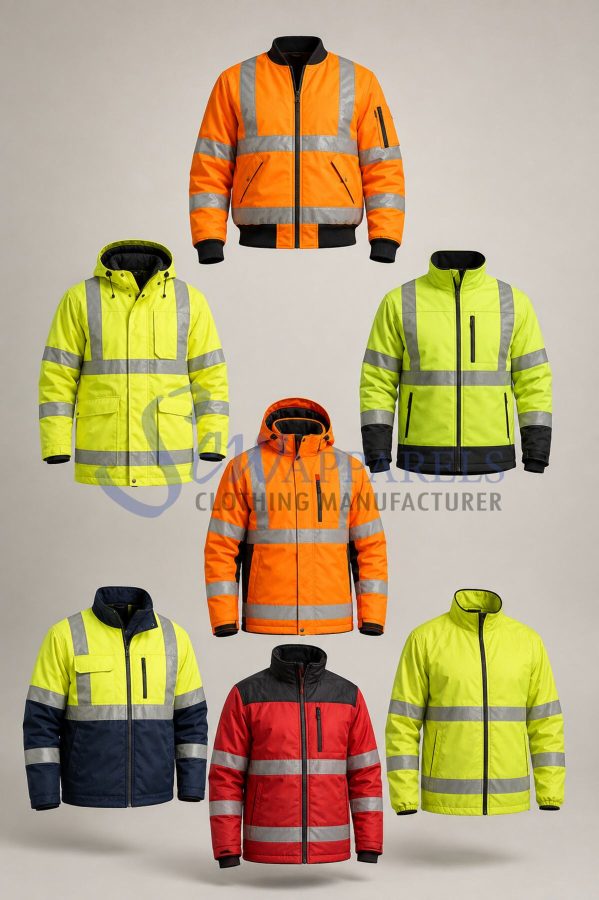
1. Define hi vis jacket storage handling for the exact model
Begin with the jacket model, construction revision, colour and size range. Record which stock the instructions cover. A generic description such as fluorescent jacket does not explain whether two garments share the same fabric, reflective components, closures or manufacturer requirements. Keep the accepted specification connected to the handling brief.
Hi vis jacket storage instructions should come from the relevant supplied information and competent workplace procedure. Identify the source, date and revision. If the care label and separate document appear inconsistent, request clarification instead of choosing whichever instruction is easiest for the warehouse.
A hi vis jacket supplier care document should remain accessible when goods move between receiving, storage and issue locations. Do not leave the only copy inside a discarded carton. Where a revised document arrives, preserve the earlier reference and confirm whether the revision covers existing stock or only a changed product.
For hi vis jacket storage handling, agree who owns the process. Receiving staff can identify discrepancies, warehouse staff can maintain locations and a designated responsible person can decide how questionable garments are assessed. Within hi vis jacket storage handling, a location move should not automatically change a held garment into available stock.
Record any specific conditions supplied for the model without inventing numerical limits. This article does not provide a universal temperature, humidity range, shelf life or stacking height. If such conditions are necessary, obtain the applicable information and plan how the storage operation will follow it.
2. Choose a clean storage area and manage exposure questions
HSE guidance on PPE maintenance, in its Great Britain context, calls for equipment to be looked after and properly stored, giving a clean, dry cupboard as an example. It also emphasises keeping reusable PPE clean and in good condition. Use that general principle with the instructions applicable to the actual garment and workplace.
Hi vis jacket warehouse care should consider the surrounding operation. A shelf beside leaking materials, dusty processing or uncontrolled returned goods is different from a designated clean stock area. Identify foreseeable exposure and handling problems rather than treating every empty space as suitable storage.
Reflective jacket storage exposure should be discussed in terms of actual conditions: nearby contamination sources, contact with other materials, moisture, heat or light where relevant to the supplied instructions. Do not claim that a particular exposure is harmless without evidence for the product. Equally, do not present an untested concern as a proven performance failure.
A hi vis jacket sunlight storage question belongs in the supplier clarification list when the proposed location receives direct light or prolonged display exposure. Ask what restrictions apply to the model and packaging. This guide does not establish a safe exposure duration or predict how much performance a jacket will retain.
Keep hi vis jacket storage handling specific enough for staff to apply. Identify approved locations, how stock is protected from avoidable contamination and what to do if the area becomes unsuitable. If a carton becomes wet or its contents are affected, record the observation and route the stock for review instead of moving it quietly to a different shelf.
3. Separate new stock, clean returns and uncertain garments
High visibility jacket stock handling needs physical separation that matches the recorded status. New received goods awaiting checks, accepted unused stock, clean returns and held articles should be distinguishable. A status in a spreadsheet is not enough when anyone can take the wrong garment from a shared pile.
Hi vis jacket clean return separation should define what qualifies a return for the clean area. A wearer saying the garment was washed does not necessarily establish its process history or condition. Use the applicable return procedure and record missing information without converting an unknown into an assumed pass.
For hi vis jacket contamination segregation, follow the workplace’s relevant process and obtain competent advice where the reported exposure requires it. Describe what is known and keep the affected stock from normal issue. Do not prescribe a general home cleaning solution for an unidentified contaminant.
A hi vis jacket damaged stock hold should identify the garment, reported defect, hold location and responsible reviewer. Use a clear status and prevent accidental reissue through the actual handling arrangement. The hold label should not conceal the original model identity or erase its service history.
Hi vis jacket storage handling should also control returns with no readable identity. A garment that cannot be connected to its model or history should not be assigned a convenient identifier and treated as verified stock. Record the uncertainty and resolve it through the responsible review process.
| Stock state | Handling record | Next responsible action |
|---|---|---|
| New receipt | Model, quantity and receiving observations | Complete the agreed receiving review |
| Accepted unused stock | Location and applicable instruction reference | Preserve identity until issue |
| Clean return | Identity, return information and condition status | Apply the return and issue procedure |
| Held stock | Reason, location and named responsible role | Resolve the concern before release |
| Retired stock | Decision reference and removal status | Prevent return to ordinary issue stock |
These are suggested operational categories rather than a statutory form. Adapt them to the actual process, applicable requirements and manufacturer information. A status should describe an action that occurred, not an intention to inspect the garment later.
4. Preserve identity through packing, movement and issue
A hi vis jacket packing handling brief should identify the intended pack arrangement, model and size identification, quantity reconciliation and treatment of discrepancies. Ask whether the chosen packing method affects the garment or supplied information. Do not change packaging and then assume the original handling instructions still describe the new arrangement.
Hi vis jacket issue identification should connect the garment or controlled batch to its model, size and current stock status. Preserve enough information to distinguish a replacement article from the returned one. Separate garment identity from a person’s name and use only the assignment data needed for the operational purpose.
A high visibility jacket storage record can include location, receipt reference, instruction revision, status changes and responsible entries. When stock moves, record the destination and keep its status intact. A transfer between warehouses should not erase a previous damage report or an unresolved receiving discrepancy.
In hi vis jacket storage handling, quantities and condition have different roles. Counting twelve jackets proves a quantity observation; it does not prove that all twelve were inspected or that they meet a protective performance requirement. Keep those statements separate in the receiving and issue records.
A hi vis jacket issue check should verify the intended model and size, its available status and any required accompanying information. Confirm the selection through the appropriate workplace process. A familiar colour or a visible reflective strip does not by itself establish suitability for the task.
For private label hi vis jacket production, discuss garment identification, supplied instructions and packing requirements during development. Confirm the actual manufacturing and documentation scope before ordering. This article does not claim that Sew Apparels provides a stock management platform, certified inspection service or guaranteed storage lifespan.
5. Inspect stored stock and resolve exceptions before release
Hi vis jacket stored garment inspection should follow the applicable procedure and instructions. Record the specific observation, garment identity and review outcome. A damaged closure, affected tape area, unusual contamination or illegible label deserves a clear description rather than a vague note such as old stock.
Hi vis jacket stock status control should identify who can release a held item and which evidence supports that decision. Purchasing replacement stock does not automatically approve the old garment for use. Keep replacement procurement separate from the responsible condition assessment.
HSENI guidance on personal protective equipment, for Northern Ireland, advises proper storage, following manufacturer maintenance schedules and keeping suitable replacement PPE available. It also addresses training on damage reporting and replacement. Requirements for another destination should be checked through its applicable guidance and responsible assessment.
A useful hi vis jacket storage handling exception record connects the problem to its resolution. For an illustrative example, carton C-A arrives with signs of moisture and is held pending review; carton C-B is accepted through the normal receiving procedure. These are fictional identifiers, not actual inspection findings or evidence of Sew Apparels product performance.
Investigate how an exception occurred before returning the stock area to normal use. If the location remains exposed to the same problem, releasing a reviewed garment into that location may repeat the issue. Record the relevant corrective action and who confirms that the handling arrangement is suitable.
A visual condition review should not be described as laboratory verification of retained reflective performance. Where uncertainty concerns protection, use the appropriate competent review and product evidence. Hi vis jacket storage handling records support traceability; they do not replace that assessment.
Keep the hi vis jacket cleaning and replacement records linked to storage status so a warehouse move cannot erase a care event, hold or retirement decision.
Questions to close in the handling brief
Can clean returns share the new stock area?
Define separate identifiable statuses and follow the applicable return procedure. Do not let an assumed cleaning history or unreadable identity become an ordinary available-stock entry.
Does a sealed carton guarantee suitable storage?
No. Check the relevant instructions, location and actual condition. Packaging alone does not establish protection from every exposure or prove that the contents remain suitable.
What should happen when stored stock has an unresolved defect?
Keep it held and identifiable, route the concern to the responsible reviewer and record the decision before release. Avoid informal reissue while the record still shows an open concern.
Use the Hi-Vis Jackets Buying Guides for related development decisions. Complete hi vis jacket storage handling with an instruction reference, clear stock separation and traceable issue controls that staff can apply consistently.