
Jogger scrub pants length variant ordering gives an institutional buyer a way to separate waist size from trouser length before a bulk order is released. A waist-size total alone does not show how many wearers need a shorter or longer approved block. Use fitted garment references, distinct variant codes and an order matrix so the supplier and receiving team can identify each required combination.
This guide provides six critical checks for a short, regular and tall assortment. Those names are buyer-defined planning categories, not confirmation that a manufacturer offers every option. The focus is fitting references, measurement records, garment identities, quantities and supplier terms. Ankle-cuff design and general leg-shape development remain separate product decisions.
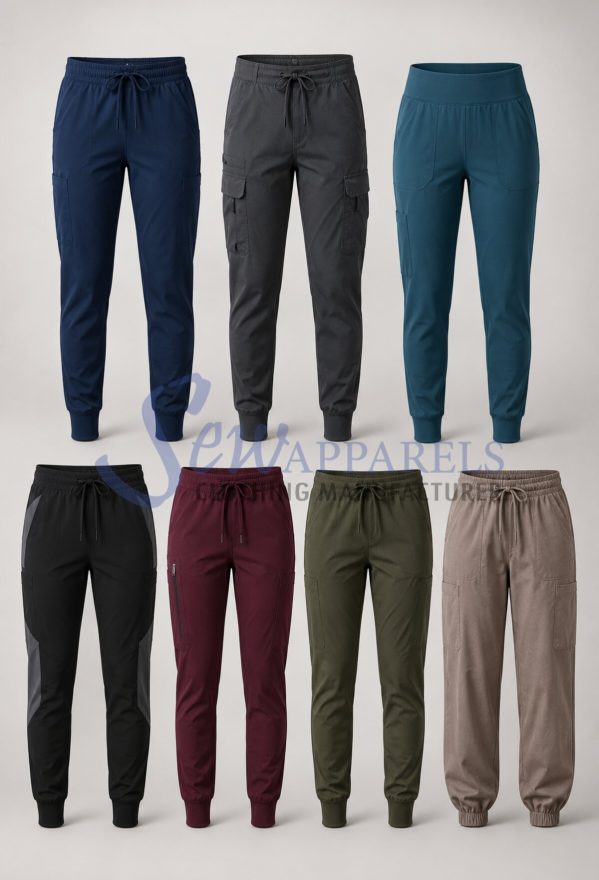
Why jogger scrub pants length variant ordering needs a separate matrix
A programme can have the correct total quantity of medium-waist trousers and still supply the wrong length mix. Treat each approved waist-and-length combination as a distinct order line. Keep style, colour and reference revision attached to that line so the length code is not detached from the actual garment being purchased.
Do not assume a length variant means simply cutting the same pattern shorter or longer. The supplier must review how the proposed blocks relate to the approved fit and construction. The buyer’s task is to define the required variants and their evidence, then obtain confirmation of the feasible development and production arrangements.
1. Define short, regular and tall garment blocks
Begin jogger scrub pants length variant ordering by defining the intended blocks. A scrub jogger short regular tall order matrix needs more than three column headings: identify the garment reference for each length, its measurement revision and the waist sizes to which it applies. If a variant remains unapproved, mark it as proposed rather than available for production.
Use short, regular and tall as internal names only after the buyer and supplier agree their meaning. They are not universal measurements and do not translate automatically between brands. Specify the finished-garment points that define each block, and identify any related fit differences that the pattern team must review before confirming a length option.
Keep the existing cuff specification attached to the approved style. This article does not redesign cuff height, ankle opening or taper. If a proposed length block changes those design requirements, flag it for a separate sample review rather than allowing an order-sheet description to alter the approved garment silently.
2. Use a fitting kit to confirm length needs
Base jogger scrub pants length variant ordering on an identified hospital jogger scrub length fitting kit. The kit should represent the actual proposed garment or clearly disclose any difference. Record style codes, waist sizes, length variants, material and sample revisions so a fitting decision can be connected to the right reference.
A scrub jogger fitting kit reference belongs beside each confirmed selection. Let the responsible buyer organise fitting and collect the sizing information needed for the order. Aggregate the results into anonymised waist-and-length totals before sharing the purchasing brief. Employee names, health information and personal details are unnecessary when only variant quantities are required.
Review the relevant workwear fit through the buyer’s approved process, including the intended footwear and normal movements where appropriate. Record unresolved selections separately. A wearer’s height or existing trouser label can help start a discussion but should not be presented as proof that a particular finished block fits that person.
3. Record the measurement method for approved lengths
Jogger scrub pants length variant ordering needs a consistent scrub jogger inseam measurement method. Define the starting point, ending point, garment condition and measurement units. For a cuffed trouser, state whether the specified length includes the cuff and how the garment is positioned. Attach a drawing or approved measurement instruction where words alone leave room for interpretation.
Distinguish a body measurement from a finished-garment measurement. Record the relevant fit reference, not just a number copied from an unrelated size chart. If tolerances or post-care measurements are required, obtain the agreed limits and method from the responsible technical reviewer. This guide does not prescribe universal inseams, tolerances or shrinkage allowances.
CottonWorks provides sourcing and manufacturing resources covering garment production, quality assurance and related textile processes. Use this technical background when organising questions for the supplier. It does not establish that a particular factory offers short or tall scrub blocks, or that a sample meets the buyer’s measurement requirements.
Consider the intended care route during sample approval. CDC guidance discusses healthcare laundry and bedding practices. The institution and its laundry provider should define applicable care and processing requirements. Confirm garment evaluation against the agreed route; a correct inseam measurement alone does not establish infection-control or protective performance.
4. Give each waist-and-length combination its own identity
Use jogger scrub pants length variant ordering to establish unambiguous jogger scrub inseam SKU identification. A SKU can connect style, colour, waist size and length code to one approved item. Whatever coding structure the buyer chooses, the supplier and receiving team should be able to interpret it without guessing which field describes length.
For an illustrative example, a programme could use JS-NAVY-M-REG and JS-NAVY-M-TALL for two medium-waist variants. These are example identifiers, not existing Sew Apparels stock codes or confirmed options. Connect each code to its approved garment measurement and fit reference so a label does not become the only record of the intended block.
If a scrub jogger size length barcode is requested, define the data it represents and how it maps to the readable code. Ask the supplier to confirm feasible printing, placement and verification. Keep a human-readable identity available where the receiving process requires it; a barcode is useful only when the parties can read and reconcile the associated records.
5. Allocate quantities and packing labels by variant
Jogger scrub pants length variant ordering should separate confirmed wearer demand from any buyer-approved reserve. Jogger scrub trouser size range allocation can then show the quantity for each waist-and-length combination. Do not distribute short, regular and tall quantities by an invented percentage simply because the final order needs a balanced-looking assortment.
Review scrub jogger short length allocation and scrub jogger tall length allocation against the fitting totals. Keep regular quantities visible as a separate column. If some selections remain open, record them as unresolved rather than assigning them to regular automatically. The buyer should approve how incomplete sizing information is handled before the matrix is released.
Scrub jogger length pack labels should identify the same variants as the order. Confirm whether goods are grouped by variant, mixed under an approved assortment or allocated to departments. Show counts and unit definitions at the relevant packing levels. A carton described only as medium trousers can conceal an incorrect length mix.
Use scrub jogger length order reconciliation to compare the matrix, packing list and physical labels. Check row totals by waist size, column totals by length and the overall trouser count. Resolve differences before dispatch or receiving acceptance. A correct overall count does not cancel a shortage in one required variant.
6. Request supplier terms from the final order matrix
The final jogger scrub pants length variant ordering check is a scrub jogger length assortment quotation based on the identified variants. Share the approved block references and quantities, then ask the supplier to confirm what can be developed and produced. Record any sample work, minimums, grouping constraints and commercial conditions in the actual proposal.
Scrub jogger variant supplier terms may differ when several blocks, colours or small variant quantities are requested. Ask for written clarification rather than assuming one quoted style price or order minimum covers every length. Confirm lead-time and approval dependencies for the proposed assortment without inventing an available option, charge or delivery promise.
Record scrub jogger bulk variant approval against the accepted order revision. Identify approved garment references, variant quantities, pack-label format and outstanding conditions. If the supplier proposes a change to the assortment, return it to the buyer for a documented decision before treating the alternative as the final production instruction.
A waist-by-length matrix for jogger scrub pants length variant ordering
Use a scrub jogger waist length matrix to connect fitting results with purchasing and receiving. The fields below are an original planning tool, not a manufacturer’s confirmed size range. Add only approved combinations and keep proposed variants distinguishable from released order lines.
| Required record | Approved reference | Buyer entry | Supplier response | Release action |
|---|---|---|---|---|
| Programme reference: order or enquiry number, garment style, colour and controlled revision. | ||||
| Waist identity: buyer-defined size and the approved fit-block reference. | ||||
| Length identity: short, regular or tall code, measurement method and approved sample revision. | ||||
| Demand: anonymised confirmed fitting total and separately approved reserve, if any. | ||||
| Garment identity: readable SKU and barcode mapping where requested and confirmed. | ||||
| Packing instruction: unit label, grouping rule, department allocation and quantity reference. | ||||
| Release status: supplier acceptance, quotation reference, buyer approval and open actions. |
As a simple illustration, suppose the approved medium-waist row requires 12 short, 18 regular and 6 tall trousers. The row total is 36, and each quantity belongs to a different variant identity. These values demonstrate matrix arithmetic only; they are not recommended demand ratios, minimum quantities or a forecast for a healthcare workforce.
If a later fitting review moves two confirmed requirements from regular to tall, the total remains 36 but the assortment changes to 12 short, 16 regular and 8 tall. Update the relevant SKU totals, quotation scope and packing instructions as needed. Retain the revision and approval so the supplier does not produce from the superseded mix.
Common errors to resolve before releasing the order
Check for a length code without an approved garment reference, a waist-size total without a variant split, or a barcode that maps several lengths to one identity. Verify that the fitting kit corresponds to the intended fabric and style. If it does not, identify the difference and obtain the necessary review instead of treating the reference as equivalent.
Also check whether a reserve was added twice, whether a departmental allocation exceeds the confirmed order and whether packing labels omit the length code. Give each unresolved item an owner and a next action. This keeps technical approval, commercial acceptance and receiving preparation connected without allowing one team’s assumption to stand in for another team’s decision.
Prepare a clear scrub-jogger bulk-order enquiry
For custom jogger scrub pants manufacturing, send anonymised waist-and-length totals, the proposed matrix and approved fit references. Ask the supplier to confirm feasible variant development and production terms. Keep the enquiry grounded in actual requirements rather than assuming that short and tall options or their minimums are already available.
For private label jogger scrub pants production, connect the variant identities with brand labeling, packing and the receiving process. Confirm sampling, artwork and commercial approvals before releasing the assortment. A clear purchasing record makes it easier to investigate changes because the intended garment and quantity remain linked.
Share your matrix and approved fitting references through the Sew Apparels jogger scrub pants service. Consult the related jogger scrub pants buying guides for connected garment-development decisions. Release the confirmed jogger scrub pants length variant ordering record alongside the order so the supplier and receiving team use the same approved waist-and-length assortment.